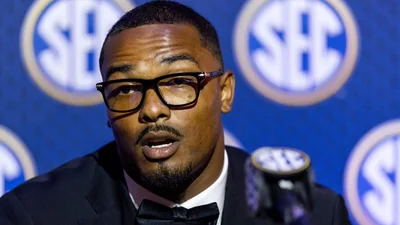
The Arion Carter NCAA suspension has quickly become one of the most discussed stories in College Football, raising difficult questions about how the NCAA applies its eligibility rules in the modern Name, Image and Likeness (NIL) era. Tennessee’s standout linebacker, widely regarded as one of the Southeastern Conference’s top defensive players, will miss the Volunteers’ first two games of the 2026 season after the NCAA ruled that an agent-funded flight violated amateurism regulations.
The decision has generated strong reactions because Carter later reimbursed the cost of the flight and ultimately returned to Tennessee instead of entering the NFL Draft. Despite those actions, the NCAA determined that a rules violation had occurred, leading to one of the more significant penalties issued for a Level III infraction in recent years.
Beyond Tennessee football, the case has become another example of the growing challenges facing college athletics as decades-old eligibility rules continue to intersect with a rapidly evolving NIL landscape.
Why Was Arion Carter Suspended?
The NCAA suspended Arion Carter after determining that his agent paid for a $427 flight to an NFL pre-draft training facility before Carter ultimately chose to return to Tennessee.
Although Carter later repaid the cost of the flight, NCAA officials concluded that accepting the benefit before reimbursement still constituted an eligibility violation under existing rules governing athlete benefits.
The incident was categorized as a Level III violation, generally considered the least serious category of NCAA infractions. However, the resulting two-game suspension has attracted attention because penalties for Level III violations are often considerably lighter.
Quick Overview of the Case
| Category | Details |
|---|---|
| Player | Arion Carter |
| School | University of Tennessee |
| Position | Linebacker |
| Violation | Agent paid for pre-draft travel |
| Flight Cost | $427 |
| Violation Level | Level III NCAA violation |
| Original Suspension | Three games |
| Appeal Outcome | Reduced to two games |
| Games Missed | Furman and Georgia Tech |
Josh Heupel Strongly Defends His Star Linebacker
Tennessee head coach Josh Heupel publicly backed Carter following the NCAA’s decision, describing him as a model student-athlete whose commitment to the university extends far beyond football.
“Arion Carter represents everything that is right about college athletics. His leadership, loyalty, and character have been exceptional throughout his Tennessee career.”
Heupel also emphasized Carter’s academic achievements, noting that he is set to graduate with honors while maintaining a strong reputation as one of the team’s leaders.
The coach’s comments highlight an important aspect of the controversy: many observers believe Carter acted responsibly by repaying the expense and returning to school, making the punishment appear disproportionate to the nature of the violation.
Who Is Arion Carter?
Arion Carter has emerged as one of the SEC’s premier defensive players. His athleticism, football intelligence, and consistency have made him the centerpiece of Tennessee’s defense.
Last season he led the SEC with an average of 7.6 tackles per game, earning conference recognition and establishing himself as one of the nation’s most productive linebackers.
His ability to diagnose plays, stop the run, and contribute in pass coverage has made him an NFL prospect while simultaneously elevating Tennessee’s defensive unit.
Why Carter Returned to Tennessee Instead of Entering the NFL Draft
Carter initially explored the possibility of entering the NFL Draft and participated in pre-draft preparations before suffering an injury.
The setback altered his plans, leading him to withdraw from the draft process and return to Tennessee for another collegiate season.
Many players in similar situations use an additional year of college football to improve their draft stock, regain full health, and continue developing before making the jump to the professional level.
Ironically, that decision to return to college ultimately placed Carter under NCAA eligibility review.
Understanding Level III NCAA Violations
NCAA violations are divided into multiple categories based on severity.
A Level III violation generally involves isolated or less serious breaches that typically produce limited competitive advantages.
Examples often include:
- Minor recruiting mistakes
- Administrative reporting errors
- Limited eligibility violations
- Impermissible but relatively small benefits
Because Level III cases are considered less severe, lengthy suspensions are relatively uncommon, making Carter’s punishment unusual compared to many previous cases.
The NIL Era Has Changed College Athletics
Since NIL rules transformed college sports, athletes can legally earn money through endorsements, sponsorships, appearances, and personal branding opportunities.
However, NIL has not eliminated every restriction.
Athletes still must comply with rules regarding agents, recruiting inducements, eligibility requirements, and certain financial benefits connected to professional representation.
The Carter case demonstrates that while athletes today have greater financial freedom than ever before, navigating NCAA regulations remains surprisingly complex.
Why This Case Has Sparked National Debate
The controversy extends beyond one player.
Many college football analysts argue that the punishment illustrates the tension between traditional amateurism policies and the realities of modern college athletics.
Critics question whether a reimbursed $427 travel expense should outweigh an athlete’s otherwise exemplary academic and athletic record.
Supporters of strict enforcement, however, maintain that consistent application of eligibility rules is necessary to preserve competitive fairness across college sports.
Impact on Tennessee Football
Losing Carter for two games creates an immediate challenge for Tennessee’s defense.
As the team’s defensive leader, Carter contributes not only statistically but also through communication, leadership, and experience.
The Volunteers will need younger linebackers to step into larger roles during the opening weeks of the season.
Although Tennessee remains favored in its opener, missing one of the SEC’s best defenders affects defensive rotations and overall stability.
How This Could Affect Carter’s NFL Future
From an NFL scouting perspective, the suspension itself is unlikely to erase Carter’s draft potential.
Professional teams typically evaluate prospects using multiple factors, including:
- On-field production
- Athletic testing
- Football intelligence
- Leadership qualities
- Medical evaluations
- Character assessments
Because the violation does not involve performance-enhancing drugs, criminal conduct, or academic misconduct, scouts are expected to place greater emphasis on Carter’s overall body of work once he returns to competition.
Comparing This Case to Other NCAA Eligibility Disputes
College athletics has experienced numerous eligibility controversies involving recruiting benefits, travel expenses, and amateurism rules over the past decade.
What makes Carter’s situation different is that it occurred during an era in which college athletes can legally generate significant NIL income while still facing restrictions on relatively modest benefits tied to professional representation.
This contrast has fueled broader conversations about whether current NCAA regulations require further modernization.
The Bigger Issue Facing the NCAA
The NCAA continues to face increasing pressure to simplify its eligibility framework.
As college athletics evolves through NIL agreements, transfer portal reforms, and expanded athlete rights, governing bodies must balance competitive integrity with practical realities.
Cases like Carter’s highlight how even relatively minor administrative issues can produce significant competitive consequences for both athletes and programs.
Many experts believe clearer guidelines could reduce confusion for players considering professional opportunities while preserving fair competition across college sports.
What Happens Next?
Carter will serve his two-game suspension before becoming eligible to return to Tennessee’s lineup.
Once reinstated, he is expected to resume his role as the centerpiece of the Volunteers’ defense.
His performance after returning could play a major role in both Tennessee’s SEC ambitions and his future NFL Draft evaluation.
The NCAA, meanwhile, will likely continue facing scrutiny over how eligibility rules are interpreted in similar situations moving forward.
Conclusion
The Arion Carter NCAA suspension represents far more than a two-game absence for one of Tennessee’s top defenders. It reflects the ongoing challenges of governing college athletics during a period of unprecedented change.
While the NCAA determined that existing rules required disciplinary action, the case has reignited debate over whether those rules adequately reflect today’s NIL environment. Tennessee will temporarily lose one of its defensive leaders, but the broader discussion surrounding athlete eligibility, fairness, and regulatory reform is likely to continue long after Carter returns to the field.
For college football fans, administrators, and athletes alike, this case serves as another reminder that the sport’s evolving landscape still contains legal and regulatory gray areas that may shape the future of NCAA governance for years to come.
For breaking news and live news updates, like us on Facebook or follow us on Twitter and Instagram. Read more on Latest Sports on thefoxdaily.com.






COMMENTS 0