Azhar Ali’s criticism of Aaqib Javed has added another layer to the growing scrutiny surrounding Pakistan cricket after a difficult overseas campaign. The former Pakistan captain has questioned the senior selector and High Performance Director’s decision-making, calling for greater accountability and suggesting that Javed should consider stepping aside if he cannot effectively manage the setup he has helped shape.
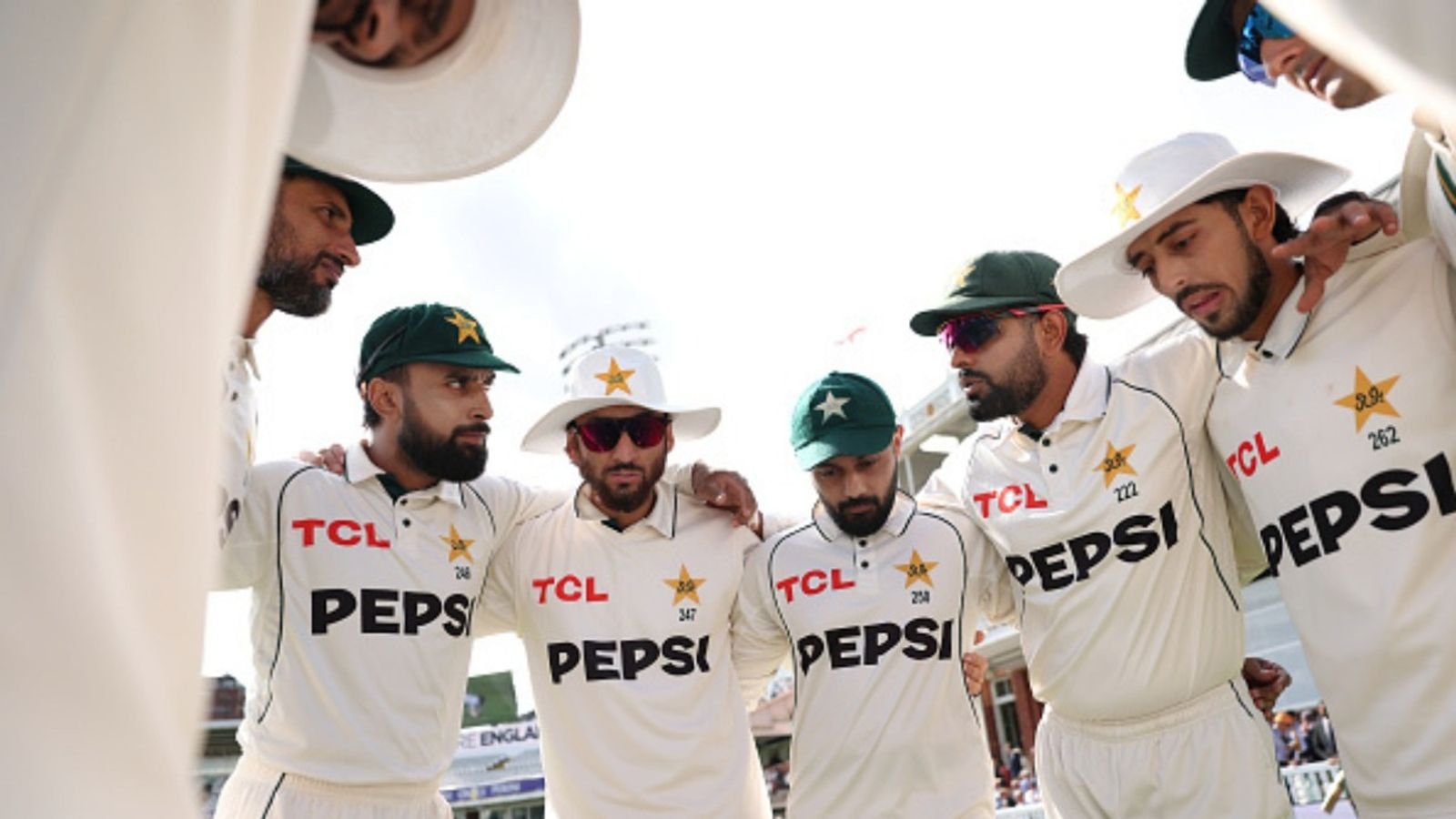
Ali’s comments came after Pakistan suffered heavy Test defeats at Headingley and Lord’s during their England tour. With performances continuing to attract criticism, the former captain argued that the problems go beyond individual matches and reflect a longer-running issue involving selection, leadership and planning.
The criticism is particularly significant because it comes from a former Pakistan captain who has experienced the pressures of international cricket from inside the dressing room. Rather than focusing solely on individual players, Ali directed attention toward the decision-making structure behind the team.
What did Azhar Ali say about Aaqib Javed?
Azhar Ali delivered a direct assessment of the situation, arguing that Pakistan have experienced poor decisions for several years and that those responsible for the performances should accept responsibility.
“We have had bad decisions like these for three years now. He should take responsibility for performances.”
Ali also questioned Javed’s judgment and highlighted what he viewed as contradictions in the selector’s public comments. According to Ali, he had heard Javed discuss responsibility involving Sarfaraz Ahmed and Babar Azam despite Javed having appointed them only months earlier.
The former captain’s central argument is therefore about accountability. His criticism suggests that changing players, coaches or captains without examining the decision-making process behind those changes may not solve Pakistan’s underlying problems.
‘Every decision he makes backfires’: Why the criticism is significant
Ali’s strongest criticism was that Javed’s decisions repeatedly produce negative outcomes before responsibility is shifted elsewhere.
“Every decision he makes backfires, and he then says: ‘It’s not me.’ Look at yourself first.”
The statement goes beyond normal criticism following a poor result. It questions whether Pakistan’s cricket administration has a clear chain of responsibility when major decisions fail.
In international cricket, selection decisions can have consequences that extend far beyond one match. A player dropped from the squad may lose confidence, a captain removed from the role may disrupt the dressing room, and frequent coaching changes can prevent a consistent playing philosophy from developing.
That is why Ali’s call for accountability is relevant to the broader debate surrounding Pakistan cricket. The issue is not simply whether one particular selection was correct. It is whether the team has a stable process for making and evaluating decisions.
Pakistan’s recent upheaval has intensified the debate
The criticism comes during a period of significant change within Pakistan cricket. The team has experienced changes involving its coaching staff, leadership structure and playing personnel.
The departure of head coach Sarfaraz Ahmed and bowling coach Umar Gul, alongside several players being sent home, has contributed to an atmosphere of uncertainty around the national setup.
Changes are sometimes necessary when results remain poor, but constant restructuring can also create another problem: instability.
A team needs time to establish combinations, understand roles and develop confidence. If players and coaches constantly fear that another poor result could lead to immediate changes, long-term development can become difficult.
The bigger problem: short-term fixes versus long-term planning
One of the most important elements of Azhar Ali’s criticism is his call for a longer-term approach. He has argued that Pakistan cricket needs greater stability instead of repeatedly searching for immediate solutions.
This distinction is crucial.
A short-term approach generally focuses on the next series or tournament. If results are poor, the response can involve changing the captain, replacing coaches or selecting a different group of players.
A long-term approach asks different questions: Is the domestic structure producing enough international-quality players? Are young cricketers being prepared for Test cricket? Do selectors have a consistent definition of the type of player they want? Are players being given enough time to establish themselves?
These questions are harder to answer, but they are also more important if Pakistan want sustainable improvement.
Why selection consistency matters in Test cricket
Test cricket places different demands on players compared with limited-overs cricket. A batter may need time to develop the patience and technique required to succeed over long innings, while bowlers need workloads and tactical experience that cannot always be developed immediately.
That makes consistency particularly important.
If a young player is selected for one Test and removed after a poor performance, selectors may never discover whether that player could have developed into a reliable international performer.
On the other hand, retaining a player indefinitely without evaluating performance can also become problematic. The challenge for selectors is therefore finding a balance between patience and accountability.
Ali’s comments suggest that Pakistan’s problem is not simply about choosing the right eleven. It is about creating a selection philosophy that players, coaches and supporters can understand.
Aaqib Javed’s role puts him at the centre of scrutiny
As a senior selector and High Performance Director, Aaqib Javed occupies a position with significant influence over Pakistan’s cricket structure. That naturally makes him one of the central figures when results decline.
With greater authority comes greater scrutiny. If major selections or leadership decisions fail to produce improvements, questions about responsibility are inevitable.
However, accountability should not mean blaming one individual for every problem. Cricket teams are affected by multiple factors, including player form, injuries, coaching, preparation, domestic development and administration.
The more useful question is whether Pakistan’s leadership structure has a clearly defined process for assessing what went wrong and deciding what should change.
The Sarfaraz and Babar issue highlighted by Azhar Ali
One of Ali’s specific complaints concerns the treatment of Sarfaraz Ahmed and Babar Azam. He questioned the logic of criticising those figures when, according to his comments, Javed had been involved in appointing them only months earlier.
The issue highlights a common challenge in sports administration: decisions often look different after results are known.
When a captain or coach is appointed, the decision is generally based on expectations about future performance. If results later deteriorate, it becomes easy to judge the original decision with hindsight.
For a healthy system, selectors and administrators must therefore explain not only what decision they made but also why they made it. That creates institutional accountability and makes future decisions easier to evaluate.
Why constant leadership changes can hurt Pakistan
Leadership changes can produce an immediate sense of action, but they do not necessarily address structural problems.
A new captain may bring fresh ideas, while a new coach may introduce a different tactical approach. But if the underlying player-development system remains unchanged, the same problems can eventually return.
There is also a human element. Players need clarity about their roles and expectations. Frequent changes can make that clarity harder to maintain.
For Pakistan, the challenge is therefore to determine which problems require immediate intervention and which require patience.
Pakistan’s overseas struggles expose the deeper challenge
The defeats at Headingley and Lord’s have naturally increased pressure on the team because overseas Test cricket provides a demanding examination of technique, temperament and preparation.
Playing in England presents particular challenges for visiting batting line-ups, while bowlers must adapt to conditions that can change significantly during a match.
However, poor overseas results should not automatically be interpreted as evidence that every part of the system is failing.
The more useful assessment would examine patterns across multiple series: batting consistency, top-order stability, bowling depth, fielding standards, fitness, tactical decision-making and the ability of players to adapt to different conditions.
What Pakistan can learn from stable cricket systems
Successful international teams generally combine high standards with continuity. Players know what is expected of them, selectors maintain a clear pathway and changes are made for defined reasons rather than simply as reactions to one defeat.
This does not mean successful teams never change their personnel. They do. The difference is that changes are usually connected to a broader plan.
For Pakistan, creating that connection could be more important than simply finding another captain or another coaching combination.
The country has no shortage of cricketing talent. The bigger challenge is converting that talent into a consistently competitive international team.
The junior pathway could hold the long-term answer
Azhar Ali has also stressed the importance of long-term planning, particularly at junior levels. This may be one of the most important points in his criticism.
International success begins well before a player enters the national dressing room. Young cricketers need quality coaching, competitive domestic cricket, appropriate fitness preparation and exposure to different playing conditions.
If the development pathway is strong, selectors have a larger pool of players who are already prepared for the demands of international cricket.
That reduces the pressure to constantly experiment at senior level.
Accountability should be paired with a clear plan
Azhar Ali’s call for Aaqib Javed to take responsibility raises an important question: what should accountability actually look like?
It should not simply mean resignations after every disappointing series. A stronger model would involve clearly defined targets, transparent selection principles and regular evaluation of whether the strategy is working.
If a decision fails, the people responsible should be able to explain why it was made and what will change as a result.
This approach allows mistakes to become part of a learning process rather than another reason for wholesale disruption.
What happens next for Pakistan cricket?
The immediate focus will remain on performances, but the bigger test will be whether Pakistan’s cricket leadership responds to criticism with another round of short-term changes or develops a more stable strategy.
Azhar Ali’s comments have made the debate sharper because they focus attention on the decision-making process rather than only the players on the field.
If Pakistan can establish greater continuity in selection, strengthen its junior pathway and clearly define responsibility within the national setup, the current difficult period could eventually become a turning point.
If changes continue to be made without a coherent long-term plan, however, the cycle of poor results followed by further upheaval could continue.
Final verdict: Pakistan needs stability as much as change
Azhar Ali’s criticism of Aaqib Javed has opened a wider conversation about accountability, selection and the direction of Pakistan cricket. His argument is that repeated poor decisions cannot simply be followed by blame being passed to players or previous leadership figures.
The former captain has called for greater responsibility and suggested that Javed should step away if he cannot control the team and structure he is helping to shape.
But the larger lesson extends beyond one selector. Pakistan’s problems cannot be solved through constant personnel changes alone. The team needs a clear selection philosophy, stronger development pathways, greater stability and a willingness to judge decisions over a meaningful period.
The immediate pressure will remain intense after the disappointing England campaign. Yet the real measure of Pakistan’s cricket leadership will be what happens next: whether the response becomes another short-term correction or the beginning of a carefully planned rebuild.
For breaking news and live news updates, like us on Facebook or follow us on Twitter and Instagram. Read more on Latest Cricket on thefoxdaily.com.

COMMENTS 0