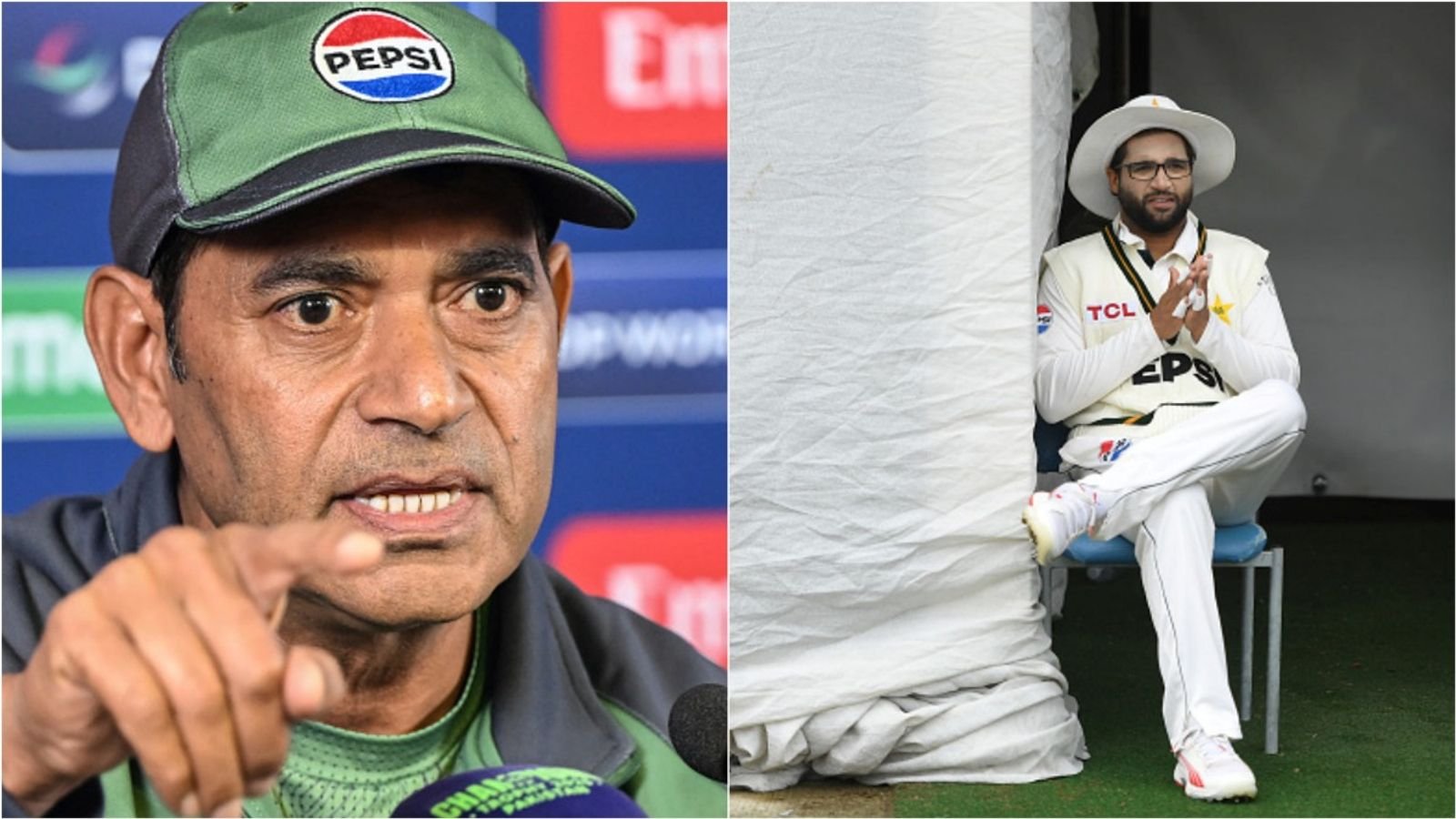
Imam-ul-Haq is facing increased scrutiny after Pakistan selector Aaqib Javed questioned why the opener did not attempt to bat in either innings of the Lord’s Test despite the team being under severe pressure.
Imam was unavailable to bat after suffering a calf muscle injury while fielding during the Test. However, his decision not to take the field with the bat in either innings has triggered criticism from Pakistan officials and former international cricketers.
Aaqib Javed has confirmed that the Pakistan Cricket Board will conduct an inquiry into the circumstances surrounding the injury and Imam’s decision. Importantly, Aaqib stopped short of accusing the batter of deliberately faking the problem, saying that the matter required investigation.
The controversy has emerged during a difficult period for Pakistan cricket. Their 194-run defeat at Lord’s was followed by major changes to the squad and coaching staff, with several senior players released before the next Test.
Aaqib Javed Questions Imam-ul-Haq’s Absence With the Bat
Aaqib Javed expressed disappointment over Imam’s failure to bat in both innings and questioned whether a muscle injury should necessarily have prevented him from attempting to contribute with the bat.
His criticism was based primarily on the circumstances of the match. Pakistan were struggling during the contest, and the absence of an established opening batter placed additional pressure on the remaining batting group.
Aaqib also referred to previous examples of cricketers attempting to contribute despite playing through physical discomfort. His comments reflected the traditional expectation that players should make every reasonable effort for their team when the situation allows.
However, the physical condition of an injured player can vary significantly. Whether an athlete is medically fit to bat, run between wickets or protect an injury is ultimately a matter that needs to be assessed using medical evidence rather than assumptions.
Inquiry Does Not Mean Imam Has Been Found Guilty
One of the most important distinctions in the controversy is that an inquiry is not the same as a finding of wrongdoing.
Aaqib explicitly avoided declaring that Imam had fabricated his injury. Instead, he questioned how the reported muscle problem could have prevented the batter from participating in both innings and said the circumstances would have to be examined.
The inquiry can therefore be expected to focus on the injury timeline, medical assessment, communication between the player and team management, and the reasons behind the decision not to bat.
That approach is important because accusations surrounding an injury can have serious consequences for a player’s reputation. Medical information and the circumstances surrounding the injury should be established before any disciplinary conclusion is reached.
Why Imam’s Decision Became Such a Major Issue
In Test cricket, a batter’s absence can have a greater impact than in shorter formats because every wicket and partnership can influence a match over several days.
Pakistan’s batting struggled during the Lord’s Test, and Imam was unavailable when his team needed runs. His absence therefore became more noticeable than it might have been during a match in which Pakistan were comfortably ahead.
The timing also mattered. Pakistan were attempting to recover from difficult situations in both innings, meaning the team had limited opportunities to absorb the loss of a senior batter.
This explains why the controversy has moved beyond the question of whether Imam was injured. The central issue for the PCB is whether all appropriate steps were taken to determine whether he could have contributed despite the injury.
Former Players Also Questioned the Decision
The debate surrounding Imam has extended beyond the PCB. Former international players have publicly expressed doubts about his decision not to bat.
Former England fast bowler Stuart Broad questioned Imam’s conduct around the match and expressed criticism of the circumstances surrounding his absence.
Former Australia opener David Warner also questioned why Imam did not attempt to play through the discomfort when Pakistan were in a difficult position.
Such comments have amplified the public discussion, but they should not be treated as medical assessments. Former players can provide valuable perspectives based on their own experiences, yet only qualified medical personnel with access to the player’s condition can determine whether batting was realistically possible.
Pakistan’s Lord’s Defeat Triggers Major Changes
The controversy surrounding Imam has arrived alongside a major shake-up in Pakistan cricket.
Pakistan suffered a 194-run defeat at Lord’s, a result that prompted the selectors and board to make significant changes before the third Test.
Seven players were released from the squad, including Imam-ul-Haq, Mohammad Rizwan and vice-captain Salman Agha. The changes significantly altered the composition of the Pakistan team heading into the next match.
Saim Ayub, Abdullah Fazal and five uncapped players were called up as Pakistan attempted to respond quickly to the disappointing result.
| Development | Impact on Pakistan |
|---|---|
| Lord’s Test defeat | Pakistan lost by 194 runs |
| Imam-ul-Haq | Released after being unavailable to bat in both innings |
| Mohammad Rizwan | Released from the squad |
| Salman Agha | Released from the squad |
| New additions | Saim Ayub, Abdullah Fazal and five uncapped players called up |
| Coaching changes | Sarfaraz Ahmed and Umar Gul removed from their roles |
Imam’s Release Adds to the Pressure
Imam’s release from the squad means the inquiry is taking place against the backdrop of an already significant selection decision.
Being removed from a touring squad does not necessarily mean that a player has been found responsible for a disciplinary issue. In Imam’s case, the reported injury and the circumstances surrounding his non-participation have become part of a larger evaluation of Pakistan’s Test campaign.
The PCB now has to separate the medical question from the broader performance concerns. That distinction will be important if the board wants the inquiry to produce a credible outcome.
A transparent review could help establish what happened and prevent speculation from becoming the only narrative surrounding the incident.
Pakistan Also Lose Mohammad Rizwan and Salman Agha
The changes are not limited to Imam. Mohammad Rizwan and vice-captain Salman Agha have also been released from the squad following the Lord’s defeat.
Removing multiple experienced players at the same time indicates the scale of dissatisfaction following the result. It also creates an opportunity for younger players to enter the Test setup.
However, major changes carry their own risks. New players require time to adjust to international cricket, particularly in demanding overseas conditions.
Pakistan’s management will therefore have to balance the desire for immediate improvement with the need to build a stable Test team for the longer term.
Coaching Department Also Undergoes Overhaul
The shake-up has extended to the coaching staff. Head coach Sarfaraz Ahmed and bowling coach Umar Gul were removed from their positions following the defeat.
The PCB subsequently turned to white-ball head coach Mike Hesson and bowling coach Ashley Noffke, asking them to join the Test squad at Edgbaston in Birmingham.
The changes highlight how quickly the Lord’s defeat escalated from a disappointing result into a broader review of Pakistan’s Test structure.
When players, selectors and coaches are all under scrutiny simultaneously, maintaining clarity becomes essential. Pakistan will need to ensure that the focus remains on improving performances rather than allowing off-field controversy to dominate the next Test.
Selectors Also Face Questions
The PCB has reportedly issued show-cause notices to selectors over the selection of Imam and Rizwan for the team.
The move has added another layer to the controversy because selection decisions are now being examined alongside team performance and injury management.
Misbah-ul-Haq, one of the four selectors, subsequently stepped down from his position.
These developments suggest that Pakistan’s problems following the Lord’s Test are not being viewed as the responsibility of a single individual. Instead, the board appears to be examining several parts of the decision-making process.
What the Imam Inquiry Could Establish
The inquiry could be important in determining exactly what happened before and during the Lord’s Test.
Several questions naturally arise from the situation: when did Imam first report the injury, what was the medical diagnosis, how severe was the muscle problem, what advice did medical staff provide, and why was he not considered fit enough to bat in either innings?
The answers should come from medical reports, team records and direct accounts rather than speculation.
If the evidence shows that Imam was genuinely unable to bat, the controversy may largely become a matter of communication and perception. If the inquiry identifies procedural or disciplinary concerns, the PCB can then decide what action is appropriate.
Either way, the process needs to be fair and evidence-based.
The Bigger Issue: Player Commitment vs Player Safety
The Imam controversy also raises a broader question in professional cricket: how should players balance team responsibility with physical safety?
Cricket has a long history of players attempting to continue despite injuries. However, modern sports medicine places greater emphasis on understanding the potential consequences of playing while injured.
There is an important difference between playing through manageable discomfort and taking the field when doing so could worsen an injury or create another risk.
Therefore, the expectation that a player should always bat through an injury cannot be applied universally. The correct decision depends on the nature and severity of the injury, medical advice and the player’s ability to perform safely.
For the PCB, the challenge is to determine whether those considerations were properly handled in Imam’s case.
Pakistan’s Immediate Focus Shifts to Edgbaston
With the controversy developing off the field, Pakistan must quickly turn its attention to the next Test at Edgbaston.
The arrival of new players means the team will have to establish combinations under significant pressure. The coaching changes also mean the players may have to adapt to new instructions and methods during a short preparation period.
The third Test therefore carries importance beyond the scorecard. Pakistan need a strong response to prevent the Lord’s defeat and subsequent upheaval from becoming the defining story of their tour.
For the younger players entering the squad, the match could also provide an opportunity to establish themselves in Test cricket.
Final Verdict: Inquiry Must Separate Facts From Speculation
The Imam-ul-Haq injury controversy has become one of the biggest talking points surrounding Pakistan’s Test tour of England. His decision not to bat in either innings at Lord’s has drawn strong criticism, particularly after Pakistan suffered a heavy defeat.
Aaqib Javed has made it clear that the PCB considers the situation serious enough to warrant an inquiry. At the same time, he has not formally accused Imam of faking his injury.
That distinction matters. The final judgment should be based on medical evidence, team records and a clear account of what happened rather than on public speculation.
The controversy is also part of a much larger crisis for Pakistan cricket. Imam, Mohammad Rizwan and Salman Agha were released, the coaching staff was changed, selectors came under scrutiny and Misbah-ul-Haq stepped down from the selection panel.
Pakistan now need to rebuild their focus ahead of the third Test. The immediate priority will be improving their performance on the field, while the PCB’s responsibility is to ensure that the inquiry into Imam’s injury is handled fairly, professionally and transparently.
For breaking news and live news updates, like us on Facebook or follow us on Twitter and Instagram. Read more on Latest Cricket on thefoxdaily.com.





COMMENTS 0