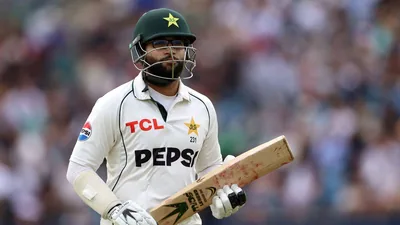
Imam-ul-Haq injury controversy has become one of the most closely watched developments in Pakistan Cricket after the Pakistan Cricket Board indicated that it will investigate the circumstances surrounding the opener’s calf problem during the England Test series.
Imam was ruled out of the remainder of the tour after suffering what the team management initially described as a calf muscle injury while fielding on the opening day of the second Test. Subsequent scans reportedly showed a tear, preventing him from taking part in the rest of the match.
The controversy intensified because Imam did not bat in either innings. Pakistan selection committee member Aaqib Javed publicly questioned how a player who had pulled up with a muscle problem could be unable to bat throughout the Test, while stressing that the matter would be investigated.
The issue comes at an especially difficult moment for Pakistan. The team had already suffered heavy defeats in the opening two Tests in England, prompting a dramatic mid-tour overhaul involving seven players and changes to the coaching staff.
That means the Imam investigation is not happening in isolation. It is part of a much wider crisis surrounding selection, player trust, medical assessments and team management.
What happened to Imam-ul-Haq?
The immediate controversy centres on the timeline of Imam’s injury.
The Pakistan team management announced during the second day of the second Test that Imam had suffered a calf injury while fielding on the first day. Further medical scans reportedly identified a tear, which ruled him out for the remainder of the England tour.
The complication was that Imam did not take his place in Pakistan’s batting order in either innings.
That absence attracted attention because Test cricket places enormous physical demands on players, but batting and fielding can involve different movements and workloads. A muscle injury can affect a player’s ability to perform specific actions differently, meaning the medical details will ultimately be important in determining what happened.
However, the public questioning from Aaqib Javed has shifted the story from a routine injury update into an administrative and disciplinary matter.
Why is the PCB investigating Imam’s injury?
The PCB’s stated concern is not simply that Imam was injured. Injuries are a normal part of professional sport, particularly in Test cricket.
The issue is the circumstances surrounding the injury and Imam’s inability to bat in both innings.
Aaqib Javed described the situation as a matter of serious concern and confirmed that an inquiry would be conducted. His comments indicate that the board wants to establish whether the injury assessment and subsequent decisions were handled appropriately.
This distinction is important. An inquiry does not itself establish that a player deliberately misrepresented an injury. Until the investigation is completed, questions about what actually happened remain unresolved.
The PCB therefore has to balance two competing responsibilities: protecting the integrity of the national team while also ensuring that an injured player is treated fairly.
The key questions the inquiry will need to answer
The investigation could examine several parts of the incident rather than focusing only on whether Imam had a physical problem.
- When did the injury occur? The board will need to establish the precise sequence of events during the first day of the Test.
- What did the initial medical assessment show? Medical records and examination results could help establish the severity of the problem.
- Why was Imam unable to bat in either innings? The medical evidence will be central to answering this question.
- Was the injury communicated consistently? The inquiry may examine what was communicated between the player, medical staff, team management and selectors.
- Were established medical procedures followed? This could determine whether the controversy resulted from a genuine injury-management issue or a breakdown in communication.
These questions are more significant than simply determining whether Imam had a calf tear. The PCB will also need to understand how the injury was diagnosed, communicated and managed.
Why Aaqib Javed’s comments have increased the pressure
Aaqib Javed’s public comments have given the controversy additional weight because he is part of Pakistan’s national selection setup.
Rather than treating the matter as a private medical issue, Javed openly stated that an inquiry would follow. He also questioned how Imam could fail to bat in both innings after sustaining a muscle injury.
That public stance suggests the PCB wants answers.
At the same time, public comments from officials before an investigation has reached its conclusion can create additional pressure. The board must eventually distinguish between questions that need investigation and conclusions that can only be reached after reviewing evidence.
For Imam, that distinction could be crucial.
Imam’s previous injury questions add another layer
The current controversy has also revived earlier concerns about Imam’s injury history.
The source material surrounding the PCB inquiry refers to former Pakistan team physio Cliffe Deacon having raised concerns with chief selector Muhammad Wasim about injury patterns involving Imam during Pakistan’s Test series against England in 2022.
That historical context makes the latest incident more sensitive for the board. A single unexplained injury might ordinarily be handled through routine medical procedures, but previous concerns can lead administrators to look more closely at a new situation.
However, previous concerns should not automatically be treated as proof of wrongdoing in the latest incident.
That is precisely why an evidence-based inquiry matters.
Pakistan’s wider England tour crisis
The Imam-ul-Haq controversy has emerged during one of the most turbulent periods of Pakistan’s England tour.
Pakistan had suffered heavy defeats in the first two Tests, creating enormous pressure on the team management and selection committee. The PCB responded with a major mid-tour overhaul involving seven squad changes.
The coaching staff was also reshaped, with the head coach and bowling coach of the touring side replaced.
Such major changes during a Test series are unusual because Test cricket requires continuity in preparation, tactics and player roles. Making several changes while a tour is still underway can therefore indicate that administrators believe the existing setup is no longer functioning effectively.
Against that backdrop, the Imam issue has become part of a much larger debate about accountability within Pakistan cricket.
How the seven-player overhaul changes the context
The timing of the changes is particularly important.
Pakistan did not wait until the conclusion of the third and final Test before making major adjustments. Senior players were sent home while replacements were brought into the squad.
That decision suggests the PCB believed immediate intervention was necessary.
For the players who remained, the message was equally clear: performances and conduct were being examined closely.
For Imam, this environment makes the injury inquiry especially significant. The board is already operating under intense scrutiny, and every decision surrounding the team is likely to receive greater attention than it would during a stable tour.
Could Imam-ul-Haq seek legal counsel?
Reports have suggested that Imam could seek legal counsel before appearing before the PCB inquiry committee.
Seeking legal advice would not by itself establish guilt or wrongdoing. When a player is required to respond to an official investigation that could potentially affect his professional career, obtaining advice about the process can be a precautionary step.
The important point is that any eventual decision should be based on the evidence presented to the inquiry.
The board will need to establish a clear process that allows Imam to respond to the allegations or concerns raised about his injury while also allowing medical and team officials to present their evidence.
Why the medical evidence could be decisive
Injury controversies are often difficult to judge from television footage or public statements alone.
A calf injury can vary significantly in severity, and the ability to walk, field, run or bat may not necessarily be identical for every player. Medical imaging, physical examinations and rehabilitation records can provide a much clearer picture than speculation based on what viewers saw during a match.
That makes the medical documentation particularly important in this case.
If the records support the team’s explanation, the controversy could eventually be resolved as a communication or perception issue. If significant inconsistencies emerge, the PCB could then have grounds for further action.
Until that evidence is reviewed, certainty would be premature.
What this means for Pakistan’s opening options
Imam’s absence also creates a cricketing problem for Pakistan.
The opening position requires specialist preparation in Test cricket because facing the new ball in England can be particularly demanding. A replacement opener needs not only technical ability but also enough confidence to deal with movement, seam and sustained pressure from the opposition attack.
Pakistan’s mid-tour squad changes therefore create another selection challenge.
The team now has to balance immediate results with the development of a stable batting combination. Frequent changes can make it difficult for players to establish partnerships and understand their roles.
Imam-ul-Haq’s career now faces an important moment
For Imam personally, the inquiry could become one of the most consequential moments of his international career.
The 30-year-old opener has already played under significant expectations because of his family connection to former Pakistan captain Inzamam-ul-Haq. Over time, he has had to establish his own identity as an international batter.
A formal inquiry into an injury therefore adds a different kind of pressure. It is no longer only about runs, technique or selection. Questions surrounding trust can affect a player’s relationship with selectors and team management.
The best outcome for Imam would be a process in which the medical evidence and his explanation are assessed fairly and transparently.
What the PCB needs to get right
The PCB’s handling of the inquiry could be nearly as important as its final conclusion.
A transparent process would help protect both the board and the player. If the evidence supports Imam’s account, the PCB should be able to explain why the investigation reached that conclusion. If evidence establishes that procedures were breached, the board will need to explain the basis for any disciplinary action.
The larger objective should be restoring confidence in Pakistan cricket’s internal systems.
That means clear medical protocols, consistent communication and a selection process that players understand.
Without those elements, controversies can quickly become bigger than the original incident.
What could happen next?
The next major development will be the PCB inquiry itself.
Imam could be asked to explain the circumstances of his injury and why he was unable to bat in either innings. Medical personnel and team officials could also be required to provide information about the diagnosis and treatment process.
The outcome could range from the matter being closed after the evidence is reviewed to further disciplinary action if the inquiry identifies serious procedural or conduct issues.
It is also possible that the investigation exposes shortcomings in the team’s injury-management process rather than wrongdoing by the player.
That possibility is worth keeping in mind because the central issue is ultimately bigger than Imam.
The bigger lesson for Pakistan cricket
The Imam-ul-Haq injury controversy highlights a recurring challenge in elite sport: trust between players, medical teams, selectors and administrators is essential.
When that trust weakens, even a genuine injury can become the subject of suspicion.
Pakistan’s current tour environment makes the problem more serious because the team is already dealing with poor results, major squad changes and coaching instability.
The PCB therefore has an opportunity to use the inquiry not simply as a disciplinary exercise but as a way to improve its internal systems.
If the investigation is handled carefully, it could clarify what happened and establish better procedures for future injury situations. If it becomes dominated by public accusations and speculation, it could deepen the instability surrounding the team.
Conclusion: The inquiry matters beyond Imam-ul-Haq
The Imam-ul-Haq injury controversy has quickly developed into a major issue for Pakistan cricket because it combines a disputed injury timeline with a team already facing serious problems on the England tour.
The PCB has confirmed that an inquiry will investigate why Imam could not bat in either innings of the second Test after suffering a reported calf injury. Aaqib Javed’s public comments have increased attention, while earlier concerns about Imam’s injury patterns have added historical context.
But the most important point remains that the inquiry has not yet established wrongdoing.
The medical evidence, team records and Imam’s own explanation will be critical. Only after those elements are assessed can the PCB determine whether disciplinary action is justified.
For Pakistan cricket, the bigger test is how the board handles the process. A fair and evidence-based investigation could restore confidence. A rushed or poorly communicated decision could create another controversy during an already turbulent tour.
For Imam, meanwhile, the next stage of his career may depend not only on what happened on the field but also on how convincingly the circumstances surrounding his injury are established.
For breaking news and live news updates, like us on Facebook or follow us on Twitter and Instagram. Read more on Latest Cricket on thefoxdaily.com.






COMMENTS 0