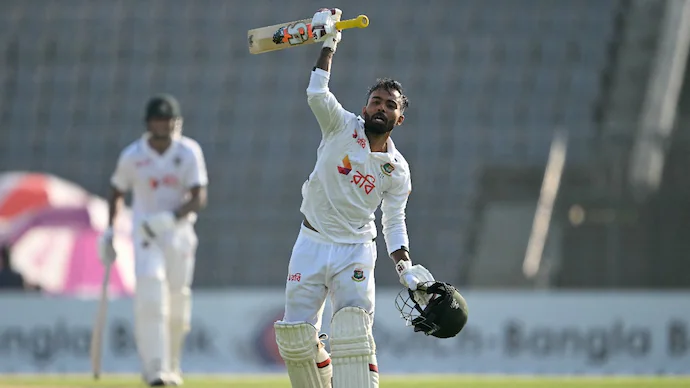
Towhid Hridoy’s extraordinary unbeaten 242 against West Indies has marked a historic moment for Bangladesh Cricket, transforming a struggling innings into a record-breaking performance. His remarkable achievement in the second Test at Sylhet not only established a new national batting record but also highlighted Bangladesh’s growing ability to produce match-defining performances in the longest format. Coming at a critical stage of the match, Hridoy’s double century has raised fresh expectations about his future as a Test batter and given Bangladesh a valuable advantage in the contest.
Towhid Hridoy’s 242 Not Out: A Historic Moment for Bangladesh Test Cricket
Records in Test Cricket are rarely created without patience, discipline and the ability to survive difficult periods. Hridoy demonstrated all three qualities during his extraordinary innings against West Indies on November 7, 2026. Facing an experienced bowling attack in challenging circumstances, the 25-year-old right-hander delivered an innings that will remain an important part of Bangladesh’s cricket history.
Hridoy finished unbeaten on 242 from 359 deliveries, striking 22 fours and 11 sixes. His innings helped Bangladesh reach 386 for nine in their first innings, securing a 30-run advantage over West Indies, who had previously scored 356.
The most significant achievement was his move past Mushfiqur Rahim’s previous Bangladesh record of 219 not out against Zimbabwe in 2018. That innings had established a benchmark for Bangladesh’s individual Test performances, but Hridoy’s remarkable effort finally moved the national record to a new level.
His achievement was particularly impressive because it came during only his third Test appearance. Even more remarkably, he became the first Bangladesh batter to convert his maiden Test century into a double century.
Hridoy also joined an exclusive group of Bangladeshi batters to score a double century in Test cricket, alongside Mushfiqur Rahim, Tamim Iqbal and Shakib Al Hasan. The milestone represents more than an individual achievement because it demonstrates the potential of Bangladesh’s next generation of international batters.
How Hridoy Rescued Bangladesh From a Difficult Position
West Indies Initially Had the Advantage
The second Test appeared to be moving in West Indies’ favour after the visitors posted 356 in their first innings. Bangladesh needed a substantial batting response to avoid allowing the opposition to establish control of the match.
However, the hosts struggled to build the partnerships required to challenge that total. When the third day’s play began, Bangladesh resumed at 88 for three, leaving considerable work for their middle order.
The situation became increasingly difficult as West Indies’ bowlers continued to take wickets. Mushfiqur Rahim, Litton Das, Mehidy Hasan Miraz and Hasan Mahmud were among the batters dismissed during the morning session.
Jomel Warrican proved particularly effective, using his spin and variations to trouble the Bangladesh batting order. Roston Chase also contributed with an important wicket, preventing the hosts from building momentum.
Bangladesh eventually slipped to 184 for seven, a position that threatened to give West Indies a substantial first-innings advantage.
At that stage, the responsibility fell heavily on Hridoy. With the recognised batting resources running out, he needed to manage the situation carefully while finding opportunities to score against a bowling attack that had already established control.
The Century That Changed the Direction of the Innings
Rather than responding to the pressure with unnecessary attacking shots, Hridoy initially focused on protecting his wicket and building his innings. His approach reflected an understanding of what the situation demanded from a batter playing in difficult circumstances.
He completed his maiden Test century from 171 deliveries, reaching the milestone through a combination of controlled strokeplay and disciplined batting.
The importance of that century extended beyond the personal milestone. Bangladesh needed someone capable of remaining at the crease long enough to prevent the innings from collapsing completely. Hridoy provided that stability while gradually changing the momentum of the match.
After reaching three figures, however, he began to increase his scoring rate. His attacking shots became more frequent, and the West Indies bowlers found it increasingly difficult to contain him.
The transition from survival to controlled aggression became one of the defining features of his innings. Instead of treating the double century as an immediate target, Hridoy continued to focus on scoring opportunities and maintaining his presence at the crease.
Taijul Islam and Taskin Ahmed Provide Crucial Support
Although Hridoy was the central figure in Bangladesh’s recovery, his lower-order partnerships played an equally important role in making the record possible.
117-Run Partnership With Taijul Islam
Taijul Islam joined Hridoy when Bangladesh were in a vulnerable position. As a specialist bowler rather than a frontline batter, Taijul was not expected to produce a major contribution with the bat. Nevertheless, he showed valuable patience and concentration.
The pair added 117 runs for the eighth wicket, giving Bangladesh an unexpected opportunity to move closer to the West Indies total.
Taijul contributed 22 runs from 56 deliveries. His innings was not particularly explosive, but its value came from the time he spent at the crease and his ability to support Hridoy.
In Test cricket, lower-order partnerships can change the direction of an entire match. A batter who has already scored a century may need someone at the other end who can defend difficult deliveries, rotate the strike and prevent the bowling team from taking another quick wicket.
Taijul fulfilled that responsibility before eventually falling to Jomel Warrican.
Taskin Ahmed Adds Another Important Partnership
Following Taijul’s dismissal, Taskin Ahmed became Hridoy’s next partner. The Bangladesh fast bowler contributed 12 runs, while the pair added another 85 runs for the ninth wicket.
This partnership further strengthened Bangladesh’s position and ensured that Hridoy had enough support to continue building his historic innings.
Taskin eventually lost his wicket to Jayden Seales, but by then Bangladesh had moved beyond West Indies’ first-innings total.
Hridoy remained unbeaten as Bangladesh finished at 386 for nine, taking a crucial 30-run lead. The contribution from the lower order demonstrated why partnerships involving tailenders remain an important part of successful Test batting.
From a Historic 350 to a Record-Breaking Test Double Century
Hridoy’s performance against West Indies did not emerge without warning. Just a few months earlier, he had produced another extraordinary batting display for Bangladesh A against South Africa A in a four-day match at Potchefstroom.
In September 2026, the right-hander scored an unbeaten 350, becoming the first Bangladeshi batter to reach that milestone in first-class cricket.
He achieved the remarkable score from 481 deliveries, hitting 27 fours and 10 sixes. His innings surpassed Tamim Iqbal’s previous national first-class record of 334 not out.
The performance demonstrated his ability to remain focused over extended periods and convert a strong start into an exceptionally large individual score.
However, the difference between his first-class triple century and Test double century is important. First-class cricket provides valuable preparation for the demands of international red-ball cricket, but Test matches introduce additional pressure, stronger opposition and greater consequences for individual mistakes.
Against West Indies, Hridoy faced an international bowling attack while his team was under considerable pressure. His ability to reproduce the patience and concentration displayed during his 350-run innings suggests that his first-class achievement was not an isolated performance.
What Makes Hridoy’s 242 So Special?
Scoring 242 runs in a Test innings requires much more than hitting boundaries. A batter must manage physical fatigue, maintain concentration, understand changing bowling plans and adjust his approach according to the match situation.
Hridoy’s innings included several important characteristics that explain its significance.
1. Exceptional Concentration
Facing 359 deliveries means remaining mentally engaged across a long period. Every delivery requires a decision about whether to defend, leave or attack. Losing concentration even briefly can end an innings that has taken hours to build.
Hridoy maintained his focus despite losing partners at regular intervals. His ability to continue scoring while managing the pressure of a collapsing batting order was central to Bangladesh’s recovery.
2. The Balance Between Defence and Attack
One of the most interesting aspects of his innings was the change in scoring approach after reaching his century.
His 22 boundaries and 11 sixes demonstrate the attacking potential of his batting. However, the number of deliveries he faced also highlights the patience behind the performance.
He did not rely exclusively on defensive batting or aggressive strokeplay. Instead, he combined both approaches according to the circumstances.
This balance is particularly important in modern Test cricket, where teams increasingly look for batters who can score quickly without sacrificing the ability to occupy the crease.
3. The Ability to Perform Under Pressure
Hridoy’s biggest contribution was not simply reaching 242. It was producing that score when Bangladesh desperately needed someone to prevent a significant first-innings deficit.
At 184 for seven, the hosts were facing the possibility of losing control of the match. His partnerships with Taijul and Taskin changed the situation completely.
That ability to respond when the team is struggling is one of the qualities that separates important innings from genuinely memorable performances.
Records Broken by Towhid Hridoy Against West Indies
Hridoy’s unbeaten double century created several important milestones in Bangladesh cricket. His achievement can be understood through the following records and statistics.
| Record or Achievement | Details |
|---|---|
| Highest individual Test score for Bangladesh | 242 not out |
| Previous national record | Mushfiqur Rahim’s 219 not out |
| Deliveries faced | 359 |
| Fours scored | 22 |
| Sixes scored | 11 |
| Test double centuries | Fourth Bangladeshi batter to achieve the milestone |
| Test appearances | Third Test appearance |
| First-class milestone | Unbeaten 350 against South Africa A |
| Bangladesh first-innings total | 386 for nine |
| First-innings lead | 30 runs |
Another remarkable achievement was his contribution of 213 runs on the third day alone. This surpassed Shakib Al Hasan’s previous Bangladesh record of 212 runs in a single day of Test cricket, scored against New Zealand in 2017.
His 11 sixes also established a new Bangladesh record for the most sixes by a batter in a single Test innings. These numbers demonstrate that his performance combined traditional Test match endurance with an aggressive scoring approach.
How Hridoy’s Performance Could Change Bangladesh’s Test Batting Future
Bangladesh have produced several outstanding batters since becoming a Test-playing nation. Mushfiqur Rahim, Tamim Iqbal and Shakib Al Hasan have all played important roles in establishing the country’s reputation in international cricket.
However, developing consistent middle-order batters remains an important challenge for any national team. Test cricket demands players who can perform in different conditions, handle quality bowling attacks and maintain concentration across multiple sessions.
Hridoy’s performance offers encouraging signs in this regard.
A Potential Long-Term Middle-Order Leader
At 25, Hridoy has considerable time to develop his red-ball game. His ability to score a triple century in first-class cricket and follow it with a record-breaking Test double century suggests that he possesses the temperament required for longer innings.
Nevertheless, one extraordinary performance should not automatically create unrealistic expectations. The real challenge will be maintaining consistency against different international opponents and adapting to unfamiliar playing conditions.
Bangladesh will want him to build on this achievement rather than judge his future entirely through the number of runs scored in one match.
The Importance of Developing More Test Specialists
Modern international cricket places considerable attention on T20 and one-day performances. These formats reward different skills, including rapid scoring, innovative shots and the ability to make an immediate impact.
Test cricket requires an additional set of qualities. Players must understand how to defend for extended periods, manage difficult spells and recognise when attacking cricket can create an advantage.
Hridoy’s innings offers an example of how an aggressive batter can also succeed through patience and tactical awareness.
For Bangladesh, developing more players with this combination could strengthen the batting order and reduce the pressure on established senior players.
West Indies Face a Challenging Situation After Bangladesh’s Fightback
While Hridoy’s individual achievement attracted most of the attention, the wider match situation also changed significantly because of his innings.
West Indies had entered the third day with the advantage of a first-innings total of 356. Bangladesh’s batting difficulties initially suggested that the visitors could secure a substantial lead and put the hosts under pressure.
Instead, Hridoy’s 242 helped Bangladesh reach 386 for nine and establish a 30-run advantage.
West Indies then began their second innings cautiously. Openers Brandon King and Joshua da Silva negotiated four overs without losing a wicket, taking the score to seven without loss.
Bad light subsequently forced an early end to the day’s proceedings. West Indies remained 23 runs behind Bangladesh at stumps, with all 10 second-innings wickets intact.
Why the Fourth Day Will Be Important
Despite Bangladesh’s first-innings advantage, the match remained open at the end of the third day. A 30-run lead is useful, but it does not guarantee victory in Test cricket.
Bangladesh’s immediate priority will be to take early wickets and prevent West Indies from building a substantial second-innings lead.
The visitors, meanwhile, will look to establish a stable opening partnership before allowing their middle order to build a competitive total.
The condition of the pitch, the effectiveness of the spinners and the ability of both teams to manage pressure will become increasingly important as the match progresses.
For Bangladesh, Hridoy has already provided the batting foundation. The responsibility now shifts towards the bowlers, who must turn that advantage into a position from which the hosts can challenge for victory.
The Bigger Picture: Why This Innings Matters Beyond One Test Match
Hridoy’s achievement deserves attention because it represents an important moment in the development of Bangladesh’s Test cricket identity.
For years, the country’s batting achievements have often been associated with a relatively small group of experienced players. Mushfiqur, Tamim and Shakib established major individual records and provided stability during important periods.
A younger batter now surpassing the national Test scoring benchmark creates a new reference point for the next generation.
There is also an important lesson in the way the innings developed. Bangladesh did not recover because every batter suddenly started scoring aggressively. The turnaround came through one player taking responsibility and lower-order partners providing enough support to make his effort count.
This is a valuable reminder that successful Test teams need contributions throughout the batting order. A strong top order is important, but the ability to recover from difficult positions can be equally decisive.
Hridoy’s performance also provides a practical example of how first-class cricket can prepare players for international challenges. His earlier 350-run innings demonstrated his capacity for long periods of concentration, and the 242 against West Indies showed that he could reproduce those qualities at Test level.
The next step will be turning these achievements into sustained international success.
Conclusion: Towhid Hridoy Announces Himself as a Major Test Cricket Talent
Towhid Hridoy’s unbeaten 242 against West Indies will be remembered as one of the defining individual performances in Bangladesh Test cricket. By surpassing Mushfiqur Rahim’s previous national record of 219, he established a new benchmark and became the fourth Bangladeshi batter to score a Test double century.
More importantly, his innings came when Bangladesh were struggling at 184 for seven. His partnerships with Taijul Islam and Taskin Ahmed helped the hosts recover to 386 for nine and secure a valuable 30-run first-innings lead.
His earlier unbeaten 350 against South Africa A had already demonstrated his ability to produce exceptionally long innings. The performance in Sylhet has now provided evidence that those qualities can translate into success at the highest level.
However, the real measure of Hridoy’s achievement will be determined by what follows. Consistency, adaptability and performances against different bowling attacks will shape his long-term place in Bangladesh’s Test team.
For now, Bangladesh have a new individual Test scoring record-holder, and Hridoy has delivered an innings that will inspire considerable confidence in the country’s future batting prospects. His 242 is not just a number in the record books; it is a statement about what determination, patience and controlled aggression can achieve in the longest format of cricket.
For breaking news and live news updates, like us on Facebook or follow us on Twitter and Instagram. Read more on Latest Cricket on thefoxdaily.com.






COMMENTS 0