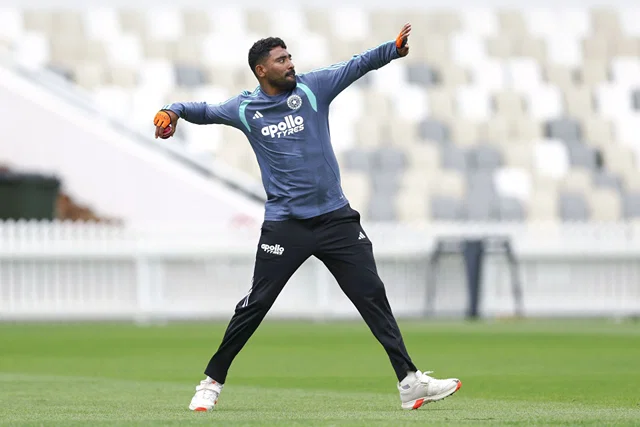
Former India spinner Murali Kartik questioned the team management’s decision to leave Mohammed Siraj out of the playing XI for the second Test against New Zealand in Christchurch. Watching the live pictures before the start of play, Kartik noticed the experienced fast bowler wearing sunglasses and wondered whether he was crying. His comments reflected concern over the emotional impact of Siraj’s continued exclusion from India’s Test side.
India once again opted to play without one of its leading Test fast bowlers, leaving Siraj out for the second consecutive match on the New Zealand tour. Kartik expressed sympathy for the pacer and questioned why he had been selected for the tour if the management did not consider him suitable for the playing XI.
Murali Kartik questions India’s decision to leave Mohammed Siraj out
Speaking on the Sony Sports Network, Kartik highlighted Siraj’s emotional approach to the game and his determination to represent India. The former India and Royal Challengers Bengaluru spinner suggested that being dropped repeatedly could be particularly difficult for a player who is eager to contribute, regardless of physical discomfort.
“Is he crying? Because he is an emotional person. Some people are fine even when they are dropped, but some really want to play. They don’t care if they have pain in their feet or a headache; they will give it everything. Siraj is like that. Sometimes you hide the hurt you are feeling because he was dropped even in the ODIs. Even against the West Indies, he played only as an afterthought. This hurts a player. Why even pick him in the squad and take him to New Zealand if you feel his form isn’t good or if he isn’t bowling well in the nets?”
Kartik’s remarks focused on the uncertainty surrounding Siraj’s role in the team. The pacer had already been left out of the Wellington Test, and his omission in Christchurch meant he had missed both matches of the series so far. Kartik questioned the purpose of including an experienced player in the touring squad if the team management did not intend to use him.
The comments also drew attention to Siraj’s recent involvement in India’s international cricket setup. Kartik referred to his absence from the ODI side and his limited opportunity against the West Indies, suggesting that repeated exclusions could affect a player’s confidence and morale.
Siraj’s record makes his continued exclusion notable
Siraj’s omission has attracted attention because of his contribution to India’s World Test Championship campaign. According to the supplied figures, he is India’s leading wicket-taker in the current WTC cycle, with 43 wickets from 11 matches. That record underlines the role he has played in the team’s recent Test performances.
One of his significant contributions came during the Oval Test last year, when he claimed nine wickets in a match India won by six runs. His performance was an important part of the team’s victory and demonstrated his ability to deliver in challenging overseas conditions.
Siraj had also maintained a consistent presence in India’s overseas Test campaigns. He had not missed an entire away series since making his Test debut at the Melbourne Cricket Ground in 2020, until the ongoing tour of New Zealand. Being left out of consecutive matches therefore represents a notable change in his involvement with the national side.
However, selection decisions depend on several factors, including pitch conditions, team balance and the management’s assessment of individual players. India chose a pace-heavy combination for the Christchurch Test, but the decision to leave Siraj out has raised questions because of his recent record and experience.
India leave Siraj out for the second consecutive Test
India made several changes to their bowling combination for the second Test at Hagley Oval. The visitors selected four specialist seamers: Jasprit Bumrah, Akash Deep, Anshul Kamboj and debutant Gurnoor Brar. Washington Sundar was the only specialist spinner in the playing XI.
Brar replaced Prasidh Krishna, earning his Test debut, while Siraj remained outside the team. The selection meant India entered another overseas Test without one of their most experienced fast bowlers. The management’s decision was particularly noticeable given Siraj’s contribution to the team’s recent World Test Championship campaign.
India had also left Siraj out of the opening Test at Wellington, which was played on a green surface at the Basin Reserve. Despite the conditions appearing suitable for seam bowling, India struggled to secure a decisive result. New Zealand scored 368 in their first innings, while India responded with a declaration at 720 for nine. The hosts then reached 239 for five in their second innings to force a draw.
India managed to take 15 wickets across New Zealand’s two innings in that match. The result did not settle the debate around the bowling combination, and Siraj’s absence became a point of discussion again when the teams announced their line-ups for Christchurch.
Indian seamers create chances but fail to make early breakthroughs
India captain Shubman Gill won the toss at Hagley Oval and elected to bowl first. The decision came at a venue where the team bowling first had won nine of the previous 15 Test matches. With a green pitch and clear skies, conditions appeared favourable for India’s pace attack.
Jasprit Bumrah led the bowling effort during the opening hour. The experienced fast bowler delivered six overs inside the first hour and repeatedly beat the outside edge of the New Zealand batters. He found movement off the surface and created opportunities, but the early pressure did not translate into wickets during his opening spell.
Tom Latham survived an early scare in the first over when India reviewed an LBW decision against him. Ball-tracking technology showed that Bumrah’s delivery had pitched outside leg stump, allowing the New Zealand captain to continue his innings.
Latham received another opportunity when KL Rahul dropped him at second slip off Akash Deep. Rahul got both hands to a thick edge but could not hold on to the ball. The missed chance allowed New Zealand’s opening partnership to continue and added to India’s frustration during the first session.
New Zealand’s openers, Latham and Devon Conway, put together 77 runs before the first wicket fell. Conway scored 31 before debutant Gurnoor Brar dismissed him on the final ball before lunch, giving India their first breakthrough of the match.
New Zealand reached the lunch interval at 77 for one. Although India’s seamers found movement and created opportunities, the visitors had only one wicket to show for their efforts. Brar’s maiden Test wicket provided a positive moment for the debutant, but the missed chance against Latham meant the hosts had made a steady start.
Questions remain over India’s bowling combination
India’s decision to field four specialist seamers showed the importance the management placed on pace bowling at Hagley Oval. Bumrah, Akash Deep, Kamboj and Brar were entrusted with the responsibility of making the most of the conditions, while Sundar provided the spin option.
However, Siraj’s continued absence remained a major talking point. His record in the World Test Championship cycle, experience in overseas conditions and previous match-winning performances have made his exclusion difficult to ignore. Kartik’s comments brought attention to the personal side of selection, particularly the disappointment a committed player might experience after being left out repeatedly.
At the same time, the first session demonstrated that India’s selected seamers were capable of finding movement on the Christchurch surface. Bumrah troubled the batters, Akash Deep created an opportunity against Latham, and Brar claimed his first Test wicket. The challenge for India was to turn those promising moments into sustained pressure and regular breakthroughs.
For Siraj, the immediate question is when he will receive another opportunity in the playing XI. For the team management, the debate concerns how to balance current conditions, bowling combinations and the contributions of experienced players. Kartik’s remarks have added another dimension to that discussion, highlighting the emotional consequences that can accompany repeated selection setbacks.
For breaking news and live news updates, like us on Facebook or follow us on Twitter and Instagram. Read more on Latest Cricket on thefoxdaily.com.






COMMENTS 0