
Mohammad Rizwan and Imam-ul-Haq have been questioned by Pakistan’s National Cyber Crimes Investigation Agency (NCCIA) in Lahore, adding another layer to the growing controversy surrounding the national team’s disastrous Test tour of England.
The two Pakistan batters were among seven players removed from the Test squad and sent home following the heavy defeat at Lord’s. They were subsequently summoned by the NCCIA and appeared before investigators on Thursday.
The precise reason for the questioning has not yet been established publicly. At least one of the two players is understood to have spent several hours with investigators, while at least one has reportedly been given a questionnaire that must be completed and returned to the agency next week.
The development comes at a particularly sensitive time for Pakistan cricket. The Pakistan Cricket Board (PCB) has also launched its own internal disciplinary inquiry after media reports concerning discipline and conduct, although the board has not publicly linked that investigation to either Rizwan or Imam.
Rizwan and Imam appear before NCCIA investigators
Rizwan and Imam appeared before the NCCIA in Lahore after receiving summons from the agency. While the appearance has been confirmed, there is currently no clear public explanation of what investigators questioned them about.
That distinction is important. Being summoned or questioned by an investigative agency does not by itself establish wrongdoing, and there has been no confirmed finding against either cricketer in the information available.
The uncertainty surrounding the matter has nevertheless attracted significant attention because it comes immediately after a major shake-up in Pakistan’s Test squad.
The NCCIA process and the PCB inquiry may or may not be connected. The PCB has separately stated that it is examining reports concerning discipline and conduct under its own regulations.
Why the England tour has triggered such a major review
Pakistan’s Test campaign in England deteriorated rapidly. They lost the opening Test by an innings and 103 runs before suffering another heavy defeat at Lord’s, where England won by 194 runs.
The second loss prompted an extraordinary response from the PCB. Seven players were removed from the squad, while head coach Sarfaraz Ahmed and bowling coach Umar Gul were also removed.
Seven replacements subsequently travelled to England, with five of them uncapped at international level.
The scale of the changes demonstrated that the PCB viewed the problems as extending beyond individual performances. Chairman Mohsin Naqvi indicated that the board was examining factors beyond results and wanted to determine the reasons behind the situation.
PCB had already started its own disciplinary inquiry
Before the latest NCCIA development became the focus of attention, the PCB had announced an internal disciplinary inquiry.
The board said it had initiated the investigation following media reports concerning discipline and conduct. It did not identify the players involved and said the process was being conducted according to PCB regulations.
That means it would be premature to assume that the NCCIA questioning is directly connected to the PCB investigation.
For now, the two processes should be treated separately unless the authorities provide further information establishing a connection.
At least one player has been asked to complete a questionnaire
The investigation has already moved beyond a simple appearance for at least one of the players. According to the supplied report, one of the cricketers has been given a questionnaire and is expected to respond to the NCCIA next week.
The details of the questionnaire have not been publicly disclosed.
Without knowing what questions were asked, it would be inappropriate to speculate about the nature of the investigation or suggest conclusions that have not been established.
The next response from the player, or any official statement from the NCCIA or PCB, could provide more clarity about why the two cricketers were summoned.
Rizwan’s England tour had already attracted criticism
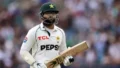
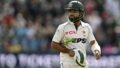
Rizwan entered the England series as an experienced member of Pakistan’s Test setup, but his batting returns during the tour were disappointing.
His scores across the England Tests were 12, 41, 7 and 1. Those figures followed relatively low returns during Pakistan’s two-Test series in the Caribbean.
His wicketkeeping, however, remained highly regarded. The report notes that Rizwan’s work behind the stumps was exemplary across the tours.
The biggest criticism of his batting came after his dismissal for one in the second innings at Lord’s. His attempted attacking stroke resulted in his dismissal and became a talking point during Pakistan’s difficult chase.
That moment should be viewed as a performance issue rather than evidence of any disciplinary wrongdoing. The two matters are separate unless officials establish otherwise.
Imam’s injury became another point of controversy
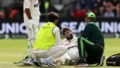
Imam-ul-Haq’s situation was different. After the opening day of the Lord’s Test, he was diagnosed with a grade-one tear in his left calf and did not take the field during either of Pakistan’s innings.
However, his fitness became a subject of public debate after he attempted some gentle knockdowns during warm-ups on the final morning and appeared to struggle physically.
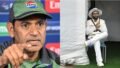
Aaqib Javed, Pakistan’s chief selector and director of high performance, publicly questioned the circumstances surrounding Imam’s injury and indicated that the matter could be investigated.
That earlier scrutiny now forms part of the wider context surrounding Imam’s appearance before the NCCIA, although the available information does not establish that the two matters are connected.
Seven players were removed after the Lord’s defeat
The changes made following the Lord’s Test were among the most dramatic Pakistan have seen during a Test series.
| Development | What happened |
|---|---|
| Lord’s Test | Pakistan lost by 194 runs |
| Squad changes | Seven players were removed |
| Coaching changes | Sarfaraz Ahmed and Umar Gul were removed |
| Replacement players | Seven players travelled to England |
| Newcomers | Five replacements were uncapped internationally |
| PCB investigation | Internal disciplinary inquiry announced |
The rapid restructuring highlighted the seriousness of the situation inside Pakistan cricket.
It also created questions about how selections had originally been made and whether the team management had properly assessed the squad before the England series.
Rizwan and Imam’s selections were also questioned
The controversy did not stop with the players. The PCB also issued a notice to selectors regarding the selection of Rizwan and Imam for the West Indies and England tours.
The selectors were reportedly asked to provide a written explanation detailing why the two players had been selected and explaining the process through which those decisions were reached.
The request added another dimension to the situation because it suggested that the board was examining decision-making at multiple levels rather than focusing exclusively on player performances.
Misbah-ul-Haq, one of the selectors, subsequently resigned from his position following the squad changes.
Pakistan’s problems go beyond two players
It would be difficult to attribute Pakistan’s England struggles to Rizwan and Imam alone. The team’s defeats were comprehensive and involved problems across several areas.
Pakistan’s batting struggled to produce the sustained partnerships required in English conditions, while their bowling attack was unable to consistently prevent England from building commanding totals.
The decision to replace a large portion of the squad indicates that the PCB believes broader structural or disciplinary questions need examination.
That is why the latest developments should be viewed as part of a much larger review rather than as an isolated issue involving two experienced batters.
Mohsin Naqvi hinted at factors beyond performance
PCB chairman Mohsin Naqvi previously indicated that the board’s discussions had identified issues that went beyond performance on the field.
He said the board wanted to determine the reasons behind the situation and indicated that those factors would be investigated.
That statement increased speculation around the changes, but it did not publicly identify any specific player or establish any particular allegation.
The responsible approach is therefore to distinguish between what the PCB has confirmed, what investigators are examining and what has merely been reported or speculated.
What happens next for Rizwan and Imam?
The immediate next step is likely to be further clarification from the NCCIA or the players involved.
At least one player is expected to submit a completed questionnaire next week, which could provide additional information about the investigation.
The PCB’s internal inquiry is also expected to continue independently. Depending on its findings, the board could decide whether further disciplinary action is warranted under its regulations.
For both players, the uncertainty comes at a difficult moment in their international careers. Their immediate cricketing futures will depend on a combination of selection decisions, performance and whatever conclusions the relevant authorities eventually reach.
Why the distinction between investigation and guilt matters
The latest development has generated considerable interest because it involves prominent international cricketers and a government investigative agency. However, it is important not to turn an investigation into an accusation.
Rizwan and Imam have been questioned, but the supplied information does not establish that either player committed an offence.
Similarly, the existence of a PCB disciplinary inquiry does not automatically mean that disciplinary wrongdoing has been proven.
Until official findings are released, the facts are limited to the summons, the players’ appearance before the NCCIA and the reported questionnaire given to at least one of them.
Pakistan cricket faces a wider credibility challenge
The timing of the investigation adds to a difficult period for Pakistan cricket. Heavy Test defeats, major squad changes, coaching departures and questions over selection have all combined to create an atmosphere of uncertainty.
The team now needs clarity at several levels. Players need to understand expectations, selectors need to justify selection decisions and the PCB needs to establish whether its internal processes are functioning effectively.
The outcome of the various inquiries could therefore have consequences beyond the two players involved.
If the investigations establish specific issues, the PCB may need to address them directly. If no significant wrongdoing is found, the board will still have to explain the reasoning behind the wider upheaval and restore stability around the national team.
Final Verdict
Mohammad Rizwan and Imam-ul-Haq appearing before Pakistan’s NCCIA has added another chapter to the fallout from the team’s disastrous England Test tour. At least one player is understood to have been questioned for several hours, while at least one has reportedly been asked to complete a questionnaire.
However, the reason for the questioning has not been publicly established, and there is currently no basis to present the players as having been found guilty of wrongdoing.
The development comes alongside a separate PCB disciplinary inquiry, sweeping squad changes and questions over the selection process that brought both players into the England touring group.
For Pakistan cricket, the larger issue is now restoring clarity and stability. The results in England exposed serious sporting problems, while the subsequent investigations have raised additional questions about discipline, selection and internal decision-making.
Until the NCCIA and PCB provide further findings, the most important distinction remains clear: Rizwan and Imam have been questioned, but the available information does not establish what, if anything, they may ultimately be held responsible for.
For breaking news and live news updates, like us on Facebook or follow us on Twitter and Instagram. Read more on Latest Cricket on thefoxdaily.com.

COMMENTS 0