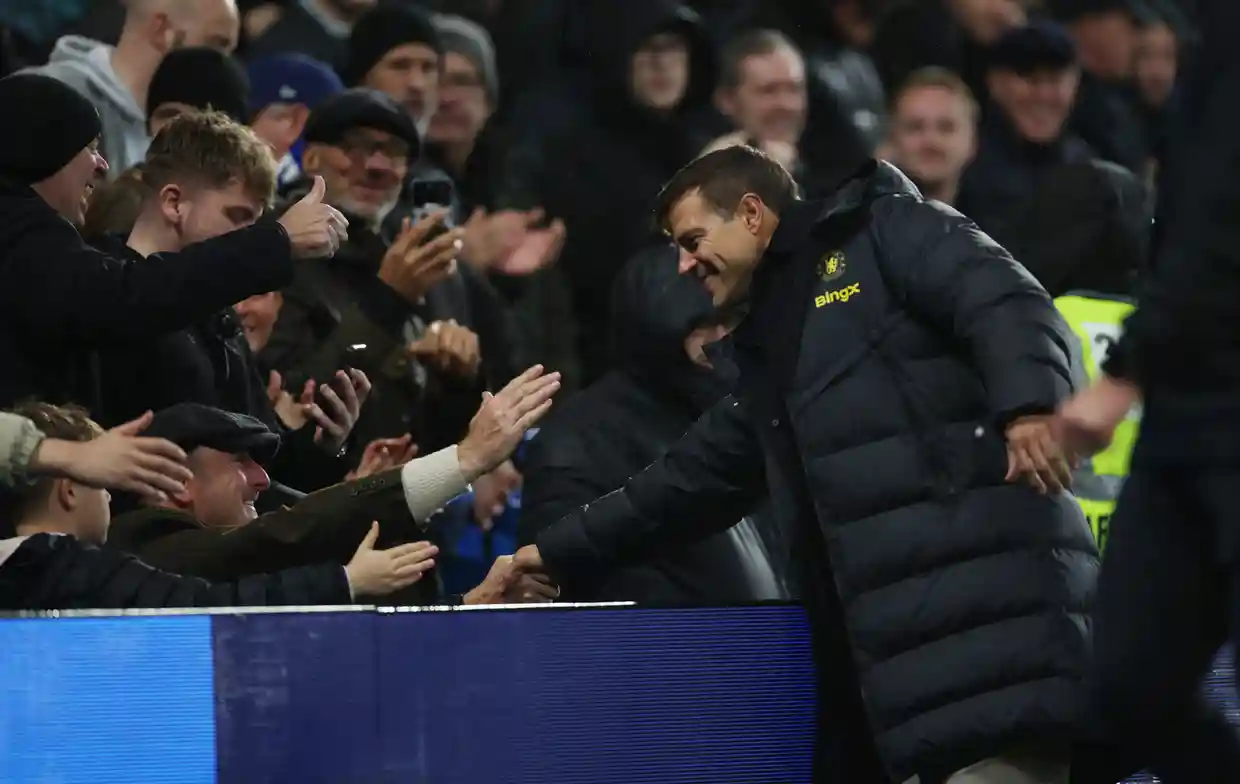
Former Chelsea captain César Azpilicueta has opened up about the relentless standards, pressure and winning mentality that defined his 11-year career at Stamford Bridge, explaining why even a draw could feel like a catastrophe at the London club.
The Spanish defender, who recently retired after a professional career spanning almost two decades, reflected on his remarkable longevity, his relationships with teammates such as Eden Hazard, and the demands of playing for one of Europe’s biggest clubs. He also discussed leadership, preparation, life after football and the qualities that helped him become a Chelsea legend.
At 37, Azpilicueta is adjusting to a different routine after spending most of his adult life preparing for matches and competing at the highest level. However, retirement has not left him short of activities, with education, family life, fitness and new opportunities keeping him occupied.
Azpilicueta Reflects on Chelsea’s Relentless Winning Culture
Azpilicueta described Chelsea as a club where expectations were exceptionally high and players were constantly required to deliver results. During his time at Stamford Bridge, he experienced the pressure of competing for major trophies while working under a succession of managers.
He explained that the club’s winning mentality was visible throughout the dressing room, with players expected to recover quickly from both victories and defeats. A positive result meant moving on to the next challenge, while a poor performance could have serious consequences for an individual’s position in the team.
“You arrive at a historic club like Chelsea and just try to stay as long as you can. That machine makes demands of you every three days. What I really noticed was a hunger to win: either you have that culture or … forget it. At Chelsea a draw was a catastrophe.”
He added that players had to learn how to manage the pressure because the club’s expectations never disappeared. Teammates regularly arrived and departed, but the demand for performances remained constant.
“On the pitch, you have to do it. It’s hard? Yes. But you can’t be sunk by a bad game. If you win: very good, done, next. If you can’t perform, you’re out … You have to manage that pressure.”
For Azpilicueta, the ability to respond to setbacks was just as important as performing well during successful periods. He recalled Chelsea’s 6-0 defeat to Manchester City as one of the unpleasant experiences of his career.
His response to a difficult result was straightforward: review the match footage, examine the data, understand the mistakes and return to training with the right attitude. He also believed experienced players had a responsibility to help teammates recover from disappointing performances.
From Osasuna to Chelsea: A Career Built on Consistency
Azpilicueta made his professional debut for Osasuna in 2007, beginning a career that eventually included more than 800 appearances across club football. His final professional match came against Celta de Vigo in May, when Sevilla suffered a 1-0 defeat.
Between those two milestones, he established himself as one of Chelsea’s most dependable players. He made 508 appearances for the London club, a figure exceeded by only five players in Chelsea’s history. He also became the club’s most frequently appearing foreign player.
Azpilicueta joined Chelsea in 2012 from Marseille at the age of 22. His arrival came late in the transfer window, at a time when the club was bringing in several younger players, including Oscar, Eden Hazard, Victor Moses and Marko Marin.
He admitted that he had not expected to spend 11 years at Stamford Bridge and joked that people who watched him early in his career might have struggled to predict such longevity.
“I don’t think anyone who saw me back then could explain how I played 11 years at Chelsea … and nor could I.”
His career at the club eventually made him a captain, a fan favourite and a player who won major domestic and international honours, including European and world titles.
Why Chelsea Signed Azpilicueta in 2012
When Azpilicueta arrived in London, his representative had informed him that Chelsea were looking to sign younger players. The club had recently won the Champions League and was strengthening its squad with several highly regarded talents.
At 22, Azpilicueta had not yet made his senior debut for Spain, and he was aware that moving to another country and adapting to a new footballing environment would bring challenges.
However, he found support from several Spanish-speaking teammates and staff members. Juan Mata, Fernando Torres and Oriol Romeu were already at Chelsea, while goalkeeper Petr Cech could also speak Spanish. Azpilicueta communicated with Hazard in French and found ways to connect with the Brazilian players as well.
He made a conscious effort to integrate into the dressing room and improve his English, understanding that adapting to life outside football was just as important as settling into the team.
One of his early experiences with Chelsea supporters also gave him a nickname that stayed with him throughout his time at the club.
How Chelsea Fans Started Calling Him Dave
During a question-and-answer event with supporters shortly after his arrival, Azpilicueta appeared alongside Fernando Torres, Juan Mata and Oriol Romeu. One fan joked that his name was difficult to pronounce and asked whether they could simply call him Dave.
Mata translated the question, and Azpilicueta agreed, believing the nickname would only be used for that particular event. Instead, it became a familiar part of his identity among Chelsea supporters.
He recalled hearing fans shout “Hey, Dave!” when he walked down the street. Although the nickname occasionally appeared in the dressing room, it was mainly supporters who continued using it.
Azpilicueta viewed the nickname as a sign of the affection he received from the Chelsea fanbase, reflecting how quickly he had become part of the club’s culture.
Adapting to Different Positions and 12 Managers
One of the most important reasons behind Azpilicueta’s longevity was his ability to adapt. He began his career as a winger in Pamplona but eventually became known for his defensive versatility at Chelsea.
He played as a right-back, left-back and in a back three, despite initially having little experience in some of those systems. His time at Stamford Bridge also involved working under 12 different managers.
Every managerial change brought uncertainty, but Azpilicueta understood that he needed to demonstrate his value regardless of the tactical approach being introduced.
His willingness to adjust helped him remain a regular part of the squad through different eras at Chelsea. Rather than insisting on one position or formation, he focused on understanding what each manager required from him.
When asked to describe his career in one word, Azpilicueta chose “constancia”, a Spanish term associated with consistency, perseverance and commitment.
Discipline and Preparation Behind His Longevity
Azpilicueta credited his discipline and preparation for helping him maintain such a high level over a long career. His approach to football involved analysing opponents, studying individual players and identifying small details that could make a difference during matches.
He wanted to understand how opposing wingers behaved when receiving possession, including which direction they preferred to turn. That information helped him anticipate movements and feel better prepared for defensive situations.
“I analysed everything. I want to know if when the winger receives, he turns left. I needed that. Football’s not mathematical – ‘this equals that’ – but that information helps you have more control, feel readier.”
He described himself as a very organised and methodical person, joking that he was more serious about preparation than some of his teammates. He also spent additional hours practising, sometimes convincing coaches or fellow players to stay behind and repeat specific exercises.
His commitment to preparation was influenced by an injury he suffered earlier in his career. At 19, while playing for Marseille, he sustained a cruciate ligament injury that changed his perspective on football.
Azpilicueta said the experience taught him to appreciate discipline, fitness and preparation. Rather than allowing the setback to define him, he used it as an opportunity to develop stronger habits.
Eden Hazard Was His Toughest Opponent
Despite having faced some of the best players in world football, Azpilicueta identified former Chelsea teammate Eden Hazard as one of the most difficult opponents he encountered.
He enjoyed training alongside the Belgian forward and explained that Hazard’s natural ability made him extremely difficult to defend against, even when the attacker was not always following the same preparation routine as his teammates.
“I was fortunate to train with Eden. He didn’t train 100%, but he forced you to. I had to kick him sometimes, haha!”
Azpilicueta also recalled the understanding they developed when playing together. Hazard would ask for the ball, while the defender would joke that he should stay in position because Azpilicueta would take care of the defensive work.
The contrast between their personalities was clear. Azpilicueta described himself as highly organised and almost robotic in his preparation, while Hazard was more relaxed.
However, he emphasised that not every player needed to follow the same routine. Different personalities could succeed as long as they contributed to the team’s objectives.
Becoming Chelsea Captain and Leading by Example
Azpilicueta’s leadership journey at Chelsea began unexpectedly. He recalled first wearing the captain’s armband during the 2017 FA Cup semi-final against Tottenham Hotspur.
Gary Cahill, the club captain at the time, was injured. When the players arrived at the stadium, Azpilicueta discovered that the armband had been placed at his position. Assistant coach Steve Holland then asked him to attend the meeting with the match officials.
He remembered the experience as a natural transition rather than a moment that required him to change his personality.
“I don’t think you change much; you have your own personality. You don’t have to score two because you’re captain. Besides, that was a one-off until later. But you do feel a little extra responsibility.”
His leadership was based on empathy, consistency and practical support. New arrivals often found him ready to help, and several players even stayed at his house while settling into life in London.
He also played an important role during a difficult period for Chelsea when the club’s assets were frozen following Russia’s full-scale invasion of Ukraine. Azpilicueta recalled helping arrange transport by paying for buses and covering petrol costs for first-team and youth-team players.
However, he rejected the suggestion that the support was his individual achievement, insisting that everyone worked together to overcome the situation.
“We did it together, which is how things should be done.”
He explained that the uncertainty affected not only the players but also the many employees and families who depended on Chelsea for their livelihoods.
Why People Were More Important Than Trophies
Although Azpilicueta won major honours during his time at Chelsea, he suggested that the people around the club were among the most meaningful parts of his experience.
He spoke about the importance of the staff members who work behind the scenes and help keep a football club operating every day. For him, the most rewarding moments were not simply lifting trophies but seeing players, employees and their families celebrate together.
“There are so many day-to-day who make it work. And sure, we’re good at football but what really fulfils you is see people there with their families all together when you win, when you lift the Champions League.”
His modesty was also evident when discussing photographs and memorabilia from his career. Although a friend had given him a framed picture of himself lifting the Champions League trophy, he admitted that it was not prominently displayed at home.
He also suggested that visitors would not immediately realise a professional footballer lived in his house, reflecting his preference for keeping his personal life separate from his achievements on the pitch.
Life After Retirement: MBA, Golf and New Opportunities
Retirement has brought a major change to Azpilicueta’s daily routine, but he has remained busy. His schedule now revolves around family responsibilities, exercise, learning and enjoying activities that were difficult to fit into the demanding life of a professional footballer.
He gets up, takes his children to school, goes to the gym and sometimes attends Pilates sessions. He also walks the dogs, plays golf and takes care of after-school activities.
Azpilicueta has completed an MBA and a sports directorship diploma, while also exploring opportunities in football media. He has already tried co-commentary and remains interested in learning more about the business side of the sport.
He explained that studying was not necessarily preparation for an immediate move into a sporting director role. Instead, he enjoyed the opportunity to learn, meet new people and understand different areas of the industry.
“I haven’t yet thought: ‘I’m bored.’”
Although he enjoys having greater control over his time, he does not view retirement as complete liberation. Playing football had been central to his life from an early age, and he still misses the experience of pulling on his boots and competing every few days.
He also admitted that he had begun considering retirement during the previous year, recognising that the physical demands of professional football were becoming increasingly difficult.
Azpilicueta Once Negotiated His Own Chelsea Contracts
Another interesting aspect of Azpilicueta’s career was his growing involvement in contract negotiations. He revealed that he personally handled negotiations for some of his final contracts rather than relying entirely on an agent.
After years of working with different representatives, he reached a point at Chelsea where he felt comfortable dealing directly with club officials. His experience as captain had already involved conversations with senior management about a wide range of club matters.
He recalled sitting down with Marina Granovskaia before later meeting Behdad Eghbali and Todd Boehly. By then, he felt confident enough to handle his own professional discussions.
Azpilicueta acknowledged that he might have secured a better financial agreement with additional representation, but said he was comfortable with the arrangement. His priority was not chasing the biggest possible deal but continuing to work in an environment where he and his family were happy and he felt valued.
What Comes Next for the Former Chelsea Captain?
Azpilicueta has not committed himself to a specific career path following retirement. He remains interested in football and has several possible directions, including media work and roles connected to the sport’s management.
His education has given him additional knowledge of the business side of football, while his experience at Chelsea and other clubs provides a practical understanding of professional team operations.
For now, he appears content to spend time with his family, continue learning and explore opportunities without rushing into a new full-time role. He has also joked about improving his golf handicap and finding a seven-a-side team.
Conclusion
César Azpilicueta’s career was built on consistency, discipline and an ability to adapt to changing demands. His 508 appearances for Chelsea, 11 years at Stamford Bridge and experience under 12 managers reflect the longevity he achieved at one of Europe’s most demanding clubs.
His memories also reveal the standards that shaped Chelsea during his time there. As he explained, a draw could feel like a catastrophe, and players who failed to perform risked losing their place. Yet Azpilicueta believes the pressure was something every player had to learn to manage.
Now retired, the former captain is embracing family life, education and new opportunities while remaining connected to football. His story is not only about trophies and appearances but also about preparation, leadership, resilience and the people who made his career meaningful.
For breaking news and live news updates, like us on Facebook or follow us on Twitter and Instagram. Read more on Latest Football on thefoxdaily.com.






COMMENTS 0