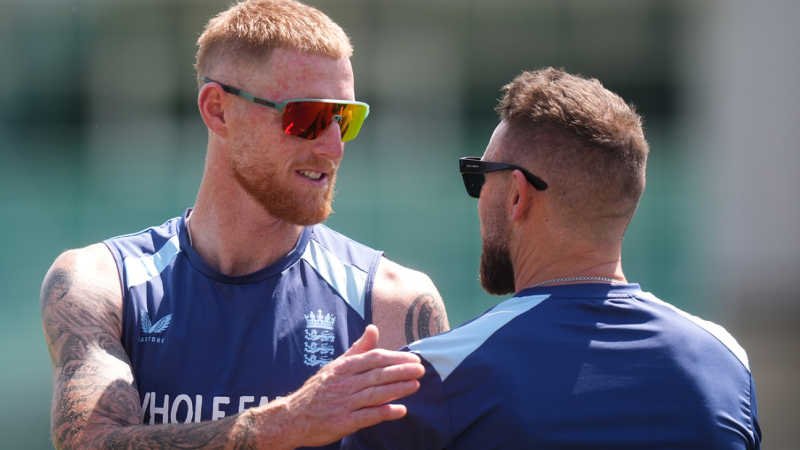
England captain Ben Stokes is back in the spotlight ahead of the decisive third Test against New Zealand, and not just because of his return to the playing XI. Over the past two weeks, speculation surrounding Stokes’ relationship with head coach Brendon McCullum has dominated cricket headlines, fueled by disciplinary controversy, disappointing results, and questions about the direction of England’s Test team.
However, as England prepares for a winner-takes-all clash at Trent Bridge, McCullum has strongly rejected suggestions of a fractured partnership. Instead, the New Zealand legend has painted a picture of a leadership duo that remains united despite recent challenges, emphasizing that both men remain committed to the same vision for English cricket.
Why Ben Stokes’ Return Matters Beyond the Playing XI
Stokes’ return comes at a pivotal moment for England Cricket. While the immediate focus is on the third Test against New Zealand, the significance of his comeback extends far beyond team selection.
England has endured a turbulent period marked by inconsistent performances, leadership scrutiny, and mounting pressure from fans and former players. The absence of Stokes during the second Test exposed the team’s vulnerability, both on and off the field. Without their talismanic captain, England suffered a heavy defeat that shifted momentum firmly in New Zealand’s favor.
Now, his return offers England an opportunity to reset the narrative and regain control of a series that has become a referendum on the team’s leadership structure.
The Controversy That Sparked the Debate
The events leading to Stokes’ temporary absence created one of the most discussed stories in English cricket this year. A breach of team protocol following the first Test led to investigations by cricket authorities, resulting in Stokes and fast bowler Gus Atkinson being stood down for the second match.
Although the investigations eventually concluded without further action, the incident triggered widespread discussion about leadership standards, accountability, and the expectations placed upon senior players.
For many observers, the controversy became larger than the actual offense. Questions quickly emerged regarding whether the situation had damaged relationships within England’s leadership group and whether tensions were developing behind closed doors.
Brendon McCullum’s Strong Message: Leadership Remains United
McCullum’s public comments ahead of the third Test appear designed to end speculation once and for all.
The England head coach made it clear that disagreements and debates are a natural part of any successful leadership partnership. According to McCullum, the ability to challenge each other’s views has actually strengthened the working relationship between him and Stokes rather than weakened it.
This distinction is important. Modern elite sports organizations increasingly encourage healthy internal debate as part of decision-making processes. Strong teams rarely succeed because leaders agree on everything. Instead, they thrive when differences of opinion lead to better solutions.
McCullum’s message suggests that England’s leadership model remains intact despite recent turbulence.
The Evolution of the Stokes-McCullum Era
Since taking charge of England’s Test team in 2022, Stokes and McCullum have transformed the side’s identity.
Their aggressive philosophy revolutionized England’s approach to Test cricket, encouraging positive intent, fearless batting, and proactive decision-making. The approach quickly became one of the most talked-about tactical shifts in modern cricket.
| Area | Before Leadership Change | Under Stokes-McCullum |
|---|---|---|
| Batting Approach | Conservative | Aggressive and attacking |
| Match Strategy | Risk-averse | Result-oriented |
| Team Culture | Structured | Player-driven freedom |
| Public Identity | Traditional | Entertaining and bold |
The transformation generated excitement among supporters and brought renewed energy to England’s Test setup. However, sustained success is ultimately measured by victories, and recent results have placed the project under increasing scrutiny.
The Pressure Created by Recent Results
One of the biggest reasons rumors gained traction is England’s recent record. Expectations rose dramatically following the initial success of the Stokes-McCullum partnership, but maintaining that momentum has proven difficult.
International cricket is unforgiving. Winning teams are praised for innovation, while losing teams often find their methods questioned. England’s recent struggles have naturally intensified discussions surrounding leadership decisions, tactical approaches, and long-term planning.
The reality is that every major sporting project eventually faces adversity. What matters most is how leaders respond when results no longer arrive consistently.
Why Trent Bridge Could Be a Defining Moment
The third Test against New Zealand carries significance beyond the series result.
A victory would allow England to restore confidence, validate their leadership structure, and shift attention back toward cricketing performance. It would also provide a valuable reminder that temporary setbacks do not necessarily indicate deeper organizational problems.
A defeat, however, could amplify existing concerns and increase external pressure on key decision-makers.
For that reason, Trent Bridge represents more than a cricket match. It is an opportunity for England’s leadership group to demonstrate resilience in the face of adversity.
The Human Side of Leadership Often Gets Overlooked
One aspect often missing from discussions surrounding elite sport is the personal relationship between leaders.
Successful captain-coach partnerships require trust, honesty, and communication. These relationships inevitably experience periods of disagreement because both individuals are responsible for making high-pressure decisions that affect entire teams.
What separates successful partnerships from unsuccessful ones is not the absence of conflict but the ability to navigate it effectively.
McCullum’s comments suggest that the foundation of trust between him and Stokes remains strong. That trust may prove crucial as England enters another challenging phase of its Test journey.
How Modern Cricket Leadership Has Changed
The role of a captain has evolved significantly over the past decade. Today’s leaders must balance tactical responsibilities with media obligations, player management, commercial expectations, and public scrutiny.
Social media has further intensified this environment. Every decision is analyzed instantly, while rumors can spread globally within minutes.
As a result, leadership partnerships face pressures that previous generations rarely experienced.
The speculation surrounding Stokes and McCullum highlights how modern narratives can sometimes grow independently of the actual relationships involved.
New Zealand’s Role in the Story
While much of the attention has focused on England’s internal dynamics, New Zealand deserves significant credit for creating the situation.
The tourists have consistently challenged England throughout the series, exposing weaknesses and capitalizing on opportunities when they emerged.
Their impressive victory in the second Test shifted momentum dramatically and ensured that the final match would carry enormous consequences.
From a competitive standpoint, New Zealand’s performance has transformed what could have been a routine series conclusion into one of the most intriguing contests of the season.
What England Must Improve to Win the Decider
Stronger Batting Partnerships
England’s batting unit must convert promising starts into substantial scores. Building partnerships remains one of the most effective ways to reduce pressure on the middle order.
Disciplined Bowling Execution
The bowling attack must maintain consistency across long spells and capitalize on favorable conditions when opportunities arise.
Leadership Stability
Perhaps most importantly, England needs stability and clarity within its leadership group. The return of Stokes provides an opportunity to restore that sense of direction.
The Bigger Picture for English Cricket
The discussion surrounding Stokes and McCullum reflects a broader challenge facing English cricket: balancing long-term vision with short-term expectations.
Every major sporting transformation experiences periods of turbulence. The question is whether decision-makers remain committed when adversity inevitably arrives.
England’s leadership group has repeatedly emphasized process, culture, and long-term development. The coming months will reveal whether those principles can withstand increasing external pressure.
The outcome of the New Zealand series may influence public perception, but it is unlikely to determine the entire future of England’s Test project.
A Unique Insight: Why This Moment Could Strengthen England
Ironically, the controversy surrounding Stokes may ultimately benefit England in the long run.
Periods of adversity often reveal the true strength of leadership partnerships. Teams that successfully navigate difficult moments frequently emerge with stronger communication, clearer priorities, and deeper trust.
If England responds positively at Trent Bridge, the recent turmoil may eventually be remembered as a temporary challenge rather than a defining crisis.
History shows that many successful sporting dynasties have endured setbacks before achieving sustained success. England now has an opportunity to demonstrate whether its current leadership group possesses that same resilience.
Conclusion: All Eyes on Trent Bridge
Ben Stokes’ return to England’s Test team represents far more than the comeback of a captain. It marks the latest chapter in a leadership partnership that has reshaped English cricket and continues to attract intense scrutiny.
Brendon McCullum’s firm rejection of rumors surrounding their relationship sends a clear message: despite recent controversies, England’s leadership remains united.
Now the focus shifts back to the cricket field, where results ultimately carry the greatest weight. A victory against New Zealand would provide a timely boost for England and reinforce confidence in the Stokes-McCullum era.
Regardless of the outcome, the coming days at Trent Bridge will offer valuable insight into the future direction of England’s Test team and the durability of one of cricket’s most influential partnerships.
For breaking news and live news updates, like us on Facebook or follow us on Twitter and Instagram. Read more on Latest Sports on thefoxdaily.com.






COMMENTS 0