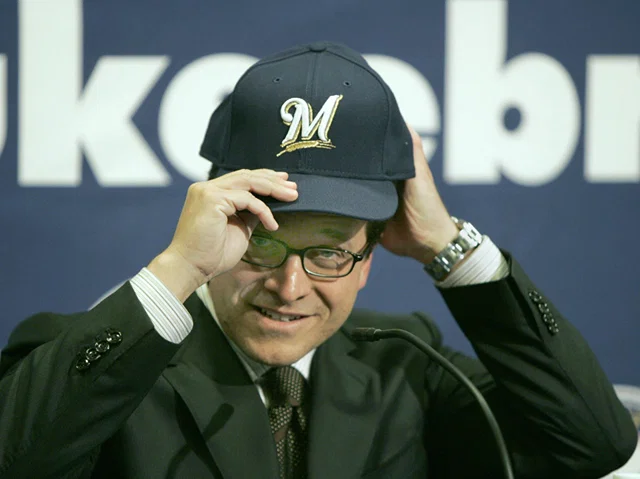
The Milwaukee Brewers are facing criticism from longtime fans after holders of the franchise’s Timeless Tickets discovered that their decade-old passes would not necessarily provide premium seating for the team’s first World Series appearance since 1982. The controversy intensified after the Brewers offered many holders seats in the upper deck or standing-room areas for the Fall Classic against the Tampa Bay Rays, prompting complaints that the organization had failed to honour the spirit of its original promise.
On Tuesday, October 20, Brewers president of business operations Rick Schlesinger acknowledged that the club had fallen short in its internal communications while processing several hundred redemption requests. The team subsequently moved to address the concerns, allowing eligible holders to keep the World Series tickets they had received while retaining their Timeless Tickets for use at a home game in a future season.
The dispute has become particularly sensitive because the passes were originally marketed as a long-term opportunity for fans to support Milwaukee in exchange for access to future home games, including the World Series. With Game 1 scheduled for Friday, October 23, at 8 p.m. ET at American Family Field, supporters argue that a historic postseason occasion should be an opportunity to reward loyal fans rather than leave them disappointed.
One frustrated fan captured the anger in a Reddit comment, writing: “This is so dumb.” The reaction reflects a broader debate over whether the Brewers fulfilled the expectations created when they sold the tickets in 2015.
What Are the Brewers’ Timeless Tickets?
The Timeless Ticket promotion began in 2015, when Milwaukee sold 1,000 brass passes for $1,000 each. The tickets were designed as a long-term investment in the relationship between the franchise and its supporters, offering buyers the opportunity to attend future Brewers home games without an expiration date.
According to the programme’s terms, the passes could be redeemed for any future home game, including the World Series. Holders were also allowed to purchase up to three additional seats at face value, making the promotion attractive to fans who wanted to attend games with family members or friends.
The concept was straightforward: supporters would pay a substantial amount upfront, while the team would provide access to future games under the conditions outlined in the programme. For buyers, the possibility of witnessing a World Series game was an especially appealing part of the offer.
However, the programme’s redemption language became central to the controversy once Milwaukee secured its place in the championship series.
The information card stated that Timeless Tickets “may be redeemed for the best available seat locations, subject to ticket availability at the time of redemption.” That qualification gave the Brewers some flexibility when assigning seats, particularly for a high-demand event with limited inventory.
Fans, however, said their understanding of the promotion was that Timeless Ticket holders would receive priority behind season-ticket holders. They believed the arrangement would provide access to desirable seats when the Brewers finally reached the sport’s biggest stage.
The disagreement therefore involves more than the physical location of a ticket. It concerns whether the programme’s written conditions matched the expectations that buyers developed when they purchased the passes.
Why Brewers Fans Are Angry About World Series Seating
Complaints grew after Milwaukee swept the Los Angeles Dodgers in the National League Championship Series on October 15, securing its place in the World Series. The achievement created enormous excitement among supporters, but it also triggered a rush to redeem Timeless Tickets for the historic matchup.
Holders were required to submit redemption forms by Saturday, October 17. According to the supplied report, the available options were largely limited to terrace-level seats and standing-room locations.
For fans who had purchased their passes more than a decade earlier, those options fell short of what they believed the programme had promised. Some argued that spending $1,000 in 2015 was an investment in the possibility of attending precisely this kind of postseason event.
One Reddit user questioned why the organization would risk damaging its relationship with supporters over the cost of providing better seats.
“This is so dumb. … It’s a f***ing drop in the bucket to avoid bad PR. … But these idiots can’t reward their fans?”
The comment reflected a widespread frustration among fans who believe that the financial cost of accommodating a relatively small group of longtime supporters would be outweighed by the goodwill generated by doing so.
For those supporters, the World Series represents the moment when the original promise should carry the most meaning. A pass that remains valid for ordinary regular-season games may still have value, but fans who purchased it partly because of the possibility of a championship appearance expected that opportunity to be treated differently.
Not everyone sided with the critics. Some supporters defended the Brewers, arguing that the organization could not have known how many Timeless Ticket holders would request seats for the same event. The World Series creates extraordinary demand, and the number of available seats is finite.
Others countered that the potential for high demand was precisely why the promotion appealed to buyers. From their perspective, the team should have anticipated that many holders would want to redeem their passes if Milwaukee eventually reached the championship series.
Timeless Ticket Holders Say the Brewers Fell Short of Their Promise
The strongest criticism has come from buyers who say the seats offered to them did not reflect the programme’s promise of the best available locations.
Kyle Deaton of Kenosha told WTMJ that a ticket representative did not dispute the possibility that better seats were available. Deaton argued that the seating options presented to holders were inconsistent with what they had expected when they purchased the passes.
“When you promise somebody the best seat available, and you give them pretty much the worst seats that you have in the whole stadium, I would say, no. They’re not honoring it,” Deaton said.
His comments highlight the central issue in the dispute: the distinction between what the written terms technically permitted and what buyers believed the promotion would deliver.
Deaton’s brother, Kevin, said he had expected to receive a significantly better location, although he did not anticipate getting a front-row seat.
“I wasn’t envisioning, hey, we’re going to get front row. But certainly first ten rows,” Kevin Deaton said. “Which is why I refused. Out of principle, I’m not even going to go.”
His decision not to attend illustrates how the controversy has affected some supporters beyond their dissatisfaction with individual seat assignments. For certain buyers, accepting the offered tickets would mean accepting a resolution they believe fails to honour the original arrangement.
Danny Fochesato received a seat in the right-field corner for Game 1 and three seats in the 400 level for Game 2, according to his comments to FOX6.
Fochesato said the experience was disappointing after years of trusting the franchise to honour the programme.
“It’s been 11 years that we did this and put our faith in the Brewers,” he said. “For them to not really honor it in the original way doesn’t feel right.”
His experience demonstrates why the dispute has attracted attention beyond the immediate question of ticket availability. The programme involved a long-term commitment by buyers, and the controversy has left some questioning whether that commitment has been reciprocated.
Rick Schlesinger Admits Brewers Failed to Meet the Spirit of the Programme
Brewers president of business operations Rick Schlesinger acknowledged that the organization had not handled the situation as well as it should have. While the club faced extraordinary limitations on available seats, he accepted that its communication and redemption process had failed to meet the programme’s broader expectations.
“Clearly, even with extraordinary limitations on available seats, we did not live up to the spirit of the program,” Schlesinger said.
The statement represents an acknowledgment that fulfilling the technical conditions of a promotion is not always enough to preserve customer trust. Even when a programme contains restrictions, buyers may reasonably expect the organization to explain those limitations clearly and apply them in a way that reflects the original offer.
The Brewers’ response also suggests that the organization recognizes the reputational risk created by the dispute. The Timeless Tickets were purchased by supporters who made a substantial upfront commitment, and the controversy emerged just as the team prepared for one of the most important events in its history.
Schlesinger said holders who submitted their requests before the deadline could keep the World Series tickets they had received. They would also retain their Timeless Tickets for redemption at a home game in a future season.
According to the supplied report, two fans who had raised concerns told Sportico that they welcomed the update. Their reaction suggests that the club’s response provided some reassurance, although it did not necessarily resolve every complaint about the seats originally offered.
Will the Brewers’ Response Be Enough to Restore Fan Trust?
The Brewers’ handling of the Timeless Ticket controversy presents a broader challenge for sports organizations that use long-term promotions to build loyalty. Such programmes can create a strong connection between a team and its supporters, but that relationship depends on clear terms, transparent communication and a shared understanding of what buyers are purchasing.
In this case, the written provision allowing redemption for the best available seats, subject to availability, appears to have left room for different interpretations. The Brewers faced a situation in which hundreds of holders sought access to a World Series game, while fans believed their passes carried a stronger priority than the available seating options suggested.
That difference in expectations became especially important because the World Series is not an ordinary home game. It is a rare opportunity that many supporters may never experience again, making seat location and access more emotionally significant than they would be during a regular-season matchup.
From a business perspective, the episode also illustrates why organizations need to consider how promotional terms will operate during exceptional circumstances. A programme can function smoothly for years but face its most difficult test when demand suddenly rises and the promised benefit becomes particularly valuable.
For the Brewers, the immediate priority is preparing for the championship series. However, how the organization communicates with Timeless Ticket holders could influence supporters’ perceptions long after the final game has ended.
Fans who feel their concerns have been acknowledged may be more willing to accept the limitations of the programme. Those who believe they were misled could remain dissatisfied, particularly if they declined tickets because of their assigned locations.
Brewers Prepare for Historic World Series Game Against the Rays
Milwaukee is scheduled to host Game 1 of the World Series against the Tampa Bay Rays on Friday, October 23, at 8 p.m. ET at American Family Field. The matchup marks the Brewers’ first appearance in the Fall Classic since 1982, making the occasion especially meaningful for a fan base that has waited decades to see its team return to baseball’s championship stage.
The historic nature of the series has amplified the emotions surrounding the Timeless Ticket dispute. Supporters are eager to celebrate the Brewers’ achievement, but some feel the ticket controversy has distracted from what should be an exciting moment for the franchise.
Fochesato told the Milwaukee Journal Sentinel that the resolution still fell short of what he had hoped for. His reaction indicates that, although the club has acknowledged the problem and outlined a path forward for ticket holders, the issue has not been fully settled in the eyes of every affected fan.
Ultimately, the controversy is about more than upper-deck seats or standing-room access. It is about the relationship between a sports franchise and the supporters who committed their money and trust years before a championship opportunity became reality.
The Brewers have taken a step toward addressing the criticism by acknowledging that they did not live up to the spirit of the Timeless Ticket programme. Whether that response restores confidence will depend on how fans view the club’s handling of the situation and whether they believe the organization has learned from the experience.
As Milwaukee prepares for its long-awaited World Series return, the team will have an opportunity to deliver memorable baseball on the field. Off the field, however, the Timeless Ticket dispute serves as a reminder that rewarding loyal supporters can be just as important to a franchise’s reputation as the results it produces during October baseball.
For breaking news and live news updates, like us on Facebook or follow us on Twitter and Instagram. Read more on Latest MLB on thefoxdaily.com.


COMMENTS 0