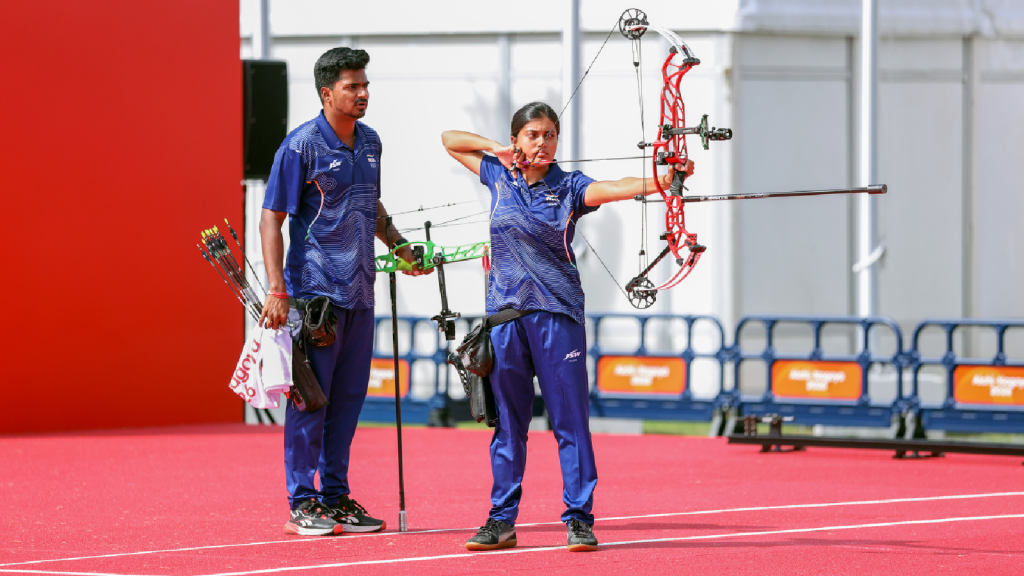
Compound archery could take on a new look at the 2032 Brisbane Olympic Games, with World Archery exploring a proposal to move the discipline indoors and distinguish it from traditional outdoor recurve competitions. The potential change reflects the sport’s ambition to attract larger audiences, introduce fresh competition formats, and secure a stronger position on the Olympic programme.
World Archery Executive Director Juan Carlos Holgado has confirmed that the international governing body is considering indoor compound archery as an option for Brisbane. The proposal is part of a broader effort to present the International Olympic Committee (IOC) with a more distinctive and engaging product that offers something different from the existing Olympic archery events.
India’s Archery Premier League (APL) may also have helped inspire new ideas. Its innovative team format, which brings recurve and compound archers together, has demonstrated how mixed disciplines, substitutions, time limits, and tactical decisions can make competitions more exciting for spectators.
Although compound archery is scheduled to make its Olympic debut at Los Angeles 2028 in the mixed team event, its initial presence will be limited. World Archery wants to build on that opportunity in Brisbane by exploring a format that could bring more compound archers into the Games and give the discipline a more prominent platform.
World Archery Wants a Different Olympic Product for Brisbane 2032
World Archery is looking beyond simply adding another outdoor archery event to the Olympic programme. According to Holgado, the organisation wants to develop a format that gives compound archery its own identity rather than making it appear too similar to outdoor recurve competitions.
Speaking to The Indian Express in Hyderabad while attending the Archery Premier League, Holgado explained that the federation was discussing ways to make the sport more interesting for spectators as it moves from Los Angeles 2028 towards Brisbane 2032.
“We will propose for Compound events to be held indoors,” Holgado told The Indian Express.
The proposal would create a clearer distinction between the two major bow divisions. Recurve archery, the traditional Olympic discipline, would continue to provide its outdoor competition format, while compound archery could be presented in an indoor setting designed around its own strengths.
That distinction matters because Olympic organisers expect sports to demonstrate how their events can attract audiences and add value to the overall programme. If two disciplines look too similar from a spectator’s perspective, introducing both can be more difficult to justify. An indoor compound competition could give the sport a different atmosphere, presentation, and competitive identity.
World Archery is therefore considering more than a change of venue. It is exploring how the competition itself could be packaged to make compound archery more distinctive and appealing at the Olympic level.
Why Indoor Compound Archery Is Being Considered
One of the main reasons behind the proposal is the opportunity to separate compound archery from outdoor recurve competition. Both disciplines involve precision shooting at targets, but their equipment and competitive characteristics differ. World Archery believes an indoor setting could make those differences more apparent and create a stronger case for including additional compound events at the Olympics.
Holgado explained that the IOC had encouraged international sports federations to examine new disciplines and concepts, provided they could demonstrate a clear benefit to the Olympic programme.
“They were OK to study, and open to a new discipline but they needed a different concept or bring something to the Games that is adding value to what’s currently present,” Holgado said.
He also highlighted the difficulty of proposing outdoor compound archery when outdoor recurve is already part of the Olympic programme. From the perspective of the Olympic organisers, the two formats could appear too similar unless the new event offered a clearly differentiated experience.
Indoor competition could provide that distinction. It would allow World Archery to present compound archery as a separate product while potentially creating opportunities for different event structures and a broader field of athletes.
The governing body is also considering the expectations of the compound archery community. Although the discipline’s inclusion in Los Angeles 2028 represents an important milestone, its initial Olympic opportunity will be limited to a single mixed team competition.
For World Archery, Brisbane 2032 represents a chance to build on that breakthrough and explore how compound archery can become a more substantial part of the Olympic programme.
Los Angeles 2028 Will Be the First Olympic Step for Compound Archery
Compound archery is set to make its Olympic debut at the Los Angeles 2028 Games through the mixed team format. That introduction will give compound archers an opportunity to compete on the Olympic stage, but the number of athletes involved will remain limited.
According to Holgado, the Los Angeles format will include only 12 men and 12 women in compound competition. While the community welcomes the discipline’s Olympic inclusion, World Archery recognises that athletes and national federations would like to see more opportunities in future editions of the Games.
“The community of Compounds are happy to be in the Games but they expect more,” Holgado said.
The challenge for World Archery is to turn the initial inclusion into a sustainable Olympic presence. A single mixed team event provides visibility, but a wider programme could offer more athletes the opportunity to represent their countries and give audiences additional ways to follow the discipline.
Holgado said the federation was searching for a meaningful formula that would make compound archery more relevant to the Olympic Games. Rather than simply copying the existing outdoor recurve structure, the organisation wants to identify a format that has its own appeal.
Moving compound archery indoors could help achieve that objective. If the proposal is accepted, Brisbane could provide a new stage for the discipline and establish a clearer separation between the outdoor recurve and indoor compound competitions.
However, the proposal remains part of World Archery’s planning and discussions. The possibility of indoor compound archery at Brisbane 2032 should not be interpreted as a confirmed change to the Olympic programme.
Archery Premier League Could Influence Future Olympic Formats
India’s Archery Premier League has emerged as an important source of ideas for World Archery as the governing body considers how to modernise the sport. Holgado, who attended the competition in Hyderabad, praised the league for introducing an innovative format that brings recurve and compound archers together.
The APL’s team-based approach creates tactical decisions that go beyond the individual act of shooting. Teams must consider which archer should shoot first, who should take the final shot, and how to manage the pressure created by strict time limits.
These elements can make a competition more unpredictable and engaging. Rather than focusing exclusively on the precision of individual shots, spectators can also follow the strategic decisions that influence a team’s performance.
Holgado highlighted several features of the APL that he believes could offer lessons for future international competitions.
“It’s fresh. And great to see Recurve and Compound interact together leading to team tactics, of who shoots first and who goes last,” he said.
He also praised the use of time limits, explaining that they increase pressure on archers by leaving little room for hesitation or mistakes. Substitutions add another strategic dimension, allowing teams to adjust their approach as the competition develops.
These features could help World Archery explore formats that are easier for new audiences to understand and more exciting to watch. The APL has shown how the sport can experiment with its traditional structure without abandoning the technical precision that defines archery.
Although there is no guarantee that the league’s rules will be adopted at the Olympics, its innovations could inform future discussions about event presentation, team tactics, and competition formats.
How the APL’s Team Format Makes Archery More Exciting
Traditional archery competitions place considerable emphasis on individual accuracy and consistency. Those qualities remain central to the sport, but team formats can introduce additional layers of drama and strategy.
In the APL, the interaction between recurve and compound archers gives teams more decisions to consider. The order in which athletes shoot can become an important tactical choice, particularly when time pressure is added to the competition.
Time limits can also change the rhythm of a contest. Archers must execute their shots quickly while maintaining their concentration and technique. A small mistake or moment of hesitation can affect a team’s result, increasing the tension for both competitors and spectators.
Substitutions provide another element of flexibility. They can give teams opportunities to adapt their line-ups and respond to changing circumstances, making the event feel more dynamic than a format based solely on a fixed sequence of individual performances.
For television audiences and fans watching inside a venue, these features can create a clearer narrative. Viewers can follow the decisions made by teams, understand the pressure surrounding each shot, and see how individual performances combine to determine the final outcome.
Holgado’s comments suggest that World Archery is interested in identifying which of these innovations could work at a higher level. The organisation’s challenge will be to preserve sporting integrity while developing formats that make archery more accessible to a wider audience.
Will Archery Have a Place at the Brisbane 2032 Olympics?
Questions have circulated about the future of archery at Brisbane 2032, including speculation about whether the sport would retain its place on the Olympic programme. Holgado dismissed those concerns and expressed confidence in archery’s position.
“Archery is in a strong position. We don’t see why we won’t have a presence in Brisbane,” Holgado said.
He also identified Maryborough, in Queensland’s Fraser Coast region, as the venue under consideration for Olympic archery. His comments indicated that World Archery was confident about the sport’s prospects while continuing to develop proposals for the compound discipline.
The potential introduction of indoor compound archery is therefore part of an effort to strengthen archery’s Olympic offering, rather than an indication that the sport is facing an imminent removal from the Games.
World Archery wants to use the opportunity to make its events more attractive and create additional possibilities for athletes. A more clearly differentiated compound competition could help the organisation demonstrate that archery can evolve while retaining its established place in international sport.
Nevertheless, the final Olympic programme and event arrangements depend on the relevant decision-making processes. World Archery’s confidence and proposals are important indicators of its intentions, but they do not by themselves confirm the final format for Brisbane 2032.
Why Compound Archery Is Well Suited to Indoor Competition
Another factor supporting the proposal is the popularity of compound archery in indoor competitions. Holgado pointed to events such as the Indoor World Series and the Vegas Shoot, where compound archery has a strong presence among athletes and participating countries.
The compound bow is particularly associated with precision-oriented competition. Its mechanical design includes a system of cams and cables that changes the force required to hold the bow at full draw, allowing archers to maintain their aim with less holding weight than would otherwise be required.
Indoor events provide a controlled environment in which archers can concentrate on consistency and accuracy. With fewer outdoor variables, competitions can be presented in a more standardised setting that highlights the athletes’ technical execution.
That established indoor following gives World Archery a foundation on which to build its Olympic proposal. Rather than introducing an unfamiliar concept, the federation would be seeking to bring an existing and popular form of compound competition to the Olympic stage.
Holgado’s argument is that an indoor format could offer the IOC a genuinely different product from outdoor recurve archery. It could also create a clearer identity for compound events and help expand the number of athletes who can compete in the discipline at future Games.
The proposal’s success will depend on how effectively World Archery can demonstrate its value to the Olympic programme. Audience appeal, event structure, athlete participation, and the distinction from existing competitions will all be important considerations.
India’s Growing Influence in International Archery
Holgado also praised India’s development as a major force in international archery. He pointed to the country’s performances in recurve and compound competitions at the Asian Games as evidence of its strength across both disciplines.
India’s large population, growing interest in sport, and focus on archery make it an important market for the international governing body. Strong performances across different bow divisions also give the country a valuable position in discussions about the sport’s future.
“The size of the country, the focus on this sport make it an important market, a top federation in competitions,” Holgado said.
His praise reflects the role national federations can play in developing new competition formats and creating opportunities for athletes. A strong domestic structure can help identify talent, increase participation, and generate interest in international events.
The Archery Premier League has added another dimension to India’s contribution by providing a platform for innovation. Its format brings together different disciplines and encourages teams to use tactical approaches that can make archery more appealing to spectators.
Holgado was particularly impressed by India’s willingness to launch the competition despite the risks involved in introducing a new format.
“I don’t think any other country is ready for this kind of crazy, excellent competition. India was brave enough to put it together even with the risk of failure,” he said.
The league’s willingness to experiment could prove valuable as World Archery evaluates how to present the sport to new audiences. While the APL and the Olympic Games operate in different competitive environments, successful ideas from one setting can inform discussions about the other.
Sponsorship Remains a Challenge for World Archery
Despite the positive outlook for archery, Holgado acknowledged that attracting sponsorship has become more difficult. Economic uncertainty, inflation, changing market conditions, and the challenges of securing traditional advertising deals have created obstacles for sports organisations.
Commercial partnerships are important for supporting competitions, developing athletes, promoting events, and expanding the sport’s international reach. When sponsorship becomes harder to secure, governing bodies must work more carefully to demonstrate the value of their events to potential partners.
Holgado said World Archery was managing the situation reasonably well but remained interested in attracting additional sponsors.
“Sponsorship nowadays, since last year, is a challenging topic,” he said.
New competition formats could offer one way to improve the sport’s commercial appeal. Events with clear narratives, engaging team dynamics, and strong visual presentation may give broadcasters and sponsors more opportunities to connect with audiences.
The APL’s emphasis on tactical decisions, time pressure, and interaction between archers illustrates how a traditional precision sport can experiment with its presentation. If these features help attract more viewers, they could also strengthen the case for investment in future competitions.
However, innovation alone cannot guarantee sponsorship growth. World Archery will still need to demonstrate audience interest, commercial value, and a sustainable model for organising and promoting its events.
What Indoor Compound Archery Could Mean for Brisbane 2032
If the proposal moves forward, Brisbane 2032 could become an important milestone in the development of compound archery. An indoor Olympic event would give the discipline a more distinctive identity and potentially open the door to broader athlete participation.
It could also establish a clearer division between the Olympic presentations of recurve and compound archery. Outdoor recurve would retain its traditional setting, while indoor compound could showcase a different competitive environment and highlight the strengths of its equipment and athletes.
The APL may continue to influence the conversation by demonstrating how mixed teams, substitutions, and time restrictions can create more engaging competition. World Archery will need to determine which ideas are suitable for the Olympic setting and how they could be adapted to meet the Games’ requirements.
For compound archers, the prospect of additional Olympic opportunities is significant. The discipline’s debut at Los Angeles 2028 will be a historic step, but the limited number of athletes and events means that Brisbane could offer a chance to build on that foundation.
For spectators, the objective is to make archery easier to follow without losing the precision and skill that make the sport distinctive. A successful indoor format could create a different atmosphere and offer a new way to experience high-level archery.
Conclusion
Compound archery could move indoors at the 2032 Brisbane Olympics as World Archery seeks to develop a more distinctive and engaging Olympic competition. Executive Director Juan Carlos Holgado has confirmed that an indoor format is being considered as a way to separate compound events from outdoor recurve archery, attract more athletes, and offer the IOC a new concept.
India’s Archery Premier League has provided an encouraging example of how the sport can innovate. Its combination of recurve and compound archers, tactical team decisions, time limits, and substitutions has impressed Holgado and could inspire future developments in international competition.
World Archery is also confident about archery’s Olympic prospects in Brisbane, with Maryborough identified as the venue under consideration. However, the proposed indoor compound format remains a plan under discussion rather than a confirmed part of the 2032 programme.
With compound archery preparing for its Olympic debut at Los Angeles 2028, the next few years could prove crucial in determining the discipline’s future. If World Archery can demonstrate that indoor compound competition adds genuine value to the Games, Brisbane 2032 could provide an important opportunity to expand the sport’s Olympic presence.
For breaking news and live news updates, like us on Facebook or follow us on Twitter and Instagram. Read more on Latest Sports on thefoxdaily.com.

COMMENTS 0