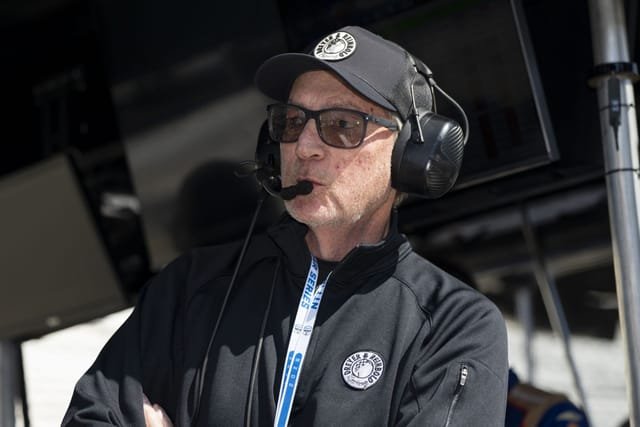
The motorsport world is mourning the loss of Dennis Reinbold, the longtime owner of Dreyer & Reinbold Racing (DRR), who passed away on June 13, 2026, at the age of 65 after reportedly battling cancer.
For more than 25 years, Reinbold was a constant presence at the Indianapolis Motor Speedway, building one of the most respected independent teams in American open-wheel racing. His contributions extended far beyond race-day results, influencing generations of drivers, mechanics, engineers, and fans who viewed him as one of the sport’s most passionate ambassadors.
As tributes continue to pour in from across IndyCar and NASCAR, one message has emerged repeatedly: the Indianapolis 500 will never feel quite the same without him.
Who Was Dennis Reinbold?
Dennis Reinbold was far more than a team owner. He represented a direct link to Indianapolis racing history through his family’s deep-rooted connection to the sport.
In 1999, Reinbold founded Dreyer & Reinbold Racing, combining his family’s racing heritage with a modern vision for competing at the highest levels of American motorsport.
The team’s name paid tribute to his grandfather, Floyd “Pop” Dreyer, a respected builder of sprint cars, midgets, and Indianapolis 500 machines whose influence dated back to the 1920s.
That connection to the sport’s golden era helped shape Reinbold’s approach to racing: honor tradition while embracing innovation.
Over the years, DRR became synonymous with perseverance, opportunity, and a deep commitment to the Indianapolis 500.
The Rise of Dreyer & Reinbold Racing
Shortly after its formation, DRR made an immediate impact on IndyCar.
In just its first full season, the team secured a remarkable victory when Robbie Buhl won at Walt Disney World Speedway in 2000.
The achievement established Reinbold as a serious competitor and demonstrated that independent teams could challenge larger organizations.
From 2000 through 2012, DRR competed full-time in IndyCar before shifting its focus exclusively to the Indianapolis 500.
While many teams struggled to remain competitive during periods of economic uncertainty and changing regulations, Reinbold found a sustainable model that allowed DRR to maintain a continuous presence at the sport’s biggest event.
Dennis Reinbold’s Remarkable Indianapolis 500 Record
The Indianapolis 500 was always the heart of Reinbold’s racing philosophy.
Since entering the race under the DRR banner, the team achieved an extraordinary milestone: every one of its 53 Indianapolis 500 entries successfully qualified for the field.
In an event where even established organizations regularly fail to make the grid, that consistency speaks volumes about the team’s preparation and execution.
DRR’s best Indianapolis 500 finish came in 2012 when the team secured fourth place, narrowly missing out on a podium finish.
However, statistics alone fail to capture Reinbold’s true impact.
For many drivers, DRR represented an opportunity to revive careers, gain experience, or return to the spotlight on motorsport’s biggest stage.
| Milestone | Achievement | Year |
|---|---|---|
| DRR Founded | Team established by Dennis Reinbold | 1999 |
| First IndyCar Victory | Robbie Buhl wins at Walt Disney World Speedway | 2000 |
| Best Indianapolis 500 Finish | Fourth place | 2012 |
| Indianapolis 500 Entries Qualified | 53 out of 53 | 1999-2026 |
| Transition to Indy 500 Focus | Shifted from full-time competition | 2012 |
The Drivers Who Helped Define DRR
Throughout its history, Dreyer & Reinbold Racing became known for assembling talented lineups that blended experience with opportunity.
Several accomplished drivers represented the team, including:
- Ryan Hunter-Reay
- Buddy Lazier
- Buddy Rice
- Simon Pagenaud
- Conor Daly
Each driver brought unique strengths, but many shared a similar experience: Reinbold believed in them when opportunities elsewhere were limited.
Conor Daly’s heartfelt tribute reflected that sentiment.
“The passion for IndyCar racing you had and the tremendous culture you built within the team is something to be extremely proud of.”
Daly competed for DRR in multiple Indianapolis 500 campaigns, often delivering some of the strongest performances of his career.
His message underscored a defining aspect of Reinbold’s leadership style: he prioritized people as much as results.
Why Dennis Reinbold Mattered Beyond the Results Sheet
Modern motorsport is increasingly dominated by major manufacturers, extensive budgets, and data-driven decision-making.
Against that backdrop, Reinbold represented something increasingly rare: the independent owner driven by passion rather than corporate strategy.
He maintained a family-oriented culture that attracted loyal employees and earned respect throughout the paddock.
His team’s continued success at the Indianapolis 500 demonstrated that determination and smart planning could still compete against larger operations.
Perhaps more importantly, Reinbold preserved an essential part of IndyCar’s identity.
The Indianapolis 500 has always been a place where underdogs can challenge giants, and DRR embodied that spirit year after year.
The Unique Importance of Independent Teams in IndyCar
Independent teams like DRR play a vital role in sustaining competitive balance within IndyCar.
They create opportunities for emerging talent, encourage innovation, and preserve the diversity that makes the series compelling.
Without organizations like Dreyer & Reinbold Racing, fewer drivers would have pathways to compete in marquee events such as the Indianapolis 500.
Reinbold understood that success in motorsport extends beyond winning trophies.
Building a team capable of consistently qualifying for the world’s most challenging oval race for more than two decades is an achievement worthy of recognition in its own right.
How the Motorsport Community Reacted
Following the announcement of Reinbold’s passing, tributes flooded social media from fans, drivers, and industry figures.
Many described him as approachable, generous, and deeply committed to preserving the traditions that define Indianapolis racing.
Fans reflected on his unwavering presence at the speedway, while former drivers shared stories about the opportunities he provided.
The emotional response highlighted an important truth: Reinbold’s influence extended far beyond his own garage.
He was a respected figure whose passion helped strengthen the entire IndyCar ecosystem.
What Happens Next for Dreyer & Reinbold Racing?
Despite the tremendous loss, DRR has confirmed that the team will continue its pursuit of victory at the 111th Running of the Indianapolis 500.
That decision reflects the foundation Reinbold built over more than two decades.
Continuing to compete ensures that his vision, values, and commitment to the Indianapolis 500 will endure.
For many within the organization, carrying the team forward is more than a business objective—it is a way to honor the legacy of the man who created it.
Maintaining DRR’s tradition of qualifying every entry for the Indianapolis 500 will now carry even greater significance.
The Future of IndyCar Without Dennis Reinbold
IndyCar has experienced significant growth in recent years, attracting new audiences and expanding its commercial footprint.
However, the series must also preserve the individuals and organizations that built its foundation.
Reinbold’s passing serves as a reminder that motorsport’s greatest assets are often the people working behind the scenes.
As IndyCar evolves, maintaining space for independent teams will remain essential to preserving the character and unpredictability that make the series unique.
Future generations of fans may remember Reinbold not only for his team’s achievements but also for his role in protecting the spirit of the Indianapolis 500.
Conclusion
Dennis Reinbold leaves behind a legacy defined by passion, perseverance, and an unwavering commitment to the Indianapolis 500.
Through Dreyer & Reinbold Racing, he created opportunities for drivers, preserved family traditions, and demonstrated that independent teams can thrive in modern motorsport.
His absence will be deeply felt throughout the IndyCar paddock, but the values he championed will continue to shape the sport for years to come.
When the field takes the green flag at next year’s Indianapolis 500, DRR’s presence on the grid will stand as a powerful tribute to a man whose impact reached far beyond the checkered flag.
For breaking news and live news updates, like us on Facebook or follow us on Twitter and Instagram. Read more on Latest Sports on thefoxdaily.com.

COMMENTS 0