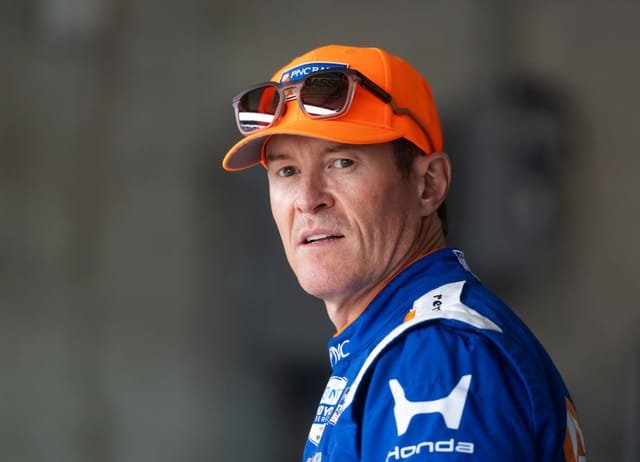
The Scott Dixon Chip Ganassi exit is more than just another driver transfer story. It represents the conclusion of one of the most successful partnerships in modern motorsport history and raises a question that could influence the future direction of IndyCar: who can possibly replace a six-time champion?
For nearly a quarter-century, Scott Dixon and Chip Ganassi Racing have been synonymous with excellence. Together, they built a legacy defined by championships, consistency, strategic brilliance, and an ability to remain competitive across multiple generations of race cars and rivals.
Now, with Dixon set to depart after the 2026 season, the focus shifts from celebrating an extraordinary era to identifying the driver capable of carrying one of IndyCar’s most prestigious seats into the future.
The challenge facing Chip Ganassi Racing extends beyond replacing a driver. The organization must replace leadership, experience, racecraft, technical feedback, and one of the most reliable performers motorsport has ever seen.
The End of an Era in IndyCar
Few driver-team partnerships in racing history have lasted as long or achieved as much as Dixon’s relationship with Chip Ganassi Racing.
Over more than two decades, the partnership delivered:
- Multiple IndyCar championships.
- Dozens of race victories.
- An Indianapolis 500 triumph.
- Long-term competitiveness.
- A reputation for excellence.
What makes the separation particularly significant is its rarity in modern motorsport.
In an era where drivers frequently switch teams, Dixon remained a cornerstone of the Ganassi organization for nearly his entire IndyCar career.
That level of continuity helped create one of the sport’s most enduring success stories.
Why Replacing Scott Dixon Is So Difficult
At first glance, replacing a driver may seem straightforward. Sign another talented racer and continue competing.
The reality is far more complicated.
Dixon’s value extends beyond race results.
Elite veteran drivers contribute in several critical areas:
- Car development feedback.
- Strategic race management.
- Leadership within the team.
- Mentorship for younger drivers.
- Technical understanding.
Few drivers in IndyCar history have mastered all of those elements as consistently as Dixon.
Replacing his influence may require multiple seasons rather than a single signing.
Christian Lundgaard Emerges as the Leading Candidate
Among the names linked to the vacant seat, Christian Lundgaard appears to be one of the strongest candidates.
The Danish driver has continued to establish himself as one of IndyCar’s rising stars and possesses many qualities that would appeal to Ganassi.
His strengths include:
- Race-winning pace.
- Strong road-course performance.
- Youth and long-term potential.
- Growing experience.
- Proven adaptability.
Most importantly, Lundgaard represents a balance between immediate competitiveness and future development.
Ganassi may view him as a driver capable of competing for victories now while growing into a championship contender over the next several years.
Why Marcus Armstrong Cannot Be Overlooked
Another intriguing possibility is Marcus Armstrong.
Unlike some candidates, Armstrong already understands the Chip Ganassi Racing environment.
Previous experience with the organization could offer several advantages.
| Marcus Armstrong Advantages | Potential Value to Ganassi |
|---|---|
| Previous team experience | Shorter adaptation period |
| Knowledge of engineering systems | Faster performance integration |
| IndyCar experience | Reduced development risk |
| Youth and growth potential | Long-term investment opportunity |
Teams often value familiarity because it reduces uncertainty. Armstrong’s existing relationships within the organization could make him an attractive option.
Dennis Hauger Could Be the Wildcard Choice
Every major driver market includes at least one emerging talent capable of surprising observers.
Dennis Hauger may fit that description.
The Norwegian rookie has generated attention through his early IndyCar performances and has demonstrated the kind of raw speed teams seek when evaluating future stars.
Younger drivers frequently carry greater risk, but they also offer potentially greater rewards.
If Ganassi believes Hauger possesses championship-level potential, investing early could prove beneficial over the long term.
The Bigger Question: Should Ganassi Think Beyond IndyCar?
One fascinating possibility involves looking beyond the current IndyCar grid.
Historically, successful teams have occasionally recruited talent from outside the series.
This approach can introduce:
- Fresh perspectives.
- Unique driving styles.
- Different technical feedback.
- New commercial opportunities.
- Unexpected competitive advantages.
Although such moves involve risk, they can also reshape competitive dynamics.
Some of IndyCar’s most successful drivers arrived from alternative racing backgrounds.
How Scott Dixon Changed Modern IndyCar
Before examining potential successors, it is worth understanding the scale of Dixon’s impact.
His legacy extends far beyond statistics.
Dixon helped redefine what sustained excellence looks like in IndyCar.
Several qualities became synonymous with his career:
- Consistency.
- Patience.
- Strategic intelligence.
- Fuel-saving expertise.
- Mental resilience.
Many drivers can produce occasional brilliance.
Few maintain elite performance across decades.
That consistency is arguably Dixon’s greatest achievement.
What a Move to Arrow McLaren Would Mean
Reports linking Dixon to Arrow McLaren have added another layer of intrigue.
If such a move materializes, it could significantly alter the competitive balance within IndyCar.
Even at this stage of his career, Dixon remains one of the sport’s most respected competitors.
His arrival would provide:
- Veteran leadership.
- Championship experience.
- Technical expertise.
- Commercial value.
- Credibility within the paddock.
Few driver additions could influence a team’s culture as dramatically as Dixon.
Comparing Potential Successors
| Driver | Primary Strength | Potential Challenge |
|---|---|---|
| Christian Lundgaard | Proven race-winning speed | Replacing Dixon’s leadership |
| Marcus Armstrong | Familiarity with Ganassi | Taking next competitive step |
| Dennis Hauger | High long-term upside | Limited IndyCar experience |
| External Candidate | Fresh perspective | Adaptation period |
Each option presents a different strategic direction for the organization.
Why This Decision Could Shape the Next Five Years
Driver signings often influence team performance far beyond a single season.
The individual selected to replace Dixon may become the centerpiece of Ganassi’s future championship ambitions.
That reality makes this one of the most important personnel decisions the team has faced in years.
The successful candidate will inherit:
- Championship expectations.
- Elite resources.
- A winning culture.
- Significant pressure.
- A historic legacy.
Not every talented driver thrives under those circumstances.
The Commercial Impact of Dixon’s Departure
Beyond competition, Dixon’s exit carries important business implications.
Veteran stars often serve as major assets for sponsors, manufacturers, and marketing partners.
His departure creates opportunities but also challenges.
Ganassi’s next driver must help maintain:
- Brand visibility.
- Sponsor confidence.
- Fan engagement.
- Media attention.
- Competitive relevance.
This makes the selection process even more significant.
A Unique Challenge for Chip Ganassi Racing
Replacing a legendary athlete is one of the most difficult tasks in sports.
History shows that organizations often struggle when iconic figures depart.
Success depends not only on choosing the right replacement but also on managing the transition effectively.
Ganassi’s organizational strength suggests it is well-positioned to navigate the change, but even elite teams face uncertainty when saying goodbye to generational talent.
Prediction: The Future May Be Younger Than Expected
While experience remains valuable, modern motorsport increasingly rewards long-term planning.
That reality could favor younger candidates with growth potential rather than established veterans.
If Ganassi views the next era as a multi-year project rather than an immediate championship push, selecting a younger driver may ultimately prove the smartest move.
The team’s history of developing talent suggests this possibility should not be dismissed.
Conclusion
The Scott Dixon Chip Ganassi exit marks the end of one of IndyCar’s most iconic partnerships and begins a new chapter for both the driver and the team. After more than two decades of success, championships, and unforgettable moments, replacing Dixon will be one of the most consequential decisions in recent IndyCar history.
Whether Chip Ganassi Racing chooses Christian Lundgaard, Marcus Armstrong, Dennis Hauger, or an unexpected candidate, the goal will not simply be replacing a driver. The organization must identify the person capable of leading its next era of success.
As speculation continues, one thing is certain: whoever inherits the legendary No. 9 seat will face enormous expectations and one of the most challenging assignments in motorsport. The future of one of IndyCar’s premier teams may depend on getting that decision right.
For breaking news and live news updates, like us on Facebook or follow us on Twitter and Instagram. Read more on Latest Sports on thefoxdaily.com.


COMMENTS 0