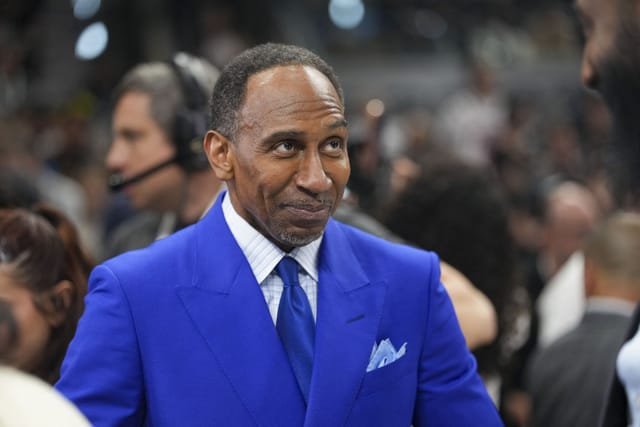
Dez Bryant has publicly sided with Stephen A. Smith amid an increasingly heated disagreement involving Smith and his former ESPN colleagues Cari Champion and Jemele Hill.
The former Dallas Cowboys star reacted after Smith criticized what he described as a lack of appreciation following his three-hour appearance on Champion and Hill’s “Flagrant and Funny” podcast.
Smith argued that his appearance produced a dramatic increase in attention for the podcast, while he received no payment for the lengthy conversation. Bryant amplified Smith’s argument on social media, suggesting that people should recognize the financial value of high-profile appearances and the attention they can generate.
The dispute is not simply about whether someone said “thank you.” It has also exposed broader questions about media relationships, professional courtesy, unpaid appearances and the enormous value that established personalities can bring to digital platforms.
Dez Bryant tells Cari Champion and Jemele Hill to “run them ducats”
Bryant entered the conversation after reposting a clip of Smith discussing the controversy on his own show, “Straight Shooter.”
The Cowboys legend made his position clear while reacting to Smith’s description of what happened after the podcast interview.
“Run them ducats 😂.. they could at least said thank you!”
Bryant’s response reflected his broader point about compensation. He explained that he became more selective about appearing for free after learning how much other personalities were being paid for similar media opportunities.
He also pointed out that his own appearances can generate significant attention online, making the value of a conversation difficult to measure simply by the number of hours spent recording it.
For Bryant, the situation appears to be an example of why public figures should understand the commercial value of their time and audience.
Why Stephen A. Smith is upset
Smith’s frustration centers on his three-hour appearance on Champion and Hill’s podcast.
According to Smith, he arrived without a particular agenda and made it clear to the hosts that he was willing to spend considerable time speaking with them. He later became upset after hearing comments from Champion that he believed minimized the importance or value of his appearance.
Smith argued that the podcast experienced a substantial surge in audience numbers following his visit.
Before his appearance, Smith said the program had approximately 9,000 subscribers, while its top video had around 35,000 views.
After the interview, Smith said the podcast gained more than 30,000 subscribers and surpassed one million total views, with approximately 500,000 views coming through YouTube.
Smith’s argument is therefore based on the measurable difference in the show’s reach before and after his appearance.
Smith says a simple thank-you would have been enough
Interestingly, Smith did not frame his complaint primarily around payment.
His central criticism was that he felt the hosts did not adequately acknowledge the contribution he believed his appearance made to the podcast.
Smith emphasized that he had given the hosts several hours of his time without charging them for the appearance. From his perspective, recognition of that contribution would have been enough to prevent the dispute from escalating.
That distinction matters because the disagreement is partly about professional etiquette rather than simply money.
In media, a guest can provide value through name recognition, audience reach, expertise or controversy. Hosts, meanwhile, provide the platform, production and distribution. Determining exactly who benefited more from an interview can therefore become complicated.
Smith believes the numbers demonstrated that his contribution was substantial.
What happened during the “Flagrant and Funny” conversation?
The disagreement appears to have developed from a broader conversation between Smith, Champion and Hill.
The podcast was not simply a promotional interview. The discussion reportedly touched on several issues connected to the personalities’ shared history at ESPN.
Champion challenged Smith’s version of how she obtained her former moderator role on “First Take,” the ESPN program where Smith became one of the network’s most recognizable personalities.
Hill also questioned Smith about his response to her suspension from ESPN in 2017.
Those subjects added personal and professional history to what might otherwise have been a straightforward podcast appearance.
Once the interview became part of a larger disagreement over their past working relationship, the question of appreciation became another point of contention.
Dez Bryant sees the situation differently
Bryant’s reaction adds another prominent sports personality to Smith’s side of the dispute.
The former NFL receiver has extensive experience with the media and understands how athlete interviews can generate attention far beyond the original conversation.
His comments suggest that he views Smith’s appearance as something that should have been treated as valuable intellectual and promotional capital.
Bryant’s argument is especially relevant in today’s media environment, where a single appearance by a recognizable personality can generate clips, social-media discussion, YouTube views and new subscribers.
For digital creators, that attention can have a direct commercial value through advertising, sponsorships, memberships and future audience growth.
Emmanuel Acho also supports Stephen A. Smith
Bryant is not the only former athlete to weigh in.
Emmanuel Acho, who transitioned from professional football into sports media, also reacted to the controversy and attempted to quantify the value of Smith’s time.
Acho estimated that three hours of Smith’s time could be worth at least $20,000, particularly given Smith’s profile in sports media.
He also focused on the reported difference between the podcast’s audience before and after Smith’s appearance.
According to Acho’s assessment, the show’s previous high was around 30,000 views, while the interview-related content ultimately surpassed one million views.
Acho’s argument was that the financial benefits appeared to flow primarily toward Champion and Hill’s platform rather than Smith.
However, it is important to distinguish between an estimated monetary value and confirmed earnings. The available information does not establish how much revenue the podcast generated from the increased views or whether Champion and Hill personally received a specific amount.
The numbers are at the heart of the controversy
The audience figures cited by Smith are central to the argument because they provide a measurable basis for his claim.
| Metric | Before Smith’s Appearance | After the Appearance |
|---|---|---|
| Podcast subscribers | Approximately 9,000 | More than 30,000 additional subscribers according to Smith |
| Top reported video performance | About 35,000 views | More than 1 million total views reported after the appearance |
| YouTube views | Previously far lower | About 500,000 attributed to YouTube by Smith |
| Smith’s reported compensation | Smith said he appeared without charging a fee | |
These figures help explain why Smith believes the appearance had significant value. At the same time, audience growth alone does not prove that every additional subscriber or view came exclusively from Smith’s appearance.
Digital audiences can increase for several reasons, including social-media promotion, controversy, clips going viral and interest in the hosts themselves.
That distinction is important when evaluating both sides of the argument.
Why unpaid celebrity appearances can be complicated
Unpaid media appearances are common across sports and entertainment, but they do not necessarily mean that the guest provides no value.
A guest may agree to appear because they want to promote a project, discuss a personal topic, strengthen a relationship or simply enjoy the conversation.
At the same time, the host receives valuable content that can be distributed across multiple platforms.
The potential disagreement arises when the two sides have different expectations about what the appearance represents.
If the guest views the conversation as a favor and the host sees it as a mutually beneficial collaboration, the relationship can become strained if the audience response is dramatically larger than expected.
That appears to be part of the underlying issue in Smith’s case.
Stephen A. Smith’s media influence is difficult to ignore
Smith has spent years building one of the strongest personal brands in sports media.
His opinions frequently generate discussion across television, YouTube and social media, while his recognizable personality makes him an attractive guest for other platforms.
That influence can be especially valuable to podcasts because digital programs often depend heavily on discoverability. A prominent guest can introduce a show to an entirely new audience.
However, the same personality-driven approach can also create controversy. Smith’s willingness to speak openly about disagreements has become part of his media identity, meaning disputes involving him can themselves generate substantial attention.
Ironically, the disagreement with Champion and Hill has therefore created another wave of discussion around all three personalities.
Cari Champion and Jemele Hill have their own history with Smith
The dispute cannot be separated completely from the professional history shared by Smith, Champion and Hill.
All three became prominent sports-media personalities during their time at ESPN, although they eventually developed separate careers.
Champion became known for her work as a sports broadcaster and interviewer, while Hill expanded her career across journalism and digital media. Smith remained one of ESPN’s most visible personalities before continuing to build his own media presence.
Their shared history means disagreements can carry more weight than an ordinary disagreement between a host and guest.
When former colleagues discuss past professional experiences publicly, questions about memory, recognition and responsibility can quickly become central to the conversation.
What the controversy could mean for sports podcasts
The episode illustrates how important high-profile guests have become to the sports-podcast economy.
Podcast audiences are often built around personality-driven conversations rather than traditional news formats. A major guest can potentially transform the reach of an episode within hours.
But creators also need to manage expectations carefully.
A successful interview can benefit both sides, and not every increase in views should automatically be treated as belonging to one participant. The hosts bring their own audience, production resources and editorial direction, while the guest contributes reputation, expertise and a potential new audience.
The healthiest collaborations usually make those expectations clear before recording.
Dez Bryant’s reaction adds another angle
Bryant’s “run them ducats” comment reflects a broader attitude among athletes who have moved beyond traditional sports contracts and into media businesses.
Former players increasingly understand that their names, personalities and audiences have independent commercial value.
That has changed the relationship between athletes and media outlets. Players are no longer dependent solely on newspapers, television networks or established broadcasters to reach fans. They can create podcasts, social channels and independent shows of their own.
Bryant’s comments fit into that larger shift toward athletes treating media appearances as professional opportunities rather than informal favors.
Who benefits when an interview goes viral?
There is no simple answer.
A viral interview can benefit the guest through increased visibility, credibility and social engagement. The host can gain subscribers, advertising opportunities and future negotiating power.
The platform itself can also benefit because higher traffic can increase its overall commercial value.
In this particular dispute, Smith believes the podcast received a much larger audience following his appearance. Champion and Hill, however, have not been presented in the supplied report as agreeing with his interpretation of the numbers or his characterization of the situation.
That leaves the controversy largely centered on competing perspectives rather than a fully settled account.
What happens next?
The disagreement could continue through further comments from the personalities involved, particularly because Smith has already discussed the matter publicly and Bryant and Acho have amplified his position.
Whether Champion or Hill respond further could determine whether the controversy becomes a longer-running media dispute or gradually fades after the initial wave of attention.
For now, the most notable development is the support Smith has received from former athletes who understand the commercial value of a recognizable sports personality.
The bigger picture
Dez Bryant’s reaction has turned an already public disagreement into an even broader conversation about respect, compensation and the value of media appearances.
Smith believes his three-hour appearance delivered an enormous audience boost to Champion and Hill’s podcast and that a simple expression of gratitude would have been enough.
Bryant clearly agrees with that perspective, while Emmanuel Acho has gone further by attempting to place a monetary value on Smith’s time.
Still, the available figures should be viewed as claims and estimates rather than proof of a specific financial windfall. Audience growth does not automatically translate into an equivalent amount of revenue, and the precise commercial impact of the appearance has not been established.
What is clear is that the interview generated significant attention, and the disagreement surrounding it has become a story of its own.
For Smith, Bryant and Acho, the lesson appears straightforward: in modern sports media, attention has measurable value. And when a high-profile guest believes he helped transform a podcast’s reach, professional appreciation can become just as important as the numbers themselves.
For breaking news and live news updates, like us on Facebook or follow us on Twitter and Instagram. Read more on Latest NFL on thefoxdaily.com.


COMMENTS 0