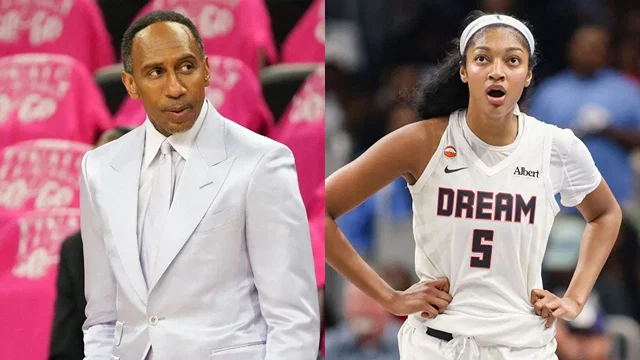
Stephen A. Smith has sparked a debate among WNBA fans after criticizing the Atlanta Dream’s arena situation following their impressive run to the WNBA Finals. While Smith expressed frustration over the circumstances surrounding the team’s home venue, many fans questioned why he had not given the Dream comparable attention after their semifinal success. Some argued that the reaction would have been different if Caitlin Clark and the Indiana Fever had been involved.
The controversy emerged after the Dream defeated the New York Liberty 85-83 in Game 3 of the semifinals on Friday. The victory completed a sweep of the Liberty and secured Atlanta’s place in the WNBA Finals. However, the team’s upcoming home games became a talking point because of scheduling adjustments involving State Farm Arena, the home of the Atlanta Hawks.
On Tuesday’s episode of The Stephen A. Smith Show, Smith criticized the circumstances surrounding the venue arrangements. His comments quickly circulated online after the show’s official X account shared a video of the segment, prompting fans to debate the league’s treatment of the Dream, media coverage of their achievement, and the broader discussion surrounding WNBA attendance.
Stephen A. Smith Criticizes the Atlanta Dream’s Arena Situation
The Atlanta Dream’s advancement to the Finals represented a significant moment for the franchise. After defeating the Liberty in three consecutive semifinal games, the team earned an opportunity to compete for the WNBA championship. However, the arrangements for the Finals introduced a logistical challenge involving the venue and game schedule.
During his Tuesday show, Smith questioned how the situation had developed and criticized the circumstances surrounding the team’s access to a larger arena.
“It’s the WNBA Finals, and we are congratulating you for getting an arena for the Atlanta Dream to play in. You’ve got to be kidding me. That’s a dereliction of duty,” Smith said.
His remarks focused on the fact that the Dream were preparing for the league’s championship series while dealing with venue arrangements that required changes to the schedule. State Farm Arena, which has a capacity of just over 17,000, offered a considerably larger setting than Gateway Center Arena, where Atlanta played most of its regular-season home games and several playoff contests.
The move to State Farm Arena was significant because the larger venue could accommodate more spectators for the Finals. However, using the Hawks’ home court also meant coordinating the Dream’s games with the NBA team’s schedule.
Although Smith presented the situation as a serious organizational concern, the online response quickly shifted toward another question: why had the Dream’s achievement received less attention from some media personalities before the arena controversy became a talking point?
Fans Question Stephen A. Smith’s Coverage of the Dream
Following the release of Smith’s comments, fans used the show’s X post to criticize what they perceived as a lack of attention toward the Atlanta Dream’s playoff success. Several responses focused on the team’s sweep of the Liberty and argued that the achievement deserved greater recognition before the discussion about the Finals venue.
One fan directly compared the coverage with the attention surrounding Caitlin Clark and the Indiana Fever, writing:
“Yet you haven’t talked one minute before this about Angel Reese and the Dream sweeping the Liberty and making it to the Finals. First Take and ESPN ought to be ashamed of themselves. I bet if it was Caitlin and the Fever, you would have been all over it 😤,” one fan said.
The comment reflected a broader debate about media attention in women’s basketball. Clark has been one of the most closely followed players in the WNBA, and discussions involving her and the Fever frequently attract substantial public interest. The fan argued that a similar level of attention should have been directed toward the Dream after their postseason success.
Another viewer questioned why Smith was discussing the team only after the arena issue became prominent.
“This is the first time you mentioned them making the Finals; clown at this point, say nothing,” another fan said.
A third fan made a similar argument, suggesting that the Dream’s achievement had not received the same sustained attention they believed it deserved.
“Now you wanna talk about the Dream but you’re not even covering them now that they’ve made the finals, but if that were the other person, we would still be talking about it right now,” another fan commented.
These reactions highlighted the distinction between discussing a team’s on-court accomplishments and covering an off-court controversy. While Smith’s comments concerned the arena arrangements, critics wanted more attention devoted to Atlanta’s performance against New York and its journey to the championship series.
The responses also illustrated how debates about media coverage have become part of the wider WNBA conversation. Fans continue to discuss whether attention is distributed evenly across teams and players, particularly when the league’s most recognizable stars are involved in comparisons with less frequently covered franchises.
Caitlin Clark and Angel Reese Become Part of the Debate
The criticism surrounding Smith’s comments extended beyond the Atlanta Dream’s venue arrangements. Several fans brought up Caitlin Clark and Angel Reese, two players who have attracted considerable attention throughout their professional basketball careers.
Clark’s popularity and the interest surrounding the Indiana Fever have frequently featured in conversations about WNBA viewership, attendance, and media coverage. Reese, meanwhile, was specifically mentioned by fans discussing the Dream’s semifinal victory and their qualification for the Finals.
One fan argued that Clark’s influence on WNBA ticket sales had become too central to discussions about the league’s popularity.
“Caitlin Clark being the only reason people care about WNBA ticket sales is exactly the problem. The Dream played in a 3500 seat arena all season, and nobody said a word until it was playoff time,” one fan commented.
The comment connected two separate issues: the Dream’s regular-season venue and the media attention surrounding the team’s playoff run. It also expressed frustration with what the fan viewed as an excessive focus on Clark when discussing the commercial appeal of women’s basketball.
However, these comments represent individual fan opinions rather than independently established conclusions about how much each player contributes to WNBA attendance or media coverage. The debate nevertheless demonstrates how discussions about one team’s arena arrangements can quickly expand into broader questions about visibility, commercial interest, and recognition across the league.
For the Dream, the immediate sporting achievement remains clear: they swept the Liberty in the semifinals and secured a place in the WNBA Finals. The attention surrounding their venue arrangements has added another storyline to their championship campaign, even as fans continue to debate how that achievement has been covered.
More Fans React to Smith’s Comments
Other responses to the segment focused on Smith’s timing, his knowledge of the matchup, and his overall approach to discussing the Dream. Some fans were dismissive of his remarks, while others argued that his criticism had arrived too late to be meaningful.
“You’re late with the news, old man. Talk about the game, but we know you don’t have a clue about the matchup. 🤡,” another fan commented.
The reaction suggested that some viewers wanted more detailed discussion of the basketball itself, particularly after Atlanta’s sweep of New York. Rather than focusing primarily on the arena issue, they wanted commentary about the players, the team’s postseason performance, and the matchup awaiting the Dream in the Finals.
Another fan criticized Smith’s compensation in a brief response:
“You’re not worth the money you are getting paid,” another fan said.
These comments demonstrate the strength of the reaction to the segment, although they do not establish a broader consensus among WNBA fans. Some viewers focused on perceived disparities in coverage, while others criticized the timing and substance of Smith’s discussion.
The controversy also underscores the scrutiny that prominent sports commentators face when discussing women’s basketball. Their remarks can prompt reactions not only to the specific issue being discussed but also to their previous coverage and the amount of attention given to different teams and players.
Where Are the Atlanta Dream Playing Their WNBA Finals Home Games?
The Atlanta Dream announced on Tuesday that Games 3 and 4 of the WNBA Finals would take place at State Farm Arena, the home of the Atlanta Hawks. The venue has a capacity of just over 17,000, offering a larger setting than Gateway Center Arena, where the Dream played most of their regular-season home games.
The change provides the Dream with access to a larger venue for two potentially decisive games in the championship series. However, the arrangements also required adjustments to the schedule because of the Hawks’ own commitments at State Farm Arena.
According to the announcement described in the source material, Game 3 was moved forward by one day. It had originally been scheduled for Thursday but was rescheduled for Wednesday at 8 p.m. ET.
Game 4 remained scheduled for Saturday, although its start time was changed. Instead of tipping off at 3:30 p.m. ET, the game was set to begin at 1 p.m. ET.
The Hawks were scheduled to play their regular-season opener later that same Saturday at 8:30 p.m. ET. The timing meant that State Farm Arena would host the Dream’s Finals game earlier in the day before being used for the Hawks’ NBA contest that evening.
These scheduling adjustments were central to the discussion surrounding the venue. While the larger arena represented an opportunity to accommodate more fans, coordinating two professional basketball games at the same facility required changes to the original Finals schedule.
Updated Schedule for Games 3 and 4
| Game | Venue | Scheduled Day | Start Time |
|---|---|---|---|
| Game 3 | State Farm Arena | Wednesday | 8 p.m. ET |
| Game 4 | State Farm Arena | Saturday | 1 p.m. ET |
| Atlanta Hawks regular-season opener | State Farm Arena | Saturday | 8:30 p.m. ET |
Fans unable to attend the Dream’s home games in person could watch Games 3 and 4 of the WNBA Finals on NBC and Peacock, according to the supplied information.
Why the Arena Controversy Matters for the WNBA
The debate surrounding the Dream’s Finals venue brings attention to the logistical challenges that can arise when a team shares a city with another professional sports franchise. State Farm Arena is the Hawks’ home court, meaning its schedule must accommodate the NBA team as well as other events. The Dream’s move to the larger venue therefore required coordination around the Hawks’ commitments.
For Atlanta, playing at State Farm Arena also offered an opportunity to host Finals games in front of a larger potential audience. The Dream had spent most of the regular season at Gateway Center Arena, which has a substantially smaller capacity. Moving to a venue with more than 17,000 seats created the possibility of welcoming more supporters during the franchise’s championship run.
At the same time, the discussion has raised questions among fans about the visibility of women’s basketball teams that do not receive the same level of attention as some of the league’s biggest stars. The reactions to Smith’s remarks show that some viewers want media coverage to recognize playoff achievements and team success, not only controversies or stories involving the most prominent names in the sport.
Whether fans agree with Smith’s criticism or the responses it generated, the situation has placed the Dream’s championship campaign in the spotlight. Atlanta’s sweep of the Liberty earned the team its place in the Finals, while the arena announcement created an additional topic of discussion ahead of the remaining home games.
Final Thoughts
Stephen A. Smith’s criticism of the Atlanta Dream’s arena situation has prompted a wave of reactions from WNBA fans, with many questioning why the team’s semifinal success did not receive more attention in his coverage. Several commenters compared the situation with the media interest surrounding Caitlin Clark and the Indiana Fever, while others argued that the focus should remain on Atlanta’s basketball performance.
The practical issue involves the Dream’s use of State Farm Arena for Games 3 and 4 of the WNBA Finals. The venue offers considerably more capacity than Gateway Center Arena, but the Hawks’ schedule required changes to the start times of both games.
With the debate extending from arena logistics to media representation, the controversy has become another talking point during the WNBA’s championship series. For the Dream, however, the central sporting achievement remains their sweep of the Liberty and their opportunity to compete for the title.
For breaking news and live news updates, like us on Facebook or follow us on Twitter and Instagram. Read more on Latest Basketball on thefoxdaily.com.






COMMENTS 0