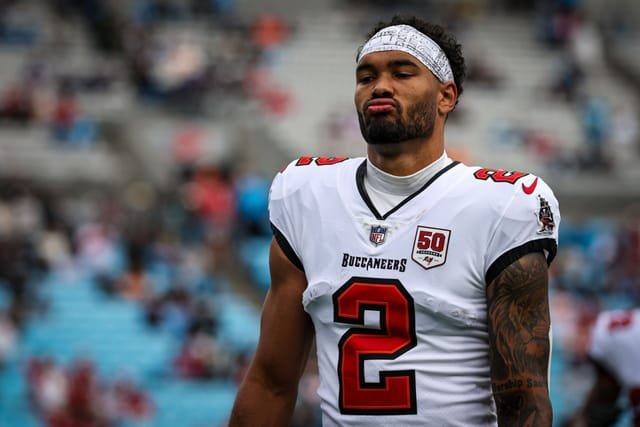
Emeka Egbuka injury concerns have become an important storyline for the Tampa Bay Buccaneers just weeks before the start of the 2026 NFL regular season. The second-year wide receiver suffered a toe injury during a joint practice with the New York Jets, and head coach Todd Bowles has acknowledged uncertainty surrounding his availability for the season opener.
The injury initially appeared difficult to assess because the Buccaneers did not immediately provide extensive details. However, subsequent discussion from sports medicine professionals pointed toward a possible turf toe problem, an injury that can be particularly troublesome for a wide receiver because explosive movement depends heavily on the big toe.
That makes Egbuka’s situation more significant than a routine training-camp setback. His ability to accelerate, change direction, cut routes and push off the ground could all be affected if the injury is not fully recovered. Tampa Bay therefore faces a delicate decision: allow its young receiver to return quickly or prioritize a longer recovery to avoid turning a relatively manageable injury into a persistent problem.
Why Emeka Egbuka’s injury matters to Tampa Bay
Egbuka enters the 2026 season with expectations considerably higher than those surrounding an ordinary second-year receiver. After being selected with the No. 19 overall pick, he produced 938 receiving yards, 63 receptions and six touchdowns during his rookie campaign.
Those numbers established Egbuka as an important part of Tampa Bay’s offensive plans. He is no longer simply a developmental prospect waiting for opportunities. The Buccaneers have already seen him produce at the NFL level, and his progression is expected to be an important part of their offensive identity.
That is why an injury occurring during the final stages of preseason preparation can create complications beyond the player’s individual availability.
A receiver can technically be cleared to play while still lacking the explosiveness required to perform normally. For Egbuka, that distinction could be especially important because wide receiver production is not determined only by catching ability. Route separation, acceleration out of breaks and the ability to make sudden cuts are fundamental parts of the position.
What is turf toe and why can it affect wide receivers?
Turf toe is generally used to describe a sprain involving the structures around the big toe joint. It can occur when the toe is forced into an excessive position while the foot is planted, placing stress on the joint and surrounding soft tissues.
The big toe may look relatively small compared with other parts of the body, but its role in athletic movement is substantial. Athletes repeatedly use it when pushing away from the ground, accelerating, stopping and changing direction.
That explains why sports doctor Jesse Morse emphasized the functional consequences of the injury when discussing Egbuka’s situation. If an athlete cannot comfortably use the big toe during explosive movement, ordinary football actions can become difficult.
For a wide receiver, the problem can become particularly obvious during:
- Explosive starts from the line of scrimmage.
- Sharp cuts during route running.
- Sudden changes of direction.
- Jumping for contested catches.
- Accelerating after making a reception.
- Maintaining balance while adjusting to the football.
Sports doctor explains the potential recovery difference
Sports doctor Jesse Morse warned that the severity of a turf toe injury can dramatically change the recovery outlook. His assessment highlighted a distinction between a lower-grade injury and a more significant sprain.
According to Morse, a potential Grade 1 turf toe injury could involve a recovery period of roughly two to three weeks before the athlete reaches full readiness. A Grade 2 injury, however, could be substantially more serious and potentially affect the beginning of the regular season.
It is important to note that these are general medical observations rather than a confirmed diagnosis or official recovery timetable for Egbuka. The Buccaneers have not publicly established the exact grade of his injury, meaning his individual timeline cannot be determined from outside assessments alone.
Why a quick return could still be complicated
One of the biggest issues surrounding Egbuka is that being available for Week 1 and being fully effective in Week 1 are not necessarily the same thing.
Physical therapist Jeff Mueller offered a more optimistic interpretation of the available information, suggesting that the description of a “stable sprained toe” could indicate that imaging did not reveal ligament damage serious enough to require surgery.
However, Mueller also warned that turf toe could affect Egbuka’s early production even if he is active when Tampa Bay opens its season.
That distinction is crucial. A receiver who is playing through discomfort may subconsciously avoid putting maximum pressure through the injured foot. Even a small reduction in confidence while planting or cutting can affect route timing and separation.
Egbuka’s rookie numbers raise the stakes
| Category | Emeka Egbuka’s 2025 season |
|---|---|
| Draft position | No. 19 overall |
| Receptions | 63 |
| Receiving yards | 938 |
| Touchdowns | 6 |
| Team | Tampa Bay Buccaneers |
Egbuka’s rookie production provides the clearest reason Tampa Bay will be monitoring the injury carefully. Nearly 1,000 receiving yards in a first NFL season represents a strong foundation, and the expectation naturally shifts toward improvement in Year 2.
The Buccaneers therefore need to balance two objectives. They want their young receiver on the field, but they also need him healthy enough to contribute throughout the season rather than rushing him back and risking a longer interruption.
What the injury could mean for Tampa Bay’s offense
If Egbuka cannot play in Week 1, Tampa Bay would have to redistribute his targets and snaps among the other receivers and offensive weapons on the roster.
The bigger concern would be the loss of continuity. Training camp and preseason are designed to establish timing between quarterbacks and receivers. Missing valuable preparation time can make it harder for a receiver to immediately operate at full speed once the regular season begins.
For an offense, that can lead to more conservative route combinations or increased reliance on established players while the injured receiver returns to full rhythm.
Even if Egbuka avoids missing games, Tampa Bay could initially manage his workload rather than immediately giving him his normal number of snaps.
Buccaneers face an important decision before Week 1
The Buccaneers begin their 2026 campaign against the Cincinnati Bengals on September 13. That gives the team some time to evaluate Egbuka before making a final decision.
The most important factors will likely include his ability to run, cut, accelerate and perform football-specific movements without significant discomfort. Medical clearance alone may not tell the entire story because wide receiver performance requires repeated explosive actions.
Tampa Bay could therefore take a cautious approach if Egbuka is not completely ready. The short-term temptation to play a key offensive weapon must be weighed against the longer-term importance of keeping him healthy.
Could Egbuka still have a breakout second season?
Nothing about the current injury necessarily changes the long-term outlook for Egbuka. His rookie production demonstrated that he can already contribute at a high level, and a healthy offseason would give him an opportunity to build on that foundation.
The key question is simply how much the toe problem interrupts his preparation.
If the injury proves minor and he returns quickly, Egbuka can still enter the season with significant expectations. If the problem is more serious, however, Tampa Bay may prioritize recovery over an aggressive return, particularly because the NFL season is a marathon rather than a single game.
What happens next in the Emeka Egbuka injury timeline?
The next meaningful updates should come from Tampa Bay’s medical evaluations and Todd Bowles’ comments as the team approaches the regular season. Until the Buccaneers provide more specific information, the exact severity and recovery timeline should be treated as uncertain.
The most encouraging scenario for Tampa Bay would be a stable injury that responds well to treatment and rehabilitation, allowing Egbuka to gradually resume football activities without setbacks.
The more concerning scenario would involve persistent pain or limitations during cutting and pushing off the injured foot. That could make a slower return necessary and potentially affect his availability for the opening weeks.
Final outlook
The Emeka Egbuka injury is worth watching because the second-year receiver is coming off a productive rookie campaign and is expected to play an important role for Tampa Bay in 2026.
The reported toe problem does not automatically mean he will miss Week 1, but turf toe can be particularly demanding for players whose careers depend on explosive acceleration and rapid changes of direction.
For now, the Buccaneers appear to have a situation that requires patience rather than panic. The severity of Egbuka’s injury, his response to rehabilitation and his ability to perform football movements at full speed will ultimately determine his availability.
With Tampa Bay scheduled to face Cincinnati on September 13, the coming weeks should provide a much clearer picture. If Egbuka returns without restrictions, the injury may quickly become a footnote. If not, the Buccaneers may have to begin the season without one of their most promising young offensive weapons.
For breaking news and live news updates, like us on Facebook or follow us on Twitter and Instagram. Read more on Latest NFL on thefoxdaily.com.





COMMENTS 0