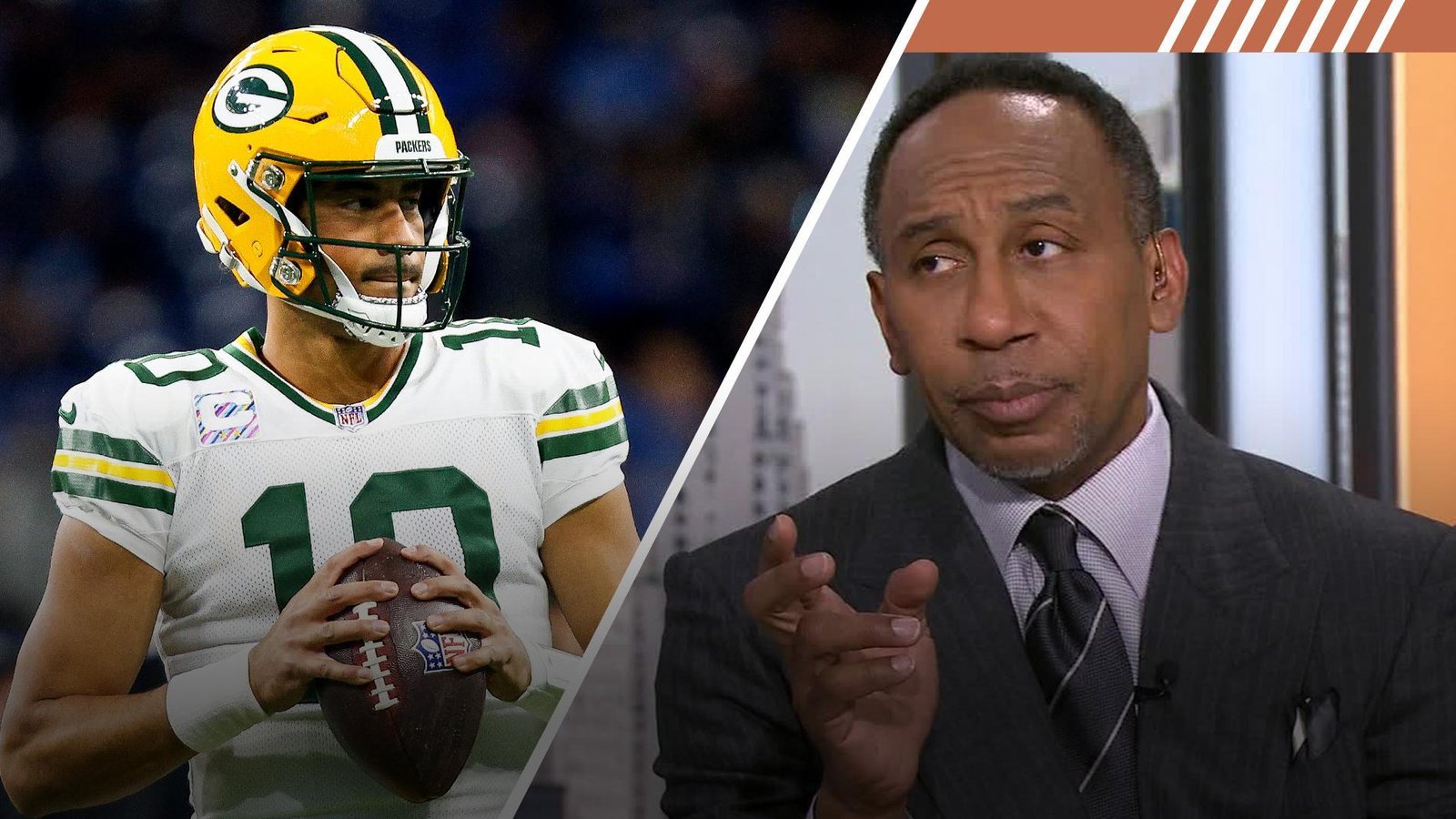
Micah Parsons and Patrick Mahomes suffered serious knee injuries on December 14, 2025, but their recovery timelines have followed very different paths. Mahomes returned to full participation before the Kansas City Chiefs‘ training camp opened in July 2026, while Parsons remained on the Green Bay Packers‘ physically unable to perform list more than 10 months after his injury.
The difference has raised questions among NFL fans about why two elite players recovering from anterior cruciate ligament (ACL) injuries have progressed at such different speeds. However, the comparison involves more than the calendar. Parsons also tore his meniscus, underwent surgery later than Mahomes and faced rehabilitation restrictions that affected his ability to bear weight and regain normal knee movement.
The position each player occupies adds another important distinction. Mahomes must be able to plant, pivot, throw and move under pressure, but Parsons plays a physically demanding defensive position in which acceleration, sudden changes of direction, contact and the ability to escape blockers are essential.
Green Bay’s medical and coaching staff must therefore determine not simply whether Parsons can run, but whether his knee can withstand the demands of professional football. Packers coach Matt LaFleur recently suggested that Parsons could begin practicing as early as the following week, offering the first indication of a possible next step in his recovery.
Understanding the difference between the two timelines requires looking at the additional damage to Parsons’ knee, the nature of meniscus repair surgery, the demands of his position and the final stages of ACL rehabilitation.
Micah Parsons and Patrick Mahomes Suffered Their Injuries on the Same Day
The two injuries occurred within a few hours of each other on December 14, 2025. Mahomes injured his left knee during a scramble in Kansas City, hyperextending it as his season came to an end. Later that day, Parsons went down in Denver after stumbling without contact and immediately grabbing his left knee.
Both players suffered torn ACLs, but the injuries were not identical.
Mahomes also suffered damage to his lateral collateral ligament (LCL), according to the original report. His surgeon, Dr. Dan Cooper of Dallas, operated promptly to address the injury. Parsons’ surgery took place approximately two weeks after his injury, with the delay attributed in part to personal circumstances surrounding the birth of his child and the consideration of initial swelling before surgery.
That difference affected the starting point for their recoveries. Mahomes underwent surgery earlier, while Parsons began his postoperative rehabilitation later.
By the time the Chiefs’ rookies and quarterbacks reported for training camp on July 24, Mahomes had been cleared. Parsons, meanwhile, had not reached the stage at which the Packers were ready to put him back on the practice field.
The comparison illustrates why the date of an injury alone cannot reliably predict a player’s return. The precise damage, surgical approach, rehabilitation restrictions and physical demands of the player’s role all influence the process.
The Meniscus Repair Is a Major Reason Parsons Needs More Time
One of the most important details in Parsons’ recovery is that his injury involved more than the ACL.
Parsons revealed that he also tore the meniscus in his left knee. He subsequently confirmed that his surgeon performed a meniscus repair rather than simply trimming the damaged tissue.
That distinction matters because the two procedures have different rehabilitation implications. A meniscus trim removes damaged tissue, while a repair attempts to preserve the tissue by allowing the torn portion to heal.
Repairing the meniscus can require additional protection during the early stages of recovery. Rehabilitation protocols vary depending on the injury, surgical findings and the surgeon’s instructions.
Dr. Sharif Tabbah, a physical therapist who has worked with NFL players recovering from ACL injuries, explained in the source report that meniscus repair can restrict knee bending to no more than 90 degrees for approximately four to eight weeks, depending on the surgeon’s protocol.
Such restrictions can affect the recovery of normal knee movement. The player must protect the repair while gradually rebuilding strength and mobility, creating an additional challenge alongside ACL rehabilitation.
Why walking can take longer after a combined injury
Parsons told ESPN that he did not walk without assistance for eight weeks after surgery. That was considerably longer than the approximately two weeks in which many patients recovering from an isolated ACL injury can stop using crutches, although individual recovery protocols differ.
The extended period of limited weight-bearing reflects the importance of protecting the repaired structures. Returning to normal walking too quickly can conflict with the restrictions established for healing.
As a result, Parsons had to progress through an early recovery phase that was more restrictive than the one commonly associated with an isolated ACL tear.
This distinction helps explain why comparing the two players’ injury dates can be misleading. Even when the ACL damage appears similar, an accompanying meniscus injury can change the sequence and pace of rehabilitation.
Why Patrick Mahomes Was Able to Return Earlier
Mahomes’ recovery benefited from an earlier operation and the absence of a reported meniscus injury. Although he also had an LCL injury, the original report indicated that his surgeon operated promptly to address the ligament damage.
Dr. Michael J. Alaia, a sports orthopedic surgeon at NYU Langone Health, explained that an LCL injury can influence the timing of surgery. In some cases, certain ligament injuries are treated earlier because delaying repair may make the procedure more difficult or affect the result.
That explanation provides context for the different surgical timelines, but it does not establish that every player with an LCL injury must undergo immediate surgery. Decisions depend on the specific injury and the treating surgeon’s assessment.
Mahomes’ earlier operation also gave him a head start on the postoperative rehabilitation process. By the time Parsons underwent surgery, Mahomes had already begun recovering from his procedure.
Even so, the difference in timing does not mean Mahomes’ ACL injury was necessarily less serious in every respect. Both players sustained significant injuries, and the available information describes different combinations of damaged structures and treatment requirements.
The more useful comparison is therefore not simply which player recovered faster. It is how the specific injuries shaped the rehabilitation demands each athlete faced.
Parsons’ Position Makes Returning to Football More Complicated
Micah Parsons plays a position that places exceptional demands on the lower body. As a pass rusher, he must accelerate toward the quarterback, change direction rapidly, bend around offensive tackles and react to blockers attempting to redirect or bring him down.
These movements require more than the ability to walk or run in a straight line. A player must demonstrate that the injured knee can tolerate repeated acceleration, deceleration, rotation and contact at game speed.
Mahomes faces a different set of physical demands as a quarterback. He needs to move effectively within and outside the pocket, plant his feet to throw and respond to defenders, but his role does not generally require the same repeated battles against offensive linemen that Parsons experiences.
This does not make quarterback rehabilitation easy or guarantee that a quarterback can return sooner. It means the final requirements for returning to competition differ by position.
Parsons must be able to use his injured leg confidently while fighting through blocks and changing direction under pressure. A knee that performs adequately during controlled rehabilitation may still need further conditioning before it is ready for those demands.
Why the risk of contact matters
Offensive players attempting to block a pass rusher may attack from different angles, grab at the defender or try to redirect his movement. Defensive players must react without knowing exactly how the next collision will unfold.
That unpredictability makes the return-to-play decision particularly important for a player whose effectiveness depends on speed and explosiveness.
Tight end Tucker Kraft, who was also recovering from an ACL injury, highlighted this distinction in the original report. He observed that quarterbacks receive a different level of protection on the field from defensive players such as Parsons, who regularly face attempts to stop their movement through contact.
The key consideration is whether Parsons can perform the specific movements his position requires without hesitation or an unacceptable risk of reinjury.
Green Bay’s Previous ACL Recoveries Provide Useful Context
The Packers have experience managing ACL recoveries, and two recent examples help explain why Parsons’ timeline has attracted attention.
Tight end Tucker Kraft tore his right ACL on November 2 in the previous season. According to the original report, he returned to practice approximately eight and a half months after surgery, or 271 days after the injury. He was cleared for full-team drills around two and a half weeks later and made his season debut in Week 1.
Wide receiver Christian Watson also returned to practice after recovering from a torn right ACL. His practice return came 274 days after the injury, and he played in his first game approximately 20 days later.
Those examples establish that the Packers have previously brought players back to practice in a period shorter than Parsons’ recovery had reached by the time of the report.
However, the comparisons have limitations. Kraft, Watson and Parsons play different positions, and Parsons’ meniscus repair introduced additional rehabilitation restrictions. Their surgical procedures, physical requirements and individual recovery progress also differed.
It would therefore be inaccurate to treat 271 or 274 days as a fixed deadline for every player recovering from an ACL injury.
| Player | Injury and recovery detail | What the comparison shows |
|---|---|---|
| Patrick Mahomes | ACL and LCL injuries; surgery shortly after the December 14, 2025, injury | Earlier surgery and a different injury combination shaped his recovery timeline. |
| Tucker Kraft | Right ACL tear; returned to practice 271 days after injury | A previous Packers recovery provides a reference point, not a universal deadline. |
| Christian Watson | Right ACL tear; returned to practice 274 days after injury | Another example of a recovery timeline that cannot automatically be applied to Parsons. |
| Micah Parsons | Left ACL and meniscus tears; meniscus repair and prolonged early weight-bearing restrictions | The additional injury and position-specific demands help explain the longer process. |
By the time covered in the report, 319 days had passed since Parsons’ injury and 304 days since his surgery. Although those figures exceeded the practice-return timelines cited for Kraft and Watson, the differences in the injuries mean that elapsed time alone cannot establish whether Parsons’ rehabilitation was delayed or proceeding appropriately.
Why Parsons’ Early Return Predictions Did Not Materialize
Parsons initially expressed confidence that he could return during the opening weeks of the 2026 season. In January, less than a month after surgery, he said he believed a return within the first four weeks was possible.
During training camp, he continued to express optimism, describing a return for the Week 6 game against his former team, the Dallas Cowboys, as realistic.
Neither timeline materialized.
According to a source familiar with his recovery, a November return had been the more likely outcome even without additional setbacks. The source indicated that Parsons’ need to regain full physical readiness, the meniscus injury and the demands of his position made an earlier return unlikely.
The difference between an athlete’s expectations and the eventual rehabilitation timeline is not unusual. Players may be able to complete certain exercises or demonstrate significant progress without satisfying every requirement for a full return to competition.
Training camp also involves more than individual running drills. A player must be able to participate in football-specific activities, handle the demands of practice and recover adequately between sessions.
For Parsons, the absence of full practice participation during training camp provided an indication that his recovery had not reached the stage necessary for a return to normal football activities.
The lesson is that an athlete’s optimism can coexist with a longer medical timeline. Confidence and motivation are valuable, but they do not replace the physical benchmarks required for safe participation.
Muscle Strength and Leg Symmetry Are Critical Before a Return
ACL rehabilitation does not end when the surgical repair has healed sufficiently for a player to begin running. The athlete must also rebuild strength, control and coordination so the injured leg can perform comparably with the uninjured one.
LaFleur alluded to this concern when discussing the need for Parsons’ body to be balanced, explaining that one leg should not be substantially stronger than the other.
Tabbah also emphasized the importance of symmetry. In the original report, he discussed using strength differences between the legs as one factor in deciding when an athlete can progress to more demanding exercises.
For example, single-leg exercises can help identify and address weaknesses that might be concealed when both legs perform a movement together. If an athlete relies more heavily on the stronger leg during a two-legged exercise, the weaker leg may not receive enough of the workload required to close the gap.
Improving strength symmetry is therefore one component of preparing the knee for the demands of competition.
However, symmetry is not the only consideration in an ACL return-to-play decision. Medical teams also assess functional performance, movement quality, sport-specific demands and the player’s overall recovery. No single percentage can independently determine whether an athlete is ready to return.
For Parsons, the goal is to establish that his injured leg can tolerate the explosive movements and repeated contact associated with pass rushing.
The Mental Side of ACL Rehabilitation Can Be Just as Challenging
Physical recovery is only part of the process. Returning to competition after a major knee injury can also involve uncertainty about whether the leg will respond normally under pressure.
Kraft described the final stage of rehabilitation as potentially frustrating because players can feel close to returning while still needing additional preparation.
That frustration is understandable for an athlete accustomed to performing at an elite level. Even after substantial progress, the remaining steps may involve careful testing, gradual increases in workload and repeated assessments before full participation becomes appropriate.
Parsons has a further reason to be cautious. According to a source familiar with his recovery, he has considered the experience of former Dallas Cowboys teammate Trevon Diggs, who suffered an ACL injury early in the 2023 season and did not return to his previous form after the injury.
That example does not establish what Parsons’ own outcome will be. Players respond differently to injuries, and one athlete’s recovery cannot reliably predict another’s career trajectory.
Nevertheless, it helps explain why a player might prioritize a thorough recovery rather than attempting to meet an early-season target. For an athlete whose effectiveness depends heavily on explosiveness, the objective is not merely to return quickly but to return capable of performing at a high level.
Does Micah Parsons Need More Time, or Is Green Bay Being Cautious?
The available information does not establish one definitive reason for Parsons’ prolonged absence from practice. His meniscus repair, early restrictions on weight-bearing, the need to rebuild strength and the physical demands of his position all provide plausible explanations for the longer timeline.
The Packers also have a strong incentive to avoid rushing a major player back before he is ready. Parsons is an important defensive investment, and a premature return could expose him to further injury or leave him unable to perform at his usual level.
That does not mean Green Bay is necessarily being overly cautious. Nor does the extended timeline, by itself, prove that Parsons has experienced a complication.
Injuries and rehabilitation vary considerably between individuals. Without a complete medical assessment, it is not possible to determine whether a particular player should already be practicing simply because another athlete returned at a similar point after surgery.
The most meaningful indicators will be Parsons’ ability to complete football-specific drills, demonstrate adequate strength and movement control, tolerate increasing workloads and progress through the Packers’ return-to-play process.
LaFleur’s suggestion that Parsons could begin practicing the following week offered a reason for optimism, but a potential practice return is not the same as medical clearance for a game. Practice participation can be an important step in evaluating readiness without establishing a definite date for competitive action.
What Happens Next in Parsons’ Recovery?
The next stage will depend on how Parsons responds to the demands of practice and whether the Packers determine that he has met the necessary physical benchmarks.
If he begins practicing, the coaching and medical staffs will have an opportunity to assess his ability to move at football speed, change direction and participate in drills that more closely resemble game conditions.
Any progression would need to account for the additional demands of his position. Successfully completing controlled exercises is one milestone; handling repeated contact with offensive linemen is another.
The Packers must also consider whether Parsons can sustain the required workload without an adverse response. A successful return is not just about completing one practice but demonstrating that the player can consistently handle the demands of the sport.
Until the team provides a clearer update, the possibility of a practice return should be treated as an indication of progress rather than a guarantee that Parsons will immediately be available for games.
Conclusion: Why Micah Parsons’ ACL Recovery Is Different From Mahomes’
Micah Parsons’ longer ACL recovery compared with Patrick Mahomes is best explained by the differences in their injuries, surgical timelines, rehabilitation restrictions and playing positions.
Mahomes underwent surgery earlier and did not have a reported meniscus injury. Parsons required a meniscus repair in addition to ACL surgery, faced a prolonged period without walking independently and needed to rebuild the strength and movement control required for an exceptionally physical defensive role.
The Packers’ previous ACL recoveries involving Tucker Kraft and Christian Watson provide useful comparisons, but they do not establish a deadline for Parsons. Each injury has its own requirements, and a player’s readiness must be judged by recovery progress rather than elapsed time alone.
Green Bay’s cautious approach may be frustrating for fans eager to see one of the NFL’s premier pass rushers return, but the central objective is to ensure that Parsons can withstand the demands of professional football.
His potential return to practice represents an encouraging development. The more important milestone, however, will be demonstrating that his knee can handle the acceleration, sudden direction changes and physical contact that define his position.
Ultimately, the difference between Parsons and Mahomes is not simply that one player recovered faster. Their injuries required different rehabilitation paths, and their bodies must meet different physical demands before they can safely return to competition.
For breaking news and live news updates, like us on Facebook or follow us on Twitter and Instagram. Read more on Latest NFL on thefoxdaily.com.




COMMENTS 0