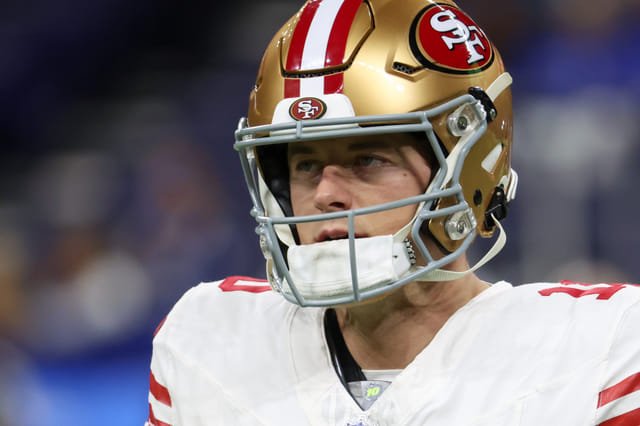
A Rare Compliment That Says a Lot About a Quarterback
When All-Pro tight end George Kittle speaks about teammates, it usually carries weight inside the locker room and across the league. His recent comments about backup quarterback Mac Jones have sparked interest not because of stats or highlight plays—but because of leadership.
Kittle described Jones as a “glue guy,” a term rarely used for quarterbacks in the NFL. In most locker rooms, quarterbacks are leaders by default, but Kittle’s remarks suggest something more unique: Mac Jones has become a unifying presence behind starter Brock Purdy within the San Francisco 49ers.
This raises an important question: why does a backup quarterback’s personality matter so much in a Super Bowl-contending roster?
Background: Mac Jones’ Unexpected Role in San Francisco
Mac Jones arrived in San Francisco with a very different narrative compared to his early career expectations. Once a first-round pick and franchise hopeful elsewhere, he transitioned into a backup role with the 49ers—one of the NFL’s most system-driven and competitive teams.
In 2026, Jones was forced into action when Brock Purdy dealt with injury setbacks. What followed surprised many: steady production, composure under pressure, and above all, consistency that helped the team stay afloat during a critical stretch of the season.
While backup quarterbacks are often judged purely on wins and losses, Jones added something less measurable but equally important—locker room energy and stability.
George Kittle’s “Glue Guy” Comment Explained
Kittle’s description of Jones as a “glue guy” is significant because it breaks the typical quarterback stereotype. Quarterbacks are usually seen as strategic leaders, not emotional connectors.
But according to Kittle, Jones brings something different:
“He’s a juice guy… he’s got all the energy in the world. Usually, your quarterback is not the glue guy.”
This statement highlights an unusual dynamic in the NFL: leadership is not always tied to starting status. Sometimes, it is about personality, energy, and how a player influences team culture behind the scenes.
Why Leadership Behind the Starter Matters in the NFL
In modern NFL teams, especially contenders like the 49ers, depth and culture matter as much as star power. Backup quarterbacks are no longer just insurance policies—they are integral to weekly preparation, practice intensity, and emergency game readiness.
A strong QB room ensures:
- Stability when injuries occur
- Consistent practice competition
- Reduced drop-off in offensive execution
- Strong locker room morale during adversity
Jones’ presence appears to check multiple boxes, making him more valuable than a typical backup quarterback.
The Brock Purdy Factor: Why Chemistry in the QB Room Is Crucial
Starter Brock Purdy has already established himself as a central figure in San Francisco’s offensive system. However, sustaining success over a long NFL season requires more than just one reliable starter.
In systems like the 49ers’, where timing, precision, and adaptability are critical, backup quarterbacks must be ready to step in without disrupting offensive rhythm.
Jones’ familiarity with the system, combined with his locker room influence, ensures that the team does not lose identity when rotation or injury forces changes.
Mac Jones’ On-Field Impact When Called Upon
Beyond leadership traits, Jones delivered meaningful on-field production when needed. During his starting stretch, he demonstrated efficiency, ball control, and the ability to manage games within a structured offense.
His performance included strong completion rates, controlled decision-making, and key wins that helped stabilize the team during Purdy’s absence.
One standout performance came in a high-pressure game where he led a comeback drive under physical strain, reinforcing his reputation as a dependable backup capable of handling NFL intensity.
Statistical Snapshot of Mac Jones’ Contribution
While stats do not fully define a “glue guy,” they help contextualize his role in the offense.
| Category | Performance Highlight |
|---|---|
| Games Started | Multiple starts during starter injury absence |
| Completion Rate | Near 70% efficiency during starting stretch |
| Passing Output | Over 2,000 yards in limited starts |
| Touchdowns | Double-digit passing touchdowns |
| Interceptions | Low turnover rate relative to starts |
Why the 49ers Value Mac Jones Beyond Numbers
The San Francisco 49ers have long prioritized system fit and team chemistry over individual statistics. Jones fits this philosophy perfectly.
His energy, communication style, and willingness to support teammates align with a culture built around accountability and consistency.
In high-performing NFL environments, the difference between winning and losing often comes down to subtle factors like leadership presence during practice weeks or how players respond to adversity.
Comparing QB Roles: Starter vs Backup Influence
| Factor | Brock Purdy (Starter) | Mac Jones (Backup “Glue Guy”) |
|---|---|---|
| Primary Role | Offensive leader and system executor | Support leader and emergency starter |
| Team Influence | Game-day decision maker | Locker room energy and practice intensity |
| Responsibility | Weekly performance pressure | Staying ready and maintaining morale |
| Impact Type | Statistical and strategic | Emotional and cultural |
| Visibility | High media attention | Low public attention, high internal value |
Why This Story Matters for the 49ers’ Super Bowl Ambitions
The 49ers are consistently considered Super Bowl contenders, which means every roster role carries strategic importance. A strong backup quarterback ensures that the team’s championship hopes remain intact even if injuries occur.
In that context, Mac Jones becomes more than a backup—he becomes a safeguard for continuity.
George Kittle’s praise suggests that the team not only trusts Jones on the field but also values him as a cultural stabilizer in the locker room.
Future Outlook: Could Mac Jones’ Role Expand?
While Brock Purdy remains the established starter, NFL seasons are unpredictable. Injuries, performance fluctuations, and strategic adjustments can quickly change depth charts.
Jones’ combination of experience, system familiarity, and leadership presence ensures that he will remain a critical piece of the roster moving forward.
If anything, his “glue guy” reputation may increase his long-term value across the league, especially for teams seeking reliable veteran backups.
Conclusion: The Hidden Importance of a “Glue Guy” Quarterback
The George Kittle Mac Jones glue guy 49ers quarterback depth story highlights an often overlooked truth in the NFL: winning teams are built not only on stars, but also on personalities who hold everything together behind the scenes.
While Brock Purdy leads the offense on game day, Mac Jones appears to be playing a crucial role in maintaining unity, energy, and readiness within one of the league’s most competitive environments.
In a league where margins are razor-thin, that kind of influence might be just as valuable as a highlight throw or a game-winning drive.
For breaking news and live news updates, like us on Facebook or follow us on Twitter and Instagram. Read more on Latest Sports on thefoxdaily.com.






COMMENTS 0