The dispute between Louisiana State University and the Southeastern Conference (SEC) over player eligibility has entered another significant phase after Georgia Attorney General Christopher Carr urged the conference to consider disciplinary action against the Tigers, potentially including expulsion. In a letter addressed to SEC Commissioner Greg Sankey on Wednesday, Carr accused LSU of demonstrating a repeated disregard for conference regulations and argued that its latest decision to add basketball player RJ Luis to the roster raises serious questions about the league’s authority to enforce its own rules. The letter marks the second time Carr has directly contacted SEC leadership about LSU’s handling of player eligibility disputes. It also comes amid growing legal tensions involving LSU, the SEC, state officials and athletes seeking additional opportunities to compete in college sports.
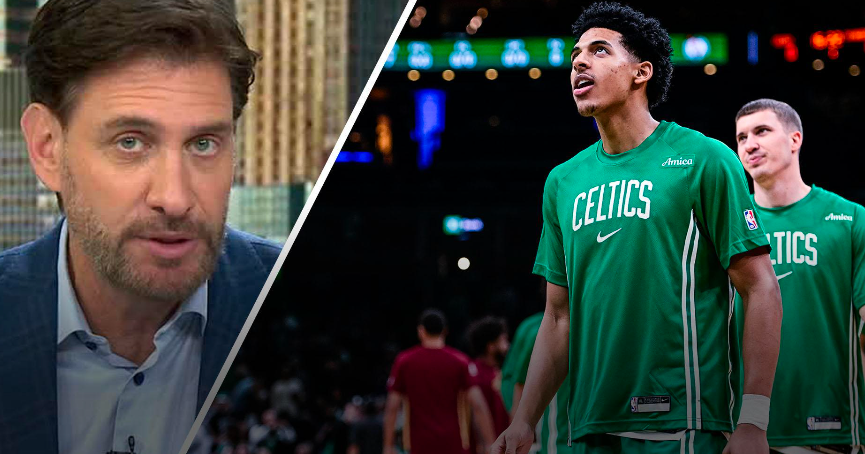
The immediate issue is LSU’s decision to roster Luis, a 23-year-old basketball player who previously declared for the 2025 NBA draft and later appeared professionally for the Boston Celtics during the preseason. Luis received a temporary restraining order and subsequently a preliminary injunction from a Louisiana state court allowing him to pursue another college season. The SEC has said it will comply with the court order while it remains in effect, meaning the conference cannot penalize LSU for playing Luis under the current terms of the injunction. Carr, however, argues that LSU is once again using legal proceedings to challenge rules that its member institutions previously approved.
The disagreement now extends beyond one player’s eligibility. At its center is a broader question about how the SEC should respond when a member university relies on a state court ruling that appears to conflict with conference-wide eligibility regulations. Carr wants the league’s presidents and chancellors to consider formal action against LSU, while LSU’s position is shaped by the legal protection currently available to Luis. The SEC must navigate the court order while also addressing concerns about the consistency and enforceability of its rules.
Georgia Attorney General Calls for SEC Action Against LSU
In his latest letter to Sankey, Carr described LSU’s conduct as a pattern of destructive behavior and urged the SEC’s leadership to respond. He argued that the university’s repeated challenges to conference eligibility rules cannot be treated as isolated incidents. According to Carr, LSU has continued to pursue arrangements that undermine regulations approved by the conference’s own member institutions.
Carr’s criticism was particularly direct in his assessment of LSU’s decision to add Luis to its men’s basketball roster. He described the move as an immediate issue of grave concern and argued that the university was attempting to benefit from legal uncertainty that it had helped create. His letter stated that LSU was again seeking to take advantage of legal chaos surrounding eligibility disputes.
The Georgia attorney general also emphasized that SEC rules are not simply recommendations that universities can choose to follow when convenient. Member institutions participate in conference governance and agree to operate under common regulations. Carr’s argument is that those commitments should carry consequences when a university repeatedly challenges the rules through legal proceedings.
He encouraged the SEC’s presidents and chancellors to consider appropriate disciplinary measures, explicitly raising the possibility of expelling LSU from the conference. Such a recommendation represents a serious escalation because expulsion would affect LSU’s long-term relationship with one of the most prominent athletic conferences in college sports.
However, Carr’s letter is a request for action rather than an announcement that the SEC has decided to punish LSU. The conference’s leadership would need to consider the matter through its established governance procedures. The letter also does not change the legal status of Luis’s eligibility or remove the protection provided by the Louisiana court’s injunction.
RJ Luis Eligibility Dispute Triggers the Latest Confrontation
The latest controversy developed after LSU placed Luis on its men’s basketball roster, a move that immediately attracted attention because of his professional basketball history. Luis previously played for St. John’s before declaring for the 2025 NBA draft in March of that year. He went undrafted and subsequently participated in the Boston Celtics’ preseason program as a professional player.
His previous declaration for the NBA draft is central to the SEC’s eligibility regulations. The conference adopted a rule on August 25 that restricts eligibility for athletes who previously declared for the NFL, NBA or WNBA draft without appropriately withdrawing their names. The rule is intended to establish a common standard for athletes whose professional draft decisions could otherwise create uncertainty about their college eligibility.
Under that regulation, Luis’s previous NBA draft declaration became a significant obstacle to returning to College Basketball. LSU’s decision to roster him therefore raised questions about whether the university could add a player whose circumstances appeared to fall within the restrictions established by the SEC.
Luis challenged the eligibility restriction in Louisiana state court. On Friday, he received a preliminary injunction from a local judge allowing him to play another college season. The ruling followed an earlier temporary restraining order and provided the legal basis for LSU to move forward with adding him to the roster.
LSU subsequently included Luis in its lineup for Wednesday night’s game against UL Monroe. He was in uniform and made his debut after entering the contest with 12:04 remaining in the first half. His appearance transformed the eligibility disagreement from a legal dispute about a possible roster addition into an active issue involving a player competing in an official game.
For LSU, the injunction provides an immediate legal basis for allowing Luis to participate. For Carr, the decision to use that protection demonstrates why he believes the SEC must address the university’s relationship with conference regulations. The two positions reflect different questions: whether Luis can play under the court order and whether LSU’s conduct should face consequences under the SEC’s governance system.
Why the SEC Cannot Penalize LSU Under the Current Injunction
The SEC’s response to the court ruling has been shaped by the legal restrictions imposed through the preliminary injunction. On Monday, the conference confirmed that it would abide by the terms of the injunction while it remains in effect. That position means the SEC cannot impose penalties on LSU for adding Luis while the court order provides the applicable protection.
The conference’s response is important because it separates its disagreement with the roster decision from its ability to enforce the eligibility rule. The SEC has not indicated that it considers the underlying eligibility regulation irrelevant. Instead, it has acknowledged that the court order affects what the conference can do while the injunction remains active.
On Tuesday, the SEC issued a carefully worded statement describing LSU’s decision to roster Luis as a deeply concerning and disappointing development. The language showed that the conference was unhappy with the situation even though it had agreed to comply with the court’s ruling.
This creates a complicated position for the SEC. The conference must respect the judicial order while also maintaining the credibility of its eligibility policies. If it attempted to punish LSU in a way prohibited by the injunction, it could face further legal consequences. At the same time, remaining silent about the roster decision could create questions about whether conference rules are being applied consistently.
The distinction between legal compliance and institutional approval is therefore central to the dispute. The SEC can follow the injunction without endorsing LSU’s interpretation of the situation. Similarly, LSU can rely on the court’s ruling without necessarily resolving the wider disagreement over the conference’s eligibility policy.
The current legal protection also does not automatically settle every question involving the SEC’s authority. The injunction determines what the conference can do under its terms while it remains in place. Any future disciplinary decision would have to account for the precise scope of the court’s order and the conference’s governing procedures.
Attorney for RJ Luis Seeks Contempt Action Against SEC
The legal confrontation intensified further on Wednesday when Luis’s attorney told ESPN that he had filed a motion asking 19th Judicial District Court Judge William Jorden to hold the SEC and Sankey in contempt of court. The motion followed the conference’s public statement criticizing LSU’s decision to add Luis to its roster.
The attorney reportedly characterized the SEC’s statement as a threat, arguing that it suggested LSU could face consequences for relying on the Louisiana court’s ruling. According to the attorney’s interpretation, the conference’s language implied that following the injunction could carry a cost for the university.
The contempt motion introduces another legal question into an already complicated dispute. The SEC has said it will comply with the preliminary injunction, but Luis’s legal team appears concerned that the conference’s public criticism could undermine the practical effect of the court’s decision.
Whether the judge accepts that argument remains a separate matter for the court. Filing a contempt motion does not mean that the SEC or Sankey has been found in contempt. The judge would need to consider the motion and determine whether the conference’s conduct violated the injunction or any applicable court requirements.
The development also places additional pressure on the relationship between the conference and Louisiana’s legal authorities. The SEC is attempting to defend its shared eligibility regulations, while Luis’s legal team is seeking to protect the player’s ability to compete under a state court order. LSU’s roster decision has become the point where those competing interests directly meet.
For the SEC, the situation demonstrates how public statements about an ongoing legal dispute can create additional complications. Even when a conference believes that a member institution has acted against its regulations, it must carefully distinguish criticism of that decision from actions that could interfere with a judicial order.
LSU’s Eligibility Problems Began With Football Players
The disagreement involving Luis is not the first time LSU has faced questions about athletes seeking eligibility after entering professional football environments. The university has been under scrutiny from the SEC for months following disputes involving football players Dae’Quan Wright and Zxavian Harris.
Wright and Harris had verbally committed to play for LSU after spending time in NFL camps. Their professional football experiences created eligibility questions under the conference’s regulations. Both players pursued legal action in Louisiana, seeking permission to compete at the college level.
The players received preliminary injunctions allowing them to play. However, LSU ultimately decided not to place either athlete on its roster on September 4, the Friday night before the Tigers’ season-opening game against Clemson.
That decision became an important part of the wider conflict because it showed that obtaining a favorable court ruling did not automatically mean LSU would use the players. The university’s choice not to roster Wright and Harris also differed from its later decision involving Luis.
The three cases share a central issue: athletes who have entered or pursued professional opportunities are seeking another chance to compete in college sports, while the SEC is attempting to enforce eligibility standards adopted by its member institutions.
However, the cases are not identical. Wright and Harris had spent time in NFL camps, while Luis declared for the NBA draft and later participated in the Celtics’ preseason program. The different circumstances may affect the legal arguments and the application of the conference’s regulations.
LSU’s handling of the cases has nevertheless become a source of concern for SEC leadership. Carr’s latest letter refers to a broader pattern rather than treating the Luis decision as an entirely separate matter. His position is that the conference should consider the cumulative effect of LSU’s actions when deciding whether institutional discipline is necessary.
SEC Filed Federal Lawsuit Against LSU
The conflict between LSU and the SEC escalated in September when the conference filed a federal lawsuit in Alabama seeking to enforce its eligibility rules. The legal action followed the disputes involving Wright and Harris and reflected the conference’s effort to establish that its member universities must comply with regulations adopted through shared governance procedures.
On September 3, the SEC filed the lawsuit. Five days later, it submitted an amended complaint that included an accusation that LSU lacked institutional control over its athletic programs. The amended complaint expanded the dispute beyond individual player eligibility and raised broader questions about the university’s responsibility to follow conference policies.
The SEC also scheduled a vote involving its presidents and chancellors to consider whether LSU should be expelled from the conference. That vote never took place. Although the possibility of expulsion entered the discussion, no final decision was reached through the planned process.
The conference’s September 8 statement outlined its position on the importance of agreed-upon regulations. It argued that the SEC and its member universities have the right to establish rules through their governance procedures and expect every participating institution to follow them.
The statement also emphasized that commitment to conference regulations and the principles of the SEC is an essential part of membership. In other words, the conference presented rule compliance as a shared institutional responsibility rather than an optional requirement that could vary from university to university.
The SEC’s amended complaint also named Louisiana Attorney General Elizabeth Murrill as a defendant. Her inclusion demonstrated that the dispute had expanded beyond the athletic department and university leadership, bringing state-level legal officials into the broader disagreement.
The federal lawsuit and the latest letter from Carr are separate developments, but both concern the same underlying issue: the SEC’s ability to enforce rules that its members have agreed to follow. The renewed call for possible disciplinary action indicates that concerns about LSU’s conduct have not disappeared despite the earlier decision not to hold the scheduled expulsion vote.
Why Expulsion Is a Significant Possibility
Carr’s suggestion that LSU could face expulsion is one of the most consequential elements of his letter. The SEC is not simply a collection of universities competing in sporting events. Its member institutions operate within a shared structure of athletic governance, eligibility standards and conference decision-making.
Removing a university from that structure would represent a major institutional decision. It would affect LSU’s position within the conference and raise questions about the future of its athletic programs in relation to the SEC. Such a step would also require the conference to consider the procedures and standards governing membership decisions.
At this stage, expulsion remains a possibility raised by Carr rather than an outcome approved by the SEC. His letter encourages the presidents and chancellors to consider the full range of disciplinary options. It does not establish that the conference has agreed to remove LSU or that a new vote has been scheduled.
The issue also involves a difficult balance between enforcing shared rules and respecting the legal process. The SEC adopted its eligibility policy through conference governance, but athletes and universities can still pursue legal challenges when they believe a rule should not prevent participation. Courts may issue orders that temporarily change how those rules can be applied in individual cases.
For conference leaders, the challenge is to protect the credibility of their regulations without disregarding judicial decisions. For LSU, the challenge is to manage its athletic roster while navigating legal disputes that could affect its relationship with the conference. For players such as Luis, the immediate concern is whether they can compete while their eligibility cases remain before the courts.
What the Dispute Means for College Sports
The LSU controversy highlights the growing complexity of college sports eligibility, particularly when athletes move between college competition and professional opportunities. The traditional distinction between college athletes and professional players has become more complicated as players explore different routes toward professional careers and later seek opportunities to return to college competition.
Conference eligibility rules are designed to create consistent standards across member institutions. Without common regulations, universities could face different eligibility situations depending on how individual athletes entered professional environments or pursued draft opportunities. The SEC’s August 25 rule attempts to address one part of that challenge by specifying restrictions for athletes who declared for certain professional drafts without appropriately withdrawing.
However, the dispute shows that writing a rule and enforcing it are two different challenges. A regulation may be approved by conference members, but its application can still be challenged in court. When a judge issues an injunction, conference officials must consider the legal order even if they disagree with the result or believe the rule should apply differently.
The situation also raises questions about consistency. LSU chose not to roster Wright and Harris after they received preliminary injunctions, but it later added Luis after he secured a similar form of legal protection. The circumstances of the athletes’ cases differ, and the available information does not establish that the decisions were legally identical. Nevertheless, the contrasting roster outcomes have become part of the wider discussion about LSU’s approach to eligibility disputes.
For other SEC universities, the outcome could influence how they respond when athletes challenge conference rules through state courts. If institutions believe that eligibility policies can be repeatedly contested through legal action, they may seek greater clarity about enforcement procedures. Conversely, the cases could encourage conferences to examine whether their regulations need more precise language to address athletes with professional experience.
The dispute also illustrates the importance of communication between conference officials, universities and courts. A public statement criticizing a member institution may be intended to defend conference standards, but it can create additional legal questions when a court order is already in effect. The contempt motion filed by Luis’s attorney demonstrates how quickly the disagreement can expand beyond the original eligibility question.
What Happens Next for LSU and the SEC?
The next phase of the dispute will depend on several developments. One immediate issue is the motion asking Judge William Jorden to hold the SEC and Sankey in contempt. The court’s response could clarify whether the conference’s public statement is considered inconsistent with the preliminary injunction or whether it falls outside the order’s restrictions.
Another important question concerns the continued status of Luis’s injunction. The SEC has said it will follow the court’s ruling while it remains in place. Any change to that legal protection could affect the conference’s ability to enforce its eligibility rule in his case and could alter the university’s position regarding his participation.
The SEC’s leadership must also decide how to respond to Carr’s request. The Georgia attorney general has urged the conference’s presidents and chancellors to consider disciplinary action, including possible expulsion. However, the conference has not announced that it will take that step. The earlier expulsion vote was never held, and the latest letter does not establish that another vote is imminent.
The federal lawsuit filed by the SEC remains another important part of the broader conflict. Its focus on enforcing conference regulations and the allegations included in the amended complaint show that the disagreement is not limited to Luis’s basketball eligibility. The outcome of the wider legal proceedings could influence how the SEC approaches future disputes involving LSU and other member institutions.
For LSU, the immediate priority is managing its athletic program while the legal and conference-level disagreements continue. The university’s decision to play Luis has already attracted criticism from Carr and the SEC, but the preliminary injunction provides the current legal basis for his participation. The university must therefore navigate both its obligations under the court order and its relationship with conference leadership.
A Growing Test of SEC Authority
Christopher Carr’s latest letter has renewed pressure on the SEC to decide how firmly it intends to enforce its eligibility rules against LSU. By asking the conference to consider sanctions up to and including expulsion, the Georgia attorney general has placed the question of institutional accountability at the center of the dispute.
At the same time, the Luis case demonstrates the limits of conference enforcement when a state court issues an injunction. The SEC has acknowledged that it must comply with the ruling, while Luis’s attorney is now asking the judge to examine whether the conference’s public response crossed a legal boundary.
The earlier disputes involving Wright and Harris, the federal lawsuit, the amended complaint and the abandoned expulsion vote all form part of the background to the latest confrontation. Together, these developments have turned LSU’s eligibility decisions into a wider test of how a major college sports conference can maintain common regulations when universities and athletes challenge them through the courts.
No final decision on expulsion has been announced, and the legal questions surrounding Luis remain unresolved. The SEC must balance its responsibility to enforce conference rules with its obligation to respect judicial orders. LSU, meanwhile, faces continued scrutiny over how it handles athletes seeking eligibility after professional basketball or football opportunities.
The outcome could have consequences beyond one university or one player. It may influence how the SEC approaches future eligibility disputes, how member institutions respond to conference regulations and how courts interpret the relationship between private athletic governance and state-level legal protections. For now, Carr’s demand has intensified the pressure on Sankey and the SEC’s leadership, leaving the future of LSU’s conference standing and the broader eligibility dispute uncertain.
For breaking news and live news updates, like us on Facebook or follow us on Twitter and Instagram. Read more on Latest Basketball on thefoxdaily.com.






COMMENTS 0