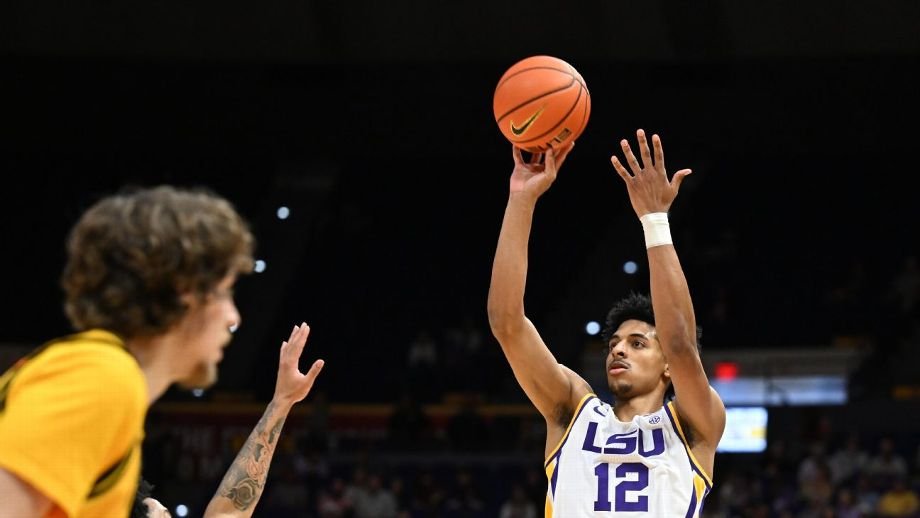
College Basketball is entering a new era in which the traditional boundaries between amateur athletics and professional sports are becoming increasingly difficult to define. Few programs illustrate that transformation better than the LSU Tigers, whose 2026-27 season has become entangled in an extraordinary dispute involving player eligibility, professional contracts, court rulings and conference regulations.
At the center of the controversy are LSU head coach Will Wade and former college basketball star RJ Luis Jr. Their situation has developed into a much larger institutional battle involving the NCAA, the Southeastern Conference (SEC), Louisiana courts and the future direction of college athletics.
Wade’s decision to recruit players with professional basketball experience has challenged established interpretations of NCAA eligibility. Luis, meanwhile, has become the most visible example of the uncertainty surrounding athletes who have signed professional agreements but have not established themselves as NBA players.
The dispute reached another important stage on November 18, 2026, when Luis appeared in an LSU game against Louisiana-Monroe for the first time. His appearance came amid a legal confrontation that intensified just hours earlier, when his attorney filed a motion seeking to hold the SEC and commissioner Greg Sankey in contempt of court.
What initially appeared to be a roster-building strategy has therefore developed into a significant test of how college basketball will regulate athletes whose careers cross between professional and collegiate competition.
Will Wade’s Return to LSU: A Second Chance Under Greater Scrutiny
Understanding the current controversy requires examining Wade’s complicated relationship with LSU.
Wade previously coached the Tigers from 2017 until 2022, building a competitive program that won the SEC regular-season championship in 2019. His teams attracted national attention, but his tenure was also overshadowed by allegations involving improper recruiting payments.
In March 2022, LSU dismissed Wade following NCAA allegations that included five Level I violations. The investigation involved allegations of improper benefits and recruiting arrangements involving multiple players and their associates.
One particularly damaging element was a federal wiretap recording in which Wade discussed making a strong offer to secure a recruit. The controversy raised questions about recruiting practices and institutional oversight.
LSU leadership eventually concluded that the university could no longer continue under the uncertainty surrounding the investigation. Wade’s departure appeared to end his relationship with one of college basketball’s most prominent programs.
From LSU Dismissal to an Unexpected Coaching Comeback
Wade did not immediately return to a major college coaching position. Instead, he spent time in Chattanooga, Tennessee, working as a basketball consultant for NBA organizations and remaining connected to the sport.
His next opportunity arrived in March 2023, when McNeese hired him as head coach. The appointment included contractual restrictions designed to address the consequences of his previous LSU tenure.
The NCAA subsequently imposed a 10-game suspension and a two-year show-cause penalty. Despite those restrictions, Wade rebuilt McNeese into a competitive program.
In 2024, McNeese reached the NCAA tournament for the first time in 22 years. The Cowboys eventually lost to Gonzaga, but the achievement helped restore Wade’s reputation as a capable program builder.
In 2025, Wade accepted the head coaching position at NC State. However, his stay in Raleigh proved relatively short. After the 2025-26 season, he returned to LSU in March 2026, describing the opportunity as a chance to go home.
His return carried enormous expectations. LSU wanted to rebuild its basketball program quickly, and Wade promised to construct a team capable of competing at the highest level.
But his rebuilding strategy would soon create a different challenge: determining which players could legally participate in college basketball.
RJ Luis Jr.: The Player at the Center of the NCAA Eligibility Controversy
RJ Luis Jr. became the most important figure in LSU’s eligibility dispute because his basketball career does not fit neatly into the NCAA’s traditional categories.
Before arriving at LSU, Luis established himself as an outstanding college player. He earned Associated Press second-team All-American recognition and was named Big East Player of the Year in 2025.
After going undrafted in the 2025 NBA draft, Luis signed two-way agreements with the Utah Jazz and Boston Celtics.
Those agreements became the central issue.
A two-way NBA contract is a professional arrangement that allows a player to move between an NBA organization and its associated G League team under specific contractual conditions. It does not necessarily mean that the athlete has established a regular NBA career.
However, the NCAA’s eligibility framework has historically treated professional agreements and participation in professional basketball as important considerations when determining whether an athlete can return to college competition.
Why Luis’ Situation Is Different
The distinction between signing a professional contract and actually appearing in an NBA game is central to Luis’ argument.
He had not appeared in an NBA regular-season game, but his agreements with professional organizations created questions about whether he had already exhausted his opportunity to participate in college athletics.
In August 2026, Luis obtained a preliminary injunction from a Louisiana court allowing him to play for LSU while the legal dispute continued.
The ruling created an immediate challenge for the NCAA, which had to defend its eligibility interpretation while the player argued that the governing body was applying inconsistent standards.
His legal team also questioned the distinction between college athletes receiving compensation through NIL arrangements and players who had signed professional agreements but had not played in the NBA.
This argument touches on a broader issue: when college athletes can receive substantial compensation, how should the NCAA distinguish between a college athlete and a professional basketball player?
That question has implications far beyond one LSU roster spot.
How LSU Built a Roster Around Eligibility Challenges
Wade’s approach to rebuilding LSU involved looking beyond the traditional transfer portal market.
Rather than relying exclusively on established college transfers and high school recruits, LSU pursued international professionals, experienced American players and athletes seeking additional seasons of college eligibility.
The strategy offered a potentially valuable competitive advantage. Experienced players could provide immediate production, while international prospects could bring professional development and tactical experience.
However, the approach also introduced uncertainty because several recruits required NCAA approval or favorable legal decisions before becoming eligible.
International Players and the Professional Basketball Question
LSU attracted attention by pursuing several international prospects with professional basketball backgrounds.
Among them were Marcio Santos, Saliou Niang, Michael Ruzic, Brice Dessert and Gilad Levy.
These players represented different eligibility situations. Their previous participation in professional leagues raised questions about how the NCAA should evaluate international basketball experience, compensation and contractual arrangements.
International basketball systems also differ considerably from American college athletics. Young players in Europe and other regions may join professional organizations at relatively early ages, sometimes before they have reached the stage at which American players typically enter college.
Consequently, applying a single eligibility framework to athletes from different basketball systems can create difficult questions.
The NCAA must consider more than a player’s age or professional experience. Compensation arrangements, contract terms, participation history and the governing eligibility rules can all influence the decision.
LSU’s international recruiting strategy therefore became an important test of how consistently those standards could be applied.
The Fifth-Year Eligibility Dispute
Another important part of Wade’s rebuilding strategy involved experienced American college players seeking additional seasons of eligibility.
Skyy Clark and Donovan Dent were among the players whose eligibility situations became connected to court proceedings.
The controversy developed around the NCAA’s five-for-five eligibility framework, which established a five-year period for athletes to compete across five seasons, subject to applicable rules.
Players whose college careers began under earlier eligibility arrangements argued that pandemic-related disruptions and the transition to the new system created circumstances deserving additional consideration.
Different court cases produced temporary protections and favorable rulings for certain athletes.
On August 21, 2026, the NCAA successfully blocked a Colorado court ruling that would have provided a broader eligibility waiver for players from the 2022 recruiting class.
However, other individual cases continued. Dent received a preliminary injunction in October, while Clark obtained an additional season following a separate legal development.
The result was a complicated recruiting environment in which players with similar circumstances could face different outcomes depending on the legal proceedings affecting their cases.
The SEC vs. LSU: When a Recruiting Dispute Became a Conference Battle
The controversy expanded beyond the NCAA when the SEC introduced restrictions concerning athletes with professional basketball experience.
On August 25, 2026, the SEC joined the Big Ten in adopting a policy restricting athletes who had previously declared for professional basketball from returning to college competition without appropriately withdrawing.
The policy also addressed athletes who had signed professional contracts or appeared on professional team rosters.
This created a particularly difficult situation for LSU because some of Wade’s recruits appeared to fall within the categories covered by the conference’s restrictions.
For the SEC, the issue was not simply whether an individual player should be eligible. It also involved maintaining consistent conference rules and determining how member institutions should respond to athletes with professional experience.
Why the SEC Took Such a Strong Position
Conference eligibility policies serve several purposes. They establish common standards for member schools, reduce uncertainty about competition and help protect the integrity of conference championships.
If one university can rely on court rulings to include athletes who would otherwise be restricted under conference policies, other institutions may question whether the same rules apply equally to everyone.
That concern becomes particularly important when eligibility decisions influence competitive balance, recruiting opportunities and postseason participation.
The SEC’s disagreement with LSU eventually became part of a broader federal legal dispute.
On September 8, 2026, the conference filed a federal lawsuit against LSU. The dispute also involved LSU football coach Lane Kiffin and the recruitment of players with NFL training camp experience.
Although the football and basketball situations involved different athletes, both raised a common institutional question: how far can a university go in challenging conference eligibility restrictions?
The SEC’s threatened action against LSU demonstrated that the disagreement had moved beyond ordinary recruiting disagreements.
Will Wade’s Leadership Under Pressure
Wade’s coaching style has always attracted strong reactions. Supporters view him as an ambitious recruiter capable of building competitive teams quickly. Critics question his willingness to operate near the boundaries of NCAA regulations.
His second LSU tenure has brought those competing perceptions back into focus.
During the October 13 SEC media-day controversy, Wade defended his roster and expressed confidence that the players he considered part of his team would eventually become eligible.
His exchange with reporter Pat Forde attracted additional attention because eligibility had become the defining issue surrounding LSU’s season.
The absence of Wade and LSU from the SEC basketball media event, officially attributed to weather-related travel difficulties in Baton Rouge, also generated social media speculation.
Local meteorologists confirmed the weather concerns, but the incident illustrated how closely every development involving Wade was being examined.
The larger challenge for Wade is that recruiting success and legal success are not necessarily the same thing.
A coach can identify talented players, secure their commitments and construct a competitive roster. But the team still needs a reliable understanding of which athletes can participate under the rules governing its competition.
That distinction has become particularly important at LSU, where roster construction and eligibility proceedings have developed simultaneously.
November 2026: RJ Luis Finally Takes the Court for LSU
The Luis dispute reached another significant milestone in November.
On November 13, 2026, a Louisiana judge granted Luis a preliminary injunction allowing him to compete for LSU during the ongoing eligibility dispute.
The SEC subsequently indicated that it would not attempt to block or punish LSU for adding Luis to its official roster.
Five days later, LSU added Luis to its athletic department website for the first time. The conference nevertheless described the decision as deeply concerning and disappointing.
The disagreement did not end there.
On November 18, hours before LSU’s fifth game of the season, Luis’ attorney filed a motion seeking to hold the SEC and commissioner Greg Sankey in contempt of court. The filing accused the conference of threatening consequences for LSU after the university decided to roster Luis.
Later that evening, Luis finally made his LSU debut against Louisiana-Monroe.
He entered the game with 12:04 remaining in the first half, marking an important moment in a controversy that had occupied much of the college basketball conversation before the season began.
His appearance did not automatically resolve the underlying legal questions. Instead, it demonstrated how court orders can influence college basketball eligibility while larger disputes remain unresolved.
Why This Case Matters Beyond LSU and RJ Luis
The LSU controversy is important because it highlights several structural problems facing modern college basketball.
1. The Line Between College and Professional Basketball Is Changing
For decades, the NCAA relied on a relatively straightforward distinction between amateur college athletes and professional players.
That distinction has become more complicated with NIL compensation, direct athlete payments and increased movement between college and professional basketball environments.
An athlete may now receive compensation, sign professional agreements or participate in international leagues without following the traditional American college-to-NBA pathway.
The NCAA must therefore determine whether its existing definitions remain suitable for a basketball environment that has changed considerably.
2. Court Decisions Are Becoming Increasingly Important
The LSU situation also demonstrates how legal proceedings can influence athletic eligibility decisions.
When athletes challenge NCAA or conference rules in court, temporary restraining orders and preliminary injunctions can affect whether they are allowed to compete while litigation continues.
This creates uncertainty for coaches, universities, conference officials and opposing teams.
It also raises questions about whether eligibility should primarily be determined through consistent national regulations or whether individual legal challenges will continue shaping the system.
3. Conference Rules Need Greater Clarity
The disagreement between LSU and the SEC exposes another problem: NCAA regulations and conference policies must operate within a coherent framework.
If a player receives permission to compete through a court order but faces restrictions under conference regulations, universities can find themselves dealing with competing legal and administrative obligations.
Clearer definitions of professional participation, contract status, eligibility restoration and enforcement procedures could reduce future disputes.
4. Recruiting Strategies Could Change Across College Basketball
LSU’s approach may influence how other programs evaluate experienced players.
Coaches looking for immediate roster improvements could become more interested in international professionals, undrafted prospects and athletes seeking additional eligibility seasons.
However, the LSU experience also provides a warning: a talented recruit is not necessarily a guaranteed contributor if his eligibility remains uncertain.
Programs may increasingly evaluate legal risk alongside basketball ability, financial expectations and transfer availability.
What Happens Next? The Future of NCAA Eligibility Rules
The immediate focus remains on the continuing legal dispute involving Luis, LSU and the SEC. The November 18 contempt motion adds another dimension to a disagreement that has already involved multiple court proceedings.
However, the longer-term implications could be even more significant.
The NCAA faces pressure to establish eligibility standards that reflect the modern financial and professional realities of college athletics. Rules that depend on outdated distinctions may become increasingly difficult to defend when athletes move between different basketball systems.
At the same time, conferences have legitimate interests in maintaining consistent competition standards. Allowing individual institutions to disregard conference policies could create problems for the broader structure of college sports.
The most likely direction for the sport is continued legal and administrative clarification rather than an immediate return to the traditional eligibility model.
Future decisions involving professional contracts, international players and additional college seasons could establish important precedents for other programs.
For LSU, the immediate priority is turning a complicated offseason into a successful basketball campaign. Wade has also attracted major recruiting commitments for the 2027 class, including several highly rated prospects, giving the program reasons for optimism beyond the current controversy.
Conclusion: LSU Has Become a Test Case for the Future of College Basketball
Will Wade’s return to LSU was supposed to represent a new beginning for a program determined to compete at the highest level. Instead, his recruiting strategy has placed the Tigers at the center of one of the most complicated eligibility disputes in modern college basketball.
RJ Luis Jr.’s situation has exposed the growing difficulty of distinguishing professional basketball experience from college eligibility in an era of NIL compensation, international recruiting and changing athlete rights.
The NCAA, SEC and LSU are now confronting questions that extend well beyond one player or one season. Their decisions could influence how future athletes move between professional organizations and college programs.
For Wade, the challenge is no longer simply building a talented roster. It is proving that his unconventional approach can produce a competitive team while navigating an increasingly complicated regulatory environment.
For the NCAA, the challenge is equally important: developing rules that are clear, consistent and capable of surviving legal scrutiny.
One thing is already clear. The LSU eligibility controversy is not just another college basketball recruiting story. It is a revealing example of how rapidly the relationship between college sports, professional basketball and athlete compensation is changing.
For breaking news and live news updates, like us on Facebook or follow us on Twitter and Instagram. Read more on Latest Sports on thefoxdaily.com.






COMMENTS 0