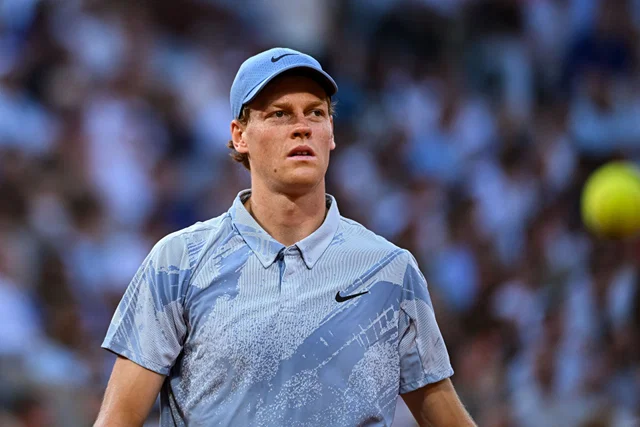
Jannik Sinner‘s return to professional tennis has become increasingly uncertain as fresh reports suggest that the Italian star is preparing to seek another medical opinion in the United States. The five-time Grand Slam champion has reportedly consulted specialists in Italy and France but continues to experience inflammation around his right knee, preventing him from returning to regular training. According to Vanity Fair Italia, Sinner wants an additional assessment before deciding on the next stage of his recovery. The reported plan has attracted attention because it would be his third specialist consultation and comes after months away from competitive tennis. Spanish journalist José Morón has questioned whether the repeated medical consultations indicate uncertainty about the diagnosis or a lack of confidence in the advice Sinner has already received. However, there is no confirmed evidence that the Italian has lost trust in his medical team. With the Australian Open remaining his main objective, the coming weeks could be crucial in determining whether he can return without risking a more serious injury.
Sinner has not competed since July 12, when he defeated Alexander Zverev in the Wimbledon final to secure his fifth Grand Slam title. His right-knee problem has kept him away from the tour for several months, creating uncertainty around his comeback schedule. During his absence, Zverev reportedly replaced him as world No. 1 earlier in the month, ending Sinner’s 95-week period at the top of the rankings. The Italian is currently scheduled to return at the Six Kings Slam exhibition event in Riyadh from December 27 to 30, although his participation and subsequent tournament plans will depend on his recovery.
The latest report has added another layer to the uncertainty. Sinner has already met Professor Alberto Zangrillo at San Raffaele hospital in Milan and French specialist Bertrand Sonnery-Cottet in Lyon. Vanity Fair Italia reports that the injury involves inflammation of the iliotibial band, potentially linked to the physical demands of matches and training. The condition is reportedly still affecting his ability to train consistently, while surgery has not been proposed by the specialists in Italy. The planned consultation in the United States could help clarify the diagnosis and determine whether continued rest and rehabilitation are sufficient.
Why Jannik Sinner Is Reportedly Seeking Another Medical Opinion
The possibility of another consultation has become the central talking point in Sinner’s recovery story. According to Vanity Fair Italia, the Italian wants a third specialist’s opinion before committing to a treatment plan. The reported medical journey has included consultations in Milan and Lyon, with earlier reports also referring to doctors in Monte Carlo and Turin.
Seeking multiple medical opinions is not necessarily unusual for an elite athlete dealing with a persistent injury. Professional tennis places considerable physical demands on the body, particularly on players who compete across long tournaments and travel internationally throughout the season. A knee problem that prevents regular training can affect not only match readiness but also movement, balance and the ability to withstand repeated changes of direction.
For a player at Sinner’s level, returning too early could create additional problems. Tennis requires explosive acceleration, sudden stops, lateral movement and repeated loading of the lower body. Even if pain becomes manageable during everyday activities, the knee may not yet be ready for the demands of professional competition.
The reported inflammation of the iliotibial band has therefore become an important part of the discussion. The iliotibial band is a strong band of connective tissue running along the outside of the thigh, extending from the hip area toward the outer side of the knee. Irritation in this region can cause discomfort around the knee, particularly during repetitive movement and physical activity.
However, the exact diagnosis, severity and treatment recommendations have not been fully detailed in the available report. It would be premature to assume that the condition requires surgery or that a particular treatment has failed. The reported decision to consult another specialist suggests that Sinner wants greater clarity before determining how to proceed.
The United States consultation could provide an additional assessment of the existing diagnosis and recovery options. It may also help Sinner and his team evaluate whether the current rehabilitation approach needs adjustment. Until the consultation takes place and its findings become known, the precise direction of his treatment remains uncertain.
José Morón Questions the Repeated Medical Consultations
The latest developments prompted a strong reaction from José Morón, a Spanish tennis journalist and editor of Punto de Break who has followed the situation. Morón questioned why Sinner has reportedly consulted several doctors across different cities and countries without reaching a clearly communicated recovery plan.
In his comments, Morón pointed to reports that the Italian had visited specialists in Monte Carlo, Turin, Milan, Lyon and now the United States. He suggested that the number of consultations raised questions about whether Sinner was satisfied with the medical advice he had received.
“Throughout the time Sinner has been injured, the Italian press has reported that he has seen doctors in Monte Carlo, Turin, Milan, Lyon, and now the USA. A tour of hospitals and doctors that doesn’t quite make sense. Doesn’t Sinner trust the doctors he’s seeing, or what’s behind this?” Morón posted.
Morón’s comments have added a debate about the communication surrounding Sinner’s injury. Fans have been waiting for a clearer explanation of the problem, its severity and the expected recovery timeline. The absence of regular updates has allowed speculation to grow, especially because the player has been away from competition for an extended period.
However, Morón’s question should be understood as commentary rather than confirmation of a problem between Sinner and his doctors. There is no established evidence that the Italian distrusts his medical team. Consulting several specialists can be a way of comparing opinions, checking a diagnosis or making sure that an athlete chooses the safest treatment option.
For a Grand Slam champion whose career depends on long-term physical health, obtaining additional medical advice may be a cautious decision. The important issue is whether the consultations help establish a consistent plan that allows him to recover without unnecessary risk.
The situation also highlights the challenge of communicating medical information in professional sport. When a leading player remains unavailable for months, every new report can become a major talking point. Yet medical decisions are often complex, and the absence of a precise public timetable does not necessarily mean that the treatment process is failing.
Australian Open Remains Sinner’s Main Comeback Target
Despite the uncertainty surrounding his knee, Sinner has publicly identified the Australian Open as his main objective. Speaking at a sponsor event in Milan on November 10, the Italian explained that he wants to compete in Australia but understands that his recovery cannot be rushed.
“The aim is to go to Australia, the aim is also maybe to do a couple of tournaments first. But I have to respect the protocols at the moment because if we rush things we could have more serious problems,” he said.
His comments suggest that the Australian Open is the target rather than a guaranteed return date. Sinner also indicated that he would like to play a couple of tournaments before arriving in Melbourne, if his physical condition allows it. Such preparation could help him regain match rhythm and test his movement under competitive conditions.
However, the possibility of playing warm-up tournaments depends on how quickly his knee improves. A player returning after a lengthy injury absence generally needs time to rebuild fitness and confidence. Training sessions alone may not fully reproduce the intensity of professional matches, where movement patterns and physical demands can change rapidly.
The Australian Open is especially important because it represents one of the biggest events on the tennis calendar. For Sinner, competing in Melbourne would offer an opportunity to return to the stage where Grand Slam ambitions are tested. But reaching the tournament is only one part of the challenge. He would also need to be physically prepared to handle the demands of a multi-match Grand Slam campaign.
The reported United States consultation could therefore have a major influence on his schedule. If specialists believe that additional rest is necessary, Sinner may need to reconsider his plans for December and January. If his recovery progresses well, he could potentially begin a gradual return through training and preparatory competition.
His public comments show that he is aware of the risks associated with an early comeback. Rather than promising a specific date, he has emphasized following medical protocols and avoiding a decision that could lead to more serious problems.
Six Kings Slam Comeback Could Be Affected by Recovery Progress
Sinner is scheduled to return at the Six Kings Slam exhibition event in Riyadh from December 27 to 30. The event provides a possible first appearance after his extended absence, but his participation will depend on the condition of his knee and the recommendations of his medical team.
Exhibition tennis differs from the regular ATP Tour in terms of competitive structure, but it can still involve intense movement and high-level physical performance. For a player recovering from knee inflammation, even a limited appearance would need to be considered carefully.
The event could offer Sinner an opportunity to return to the court before the Australian Open, but only if he is sufficiently prepared. A comeback appearance should not be treated as proof that an athlete has completed rehabilitation or is ready for the demands of a Grand Slam tournament.
There is also a scheduling question. If Sinner wants to play a couple of tournaments before the Australian Open, he will need enough time to complete rehabilitation, resume full training and assess his match fitness. Any delay in those stages could affect his ability to follow the original plan.
For now, the Six Kings Slam remains a scheduled target, while the Australian Open is the more important competitive objective identified by Sinner himself. The final decision will depend on medical advice and how his knee responds to increasing physical activity.
“I Took It All for Granted”: Sinner Reflects on His Injury Layoff
The extended absence has also changed how Sinner views his career and achievements. Speaking to The Associated Press, the Italian discussed the emotional difficulty of being unable to compete and explained how much he misses playing tennis.
For a player who has spent recent seasons competing for major titles and the world No. 1 ranking, being away from the court has represented a significant change in daily life. Professional athletes often follow demanding routines built around training, travel, competition and recovery. An injury can interrupt that structure and leave players facing uncertainty about when they will be able to return.
Sinner acknowledged that the past few months have been difficult because he misses competing and doing the activity he loves most.
“They haven’t been easy months, or rather they are not easy months, simply because I miss the competition, I miss going out onto the court, I really miss the thing I love doing: Playing tennis. But in this very important moment taking care of my body is of the utmost importance, because I want to keep playing for another 10 or 15 years. So, if I end up returning to the court a month later, it doesn’t really change anything from that perspective,” Jannik Sinner said.
His comments reveal a shift in priorities. Although returning to competition remains important, Sinner has made it clear that protecting his body is more valuable than saving a few weeks in his comeback schedule. His reference to wanting to play for another 10 or 15 years underlines the importance of considering the long-term consequences of his treatment decisions.
That approach could be particularly relevant for a player whose game depends on speed, movement and physical consistency. Rushing back before the knee is ready might create the possibility of further setbacks, potentially affecting more than one tournament.
His willingness to accept a later return also suggests that he is trying to view the injury as a long-term career challenge rather than a short-term interruption. The immediate disappointment of missing competition remains, but the bigger objective is to return in a condition that allows him to continue playing at the highest level.
How the Injury Has Changed Sinner’s View of Winning
Beyond the physical and emotional challenges, Sinner also explained that the injury layoff has changed his perspective on his achievements. Before being sidelined, winning tournaments had become a regular part of his professional life. The Italian admitted that he had sometimes viewed success as something almost expected.
“Before, it almost felt like the most normal thing in the world: You have a tournament, you win it, then you have another, you win it. Now, however, I’ve come to truly appreciate what I’ve managed to achieve,” he said.
His reflection highlights how an extended absence can change an athlete’s relationship with competition. When a player is regularly winning, the focus can move quickly from one tournament to the next. An injury interrupts that routine and can make previous accomplishments feel more significant.
Sinner also said that his desire to win remains strong and that he wants to experience the feeling of lifting another major trophy. He explained that the motivation to return and compete for the biggest titles has not disappeared during his recovery.
“At the same time, my desire to win is even stronger, the urge to lift a major trophy. It’s the most wonderful feeling and the very thing we work so hard for. Previously, I took it all for granted, as if it were just the natural order of things; I hope to experience those emotions again… and maybe I will enjoy everything even more,” he added.
These comments provide a different perspective on the comeback debate. While outside observers are focused on the medical uncertainty and the possibility of another delay, Sinner appears to be concentrating on returning in a condition that will allow him to compete for major titles again.
His comments do not resolve the medical questions, but they demonstrate that the time away from tennis has influenced how he views success and his career. The motivation to win remains, while the importance of maintaining his physical health has become even clearer.
Why a Careful Return Matters for Sinner’s Long-Term Career
Sinner’s situation illustrates the difficult balance elite tennis players must maintain between competing regularly and protecting their bodies. The professional calendar involves frequent travel, demanding matches and limited recovery periods. Even players with strong physical conditioning can experience injuries that require extended rehabilitation.
A knee problem can be particularly challenging because tennis involves repeated lateral movement, quick changes of direction and sudden acceleration. Players must also maintain balance while hitting powerful groundstrokes and recovering position after each shot. If the knee remains irritated, these movements can become difficult to perform consistently.
That is why a return-to-play decision generally involves more than checking whether pain has decreased. Medical teams may need to assess strength, mobility, movement patterns and the athlete’s ability to tolerate progressively demanding training sessions. The player also needs enough time to rebuild match fitness.
In Sinner’s case, the reported inflammation and continuing difficulty with regular training suggest that the recovery process is not yet complete. However, the available information does not provide enough medical detail to determine how serious the condition is or how long rehabilitation may take.
The additional consultation in the United States could help clarify the situation. It may provide another perspective on the diagnosis and treatment options, but it does not automatically mean that previous medical advice was incorrect or that surgery is necessary.
For Sinner, the most important outcome will be a treatment plan that allows him to return safely. His own comments indicate that he is prepared to accept a delayed comeback if that is what his body requires. That decision could be important not only for the Australian Open but also for the rest of his career.
What Happens Next in Jannik Sinner’s Recovery?
The next major development is expected to be the outcome of Sinner’s reported consultation with a specialist in the United States. The assessment could help determine whether the current rehabilitation strategy should continue or whether another approach is necessary.
Another important factor will be his ability to resume consistent training. Until Sinner can practise regularly without aggravating the knee, his participation in competitive events will remain uncertain. A gradual return to movement and tennis-specific drills would likely be an important step before he considers playing full matches.
The December Six Kings Slam is currently on his schedule, but the Australian Open remains the main objective he has publicly discussed. The possibility of competing in warm-up tournaments will depend on how much progress he makes during the coming weeks.
The reported American consultation has also created fresh discussion about the number of specialists involved in his recovery. Morón’s questions have drawn attention to the lack of a detailed public explanation, but they do not establish that Sinner has lost confidence in his doctors. More information from the player or his team would be needed to understand the reasons behind the additional opinion.
Conclusion
Jannik Sinner’s comeback remains uncertain as reports of a planned medical consultation in the United States add another development to his prolonged knee recovery. After meeting specialists in Italy and France, the five-time Grand Slam champion reportedly wants another assessment before deciding on the next stage of treatment. The reported iliotibial band inflammation continues to affect his ability to train regularly, while surgery has not been proposed in Italy.
José Morón’s comments have raised questions about the repeated medical consultations, but there is no confirmed evidence that Sinner distrusts his doctors. The Italian’s own statements suggest that his priority is to follow medical protocols and avoid rushing back before his body is ready.
The Six Kings Slam in December remains a scheduled comeback target, while the Australian Open is the main objective Sinner has identified. Whether he reaches Melbourne will depend on the results of the latest medical assessment and his progress in training. For now, his message is clear: returning a little later is preferable to risking a more serious problem that could affect the next decade of his career.
For breaking news and live news updates, like us on Facebook or follow us on Twitter and Instagram. Read more on Latest Sports on thefoxdaily.com.






COMMENTS 0