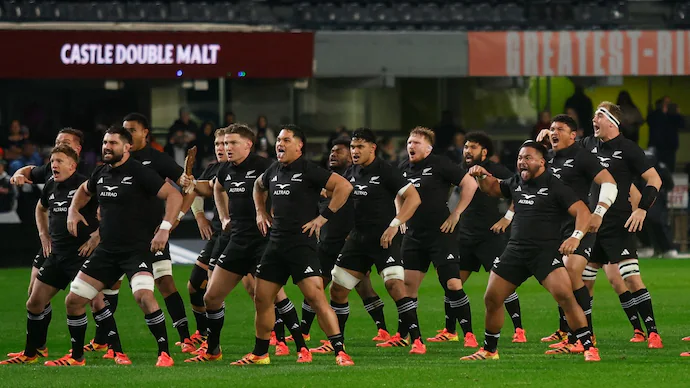
Rajgir, Bihar, witnessed a memorable blend of sport and cultural tradition as New Zealand‘s Under-20 men’s Rugby team performed the iconic Haka during the India-New Zealand U20 International Rugby Sevens Series. The performance at the Rajgir Sports Complex attracted attention beyond the competition, giving local spectators an opportunity to experience a Māori tradition closely associated with New Zealand rugby.
The Haka, known for its rhythmic chanting, forceful movements and intense facial expressions, is an important expression of Māori culture, identity and collective pride. Its appearance in Bihar added a cultural dimension to an international sporting event marking a century of sporting relations between India and New Zealand.
The tournament brought together young rugby players from both countries for a series of competitive matches and exhibition games. While the teams battled on the field, the Haka offered a distinctive moment that connected sporting competition with cultural exchange.
What Is the Haka? Understanding New Zealand’s Famous Rugby Tradition
The Haka is a traditional Māori performance involving coordinated movements, chanting, gestures and facial expressions. Although it is widely recognised internationally through New Zealand’s rugby teams, its cultural significance extends beyond sport.
Different forms of Haka can serve different purposes within Māori culture, including expressing unity, honouring people and marking important occasions. In rugby, the performance has become a familiar feature of New Zealand teams’ preparations for matches and an internationally recognised expression of their cultural identity.
The performance in Rajgir introduced this tradition to an Indian sporting audience. For spectators watching the New Zealand Under-20 players, it offered an opportunity to see a cultural practice that is often associated with international rugby broadcasts.
The Haka should not be understood simply as an attempt to intimidate opponents. Its significance is rooted in Māori heritage, cultural expression and group identity. That broader meaning helps explain why the performance can remain memorable even when viewed outside the context of a rugby match.
India-New Zealand U20 Rugby Sevens Series Inaugurated in Rajgir
The India-New Zealand Under-20 International Rugby Sevens Series was inaugurated by Bihar Chief Minister Samrat Choudhary at the Rajgir Sports Complex in Nalanda district on Tuesday, according to the supplied report.
The tournament was scheduled from October 23 to 28 at the State Sports Academy in Rajgir. It brought international Under-20 rugby competition to Bihar as part of efforts to strengthen sporting connections between India and New Zealand and promote rugby in the state.
The series was described as the first visit to India by New Zealand’s Under-20 rugby teams for an event of this kind. The participation of the visiting teams gave young Indian players an opportunity to compete against international opposition on home soil.
Senior Officials Attend the Tournament’s Opening Ceremony
Several senior officials attended the inauguration, reflecting the event’s sporting and diplomatic significance. Those present included Union Minister of State for Youth Affairs and Sports Raksha Khadse, Bihar Sports Minister Shreyasi Singh, New Zealand Acting High Commissioner to India Matthew Ayres, Bihar Chief Secretary Pratyaya Amrit and Director General of Police Preeta Verma.
According to a statement from the Chief Minister’s Office, Choudhary said the event aligned with Prime Minister Narendra Modi’s vision for sports and would help deepen sporting relations between India and New Zealand.
Players from both countries met the chief minister before the matches and introduced themselves. Choudhary also unveiled jerseys bearing the signatures of representatives from the two countries.
These activities complemented the matches by bringing together athletes, government representatives and sporting officials. They also highlighted the wider cooperation surrounding the international series.
India U20 Women Defeat New Zealand 17-0 as Men’s Team Loses 32-0
The tournament also delivered contrasting results for India’s Under-20 rugby teams. India’s women’s team recorded a 17-0 victory over New Zealand, while New Zealand’s men’s team defeated India 32-0.
The women’s result gave India a win against the visiting side, while the men’s fixture ended in a decisive victory for New Zealand. Together, the results demonstrated the competitive nature of the international series.
However, the scores alone do not reveal the tactical details behind either match. Assessing the teams’ performances in greater depth would require additional information, such as try-scoring sequences, defensive statistics, possession figures and individual contributions.
Why International Under-20 Rugby Matches Matter
International fixtures can help young athletes gain experience against unfamiliar opponents and different approaches to the game. They also provide opportunities for players to evaluate their performances in a competitive environment.
For India, the women’s victory represented a positive result, while the men’s defeat provided a match outcome that could be reviewed during future preparation. The available information does not establish which specific tactical adjustments either team might make following the tournament.
The contrasting results also added sporting interest to an event that extended beyond competition. Alongside the matches, the cultural performance and exhibition games highlighted the tournament’s broader objective of bringing the two countries together through rugby.
Mixed-Team Exhibition Matches Celebrate 100 Years of Sporting Ties
Two mixed-team exhibition matches were organised during the series, with Indian and New Zealand players sharing the same teams. The matches formed part of celebrations marking 100 years of sporting relations between the two countries.
Unlike conventional international fixtures, in which national teams compete against each other, mixed-team exhibitions bring players together on shared rosters. This format offers an opportunity for athletes to interact in a different competitive setting.
In Rajgir, the exhibition games complemented the main fixtures by emphasising cooperation alongside competition. They also reinforced the centenary theme, placing sporting interaction between the two countries at the centre of the event.
The combination of competitive matches, mixed-team games and the Haka performance gave the series several distinct elements. The matches supplied the sporting contest, the exhibition games encouraged interaction, and the traditional Māori performance provided a memorable cultural highlight.
How the Rugby Tournament Could Help Promote the Sport in Bihar
Hosting an international rugby series brought attention to Rajgir’s sporting facilities and created an opportunity for local spectators to watch young international athletes compete.
For a state seeking to broaden participation in sports, international events can help introduce unfamiliar games to new audiences. Watching live rugby may give spectators a clearer understanding of its speed, physical demands and emphasis on teamwork than they might gain from brief highlights alone.
However, hosting an international tournament does not automatically lead to long-term growth in participation. Sustained development depends on access to coaching, suitable facilities, regular competitions and opportunities for young people to learn the sport.
Grassroots Development Is Key to Long-Term Growth
School competitions, community-level programmes and structured coaching can provide pathways for young people interested in rugby. These opportunities allow beginners to develop basic skills before progressing to more competitive levels.
The Rajgir series created a platform for international exposure, but any lasting impact on rugby in Bihar would depend on what follows the event. Regular local competitions and continued access to training could help convert public interest into active participation.
The Under-20 category is particularly relevant to youth sport because it places young athletes at the centre of international competition. Events involving players in this age group can also provide local spectators with an opportunity to watch developing talent rather than only established senior teams.
These are potential benefits rather than confirmed outcomes of the tournament. Determining whether participation in Bihar increases would require information about subsequent programmes, player registrations and local competition opportunities.
India-New Zealand Sporting Relations Beyond Rugby
The tournament’s centenary theme placed the matches within a broader story of sporting connections between India and New Zealand. By bringing young athletes together in Rajgir, the event provided a setting for competition, cultural exchange and interaction between representatives of the two countries.
Sporting relationships can develop through international fixtures, athlete exchanges, joint events and opportunities for players to experience different sporting environments. Such encounters allow participants to learn from one another while representing their respective teams.
The mixed-team exhibition matches reflected this cooperative approach, while New Zealand’s Haka performance offered Indian spectators a glimpse of a cultural tradition associated with the visiting team.
The presence of Indian government officials and New Zealand’s diplomatic representative also highlighted the institutional context surrounding the event. However, the supplied report does not identify any new formal agreements or partnerships announced during the inauguration.
The distinction is important when assessing the tournament’s broader significance. The event provided a platform for sporting and cultural exchange, but any claims about lasting diplomatic outcomes would require additional evidence.
What Happens Next for Rugby in Bihar?
The tournament was scheduled to conclude on October 28, 2026. Its longer-term significance will depend partly on whether the attention generated in Rajgir translates into greater awareness of rugby and more opportunities for young athletes.
Continued youth competitions could give aspiring players regular opportunities to participate, while coach development and school-level programmes could help build the foundations for a wider rugby community.
For Indian teams, international fixtures provide opportunities to assess performance against visiting opponents. The results from Rajgir offer a starting point for reviewing the matches, although detailed conclusions about tactical strengths and weaknesses would require additional match data.
For Bihar, the tournament’s lasting value may depend on whether local players and communities gain access to regular training and competition after the international teams leave. Facilities, coaching and grassroots participation would all be relevant to any sustained expansion of the sport.
The available information does not confirm specific follow-up programmes arising from the series. Nevertheless, the event created an opportunity to raise rugby’s profile and introduce local audiences to international competition.
Haka in Bihar: A Cultural Highlight of the Rajgir Rugby Series
New Zealand’s Under-20 men’s rugby team’s Haka performance became a memorable highlight of the India-New Zealand U20 International Rugby Sevens Series in Rajgir. The traditional Māori performance brought cultural expression and sporting identity into an event celebrating 100 years of sporting relations between the two countries.
The tournament also produced contrasting results, with India’s Under-20 women defeating New Zealand 17-0 and the New Zealand men’s team beating India 32-0. Two mixed-team exhibition matches further emphasised the series’ focus on interaction between players from both countries.
For Bihar, hosting the international competition brought attention to Rajgir as a venue for rugby and gave spectators an opportunity to experience a major cultural tradition associated with New Zealand sport.
Whether the event leads to sustained growth in local rugby remains to be seen. Its immediate significance, however, extended beyond the scoreboard: the tournament combined international competition, Māori cultural expression and sporting exchange in a single event in Bihar.
For breaking news and live news updates, like us on Facebook or follow us on Twitter and Instagram. Read more on Latest Sports on thefoxdaily.com.


COMMENTS 0