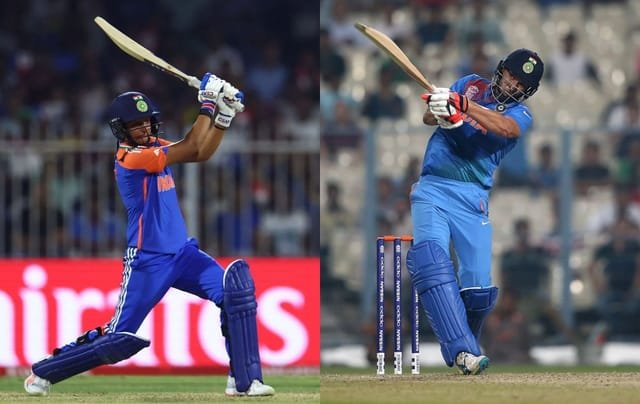
Primary Keyword: Harmanpreet Kaur vs Yuvraj Singh T20 World Cup stats comparison
The ICC T20 World Cup has produced some of the most explosive batting performances in modern cricket history. From Yuvraj Singh’s iconic six sixes in 2007 to Harmanpreet Kaur’s match-defining innings in women’s global tournaments, both players have become symbols of fearless Indian batting on the world stage.
This article goes beyond surface-level statistics to analyze Harmanpreet Kaur vs Yuvraj Singh after 28 T20 World Cup innings, focusing not just on numbers, but on context, match pressure, opposition quality, and performance evolution over time.
While comparing a men’s and women’s cricketer is not traditionally done, modern analytics allows us to explore patterns of dominance, adaptability, and clutch performance in ICC tournaments with a more nuanced lens.
LSI Keywords Used:
- T20 World Cup batting comparison
- ICC tournament performance analysis
- strike rate in T20 cricket
- knockout match performance
- Indian cricket legends comparison
- women’s vs men’s cricket stats
- clutch batting in ICC events
Context: Why This Comparison Matters in Modern Cricket Analytics
Cricket in 2026 is no longer just about averages and total runs. Analysts now prioritize:
- Strike rate under pressure
- Performance in knockout matches
- Impact against top-tier opposition
- Consistency in winning causes
Both Harmanpreet Kaur and Yuvraj Singh represent two different eras of Indian cricket aggression. Yuvraj redefined T20 batting during the 2007 revolution, while Harmanpreet has carried forward that aggressive DNA in women’s cricket, especially in ICC events where India has often fallen short in finals.
This makes their statistical comparison after equal T20 World Cup innings a fascinating study in impact versus efficiency.
Overall Performance After 28 T20 World Cup Innings
At the core of this comparison lies total output and scoring efficiency. After 28 innings each, both players show contrasting profiles.
| Player | Runs | Average | Strike Rate | Highest Score | 100s | 50s |
|---|---|---|---|---|---|---|
| Harmanpreet Kaur | 524 | 19.40 | 104.59 | 103 | 1 | 1 |
| Yuvraj Singh | 593 | 23.72 | 128.91 | 70 | 0 | 4 |
At first glance, Yuvraj Singh leads in almost every category except centuries. However, this comparison requires deeper interpretation. Yuvraj operated in an era where T20 cricket was still evolving, while Harmanpreet has played in a more structured, data-driven modern phase where strike rates are heavily scrutinized.
Harmanpreet’s solitary century remains one of the most dominant knocks in Women’s T20 World Cup history, highlighting her ability to convert starts into match-defining innings.
Batting Style Breakdown: Power vs Structure
Yuvraj Singh: Controlled Explosiveness
Yuvraj’s batting was built on timing, clean hitting, and calculated aggression. His ability to hit six sixes in an over symbolized peak T20 destruction. However, beyond the highlights, his T20 World Cup innings often came in high-pressure knockout or semi-final scenarios.
His strike rate of 128.91 reflects a balanced approach between risk and control.
Harmanpreet Kaur: High-Risk, High-Impact Approach
Harmanpreet operates in a more volatile batting role, often walking in during unstable middle-order collapses. Her strike rate of 104.59 might look lower, but her impact increases significantly in matches where India depends heavily on her stability.
Her century against New Zealand remains a benchmark for women’s T20 World Cup batting aggression.
Performance in Wins: The Real Measure of Impact
Winning contributions matter more than aggregate runs in ICC tournaments. Let’s examine their output in matches India won.
| Player | Matches (Wins) | Runs | Average | Strike Rate | 50s | 100s |
|---|---|---|---|---|---|---|
| Harmanpreet Kaur | 19 | 372 | 31.00 | 127.83 | 1 | 1 |
| Yuvraj Singh | 19 | 441 | 31.50 | 138.67 | 3 | 0 |
Yuvraj again edges ahead in strike rate and consistency. However, Harmanpreet’s numbers show a sharp rise in performance during winning causes, indicating her ability to align her batting tempo with match outcomes.
Interestingly, both players average around 31 in winning matches, suggesting a similar level of contribution when the team performs well.
Knockout Performance: Pressure Defines Greatness
Knockout matches separate good players from legends. This is where the gap becomes more visible.
| Player | Matches | Runs | Average | Strike Rate | Best Score |
|---|---|---|---|---|---|
| Harmanpreet Kaur | 4 | 44 | 11.00 | 80.00 | 24 |
| Yuvraj Singh | 4 | 113 | 28.25 | 129.88 | 70 |
Yuvraj Singh clearly dominates knockout performance metrics. His 70 against Australia in the 2007 semi-final remains one of the greatest ICC innings ever played under pressure.
Harmanpreet, meanwhile, has struggled in knockout consistency, although her 2023 semi-final knock against Australia showed signs of elite-level temperament.
Why Strike Rate Tells Only Half the Story
One of the most misunderstood aspects of this comparison is strike rate interpretation.
Yuvraj’s high strike rate reflects a naturally aggressive batting role in a dominant batting lineup. Harmanpreet often carries the burden of rebuilding innings, which naturally reduces scoring tempo.
Modern cricket analysts emphasize contextual strike rate rather than raw numbers. For example:
- Powerplay vs middle overs impact
- Wickets lost at the time of arrival
- Required run rate pressure
In this framework, Harmanpreet’s contributions often carry higher contextual value than raw strike rate suggests.
Key Insights: What This Comparison Actually Reveals
- Yuvraj Singh = Peak impact hitter in elite ICC moments
- Harmanpreet Kaur = Volume contributor with occasional explosive peaks
- Both average similarly in winning games
- Yuvraj dominates knockout cricket decisively
- Harmanpreet shows stronger century conversion in women’s T20 history
The biggest takeaway is not superiority, but role difference shaped by era, team structure, and match conditions.
Broader Impact on Indian Cricket Legacy
Yuvraj Singh remains a symbol of India’s 2007 T20 revolution. His fearless batting changed how India approached white-ball cricket forever.
Harmanpreet Kaur carries a similar legacy in women’s cricket, especially after India’s breakthrough ODI World Cup success. Her leadership has helped redefine expectations from Indian women in global tournaments.
Together, they represent two pillars of India’s evolving aggressive batting identity in ICC events.
Future Outlook: What Comes Next?
For Harmanpreet Kaur, the 2026 T20 World Cup could define her legacy. A strong knockout performance would immediately elevate her standing in all-time ICC discussions.
For Yuvraj Singh, his legacy is already cemented, but modern analytics continue to highlight how advanced his batting approach was for his era.
If cricket evolves further into data-heavy evaluation, both players will remain case studies in:
- Impact vs consistency
- Pressure performance metrics
- Era-adjusted batting value
Conclusion
The Harmanpreet Kaur vs Yuvraj Singh T20 World Cup stats comparison is not about declaring a winner. Instead, it highlights how cricket greatness is shaped differently across genders, eras, and match roles.
Yuvraj Singh represents explosive knockout brilliance. Harmanpreet Kaur represents resilient, responsibility-driven batting under evolving team dynamics.
Both have contributed significantly to India’s ICC legacy, and both will continue to be referenced whenever T20 World Cup batting greatness is discussed.
For breaking news and live news updates, like us on Facebook or follow us on Twitter and Instagram. Read more on Latest Sports on thefoxdaily.com.





COMMENTS 0