The ICC Women’s T20 World Cup 2026 begins in England on June 12. It is the 10th edition of the tournament, and the same country that hosted the inaugural event in 2009 is hosting it again. Five remarkable players will compete in both the first and the tenth edition, and their combined story is one of the most compelling in women’s cricket history.
Introduction: Seventeen Years and a Full Circle
When the inaugural ICC Women’s T20 World Cup was held in England in 2009, the format was young, the tournament was untested, and most of the players involved were at the beginning of careers that none of them could have fully predicted. The competition was fresh, the infrastructure around women’s cricket was considerably less developed than it is today, and the players who competed in that first edition were pioneers in the most literal sense.
Seventeen years later, England is hosting the tournament again. The 2026 edition is the tenth in the competition’s history, a landmark that speaks to how far the women’s game has traveled since that first tournament at venues including Taunton, Lord’s, and Nottingham. Twelve teams are participating. The prize money, broadcast infrastructure, and global audience have grown almost beyond comparison with 2009.
And five of the players who were there at the beginning will be there again this June. Their presence in both the inaugural and the tenth edition of the same tournament is not just a biographical footnote. It is a living testament to what sustained excellence at the highest level over nearly two decades actually looks like.
Player 1: Harmanpreet Kaur (India) – The Captain Who Has Seen It All
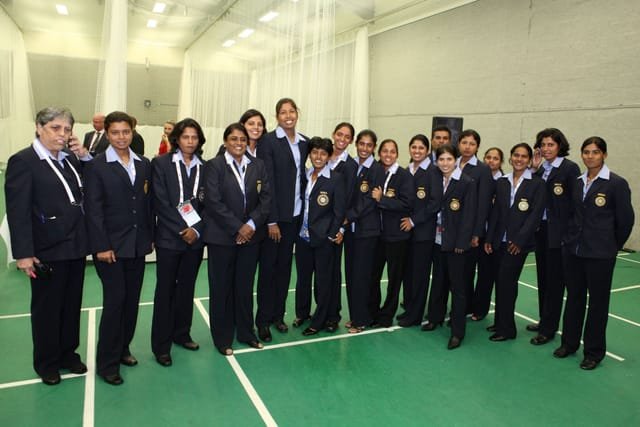
Harmanpreet Kaur is the only member of India’s 2026 Women’s T20 World Cup squad who was also part of the Indian side in the inaugural 2009 edition. She played four matches in that first tournament, scoring eight runs across two innings, including a dismissal for eight against England in Taunton and a golden duck against New Zealand in the semifinal in Nottingham.
Those numbers tell you almost nothing about who she became. The 37-year-old right-hander now captains India and stands as one of the most celebrated batting figures in the history of the women’s game, defined above all else by that extraordinary 171 not out against Australia in the 2017 Women’s ODI World Cup that announced her to a global audience who had not been paying close enough attention.
| Harmanpreet Kaur: Women’s T20 World Cup Career | Figures |
|---|---|
| Total matches | 39 |
| Innings | 33 |
| Runs | 726 |
| Average | 25.03 |
| Strike rate | 112.21 |
| Hundreds | 1 |
| Half-centuries | 4 |
From a golden duck in the 2009 semifinal to captaining India in the 2026 tournament on the same soil: the arc of Harmanpreet’s Women’s T20 World Cup story spans the entirety of the competition’s existence. India have not yet won the T20 World Cup, and the 2026 edition in England represents another opportunity to end that wait. As captain, Harmanpreet carries the weight of that ambition more directly than anyone else in the squad.
Player 2: Ellyse Perry (Australia) – The All-Rounder Who Defined an Era
Ellyse Perry was in the Australian squad for the inaugural 2009 Women’s T20 World Cup, batting once (4 not out off three balls against New Zealand) and bowling three overs across the tournament for two wickets. She was a teenager, making her earliest international appearances, with no way of knowing she would spend the next seventeen years becoming arguably the most complete women’s cricketer of her generation.
The Perry who arrives at the 2026 edition is something entirely different: a veteran of 47 Women’s T20 World Cup matches who has contributed meaningfully with both bat and ball throughout the competition’s history.
| Ellyse Perry: Women’s T20 World Cup Career | Batting | Bowling |
|---|---|---|
| Matches | 47 | 47 |
| Runs / Wickets | 503 runs | 40 wickets |
| Average | 27.94 | 17.67 |
| Strike rate / Economy | 113.80 | 5.79 |
| Best figures | N/A | 3-12 |
Perry’s bowling economy of 5.79 across 47 tournament matches is particularly striking. In the T20 format where economy is harder to maintain than at longer distances, that figure reflects a bowler who has remained disciplined and effective across a span of tournament appearances that covers the entire history of the competition. She has been a constant presence in Australia’s Women’s T20 World Cup campaigns through the years when they dominated the event, and her arrival in England for the 2026 edition brings all of that collective experience into a squad still competing for the highest honours.
Player 3: Sophie Devine (New Zealand) – From Lord’s to 2026 With the Same Competitive Fire
Sophie Devine’s Women’s T20 World Cup career began at Lord’s, one of cricket’s most iconic venues, in the 2009 final against England. She scored ten off six balls in that match before New Zealand fell short. Across three matches in the inaugural edition, she managed 24 runs at a strike rate of 171.42 and took two wickets at an economy of 4.90.
New Zealand arrive at the 2026 Women’s T20 World Cup as defending champions, having won the 2024 edition in the UAE by defeating South Africa in Dubai. Devine’s presence in their squad connects the current champions to the competition’s very first season, which is an entirely unique distinction among New Zealand’s players.
| Sophie Devine: Women’s T20 World Cup Career | Batting | Bowling |
|---|---|---|
| Matches | 38 | 38 |
| Runs / Wickets | 785 runs | 29 wickets |
| Average | 26.16 | 17.10 |
| Strike rate / Economy | 111.82 | 6.17 |
785 runs and 29 wickets across 38 matches makes Devine one of the most complete contributors to the Women’s T20 World Cup’s statistical history. Her medium pace and opening batting give New Zealand two dimensions of value from a single player, and both have been consistent across the competition’s entire span. That she began at Lord’s in the inaugural final and is back in England for the tenth edition is a symmetry that cricket’s storytelling instincts could not have planned better.
Player 4: Chamari Athapaththu (Sri Lanka) – A Lone Pioneer Returning to the Place It All Started
Chamari Athapaththu’s connection to the 2009 tournament is the most singular of the five on this list. In the inaugural edition, she played one innings against India, scoring 16 off 23 balls. She did not bowl. Sri Lanka’s campaign was limited in scope.
What she has built since that modest beginning is one of the most remarkable individual careers in women’s T20 cricket. The 36-year-old now captains Sri Lanka, has scored 711 Women’s T20 World Cup runs across 32 matches, and has become the most recognisable figure in Sri Lankan women’s cricket by a considerable margin.
| Chamari Athapaththu: Women’s T20 World Cup Career | Batting | Bowling |
|---|---|---|
| Matches | 32 | 32 |
| Runs / Wickets | 711 runs | 13 wickets |
| Average | 22.21 | 25.69 |
| Strike rate / Economy | 102.15 | 6.57 |
| Half-centuries | 3 | Best: 3-17 |
Athapaththu’s return to England for the 2026 edition as captain, on the same soil where she made her Women’s T20 World Cup debut as a teenager, gives her individual journey a specific resonance. Sri Lanka have never won the Women’s T20 World Cup, and the challenge of competing against the sport’s strongest nations in English conditions is one the captain knows well. But her presence alone, connecting the tournament’s first edition to its tenth, is itself a form of cricketing legacy.
Player 5: Marizanne Kapp (South Africa) – The All-Rounder Who Has Given Everything to the Game
Marizanne Kapp’s 2009 Women’s T20 World Cup appearance was brief: one match against Australia in Taunton, two overs bowled for 21 runs and no wicket, and 18 not out with the bat. She was 19 years old. South Africa were still establishing themselves in the women’s T20 international landscape.
The Kapp who arrives in England for the 2026 edition has developed into one of the most effective all-rounders the Women’s T20 World Cup has produced. Her bowling economy of 5.13 across 32 matches is among the most impressive of any pace bowler in the tournament’s history, and 31 wickets at an average of 17.80 represents consistent match-winning contributions throughout her career.
| Marizanne Kapp: Women’s T20 World Cup Career | Batting | Bowling |
|---|---|---|
| Matches | 32 | 32 |
| Runs / Wickets | 453 runs | 31 wickets |
| Average (bat/bowl) | 18.87 | 17.80 |
| Strike rate / Economy | 99.56 | 5.13 |
| Best figures | 43 (highest) | 3-16 |
South Africa reached the 2024 Women’s T20 World Cup final, losing to New Zealand in Dubai. For Kapp, the 2026 edition represents another opportunity to add a title to a career that has been consistently excellent at every other level. The England conditions, where the ball moves and seam and swing assist pace bowlers more than on any other major circuit, are specifically well-suited to the skills she has spent seventeen years developing.
The Honorary Mentions: Three More Legends Completing the Circle
Beyond the five featured players, three additional names deserve recognition for completing the same journey from 2009 to 2026. Suzie Bates of New Zealand was one of the 2009 edition’s most productive performers with 136 runs in five matches. Stafanie Taylor of West Indies averaged 60.50 in three 2009 innings, scoring 121 runs. And Deandra Dottin of West Indies struck 60 runs at a strike rate of 193.54, including a 53, demonstrating even then the aggressive batting intent that would define her career. All three will be part of the 2026 tournament, representing the full generational span of the competition.
What This Group of Players Represents for Women’s Cricket
The presence of five players in both the inaugural and tenth editions of the Women’s T20 World Cup is not just a biographical curiosity. It is evidence of something significant about the evolution of women’s cricket as a professional sport.
The careers of Harmanpreet, Perry, Devine, Athapaththu, and Kapp have spanned the period during which women’s cricket transformed from a sport with limited professional infrastructure into one with international franchise competitions, significant broadcast deals, and a genuinely global audience. They played in the 2009 tournament without any of those structures. They compete in the 2026 edition with all of them. The progress of the game is, in part, the story of their continued participation within it.
Each of them also represents the specific contributions that made the Women’s T20 World Cup’s ten-edition history worth telling. Perry’s all-round excellence for Australia. Devine’s consistency for New Zealand across decades of tournament cricket. Kapp’s exceptional bowling economy in an era of increasingly aggressive batting. Athapaththu’s captaincy of a smaller nation punching above its weight. And Harmanpreet carrying the captaincy of a country still waiting for its first Women’s T20 title.
Conclusion: The Tournament Comes Home, and the Pioneers Return With It
England hosted the inaugural Women’s T20 World Cup in 2009. England is hosting the tenth edition in 2026. The wheel has turned, and five extraordinary cricketers are present at both points on that arc. Their combined story covers seventeen years of women’s cricket history, three decades of personal athletic dedication, and the entire span of a tournament that has grown from its first edition into one of the most watched events in the women’s sporting calendar.
They came to England as young players, some barely known beyond their home countries, in 2009. They return as legends, captains, and the standard-bearers of their respective nations’ cricketing identities in 2026. Whatever happens in the next four weeks on the grounds of England and Wales, the presence of these five players connects this tournament to its own beginning in a way that no statistical comparison can fully convey.
The ICC Women’s T20 World Cup 2026 begins on June 12 in Birmingham. History is in the building. Some of it has been playing cricket for nearly two decades.
For breaking news and live news updates, like us on Facebook or follow us on Twitter and Instagram. Read more on Latest Sports on thefoxdaily.com.






COMMENTS 0