Introduction: The Changing of a Guard That Seemed Permanent
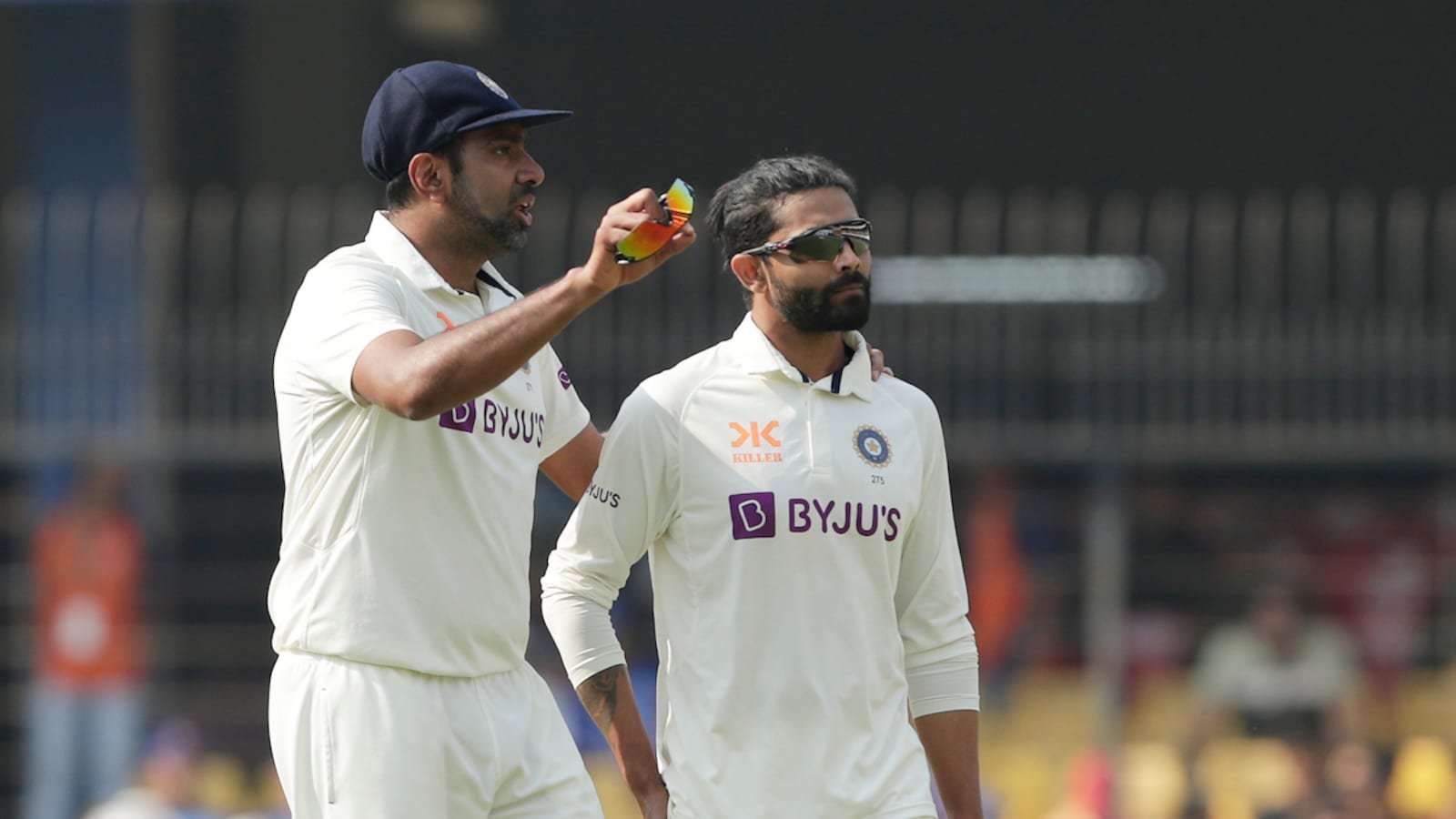
In professional sport, there are partnerships so embedded in a team’s identity that their absence creates not just a tactical problem but an existential one. Indian Cricket at home in Test matches had, for the better part of fifteen years, a simple answer to the question of how the opposition would be bowled out: Ravichandran Ashwin. Ravindra Jadeja. Often both. Always at least one. The combination was as central to India’s Test success as any batting partnership, any winning captain, or any series victory of the modern era.
When India ran out at Mullanpur for the one-off Test against Afghanistan in 2026, they did so as a team stepping into genuinely unfamiliar territory. For the first time since November 2010 a span of roughly fifteen years and hundreds of cricketing days India’s home Test playing XI featured neither Ravichandran Ashwin nor Ravindra Jadeja. Ashwin retired from international cricket at the close of the 2024 season. Jadeja has been rested for this particular fixture. The streak, one of the most quietly remarkable continuity records in modern Test Cricket, is over.
Who broke the streak? Nobody specifically it is the accumulated weight of transition, retirement, and rotation policy. What is the streak? The unbroken presence of at least one of Ashwin or Jadeja in every India home Test from 2011 to 2025. When did it end? With the India versus Afghanistan Test at Mullanpur in 2026. Where does that leave India? Facing the question of what comes after a generation of spin dominance that redefined what home advantage means in Test cricket. Why does it matter? Because the numbers Ashwin and Jadeja produced at home are not merely impressive they are the statistical foundation of India’s most dominant period in red-ball cricket history.
Going Back to 2010: The Last Time It Was Just Harbhajan and Ojha
To find the last occasion on which India played a home Test without either Ashwin or Jadeja in their XI, you have to travel to November 2010 and the third and final Test of India’s home series against New Zealand. India won that match convincingly by an innings and 198 runs with Harbhajan Singh and Pragyan Ojha serving as the two frontline spin options in the playing XI.
Both were accomplished cricketers. Harbhajan Singh was, at that point in his career, one of India’s most decorated spinners the man who had famously dismantled Australia at home, whose doosra had tormented the best batters in the world, and who had been a fixture of Indian Test cricket since the late 1990s. Ojha was a quality left-arm orthodox spinner whose domestic record earned him international consideration. Together they represented a credible spin partnership. But they were not what came next.
What came next changed everything. In India’s very next home Test, played in November 2011 in Delhi, a 25-year-old off-spinner from Tamil Nadu made his red-ball debut for India. Ravichandran Ashwin did not arrive quietly. He took nine wickets across the two innings including six in the second and announced himself as a force that Test cricket was going to have to account for for a very long time. It was an extraordinary debut, and in hindsight, it marked the beginning of one of the most dominant bowling careers in the history of Test cricket played on subcontinental conditions.
Just over a year later, in December 2012, Jadeja made his own Test debut in a home series against England. The left-arm spinner, already respected for his IPL performances and white-ball contributions, brought a different set of skills to the XI a slightly flatter trajectory, sharp fielding, and a batting ability that would grow over time into genuine all-round quality. With both men in the squad, India had something they had never quite had before: two complete spin-bowling all-rounders who could each win Test matches independently of the other.
Fifteen Years of Spin Dominance: What the Numbers Actually Say
The statistics that Ashwin and Jadeja produced in home Tests are not merely impressive by the standards of Indian cricket. They are among the most remarkable sustained performances by specialist bowlers in the history of the format.
| Player | Home Tests | Home Wickets | Bowling Average (Home) | Five-Wicket Hauls (Home) | Home Runs | Batting Average (Home) | Home Centuries |
|---|---|---|---|---|---|---|---|
| Ravichandran Ashwin | 65 | 383 | 21.57 | 29 | ~2,000 | 26+ | 4 |
| Ravindra Jadeja | 53 | 256 | Under 21 | 13 | Significant | 38.48 | 4 |
| Combined Home Total | — | 639+ | ~21 avg combined | 42 | — | — | 8 |
Consider what those numbers represent in context. Ashwin’s 383 home wickets at an average of 21.57 across 65 Tests places him in territory that very few bowlers have ever occupied. An average of 21 in Test cricket, sustained over 65 matches and across opponents of every variety, on pitches that while spin-friendly still required craft, variation, and the ability to adapt when conditions were not immediately favorable, is genuinely extraordinary. His 29 five-wicket hauls at home represent an average of nearly one every two matches a frequency that suggests not occasional brilliance but consistent, match-defining performance.
Jadeja’s numbers at home are, if anything, even more remarkable when viewed through the lens of averages. 256 wickets at an average of under 21 across 53 home Tests a bowling average that fractionally exceeds Ashwin’s own extraordinary home record. Thirteen five-wicket hauls. And then, in a development that transformed him from a quality spinner into something rarer and more valuable, a batting average of 38.48 at home in Tests four centuries, a record that puts him firmly in the all-round category rather than the lower-order-cameo one.
Together, these two cricketers took over 639 wickets in home Tests. They bowled hundreds of thousands of deliveries on Indian pitches, developed variations their opponents specifically prepared to counter, and kept producing results even as opposition teams dedicated substantial analysis time to finding their weaknesses. The combined impact on India’s home record is not simply one of individual excellence it is structural. Opposing teams coming to India knew, for fifteen years, that they were going to face these two bowlers across days of Test cricket. Planning around them was a necessity; succeeding against both of them simultaneously was nearly impossible.
The Record They Helped Build: India’s Home Test Dominance
The macro-level context makes the individual statistics even more striking. After Jadeja’s debut home series against England in December 2012 in which England held on for a draw rather than India winning the series India did not lose a single home Test series for the better part of twelve years. That is not a run of good fortune. That is the clearest possible statistical evidence of what a great spin attack does to the psychology and preparation of visiting teams.
Opponents coming to India during this period were not simply facing difficult conditions. They were facing two of the best spinners in the world, in conditions that amplified both men’s strengths, backed by fielding support that turned edges into catches at a frequency that made batting feel like a sustained emergency. The mental burden of facing Ashwin and Jadeja on a turning Indian pitch knowing that the match was being conducted on terms set by the home side, that the surface would deteriorate, and that both bowlers would only become harder to face as the match wore on was a distinct competitive disadvantage that visiting teams carried into every first day of every series.
The run ended when New Zealand whitewashed India 3-0 at home in 2024 a result that sent shockwaves through Indian cricket and accelerated conversations about the team’s Test future. But even that result came after more than a decade of home dominance that stands comparison with any sustained home advantage in Test cricket history. The Australians in Australia. The West Indians at their peak. England in England. India at home in the Ashwin-Jadeja era belongs in that conversation without qualification.
The 2010 Comparison: How Much Has Changed
Returning to the 2010 Test the last time India played at home without both Ashwin and Jadeja provides an interesting historical reference point. India in November 2010 were a strong team approaching their peak, with Sachin Tendulkar, Rahul Dravid, VVS Laxman, and Sourav Ganguly’s successor generation in full flow. The spin attack of Harbhajan and Ojha was sufficient for the New Zealand opposition they faced, and India won comfortably.
India in 2026 facing Afghanistan are in a very different situation not in the sense of expected result, but in the sense of what the fixture represents. They are a team in transition, without Ashwin’s wickets, with Jadeja rested, and with young players being asked to fill a gap that no single player can individually fill. The contrast between 2010 and 2026 is the contrast between a team at its peak using a home Test to confirm its dominance and a team in transition using a home Test to continue the process of building toward it.
Who Fills the Void? India’s Spin Future After Ashwin and Jadeja
The inevitable question that the Afghanistan Test raises — beyond its result, beyond its individual performances is what India’s spin-bowling identity looks like in the post-Ashwin era with a frequently rested Jadeja.
The answer is not yet clear, which is itself significant. For fifteen years, India’s home spin attack essentially picked itself. The question was never whether Ashwin and Jadeja would play it was which combination of other players would support them. Now, for the first time since 2011, India must genuinely think about who their premier home spinner is, what their combination looks like, and how they rebuild the home advantage that those fifteen years of accumulated excellence created.
The candidates who emerge from this Test and the broader current squad will carry enormous responsibility. They are not simply being asked to bowl well in home conditions they are being asked to begin the process of creating a new version of the identity that Ashwin and Jadeja made so formidable for so long. That is a weight that statistical comparisons cannot fully capture and that only match performances over time will resolve.
Ashwin’s Legacy: Numbers That Will Not Be Quickly Repeated
Ravichandran Ashwin retired from international cricket at the end of the 2024 season a departure that ended one of the most productive careers by a spin bowler in Test cricket history. His home record alone would secure his legacy: 383 wickets at 21.57, with 29 five-wicket hauls in 65 Tests. But his overall Test record extended far beyond Indian conditions, taking his wicket tally to a position among the all-time great off-spinners in history.
What made Ashwin specifically remarkable was not simply the volume of wickets but the manner in which they were taken. He was a bowling thinker someone who developed new deliveries, adjusted his action for specific opponents, and treated each batting lineup as a puzzle to be solved rather than a target to be attacked. Opposing teams who came to India with a specific plan for Ashwin regularly found, by the second day of a Test, that he had already adjusted to counter it.
Jadeja, still active and still available for future Test cricket, carries a different but complementary legacy. His retirement from home Tests as a regular fixture is not permanent this Afghanistan Test represents a rest rather than an endpoint. But his eventual departure, when it comes, will close the final chapter of an era that Indian cricket will not quickly replicate.
Conclusion: A 15-Year Streak Ends, and a New Question Begins
The India versus Afghanistan Test at Mullanpur is, in competitive terms, a straightforward fixture against opposition that does not carry the same weight as a series against Australia or England. But as a historical marker as the moment that ended a fifteen-year unbroken sequence of home Tests featuring at least one of India’s two greatest modern spinners it carries significance that extends beyond the scoreboard.
From Harbhajan and Ojha to Ashwin’s debut, from Jadeja’s arrival to the unbroken streak that followed, from the years of home dominance to the transition now underway Indian cricket’s spin story over the past decade and a half is one of the great chapters in the format’s modern history. The numbers confirm it. The record confirms it. And the current absence of both men from a home Test XI, for the first time since 2010, confirms something else: that era is over, and the next one has not yet found its voice.
What comes next will take time to become clear. It always does. But the standard set by Ashwin and Jadeja across fifteen years of home Test cricket 639 combined wickets, 42 five-wicket hauls, and a home record that made India the most feared team in the world in their own conditions is the benchmark against which every future Indian spin combination will inevitably be measured.
Some eras end quietly. This one ended with 639 wickets worth of evidence that it was worth everything the game gave it.
For breaking news and live news updates, like us on Facebook or follow us on Twitter and Instagram. Read more on Latest Sports on thefoxdaily.com.






COMMENTS 0