When a Legend Speaks Plainly
Ravichandran Ashwin retired from international cricket at the end of 2024 with a record that places him among the finest bowlers in the history of the game. He spent fifteen years navigating the selection pressures, management philosophies, and form-based omissions that are the constant background noise of playing for India. When he describes the handling of a fellow spinner as “bizarre,” he is not speaking from ignorance of how the system works. He is speaking from the precise knowledge of someone who lived inside it for a decade and a half.
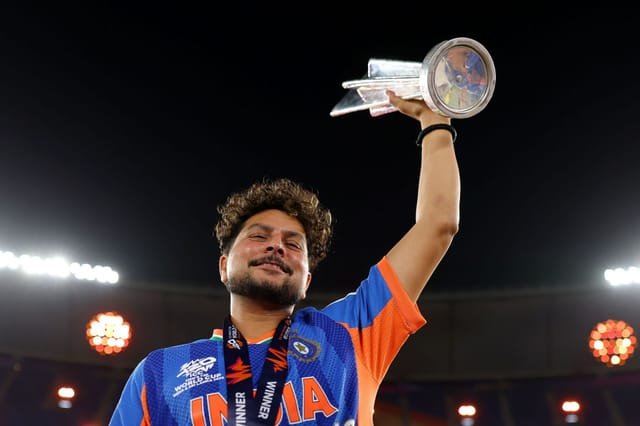
On Saturday, speaking to ESPN Cricinfo, Ashwin trained his considerable analytical intelligence on India’s latest T20I squad announcement and found it wanting in one specific respect: the treatment of Kuldeep Yadav. Despite being part of India’s triumphant 2026 T20 World Cup squad, Kuldeep has been dropped for the upcoming T20Is against Ireland and England. Ashwin’s reaction was unambiguous, his concern genuine, and his prescription for Kuldeep’s path forward both clear-eyed and sobering.
Who is at the center of this story? Kuldeep Yadav, India’s senior left-arm wrist spinner, T20 World Cup winner, and now a player left out of the next phase of India’s white-ball setup. Who is raising the alarm? Ravichandran Ashwin, retired great, current analyst, and one of the few people in Indian Cricket with both the stature to make this argument publicly and the credibility earned through personal experience to make it compellingly. What is the concern? That India’s management is handling one of its most skilled spinners without consistency, clarity, or the kind of backing that produces the best results from a bowler of his type. When does this matter? Right now, as Kuldeep stands at a career crossroads. Where does he go from here? Ashwin has an answer, and it points toward the red ball.
The World Cup Winner Who Barely Played the World Cup
The starting point for any honest discussion of Kuldeep’s current situation is a fact that contains its own uncomfortable contradiction: he is a member of India’s triumphant 2026 T20 World Cup squad, the holders of the trophy, the winners who defeated New Zealand in the final. And yet, across India’s entire nine-match World Cup campaign, Kuldeep featured in precisely one match.
A spinner of Kuldeep’s caliber playing one game in nine during a successful World Cup campaign is not a statement about the format or the conditions or the opposition. It is a statement about his standing within the management’s preferred combinations. He was there as cover rather than as a first-choice option, present on the periphery of a title victory that he contributed almost nothing to on the field.
The argument that such marginal inclusion somehow validates his place in the broader setup is a weak one. Being part of a World Cup squad that wins the tournament is meaningful, but if the management that picked you believes you are a one-game-in-nine contributor, the gap between inclusion and genuine confidence is enormous. Kuldeep will have known this. Anyone watching would have known this.
His IPL 2026 performance then made the case against him louder. Ten wickets in 12 matches at an average exceeding 38 and an economy rate of 10.29 is a poor return for a spinner of his reputation. The economy figure is particularly damaging in T20 cricket, where a bowler leaking more than 10 runs per over is providing the batting team with significant assistance regardless of the wickets taken. The IPL form gave the new selection committee a concrete, recent, and easily defensible basis for the omission.
Ashwin’s Verdict: “The Way Kuldeep Has Been Handled is Bizarre”
Ashwin’s concern is not with the specific omission but with the pattern it represents. His framing is historical and comparative, contrasting the treatment Kuldeep received under the previous management with his current uncertain position:
“The way Kuldeep Yadav has been handled is bizarre. Kuldeep, when the last team management was around with Rahul Dravid and Rohit Sharma, he was well backed, and everyone saw the proof in the pudding as he was delivering match-winning performances. But again in the last 18 months, Kuldeep finds himself with a lot of question marks. He didn’t have a great IPL, which didn’t help his cause much.”
— Ravichandran Ashwin
The reference to the Dravid-Rohit management era is significant. Under Rahul Dravid as head coach and Rohit Sharma as captain, Kuldeep experienced a revival that looked, for a period, like the rediscovery of the bowler who had terrorized international batters between 2017 and 2019 before a combination of injury, loss of form, and inconsistent selection had put him on the sidelines. During that revival, Kuldeep was backed through lean patches, given the time to work through technical adjustments, and trusted in key matches. The results validated the backing: match-winning performances that demonstrated his value as a weapon no other Indian spinner quite replicates.
The contrast with the last 18 months is stark enough that Ashwin uses the word “bizarre” twice in one discussion. The backing that produced results has been replaced by the question marks that produce inconsistency, and a bowler who has already proven he can deliver at the highest level when supported properly is now standing outside looking in.
| Period | Management | Kuldeep’s Treatment | Result |
|---|---|---|---|
| Revival Period (pre-2025) | Rahul Dravid (coach), Rohit Sharma (captain) | Consistently backed, given fair run | Match-winning performances, significant wickets |
| Last 18 Months | Gambhir era | Inconsistent selection, peripheral World Cup role | Uncertainty, question marks over form and place |
| IPL 2026 | N/A (franchise) | N/A | 10 wickets, average 38+, economy 10.29 |
| T20 World Cup 2026 | Current India management | Selected but played 1 of 9 matches | Minimal contribution to title win |
| Ireland and England T20I Series | Current India management | Dropped from squad entirely | Omission, T20I future unclear |
The Red Ball as a Lifeline: Ashwin’s Prescription
Having diagnosed the problem with Kuldeep’s situation in white-ball cricket, Ashwin offered a prescription that is both practical and honest about the difficulty of the path ahead:
“Hopefully, he can deliver great Test performances to keep that part of his cricket going. Because in Indian cricket, things can unravel very fast if you are out of form for any length of time. Test cricket must now be his priority, and he must take it on.”
— Ravichandran Ashwin
This is not comforting advice. Ashwin is not saying Test cricket is Kuldeep’s path back to T20I glory. He is saying it may be the only significant cricket left available to him if the white-ball situation continues in its current direction, and that Kuldeep needs to embrace that reality rather than wait for a T20I recall that may not come.
The warning embedded in Ashwin’s prescription is the phrase “things can unravel very fast.” He knows this from observation across decades of Indian cricket. The history of the game in India is full of talented players who spent too long waiting for a door to reopen in one format, allowed their form and confidence to erode in the process, and found that by the time another opportunity arrived, the player who walked through it was a diminished version of the one who had originally earned the chance. Kuldeep, at this point in his career, cannot afford that trajectory.
Test cricket offers him something that T20 cricket, in its current assessment of his value, does not: a format in which the wrist spinner’s ability to extract sharp turn, deceive with flight and dip, and take wickets against quality batters remains genuinely prized. The red ball moves differently, the conditions change across five days, and a spinner who can bowl in long spells with accuracy and variation is a different kind of asset than the T20 economy rate numbers currently suggest.
The Ravi Bishnoi Question: A Return With Caveats
The same squad announcement that excluded Kuldeep welcomed back Ravi Bishnoi, the leg-spinner who had previously been India’s number one-ranked T20I bowler before losing his place in the setup. Ashwin’s reaction to Bishnoi’s return was more cautiously positive, acknowledging the selection logic while identifying the specific technical problem that needs addressing:
“Ravi Bishnoi was the No.1 T20 bowler when he lost his place. So what goes around comes around. He didn’t have a great IPL, and on the back of not playing the back half of the IPL, he is back in the T20 setup. These are circular calls in many ways. But version 2.0 of Ravi Bishnoi needs to turn up because he misses his length way too much now than he must, and he must rediscover his mojo.”
— Ravichandran Ashwin
The phrase “circular calls” is precise and carries some skepticism. Bishnoi was dropped from the T20I setup when his form dipped. He has now been recalled despite not having an impressive IPL 2026 campaign, picking up only 11 wickets in nine outings. The circularity Ashwin identifies is this: the same fluctuating form that caused his original omission persists, and the same logic that justified a return once has now justified it again without the underlying technical issues being demonstrably resolved.
The specific problem Ashwin names is length. In leg-spin bowling, length control is fundamental. Too short and the batter has time to adjust and pull or cut. Too full and the batter can drive through the line. The “googly length” that troubles batters most, the length that makes the ball fizz off the surface and challenge the batter’s judgment of which way it will turn, requires precise control of where the ball lands. Bishnoi, in Ashwin’s assessment, is missing that target too often for a bowler who has been at this level long enough to know where it is.
“Version 2.0” is an interesting demand. Ashwin is not asking Bishnoi to do more of what he has been doing. He is asking him to evolve into a more controlled, more consistent version of himself than currently shows up. That is a meaningful distinction, and a genuinely challenging one for a bowler whose natural tendency toward aggression has historically been both his greatest asset and his most frequent liability.
What This Reveals About India’s Spinning Puzzle
Read together, Ashwin’s assessments of Kuldeep and Bishnoi reveal a specific challenge in India’s current T20I spinning options. Kuldeep has the quality and the proven international record but is being managed inconsistently and is currently out of form and favor. Bishnoi has the raw ability and was at one point the best T20I bowler in the world at his position but has a persistent length problem that undermines his effectiveness.
Neither situation is straightforwardly resolved by a selection decision. Kuldeep’s issues are partly managerial and partly form-based, and both need to be addressed for him to return to his best. Bishnoi’s issue is technical and requires him to do the hard work of reestablishing the muscle memory and discipline that made him a number one-ranked bowler in the first place.
The India that plays seven T20Is against Ireland and England will be asking these questions in real matches, against real opposition, with real consequences for the series results and for each player’s individual standing in the selection conversation. Bishnoi’s recall is an opportunity. Whether he converts it into a sustained run in the squad will depend entirely on whether version 2.0 actually materializes.
Conclusion: A Great Spinner’s Warning About How Spinners Are Treated
Ravichandran Ashwin’s career was shaped as much by selection battles as by bowling brilliance. He knows, at first hand, what it looks like when a spinner is backed properly and what it looks like when a spinner is managed inconsistently. His description of Kuldeep’s handling as “bizarre” comes from that knowledge, and it carries the weight of someone who has seen how these stories end when the backing is not there.
Kuldeep Yadav is a T20 World Cup winner who played one game in nine and has now been dropped from the next series. That is a strange position for a player of his ability, and Ashwin is right to identify the strangeness of it. Whether the current management addresses that strangeness with the kind of clarity and commitment that the Dravid-Rohit era provided remains to be seen.
In the meantime, the red ball awaits. And somewhere in the Test cricket that Ashwin says must now be Kuldeep’s priority, there may be the performances that force the white-ball management to reconsider what they are giving up by marginalizing one of the most gifted spinners of his generation.
The handling is bizarre. The path forward is clear. And a retired legend has done what legends do: said plainly what everyone else was thinking, and trusted the cricketer in question to listen.
For breaking news and live news updates, like us on Facebook or follow us on Twitter and Instagram. Read more on Latest Sports on thefoxdaily.com.






COMMENTS 0