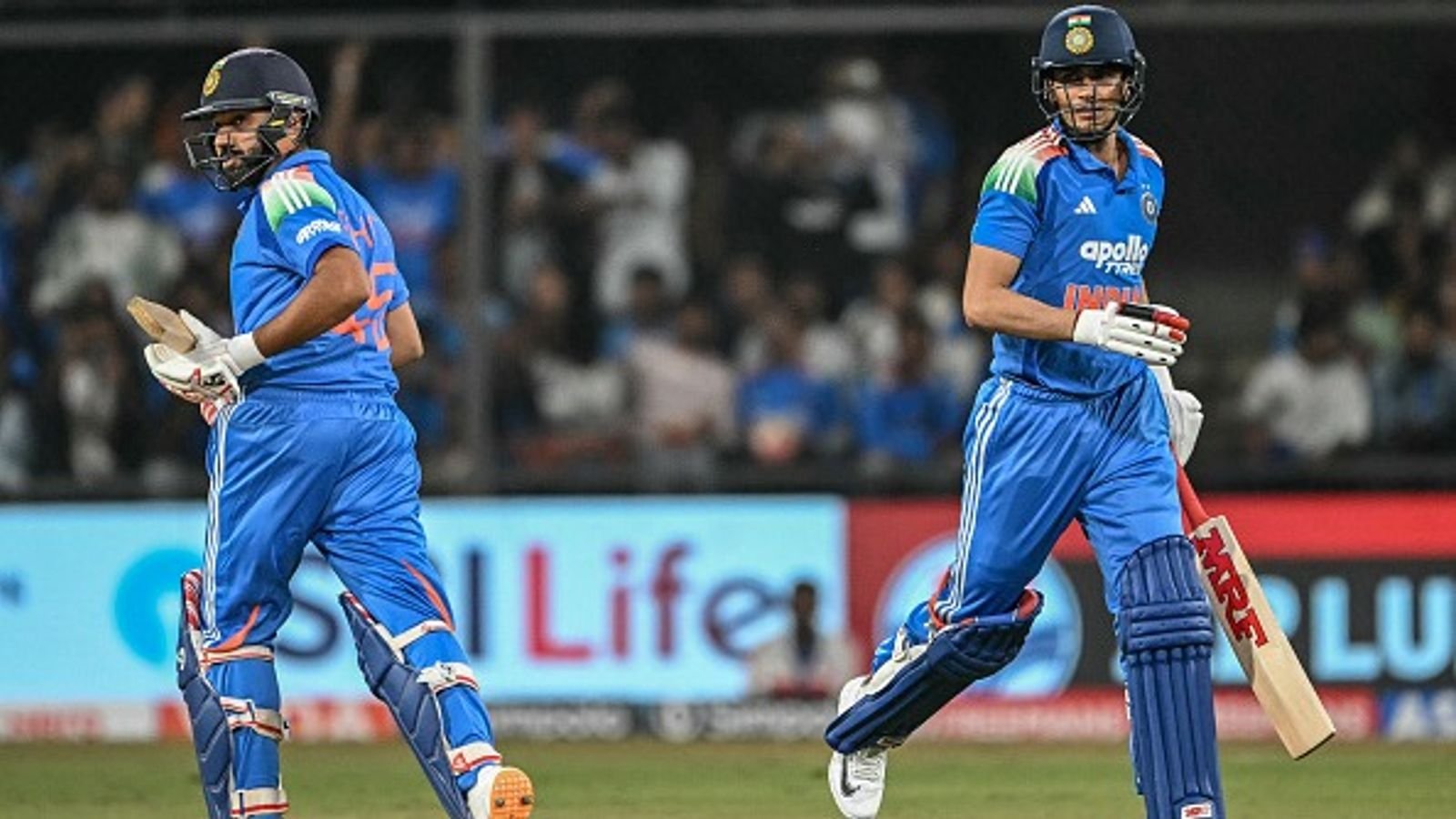
Indian Cricket finds itself at a fascinating crossroads. As the national selectors prepare to announce the squad for the upcoming ODI series against England, a compelling debate has emerged around one of the game’s most accomplished modern batters—Rohit Sharma. While the veteran opener reminded everyone of his enduring class with a fluent 79-run knock against Afghanistan, the meteoric rise of Yashasvi Jaiswal has created a selection challenge that could influence India’s ODI strategy for years to come.
The discussion intensified after stand-in captain Shubman Gill described the situation as a “good headache” for the team management. His comments reflect a larger reality: India now possesses multiple high-quality opening options, but only limited spots at the top of the order. The decision is no longer simply about selecting the best player for the next series. It is about balancing present success with future planning as the 2027 ODI World Cup moves closer.
Who should open for India in England? Can Rohit Sharma continue leading from the front despite approaching 40? Or should India accelerate its transition toward younger stars like Yashasvi Jaiswal? These are the questions dominating cricket discussions ahead of the squad announcement.
Rohit Sharma’s Timely Return to Form Changes the Narrative
For much of the past year, conversations surrounding Rohit Sharma have increasingly focused on age rather than ability. Every innings has been examined through the lens of succession planning, with many wondering how long India can continue relying on a player approaching the latter stages of his international career.
However, cricket has a habit of reminding observers not to underestimate proven champions. Rohit’s 79-run innings against Afghanistan was not merely another half-century. It was a statement that his value to India’s ODI setup remains substantial.
The innings showcased several qualities that statistics alone cannot fully capture:
- Exceptional understanding of match situations
- Ability to absorb pressure during difficult phases
- Aggressive intent without reckless shot selection
- Leadership influence on younger teammates
- Experience against elite international bowling attacks
These attributes become especially valuable in overseas conditions, where experience often makes the difference between success and failure.
Why Yashasvi Jaiswal Has Become Impossible to Ignore
While Rohit Sharma’s return grabbed headlines, Yashasvi Jaiswal may be the biggest reason this selection debate exists in the first place. The young opener has rapidly transformed from a promising prospect into a serious contender for a permanent ODI role.
His unbeaten century against Afghanistan underlined his growing maturity and ability to dominate attacks at the highest level. More importantly, he has shown consistency whenever opportunities have come his way.
Modern ODI cricket demands aggressive starts, rapid scoring rates, and the ability to maintain pressure throughout the innings. Jaiswal appears perfectly suited to these requirements.
- Fearless stroke play during powerplays
- Strong technique against pace and spin
- Excellent strike rotation
- Ability to convert starts into big scores
- Long-term value for future ICC tournaments
His performances have made it increasingly difficult for selectors to view him merely as a backup option.
What Shubman Gill’s Comments Reveal About India’s Selection Thinking
Shubman Gill’s description of the situation as a “good headache” offers valuable insight into how the Indian team management views the challenge.
Strong teams are often defined not by a lack of options but by an abundance of quality players competing for the same positions. India currently finds itself in that enviable situation.
Rather than framing the discussion as a choice between youth and experience, Gill’s comments suggest selectors are focused on identifying the strongest possible combination for specific conditions and long-term objectives.
This is an important distinction. The debate is not necessarily about replacing Rohit Sharma. Instead, it is about maximizing the overall strength of India’s ODI batting lineup.
The England Tour Adds Another Layer of Complexity
England presents unique challenges for opening batters. Conditions often favor seam bowlers, particularly during the early stages of an innings. Swing movement, cloud cover, and disciplined bowling attacks can test even the world’s best players.
In such conditions, experience carries significant value. Rohit Sharma’s years of international cricket provide a level of assurance that few players can match.
At the same time, aggressive batters capable of disrupting bowling plans are increasingly important in modern ODI cricket. Jaiswal’s attacking mindset could prove highly effective against England’s bowling attack.
This creates a genuine dilemma for selectors. Both players offer compelling arguments for inclusion, albeit for different reasons.
Possible Opening Combinations for India
| Opening Pair | Advantages | Potential Challenges |
|---|---|---|
| Rohit Sharma & Yashasvi Jaiswal | Experience combined with youthful aggression, left-right combination | Requires batting order adjustments |
| Rohit Sharma & Shubman Gill | Established partnership and stability | May leave out an in-form Jaiswal |
| Shubman Gill & Yashasvi Jaiswal | Future-focused combination for 2027 World Cup | Less overall tournament experience |
| Flexible Rotation Approach | Condition-specific selections | Reduced consistency and continuity |
Why This Decision Matters Beyond One Series
The England ODI series is important, but the implications of this selection debate extend much further.
India is entering a crucial transition phase. Several senior players remain capable of match-winning performances, while a new generation is pushing hard for regular opportunities.
Successfully managing this transition will play a major role in determining India’s chances at future ICC tournaments.
History shows that teams often struggle when transitions are handled too aggressively or too slowly. Remove experienced players too early, and valuable leadership disappears. Hold onto veterans for too long, and emerging talent may lose development opportunities.
The ideal approach lies somewhere in the middle.
The Rohit Sharma Factor: More Than Just Runs
When evaluating Rohit Sharma’s future, selectors must consider factors beyond batting averages and strike rates.
Veteran players contribute through:
- Leadership during pressure situations
- Tactical guidance for younger teammates
- Experience in knockout matches
- Understanding of international conditions
- Ability to manage momentum shifts
These intangible contributions are difficult to quantify but often prove decisive in major tournaments.
For a team targeting World Cup success, such qualities remain highly valuable.
Could India Adopt a Hybrid Strategy?
One possibility gaining attention is a hybrid selection approach. Rather than viewing Rohit Sharma and Yashasvi Jaiswal as competing options, India could explore ways to accommodate both players in the same XI.
This would allow the team to benefit from Rohit’s experience while simultaneously investing in Jaiswal’s long-term development.
Such an approach would also provide continuity as India gradually prepares for the next World Cup cycle.
Cricket’s most successful transitions often occur when experienced players mentor emerging stars rather than being immediately replaced by them.
What the Selection Committee Must Consider
Before finalizing the squad, selectors are likely to evaluate several key factors:
- Current form and recent performances
- Fitness levels across the squad
- Suitability for English conditions
- Long-term ODI planning
- Team balance and batting combinations
- Preparation for future ICC events
Each factor points toward a nuanced decision rather than a straightforward choice.
A Defining Moment for India’s ODI Future
Few selection debates capture the broader direction of a cricket team quite like this one. On one side stands Rohit Sharma, a proven match-winner whose experience remains invaluable. On the other stands Yashasvi Jaiswal, a rising star representing the future of Indian cricket.
Shubman Gill’s “good headache” comment perfectly summarizes the challenge. India is fortunate to have multiple world-class options, but choosing the right combination could shape the team’s trajectory over the next several years.
Rohit’s impressive innings against Afghanistan has ensured that his ODI journey is far from over. Meanwhile, Jaiswal’s remarkable consistency has made him impossible to ignore. The real question is no longer whether one player deserves selection over the other. Instead, it is whether India can build a strategy that maximizes the strengths of both.
As the England squad announcement approaches, selectors face a decision that extends far beyond a single bilateral series. Their choice could offer the clearest indication yet of how India intends to balance immediate success with long-term ambition on the road to the 2027 ODI World Cup.
For breaking news and live news updates, like us on Facebook or follow us on Twitter and Instagram. Read more on Latest Sports on thefoxdaily.com.






COMMENTS 0