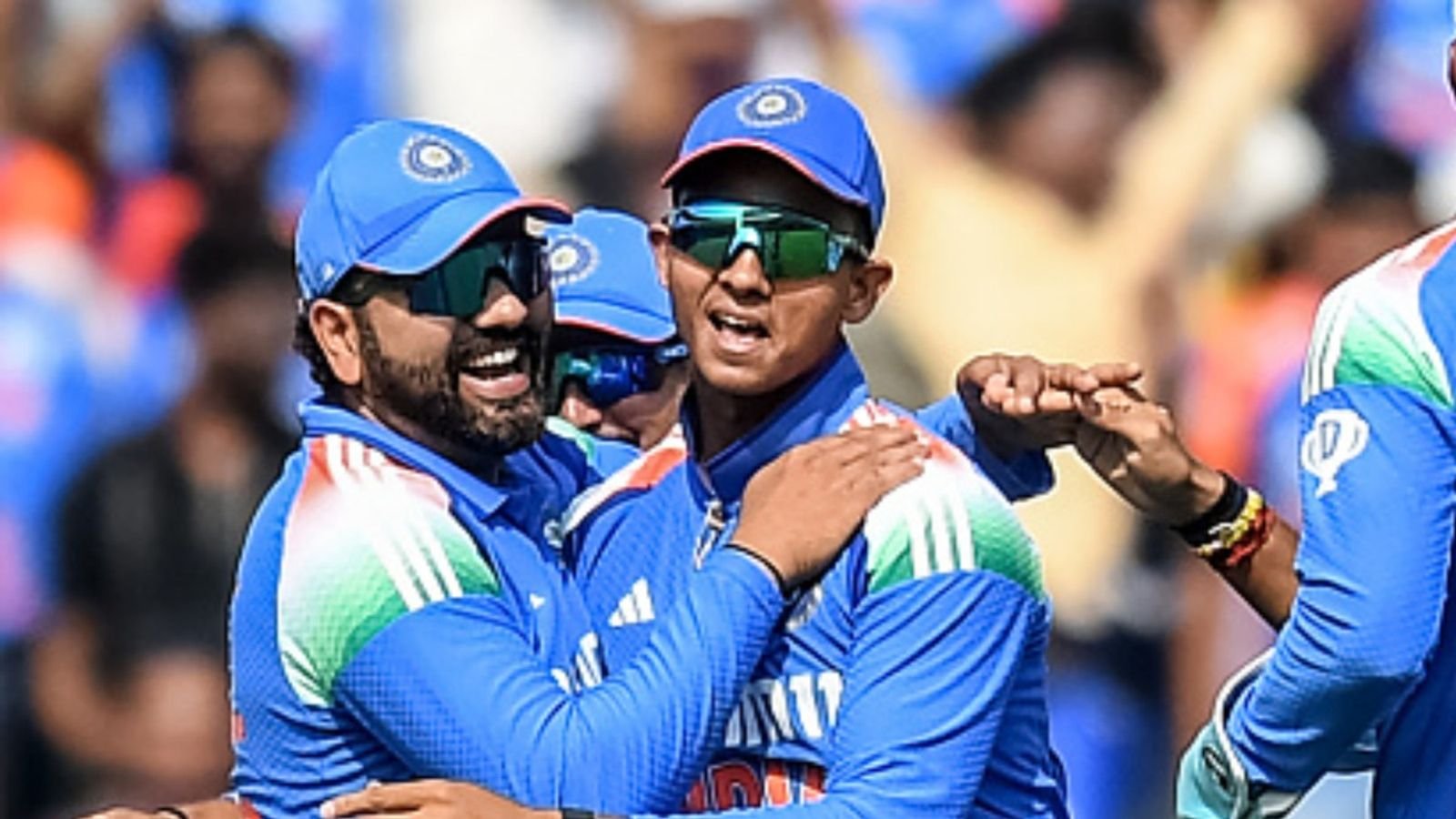
India’s squad selection for the upcoming ODI series against England has triggered a fresh debate about the team’s long-term planning, succession strategy, and preparation for the 2027 ICC ODI World Cup. At the center of the discussion is Yashasvi Jaiswal, one of Indian Cricket‘s brightest young talents, whose omission despite an outstanding record in the format has left many experts puzzled.
Among the strongest critics is former India cricketer and commentator Sanjay Manjrekar, who believes the decision sends mixed signals about India’s vision for the future. While Rohit Sharma continues to remain a key figure in India’s ODI setup, Manjrekar has questioned whether retaining senior stars should come at the expense of developing the next generation of match-winners.
The controversy has sparked an important conversation that extends beyond a single squad announcement. It touches upon how successful teams balance experience with youth, reward performance, and build toward major tournaments years in advance.
Why Yashasvi Jaiswal’s Exclusion Has Raised Eyebrows
Jaiswal’s omission becomes particularly surprising when viewed through the lens of recent performances.
The young opener has made the most of every ODI opportunity presented to him. In just six appearances, he has already scored two centuries, showcasing the consistency, temperament, and attacking intent that modern ODI cricket demands.
His breakthrough hundred against South Africa demonstrated his ability to anchor an innings, while his recent century against Afghanistan further strengthened his credentials as a long-term option at the top of the order.
| Yashasvi Jaiswal’s Recent ODI Record | Performance |
|---|---|
| ODI Matches | 6 |
| ODI Centuries | 2 |
| Recent Hundred vs South Africa | 116* |
| Recent Hundred vs Afghanistan | 100+ |
| Last Three ODI Innings | Two Centuries |
Few young players receive opportunities at the international level and immediately convert them into match-defining performances. Jaiswal has done exactly that, making his exclusion one of the most discussed selection decisions in recent months.
Manjrekar’s Core Argument: Reward Performance, Not Reputation
Sanjay Manjrekar’s criticism is rooted in a straightforward principle: players who perform consistently should be rewarded with continued opportunities.
According to the former India batter, Jaiswal’s recent ODI record should have made him difficult to ignore. Instead, his place appears to have been sacrificed to accommodate a more established name.
Manjrekar argued that selection decisions should be guided by what benefits Indian cricket in the long run rather than what feels comfortable in the short term.
The veteran commentator’s remarks have resonated with many fans who believe India must begin identifying and investing in players who will form the core of the next World Cup cycle.
The Rohit Sharma Question: Present Success vs Future Planning
While Manjrekar’s comments focus heavily on Jaiswal, they also raise an equally important question about Rohit Sharma’s future in ODI cricket.
There is little debate regarding Rohit’s achievements. He remains one of the greatest ODI batters in history and continues to produce valuable contributions for India.
His performances against Afghanistan and Australia have shown that his batting quality remains intact.
However, international cricket increasingly requires teams to think several years ahead rather than simply focusing on immediate results.
The 2027 ODI World Cup remains the ultimate target, and selectors must determine whether Rohit will realistically be part of that campaign.
India’s Key Selection Dilemma
- Continue investing in experienced match-winners.
- Gradually transition toward younger players.
- Maintain competitiveness while rebuilding.
- Avoid delaying succession planning.
- Create a stable World Cup core early.
This balancing act represents one of the biggest challenges facing modern cricket teams.
Why the England ODI Series Matters Beyond Results
At first glance, a bilateral ODI series may appear routine. However, every ODI assignment between now and the 2027 World Cup carries strategic importance.
India’s management must use these opportunities to answer critical questions regarding squad composition, batting combinations, and leadership structure.
Each series serves as a testing ground for potential World Cup combinations.
By excluding players like Jaiswal despite strong performances, selectors risk limiting the sample size available to evaluate future options under different conditions.
The Case for Building Around Youth
History shows that successful World Cup campaigns are rarely built overnight.
Teams that perform consistently at major tournaments often spend several years developing a settled core group.
India’s 2011 World Cup-winning side benefited from long-term planning, while recent champions across formats have similarly invested in players well before tournament years.
Jaiswal represents exactly the type of player many believe should be part of that planning process.
His aggressive approach aligns with modern ODI trends, where powerplay scoring rates and attacking intent have become increasingly important.
How Jaiswal Fits Modern ODI Cricket
Contemporary ODI cricket differs significantly from the format played a decade ago.
Teams are now expected to score faster, attack from the outset, and maximize powerplay opportunities.
Jaiswal’s game appears tailor-made for these demands.
His ability to score quickly while maintaining control makes him an attractive option for India’s evolving white-ball philosophy.
| Modern ODI Requirements | Jaiswal’s Strengths |
|---|---|
| Fast Starts | Aggressive Strokeplay |
| Powerplay Dominance | Fearless Approach |
| Long Innings | Ability to Convert Starts |
| Adaptability | Success Across Formats |
| Future Potential | Young Age Profile |
Why Rohit Sharma Still Deserves Consideration
While much of the debate focuses on Jaiswal, it would be unfair to overlook Rohit’s continued value.
The veteran opener remains one of India’s most experienced ODI performers and possesses an unmatched understanding of the format.
His ability to handle pressure, guide younger players, and deliver in major tournaments remains a significant asset.
Moreover, his recent performances indicate that he still has plenty to offer if managed correctly.
The challenge for selectors is not whether Rohit remains good enough. The challenge is determining how his role aligns with India’s longer-term objectives.
The Injury Factor Cannot Be Ignored
Another element influencing the discussion is Rohit’s fitness record.
Throughout his career, hamstring-related issues have occasionally disrupted his availability.
As players advance into the later stages of their careers, recovery times often increase while workload management becomes increasingly important.
This reality places additional pressure on selectors to ensure they have sufficient depth and ready-made replacements in key positions.
Developing alternatives early rather than waiting for a forced transition is often considered the safer approach.
What India’s ODI Top Order Could Look Like in 2027
The selection debate ultimately revolves around a broader strategic question.
Who should form India’s top order at the 2027 ODI World Cup?
Several contenders are competing for those positions, including established stars and emerging talents.
- Shubman Gill.
- Yashasvi Jaiswal.
- Rohit Sharma.
- Virat Kohli.
- Ruturaj Gaikwad.
- Sai Sudharsan.
The decisions made over the next 18 months could shape India’s fortunes for the remainder of the decade.
What This Debate Reveals About Indian Cricket
Beyond individual names, the controversy highlights a recurring challenge within Indian cricket.
Managing transitions involving legendary players has never been easy.
From previous generations to the current era, selectors have often faced criticism for either moving on too early or waiting too long.
The Jaiswal-Rohit discussion is simply the latest chapter in that ongoing balancing act.
Finding the right moment to integrate youth while respecting proven performers remains one of the most difficult tasks in team management.
Final Verdict
Sanjay Manjrekar’s criticism of Yashasvi Jaiswal’s exclusion has reignited an important conversation about India’s future ODI plans. While Rohit Sharma continues to justify his place through performances and experience, Jaiswal’s impressive record suggests he has earned a stronger role in India’s long-term strategy.
The debate is not necessarily about choosing one player over another. Instead, it is about ensuring that every selection decision aligns with India’s roadmap toward the 2027 ODI World Cup.
As the next World Cup cycle unfolds, selectors will face increasing pressure to strike the right balance between rewarding current performance, respecting established stars, and preparing the next generation. How they handle players like Jaiswal and Rohit could ultimately define India’s success on cricket’s biggest stage.
For breaking news and live news updates, like us on Facebook or follow us on Twitter and Instagram. Read more on Latest Sports on thefoxdaily.com.






COMMENTS 0