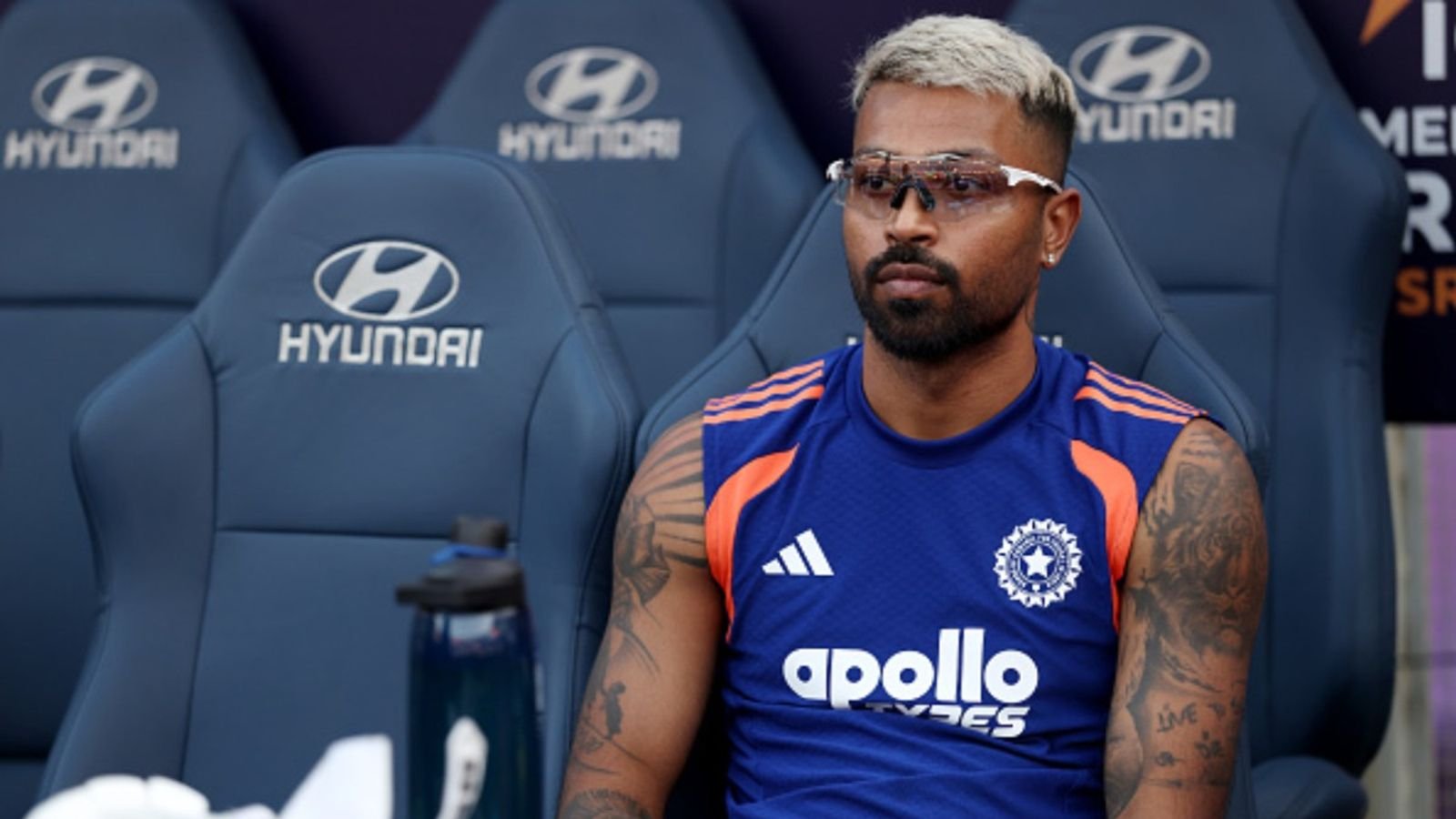
India’s quest to build a balanced and dominant white-ball team has received another reality check following Nitish Kumar Reddy’s latest injury setback. The young all-rounder has been ruled out of upcoming T20I assignments against Ireland and England after suffering a left quadriceps injury, prompting former India opener Aakash Chopra to deliver a brutally honest assessment of the country’s injury-prone seam-bowling all-rounders.
Chopra’s comments, particularly his suggestion that a “fragile sticker” should be placed on players such as Hardik Pandya and Nitish Kumar Reddy, may have carried a touch of humor. However, beneath the sarcasm lies a genuine concern that could shape India’s fortunes over the next few years, especially with the 2027 ODI World Cup firmly on the horizon.
The incident has once again exposed a long-standing challenge for Indian Cricket: finding reliable seam-bowling all-rounders capable of staying fit throughout demanding international schedules while contributing significantly with both bat and ball.
Why Seam-Bowling All-Rounders Are Cricket’s Most Valuable Asset
Modern cricket places enormous value on genuine all-rounders. Players who can bat in the top seven while delivering meaningful overs provide teams with flexibility, balance, and tactical advantages that are difficult to replicate.
For India, Hardik Pandya has become the blueprint for this role. His ability to finish innings, accelerate scoring rates, and contribute with the ball has transformed the team’s composition across formats.
However, the physical demands of being a seam-bowling all-rounder often come with significant risks.
- High workload on muscles and joints.
- Continuous transitions between batting and bowling.
- Intensive travel schedules.
- Limited recovery periods.
- Participation in franchise and international cricket.
These factors make injury management one of the most critical aspects of an all-rounder’s career.
Aakash Chopra’s Remark Highlights a Bigger Concern
Speaking after confirmation of Nitish Kumar Reddy’s injury, Aakash Chopra did not limit his criticism to one player.
“A fragile sticker should be put on him. Why put it on him alone? You should put it on everyone. Put it on Hardik Pandya and Nitish Kumar Reddy. Put a fragile sticker on all medium-pace all-rounders.”
While the statement generated headlines, it also highlighted a recurring pattern within Indian cricket. Several promising seam-bowling all-rounders have struggled to maintain consistent fitness, forcing selectors to repeatedly adjust plans and squad combinations.
The challenge is not merely about missing a series. It is about building continuity, experience, and reliability heading into major ICC tournaments.
Nitish Kumar Reddy’s Injury Comes at the Wrong Time
Nitish Kumar Reddy was increasingly being viewed as an important component of India’s future white-ball setup.
The talented all-rounder had impressed with his ability to contribute across departments and was expected to gain valuable international exposure during the upcoming T20I assignments.
His latest injury setback delays that development process and raises fresh questions about workload management.
Young all-rounders require consistent opportunities to refine their skills at the international level. Frequent interruptions caused by injuries can significantly slow their progress and impact long-term career trajectories.
Hardik Pandya’s Importance to Team India
Whenever discussions about Indian all-rounders arise, Hardik Pandya remains at the center of the conversation.
Over the years, Pandya has evolved into one of India’s most influential white-ball cricketers. His presence offers multiple advantages:
- An additional fast-bowling option.
- Explosive lower-middle-order batting.
- Leadership experience.
- Flexibility in team selection.
- Match-winning capabilities under pressure.
However, injuries have repeatedly interrupted his career. Back issues, workload concerns, and fitness management have often restricted his bowling workload and occasionally sidelined him from crucial assignments.
This reality makes succession planning essential for Indian cricket.
India’s Lack of Reliable Backups
The biggest issue highlighted by Nitish’s injury is not simply the absence of one player. It is the limited pool of proven seam-bowling all-rounders available at the international level.
Unlike specialist batters or bowlers, genuine pace-bowling all-rounders are difficult to develop. They require exceptional athleticism, technical proficiency in two disciplines, and the durability to withstand intense workloads.
| Role | Availability of Talent | Development Difficulty |
|---|---|---|
| Specialist Batter | High | Moderate |
| Specialist Bowler | High | Moderate |
| Spin All-Rounder | Moderate | High |
| Seam-Bowling All-Rounder | Limited | Very High |
This scarcity makes every injury significantly more impactful.
How Other Cricket Nations Handle Similar Challenges
India is not alone in facing this problem.
Several leading cricket nations have experienced similar struggles with pace-bowling all-rounders. The physical demands of the role have affected players across generations and formats.
Successful teams have increasingly invested in:
- Sports science departments.
- Workload monitoring systems.
- Rotation policies.
- Specialized rehabilitation programs.
- Long-term fitness planning.
These measures help reduce injury risks while maximizing player availability during major tournaments.
The 2027 ODI World Cup Factor
Every selection decision and development program in Indian cricket is increasingly being viewed through the lens of the 2027 ODI World Cup.
By then, India will require a squad capable of maintaining balance across varying conditions and high-pressure knockout matches.
Having at least one dependable seam-bowling all-rounder is often considered a necessity rather than a luxury in modern ODI cricket.
If Hardik Pandya remains fit, India will possess one of the world’s most dangerous match-winners. However, relying solely on one player carries obvious risks.
Developing alternatives like Nitish Kumar Reddy could prove equally important to India’s World Cup ambitions.
The Workload Management Debate
One of the key lessons from recurring injuries is the importance of workload management.
Modern cricketers frequently move between international commitments, domestic competitions, franchise leagues, and training camps.
For all-rounders, the challenge is amplified because they contribute in multiple disciplines.
Teams increasingly face difficult decisions regarding:
- Rest periods.
- Series participation.
- Training intensity.
- Bowling workloads.
- Recovery protocols.
Finding the right balance between development and preservation remains one of the toughest tasks for coaching staffs worldwide.
What Suryansh Shedge’s Inclusion Means
Following Nitish Kumar Reddy’s withdrawal, Suryansh Shedge has been called into the squad.
While replacements provide opportunities for emerging players, they also underline the unpredictable nature of team planning when injuries occur.
For Shedge, the call-up represents a significant opportunity to showcase his abilities at a higher level. For selectors, it offers another chance to evaluate depth options in a crucial role.
Such opportunities often shape the future direction of national teams.
The Bigger Lesson for Indian Cricket
The discussion sparked by Aakash Chopra’s comments extends beyond individual players.
It raises broader questions about talent development, fitness management, and long-term squad construction.
India possesses one of the largest talent pools in world cricket, but producing durable seam-bowling all-rounders remains a difficult challenge.
The solution may not simply involve finding the next Hardik Pandya. Instead, it may require building a larger pipeline of multi-skilled players capable of sharing responsibilities and reducing dependence on a handful of individuals.
Conclusion
Aakash Chopra’s “fragile sticker” comment may have been delivered with wit, but it highlighted a genuine issue facing Indian cricket. The latest injury to Nitish Kumar Reddy has once again exposed the vulnerability of India’s seam-bowling all-rounder resources at a time when long-term planning for the 2027 ODI World Cup is already underway.
Hardik Pandya remains a cornerstone of India’s white-ball setup, but recurring fitness concerns underline the importance of developing reliable alternatives. As selectors, coaches, and support staff continue to manage workloads and nurture emerging talent, the ability to keep key all-rounders fit could ultimately determine India’s success in future global tournaments.
In modern cricket, match-winning all-rounders are worth their weight in gold. The challenge for India is ensuring those valuable assets spend more time on the field than in the treatment room.
For breaking news and live news updates, like us on Facebook or follow us on Twitter and Instagram. Read more on Latest Sports on thefoxdaily.com.






COMMENTS 0