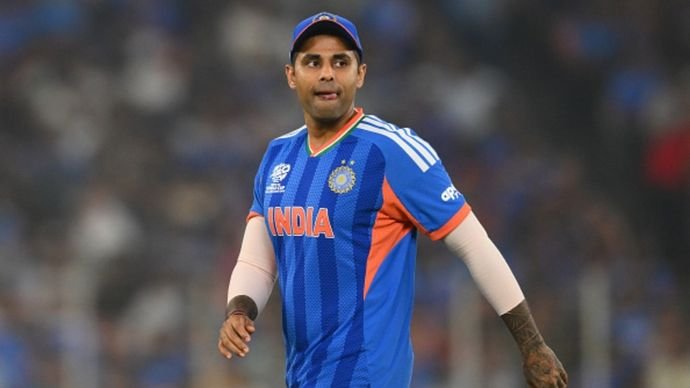
Sadagoppan Ramesh says Surya would accept his own exclusion, and that the team management likely had this conversation weeks before the squad announcement. The numbers, the timing, and the logic all point to the same conclusion: India made the call they had to make.
The Problem With Being Too Good at the Wrong Moment
Suryakumar Yadav led India to the 2026 T20 World Cup title. He won 40 of 52 T20I matches as captain. He guided the side to the Asia Cup the year before. By the conventional metrics of international cricket leadership, his record belongs in the conversation alongside the finest captains this format has ever produced.
And now he is out of the squad entirely. Not rotated. Not rested. Out.
The announcement that Shreyas Iyer would replace Surya both as a squad member and as T20I captain sent the kind of shockwave through Indian cricket that typically accompanies a genuinely unexpected decision. But former India opener Sadagoppan Ramesh, speaking on Star Sports, offered a perspective that cuts through the emotional noise and provides a far more measured assessment of what has actually happened and why.
His central argument is this: the transition, however surprising it looks from the outside, is one that Suryakumar Yadav himself will be able to accept. And when you look carefully at the numbers behind the headline, it is difficult to disagree.
Ramesh’s Core Argument: The Exit Was Already Written
“Though dropping a captain immediately after he led the side to a World Cup win is surprising, it’s a transition that Surya himself will be able to accept. Yes, he will be disappointed inside. But I feel this move would have been communicated to him weeks after the T20 World Cup itself.”
Sadagoppan Ramesh, Star Sports
The most important word in Ramesh’s assessment is “communicated.” He is not suggesting that Surya was blindsided by a squad announcement. He is suggesting that the management almost certainly had a private, professional conversation with Surya before any public announcement was made, and that Surya, as an experienced professional who knows his own numbers, would have understood the reasoning.
This matters because it changes the nature of what we are looking at. If Surya was privately informed and privately consulted, this is not a sudden betrayal of a World Cup-winning captain. It is the managed conclusion of a captaincy era, handled with the kind of dignity that great players deserve at the end of significant chapters in their careers.
“He’s obviously not there in the scheme of things for the next T20 World Cup. In a way, it is better for him to leave on the World Cup high. Had he played the next series and struggled, and then got dropped, it wouldn’t have been a great stage to leave. I feel the team management would have already spoken to Surya about this move.”
Sadagoppan Ramesh, Star Sports
This is the argument that deserves the most attention, because it is the one most people are not making. Ramesh is pointing out that leaving on a World Cup high is actually the best possible exit for a player in Surya’s batting situation. The alternative, being retained out of loyalty, struggling through another series with declining form, and then being dropped in far less flattering circumstances, would have been significantly worse for his legacy and for his own peace of mind.
The Batting Numbers That Made This Inevitable
The emotional response to Surya’s exclusion is understandable. The statistical case for it, however, is harder to argue against.
| Period | T20I Batting Average | Strike Rate | Context |
|---|---|---|---|
| Career (113 matches) | 36.35 | 162.94 | Elite T20I batter benchmark |
| Two seasons ago | 26.81 | N/A | Significant dip from career average |
| Last season | 13.62 | N/A | Alarming collapse in returns |
| 2026 T20 World Cup | 30.25 | Under 137 | Below career norms, 9 outings |
| 2026 (year to date) | 44 | N/A | Slight recovery, insufficient volume |
The career numbers paint the picture of a truly elite T20 batter. 3,272 runs at an average of 36.35 and a strike rate of 162.94 across 113 matches is a record that belongs to a player who was, at his peak, among the most destructive and reliable T20 batters in the world.
But the two-year trend is the number that matters for selection purposes. An average of 26.81 followed by an average of 13.62 is not a bad patch. It is a sustained deterioration that covers enough matches and enough time to constitute genuine evidence of a problem rather than statistical noise. The fact that he averaged 44 in 2026 is an encouraging data point, but the volume is limited and the World Cup numbers, where he managed a strike rate of under 137 across nine matches, suggest that even his recent recovery has not restored him to the level his batting demands.
Ramesh makes the point with characteristic directness.
“His place in the team would have been only as a captain and not as a player. If you only look at performances over the last two years, there is no place in the team for him. Playing as a captain, if he would have fired in the next series, it might have gotten complicated for the selectors. Hence, they would have spoken to him about this.”
Sadagoppan Ramesh, Star Sports
This is the most clinically honest assessment of Surya’s situation that has been offered publicly. The captaincy was, in effect, the only reason he remained in the squad during the period of batting decline. Once the World Cup was won and the logical endpoint of that captaincy era was reached, the selectors could no longer justify retaining him purely on the basis of leadership. The batting case, stripped of the captaincy overlay, did not hold up.
The Timing Argument: Why Leaving on a World Cup High Matters
There is a broader principle in professional sport that Ramesh is articulating through the lens of Surya’s specific situation, and it is one worth examining in detail. The timing of an exit shapes the memory of a career in ways that performance records alone do not.
Consider the alternative scenario. Surya is retained as captain for the Ireland and England T20I series. His batting form does not recover. He scores below 30 in three or four successive matches. The media narrative shifts from “World Cup-winning captain” to “struggling veteran clinging to his position.” He is eventually dropped not from a position of strength but from one of accumulated failure. The final images associated with his T20I career are not the World Cup-winning celebrations. They are the dropped catches and the scorecards with single-digit totals.
That is not a hypothetical designed to make the current decision look better than it is. It is the realistic trajectory of a player whose batting numbers have been heading in one direction for two years. Ramesh is not being callous in suggesting that leaving now is better for Surya. He is being protective of a legacy that deserves to end cleanly.
Surya’s T20I career record, 113 matches, 3,272 runs, a captaincy win rate that any leader in world cricket would envy, and a World Cup title as the final chapter, is genuinely distinguished. That record is preserved intact by an exit at this moment. It would be complicated, and potentially undermined, by another six months of deteriorating returns.
The Captaincy Record Deserves Its Own Recognition
Lost in the noise of the exclusion debate is the simple fact that Suryakumar Yadav’s captaincy record is objectively excellent. Forty wins from 52 T20Is represents a win percentage of approximately 77 percent. He delivered the 2026 T20 World Cup title. He delivered the Asia Cup the year before. As a captain, he was not merely adequate or functional. He was genuinely successful.
| Suryakumar Yadav Captaincy Record | Figures |
|---|---|
| Total T20I Matches as Captain | 52 |
| Wins | 40 |
| Win Percentage | Approx 77% |
| ICC Titles Won | T20 World Cup 2026 |
| Continental Titles Won | Asia Cup 2025 |
That record should not be allowed to disappear into the background noise of the squad announcement controversy. Whatever the circumstances of his departure from the T20I setup, Suryakumar Yadav was a very good captain. The teams he led won matches, won tournaments, and won the competition that matters most in the format. That is his legacy, and it is a substantial one.
What This Means for Shreyas Iyer and the New Era
The conversation about Surya’s exit inevitably flows into the question of what comes next, and specifically whether Shreyas Iyer is the right answer to the captaincy question. That debate is a separate one, and Ramesh’s comments do not directly address the merits of Iyer’s appointment. But the context he provides is relevant.
If the team management has handled Surya’s transition with the private communication and professional respect that Ramesh suggests, then the credibility of the process itself is at least partially intact. Players across the squad will be watching how Surya is treated. If the exit is managed with dignity, the message to the rest of the dressing room is that contribution and loyalty are recognised even when form has declined. That cultural signal matters enormously in a team environment.
The new captain inherits a strong structural foundation. India’s T20I record under Surya was built on genuine quality throughout the squad, not just exceptional captaincy. Iyer’s job is to maintain that standard while establishing his own leadership identity, and to do so without the international captaincy track record that his predecessor had accumulated across 52 matches.
Conclusion: A Great Career Deserves a Clean Ending
Sadagoppan Ramesh’s assessment of Suryakumar Yadav’s T20I departure is the most balanced and analytically honest take that has emerged from this episode. It acknowledges the disappointment that Surya will feel privately. It recognises the surprise of the decision’s public optics. And it provides the statistical and strategic reasoning that makes the call defensible, even if it is uncomfortable.
The numbers over two years made Surya’s position as a batter untenable without the captaincy to justify his inclusion. The World Cup victory provided the cleanest possible exit point. Leaving now preserves a legacy that two more struggling series would have complicated. These are not sentimental arguments. They are practical ones, and Surya, as a professional of the highest order, will understand them.
A career that includes 113 T20I matches, 3,272 runs, a 77 percent win record as captain, an Asia Cup, and a World Cup title is not a career that needs defending. It is a career that deserves celebrating. And the best way to celebrate it is to let it end exactly where it is, at the summit, before the descent begins.
Suryakumar Yadav’s T20I story is complete. It is a very good story. India’s next chapter begins with Shreyas Iyer, and the weight of living up to what Surya built is now entirely his to carry.
For breaking news and live news updates, like us on Facebook or follow us on Twitter and Instagram. Read more on Latest Sports on thefoxdaily.com.






COMMENTS 0