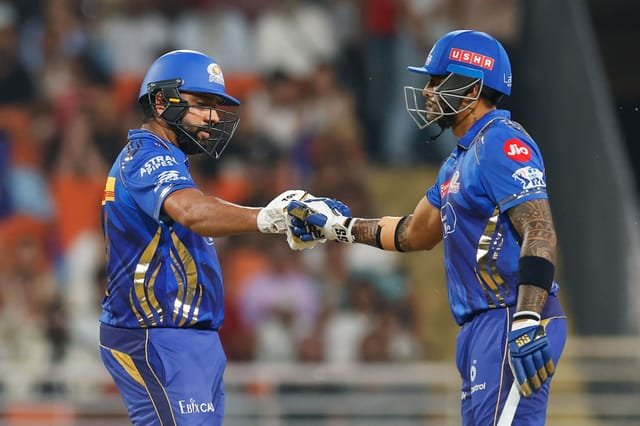
Two Champions, Two Exits, One Enduring Question
When the BCCI selection committee sacked Suryakumar Yadav as India’s T20I captain on Saturday and dropped him from the squad entirely, the commentary that followed drew repeated comparison to the manner of Rohit Sharma‘s own exit from the same role. The comparison is not simply a rhetorical device deployed by critics looking for a pattern. The two exits are structurally similar, and the careers they represent are statistically comparable in ways that make this the natural analytical question: when you place their captaincy records side by side, what do the numbers actually reveal about how these two men served Indian T20I cricket?
The answer, as the detailed statistics show, is more nuanced than either the “Rohit was better” or “SKY was equally great” positions suggest. Both men had exceptional records. The gap between them is real but not enormous. And in specific categories, Suryakumar Yadav performed in ways that Rohit Sharma’s longer and more successful tenure did not replicate. The comparison rewards careful examination rather than broad-brush summary.
Wins, Losses, and the Win Percentage Story
The most immediately comparable statistic in T20I captaincy is the win percentage. As a proxy for overall effectiveness in the role, it captures more than any single match result and reflects the sustained quality of decision-making and squad management across a full captaincy tenure.
| Captain | Matches | Won | Lost | Tied | No Result | Win % |
|---|---|---|---|---|---|---|
| Rohit Sharma | 62 | 49 | 12 | 1 | 0 | 79.03 |
| Suryakumar Yadav | 52 | 40 | 8 | 2 | 2 | 76.92 |
Rohit’s win percentage of 79.03 across 62 matches edges Suryakumar’s 76.92 across 52 games. The margin is real but small: approximately two percentage points. To put it in match terms, if Suryakumar had captained 62 matches at the same win rate, he would have ended up with roughly 47 wins compared to Rohit’s 49. The difference is not the gap between a great captain and a good one. It is the gap between two excellent T20I leaders, both of whom delivered India’s success at the highest level of the format.
The sample size difference (62 vs 52 matches) is a legitimate caveat. Rohit’s captaincy record encompasses more tests across a wider range of opponents and conditions. Whether Suryakumar’s rate would have maintained itself across an additional ten matches is a question the statistics cannot answer. What they can confirm is that his win rate, across the 52 matches he was given, was exceptional by any international standard.
With the Bat: The Captaincy Batting Comparison
Captaincy in T20 cricket is not purely a leadership function. The captain also bats, and the quality of their contributions with the bat while leading the team adds a dimension to any comparison that pure results analysis misses. The two captains’ batting records while leading India reveal an interesting reversal of the pattern their overall reputations might suggest.
| Captain | Matches | Runs | Average | Strike Rate | Highest Score | Centuries | Fifties |
|---|---|---|---|---|---|---|---|
| Rohit Sharma | 62 | 1,905 | 34.01 | 149.76 | 121* | 3 | 13 |
| Suryakumar Yadav | 52 | 1,232 | 28.65 | 154.96 | 100 | 1 | 8 |
Rohit’s batting average as captain (34.01) is notably higher than Suryakumar’s (28.65), suggesting that Rohit contributed more consistently with the bat across his captaincy tenure. His three centuries and thirteen fifties to SKY’s one century and eight fifties reinforce this advantage.
But the strike rate comparison tells the opposite story. Suryakumar’s strike rate as captain (154.96) exceeds Rohit’s (149.76) by approximately five points. In T20 cricket, a strike rate gap of five points over hundreds of deliveries represents a meaningful additional scoring pace. Suryakumar scored his runs faster than Rohit did, reflecting the batting approach that has always defined him: prioritizing scoring rate alongside volume.
The fuller picture is this: Rohit scored more runs and averaged higher, making him the more reliable accumulator. Suryakumar scored at greater pace, making him the more accelerating influence when at the crease. Different tools for the same overall goal of contributing to India’s total.
Batting in Wins: Where the Strike Rate Gap Widens
Perhaps the most revealing subset of the batting comparison is performance in wins. This isolates the contribution each captain made specifically in the matches India won under their leadership, removing the weight of losses from the average calculation and showing how they performed when the team was succeeding.
| Captain | Matches | Runs | Average | Strike Rate | Centuries | Fifties |
|---|---|---|---|---|---|---|
| Rohit Sharma (wins) | 49 | 1,572 | 35.72 | 152.03 | 2 | 12 |
| Suryakumar Yadav (wins) | 40 | 1,028 | 31.15 | 163.17 | 1 | 7 |
Rohit’s average advantage in wins (35.72 vs 31.15) persists, confirming that his batting contribution to India’s victories was more substantial in terms of runs scored per dismissal. But Suryakumar’s strike rate in wins (163.17) widens the gap with Rohit’s equivalent (152.03) by more than eleven points. When India were winning under Suryakumar’s captaincy, he was scoring at a rate of 163 runs per hundred balls, reflecting the kind of boundary-laden, momentum-generating batting that sets the tone for team performances around it.
Both captains dropped their strike rates and averages sharply in defeats. Suryakumar averaged 18.12 at a strike rate of 121.84 in India’s eight losses under his leadership, compared to Rohit’s 17.66 average and 125.44 strike rate in his twelve defeats. The drop-off in both cases is significant, reflecting the broader pattern that individual batting contributions tend to diminish in team defeats regardless of the individual’s form.
The World Cup Record: The Most Prestigious Comparison of All
Both captains led India to T20 World Cup titles. This fact alone places them in a very small category of international captains. But the batting comparison during their respective World Cup campaigns adds a fascinating statistical layer to the comparison.
| Captain | Tournament | Matches | Runs | Average | Strike Rate | Fifties |
|---|---|---|---|---|---|---|
| Rohit Sharma | T20 World Cup (all) | 14 | 373 | 28.69 | 136.63 | 4 |
| Suryakumar Yadav | 2026 T20 World Cup | 9 | 242 | 30.25 | 136.72 | 1 |
The World Cup comparison produces the most striking statistical similarity of the entire analysis. Rohit’s batting average as World Cup captain across 14 matches was 28.69 at a strike rate of 136.63. Suryakumar’s across nine World Cup matches was 30.25 at a strike rate of 136.72. The strike rates are separated by less than one tenth of a run per ball. The averages are within two runs of each other.
This near-perfect statistical convergence in the format’s most important competition is remarkable. Whatever the differences between the two captains across regular T20I cricket, when the biggest tournament arrived and the stakes were at their highest, both men performed at almost identically calibrated levels. The team results were similarly dominant: Rohit’s India won 12 of 14 matches across two World Cup campaigns, losing both times in the 2022 edition and going undefeated through the 2024 campaign. Suryakumar’s India lost only once in nine matches, to South Africa in the Super 8 stage, before recovering to defend the title.
What the Numbers Ultimately Say
The statistical comparison between Rohit Sharma and Suryakumar Yadav as T20I captains produces a picture that resists clean summary. Rohit’s win percentage is higher, his batting average as captain is higher, and his total runs and milestone tallies are greater. On conventional measures of captaincy quality, he has the edge.
But Suryakumar’s strike rate as captain, both overall and specifically in wins, is higher. In the matches that mattered most, specifically the T20 World Cup campaigns, their batting performances were essentially equivalent by the numbers. And Suryakumar led India to fewer total defeats (8) in his 52 matches than Rohit did (12) in 62, suggesting that his teams were more resilient against losing in absolute terms, even if the win percentage tells a marginally different story due to the tied matches and no results.
The 2028 T20 World Cup planning rationale offered for Suryakumar’s removal asks the question: what is India building toward, and does the decision make sense in that context? India have moved from Rohit’s era to SKY’s era to Shreyas Iyer’s era within a remarkably compressed timeframe. Two World Cup-winning captains have been replaced before they retired. The model is clearly one of cycling through captains aggressively rather than extending successful tenures until they naturally exhaust themselves.
Conclusion: The Numbers Honor Both, and the Debate Continues
When the statistical comparison between these two India T20I captains is laid out fully, what emerges is not evidence of one being clearly superior but of two exceptional leaders who contributed to Indian cricket’s most successful period in the shortest format. Rohit’s slight edges in win percentage and batting average are real. Suryakumar’s superior strike rate in winning matches is equally real. Their World Cup batting statistics are so similar as to be effectively identical.
Rohit Sharma’s name belongs permanently in the record of India’s greatest T20I captains. So does Suryakumar Yadav’s. The manner of their respective exits, both quick and both controversy-generating, is a separate question from the quality of what they produced while they were leading the team.
Shreyas Iyer now inherits a T20I setup that two World Cup-winning captains helped construct. The 2028 target for which the management is planning is two years away. What those two years will produce, and how Iyer’s captaincy statistics will eventually compare to the two that preceded him, will be one of Indian cricket’s more interesting ongoing stories.
Rohit had a slightly higher win percentage. SKY had a higher strike rate. Both won World Cups. Both left without saying goodbye. The numbers will be there long after the exits are forgotten.
For breaking news and live news updates, like us on Facebook or follow us on Twitter and Instagram. Read more on Latest Sports on thefoxdaily.com.






COMMENTS 0