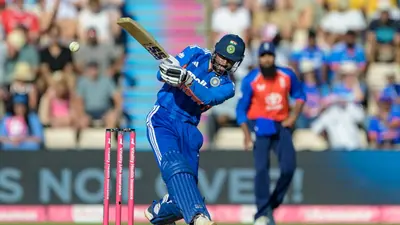
Modern T20 cricket is often judged through one lens: strike rate. Fans, analysts, and social media users frequently evaluate batters based on how quickly they score rather than the circumstances surrounding their innings. As a result, players who take time to stabilize an innings can sometimes face criticism even when they are performing roles assigned by the team management.
That debate has come into sharp focus with Tilak Varma, who recently responded to criticism regarding his strike rate during India’s T20I series against Ireland and England. The 23-year-old left-hander, who was surprisingly elevated to the role of India’s vice-captain, explained that his approach was influenced by match situations rather than personal milestones.
His comments offer a fascinating insight into how modern cricketers balance aggressive intent with the responsibility of holding together an innings when wickets fall regularly.
Why Tilak Varma’s Role Has Changed in the Indian Team
Being named vice-captain of the Indian T20I team represented a major milestone in Tilak Varma’s career.
The decision signaled that the team management views him as more than just a talented batter. It reflected confidence in his temperament, leadership qualities, and long-term importance to India’s white-ball plans.
When players receive leadership responsibilities, their roles often evolve. Instead of playing solely with personal freedom, they are expected to consider the broader needs of the team.
That shift appears to have influenced Tilak’s batting approach during the UK tour.
The Strike-Rate Debate in Modern T20 Cricket
T20 cricket has evolved dramatically over the last decade.
Teams now regularly score at rates that would have seemed impossible during the format’s early years. Batters are encouraged to attack from the first ball, while franchises and national teams increasingly prioritize explosive scoring.
However, one important reality often gets overlooked.
Not every batting situation allows for all-out aggression.
If a team loses multiple wickets early, someone must rebuild the innings. That responsibility frequently falls on technically sound middle-order batters capable of absorbing pressure.
This is the argument Tilak Varma has made regarding his performances.
What Happened During India’s UK Tour?
India endured a difficult tour of Ireland and England, failing to register a single T20I victory.
The series exposed several concerns, including batting collapses, inconsistent execution, and an inability to build momentum.
According to Tilak, one recurring issue was the loss of wickets inside the powerplay and early overs.
Such situations forced middle-order batters to alter their natural game plans.
| Challenge | Impact on Middle Order |
|---|---|
| Early wickets | Required rebuilding innings |
| Difficult conditions | Reduced attacking options |
| Scoreboard pressure | Increased responsibility |
| Spin challenges | Slowed scoring rates |
| Frequent collapses | Forced batters to stay longer |
These factors created circumstances where preserving wickets became just as important as accelerating the scoring rate.
Tilak Varma’s Explanation: Team First, Personal Numbers Second
One of the most revealing aspects of Tilak’s comments was his emphasis on adaptability.
Rather than defending his strike rate directly, he explained that he adjusts according to what the team requires.
Sometimes that means attacking from the first ball.
At other times, it means batting deep into the innings to provide stability.
This approach reflects a mature understanding of T20 cricket.
The best players are often those capable of shifting gears depending on match conditions rather than sticking rigidly to one style of play.
Tilak’s argument essentially boils down to a simple principle: winning cricket matches requires context, not just statistics.
How Tilak Varma Performed Statistically
Although criticism dominated social media discussions, Tilak’s tour was not entirely unsuccessful.
| Category | Performance |
|---|---|
| Matches Played | 7 |
| Total Runs | 178 |
| Half-Centuries | 2 |
| Highest Score | 55 |
| Vice-Captaincy | First Major Assignment |
While these numbers may not rank among the most dominant T20 performances, they indicate that Tilak was contributing despite challenging circumstances.
The debate therefore centers less on how many runs he scored and more on the pace at which those runs were accumulated.
Why Social Media Has Increased Pressure on Young Cricketers
Cricketers today face a level of scrutiny unlike any previous generation.
Every innings is analyzed instantly across multiple platforms.
Strike rates, dot-ball percentages, boundary counts, and advanced metrics are discussed within minutes of a match ending.
For young players, this environment can create enormous pressure.
A single slow innings may generate criticism regardless of the match situation.
Similarly, a quick cameo can be praised even if it contributes little to the team’s overall success.
Tilak’s comments suggest he has learned to separate external opinions from internal team expectations.
The Leadership Challenge of Being Vice-Captain at 23
Leadership responsibilities inevitably change how players think.
As vice-captain, Tilak is expected to contribute not only with the bat but also through decision-making, communication, and leadership within the squad.
Young leaders often face a difficult balancing act.
- Maintain individual performance.
- Support teammates.
- Represent management’s plans.
- Handle media scrutiny.
- Lead by example.
For a 23-year-old still establishing himself internationally, these responsibilities represent a significant challenge.
His comments indicate that he views leadership as a responsibility rather than merely a title.
Can Tilak Become India’s Long-Term T20 Leader?
The decision to appoint him vice-captain has naturally sparked discussion about his long-term future.
Indian cricket is constantly searching for leaders capable of guiding the next generation.
While it remains too early to predict future captaincy decisions, Tilak possesses several qualities selectors value:
- Calm temperament.
- Adaptability.
- Strong domestic record.
- Ability to play multiple batting roles.
- Leadership potential.
If he continues developing both as a batter and a leader, he could become an important figure in India’s white-ball setup for years to come.
Zimbabwe Series: A Fresh Opportunity
India’s upcoming T20I series against Zimbabwe provides an immediate opportunity to reset.
After difficult results in Ireland and England, the team will be eager to regain momentum and confidence.
For Tilak personally, the series offers a chance to shift the conversation away from criticism and back toward performance.
Strong contributions could reinforce the management’s faith in his leadership role while helping India secure positive results.
The series will also test how effectively the team has learned from the setbacks experienced during the UK tour.
What VVS Laxman’s Presence Means
With Gautam Gambhir unavailable for the Zimbabwe tour, VVS Laxman will oversee preparations.
Laxman has built a strong reputation for nurturing young talent and helping players understand their roles within the team structure.
His experience working with emerging cricketers could prove valuable for a squad looking to rebuild confidence.
Several of India’s younger players have previously benefited from Laxman’s guidance through developmental programs and India A tours.
The Bigger Lesson: Context Matters in Cricket
Perhaps the most important takeaway from Tilak Varma’s response is a reminder that cricket cannot be understood through numbers alone.
Statistics are valuable, but they rarely tell the complete story.
A batter scoring at a modest strike rate while rescuing a collapsing innings may contribute more to the team than someone playing a brief attacking cameo.
The challenge for players is balancing entertainment with effectiveness.
Tilak believes his role required responsibility first and aggression second.
Whether fans agree or disagree, his explanation highlights the strategic complexity that often exists behind seemingly simple scorecards.
Conclusion
Tilak Varma’s response to strike-rate criticism reveals the pressures and responsibilities that come with being India’s vice-captain. While social media debates often focus on numbers, the young batter argues that team requirements and match situations must always take priority.
His performances during the UK tour may not have satisfied every critic, but they demonstrated a willingness to adapt to difficult circumstances and shoulder responsibility when the team needed stability.
As India prepare for the Zimbabwe series, Tilak has an opportunity to combine leadership with performance and strengthen his position as one of the most important young players in Indian cricket. Whether through aggressive strokeplay or composed innings under pressure, his development could play a crucial role in shaping India’s T20 future.
For breaking news and live news updates, like us on Facebook or follow us on Twitter and Instagram. Read more on Latest Sports on thefoxdaily.com.






COMMENTS 0