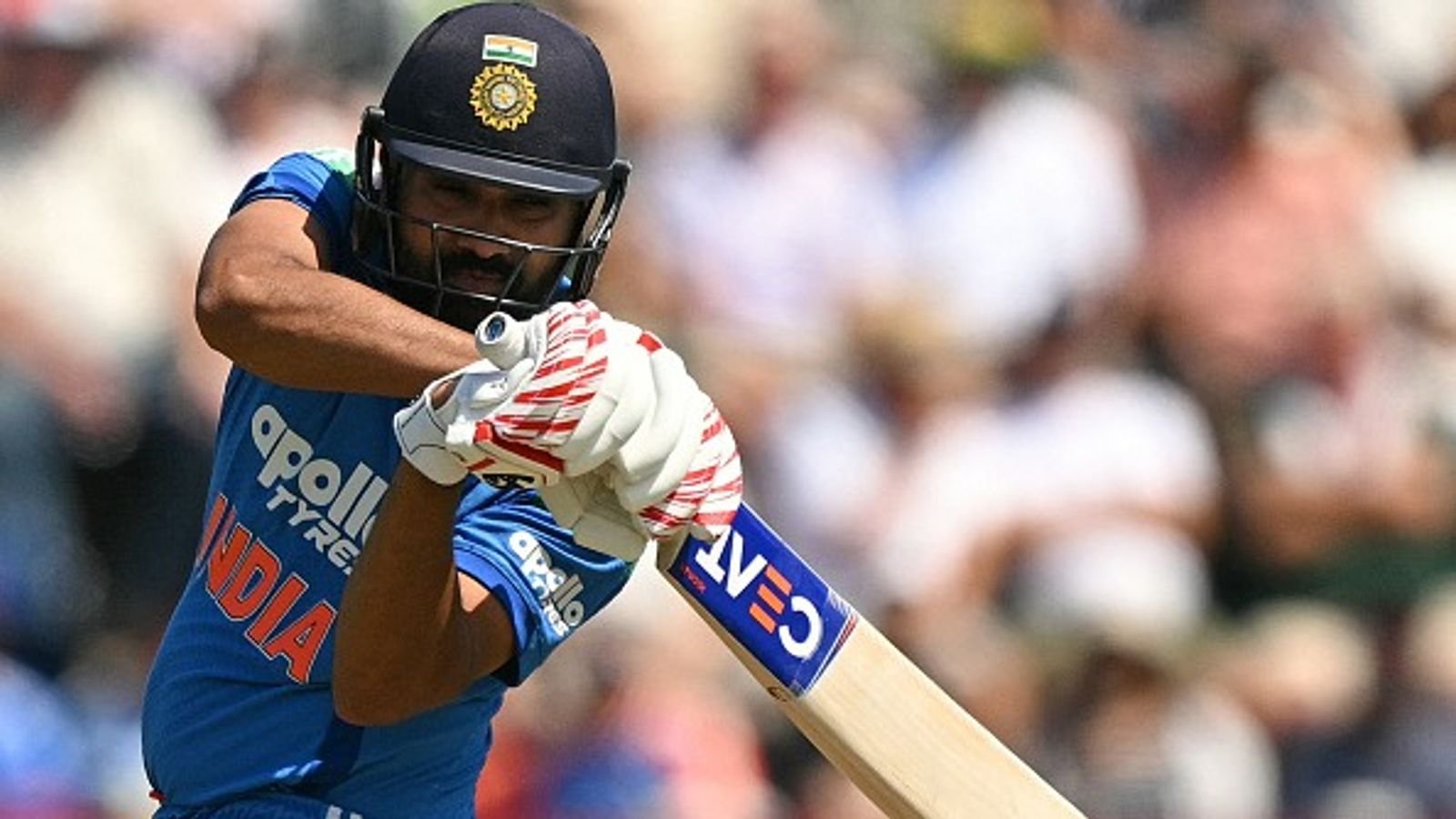
Indian Cricket may be approaching the end of an era. According to reports, Rohit Sharma is likely to announce his retirement from ODI cricket after the ongoing three-match series against England, with the final ODI at Lord’s on July 19 potentially serving as his farewell appearance in the format.
If confirmed, the decision would mark the conclusion of a remarkable ODI journey that transformed Rohit from a talented middle-order batter into one of the most successful opening batters and captains in cricket history. More importantly, it would signal the beginning of a significant transition phase for Team India as selectors shift their focus toward building a squad capable of challenging for the 2027 ICC Cricket World Cup.
While official confirmation is still awaited, the reports have already sparked intense debate among fans and experts. Why are selectors reportedly moving on from Rohit Sharma? Is this purely an age-related decision, or does it reflect a broader strategic shift within Indian cricket? And who stands to benefit from one of the most significant changes in India’s ODI setup in recent years?
Understanding the implications requires looking beyond a single retirement announcement and examining the future direction of Indian cricket.
Why Rohit Sharma’s ODI Retirement Would Be a Major Moment for Indian Cricket
Few players have had a greater impact on ODI cricket than Rohit Sharma. Over nearly two decades, he evolved into one of the format’s most feared batters, redefining what was possible as an opening batter in 50-over cricket.
His ability to convert starts into massive scores became legendary. While many great batters accumulated centuries, Rohit repeatedly produced innings that completely altered matches and tournaments.
Among his achievements are:
- Three ODI double centuries.
- The highest individual ODI score in history.
- Multiple ICC tournament campaigns as India’s leading run-scorer.
- Leadership roles across major ICC events.
- A reputation as one of the most destructive powerplay batters ever.
Beyond statistics, Rohit helped shape India’s modern white-ball identity. His aggressive approach at the top of the order influenced a generation of batters and encouraged a more attacking mindset during the first ten overs.
Why Selectors Are Looking Beyond the 2027 World Cup
The reported decision appears to be driven by long-term planning rather than short-term performance concerns.
India’s selectors face a challenge common to every successful cricket team: balancing respect for experienced players with the need to prepare the next generation.
By the time the 2027 ODI World Cup arrives, Rohit Sharma would be approaching his 41st birthday. While age alone should never determine selection, planning a World Cup campaign requires assessing whether senior players can maintain peak performance levels over multiple years.
Selectors reportedly believe the team must begin investing in younger players now rather than waiting until the final stages of the World Cup cycle.
This strategy mirrors transitions seen in other successful cricket nations, where difficult decisions are often made years before major tournaments.
The Bigger Picture: Indian Cricket’s Next Evolution
What makes this development particularly significant is that it appears to be part of a broader restructuring effort rather than an isolated selection call.
Since the appointment of Gautam Gambhir as head coach, there has been increasing emphasis on identifying long-term options across formats.
The focus has shifted toward building a squad that can remain competitive not just for the next series but for the next major ICC cycle.
That means evaluating players based on where they could be in 2027 rather than where they stand today.
In that context, the reported decision regarding Rohit becomes easier to understand, even if it remains emotionally difficult for fans.
What Rohit Sharma Leaves Behind in ODI Cricket
Regardless of when the retirement announcement arrives, Rohit’s legacy is secure.
| Aspect | Impact on ODI Cricket |
|---|---|
| Opening Batting | Redefined aggressive yet calculated starts |
| Big Scores | Set benchmarks with multiple double centuries |
| Captaincy | Led India through major ICC tournaments |
| Powerplay Dominance | Changed how teams approached the first ten overs |
| Consistency | Performed across multiple World Cup cycles |
Perhaps Rohit’s greatest achievement was mastering the balance between patience and aggression. Early in his career, critics questioned his consistency. Later, he became one of the most reliable match-winners in world cricket.
That transformation remains one of Indian cricket’s greatest success stories.
Could Lord’s Be the Perfect Farewell Venue?
If the reports prove accurate, Lord’s would provide a fitting stage for Rohit’s final ODI appearance.
Known globally as the “Home of Cricket,” Lord’s has hosted some of the sport’s most iconic moments. For many cricketers, playing a final international match at the historic venue would carry enormous symbolic value.
Indian cricket also shares a deep connection with Lord’s through several landmark victories and memorable performances.
A farewell at such a venue would add another emotional chapter to Rohit’s career narrative.
Who Replaces Rohit Sharma?
This is arguably the most important question facing India’s selectors.
Reports suggest that players such as Yashasvi Jaiswal are being considered for an extended opportunity in ODI cricket. The young left-hander has already demonstrated his potential across formats and represents the type of fearless modern batter selectors are eager to develop.
However, replacing Rohit involves more than filling an opening slot.
India would need someone capable of:
- Handling new-ball pressure.
- Setting the tempo of innings.
- Performing consistently in ICC tournaments.
- Providing leadership qualities when required.
- Building partnerships around younger teammates.
Finding a batter who can replicate Rohit’s overall influence may take years rather than months.
The Leadership Question India Must Answer
Rohit’s potential ODI exit raises another critical issue: leadership succession.
Modern ODI cricket increasingly demands captains who can adapt rapidly to changing conditions, manage data-driven strategies, and handle the pressures of major tournaments.
India must determine whether their next captain should be a long-term project or a short-term bridge toward the future.
The transition phase becomes especially important because ODI cricket remains central to ICC events despite the growing prominence of T20 leagues worldwide.
Why Fans Are Divided Over the Reported Decision
Reactions to the reports have been mixed.
Some supporters believe the selectors are making a pragmatic decision focused on the 2027 World Cup.
Others argue that experienced players like Rohit should continue as long as they remain capable of performing at the highest level.
Both perspectives have merit.
History shows that delaying transitions can leave teams underprepared for major tournaments. At the same time, removing proven performers too early can create unnecessary instability.
The challenge for selectors is finding the right balance between future planning and present competitiveness.
The Unique Insight Many Discussions Are Missing
Most coverage of Rohit’s possible retirement focuses on his age or statistics. However, the bigger story may be how Indian cricket evaluates success.
For years, teams often kept experienced stars until their performance clearly declined. Modern cricket increasingly operates differently.
Teams now make decisions based on tournament cycles, workload management, and long-term squad development rather than solely on current form.
This shift reflects how international cricket has evolved.
Selectors are no longer choosing players only for the next series. They are building teams for competitions that may be two or three years away.
Viewed through that lens, the reported decision becomes less about Rohit Sharma the player and more about India’s strategic vision for the future.
What This Means for India’s 2027 World Cup Preparation
If Rohit does retire from ODIs, India would gain additional time to experiment with combinations before the next World Cup.
The management could evaluate multiple opening partnerships, test emerging batters under pressure, and identify future leaders.
While transitions often create short-term uncertainty, they can also produce long-term benefits when managed effectively.
The next 12 to 18 months could therefore become one of the most important development periods in India’s ODI planning.
Prediction: A Defining Transition Is About to Begin
Whether the retirement announcement arrives immediately after the England series or later, the direction of travel appears increasingly clear.
Indian cricket is entering a transition phase in ODI cricket, and Rohit Sharma’s potential departure would be its most significant milestone.
The challenge for selectors will be ensuring that the next generation learns from the standards established by players like Rohit while developing its own identity.
Successful teams do not simply replace legends; they use those moments to reinvent themselves.
Conclusion
Rohit Sharma’s reported ODI retirement would bring an end to one of the most influential careers in modern cricket. From record-breaking innings to World Cup campaigns and captaincy responsibilities, his impact on the format extends far beyond runs and statistics.
If Lord’s does become the venue for his final ODI appearance, it will represent more than a farewell. It will symbolize the end of one era and the beginning of another for Indian cricket.
While fans may focus on the emotional side of the transition, selectors will already be looking toward 2027. Their task now is ensuring that the next generation is ready to carry forward the legacy left behind by one of India’s greatest ODI cricketers.
For breaking news and live news updates, like us on Facebook or follow us on Twitter and Instagram. Read more on Latest Sports on thefoxdaily.com.






COMMENTS 0