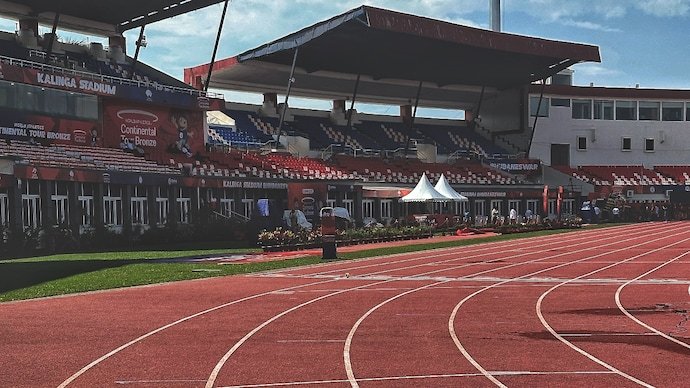
Indian athletics is undergoing perhaps its biggest transformation since the nation began producing regular finalists at major international competitions. The latest edition of the Inter-State Senior Athletics Championships in Bhubaneswar was not merely another domestic meet or a qualifying event for the Asian Games—it was a powerful demonstration of how India’s athletics ecosystem is becoming deeper, faster and far more competitive.
For decades, Indian athletics often relied on a handful of elite performers carrying the country’s hopes at global competitions. Today, that narrative is rapidly changing. Across events ranging from javelin throw and triple jump to high jump and shot put, experienced international medalists found themselves under immense pressure from fearless youngsters eager to seize national team places.
The result is a domestic circuit where every competition resembles an international final. Rather than guaranteeing selection through reputation, athletes must now consistently perform at world-class standards simply to earn the opportunity to wear India’s colors. This cultural shift could prove to be the single biggest reason behind India’s ambitions of becoming a genuine athletics powerhouse over the next decade.
Domestic Competition Has Become India’s Toughest Test
The biggest takeaway from the Inter-State Championships was simple: India’s hardest athletics competition may no longer be the Olympics or World Championships—it could be earning selection through domestic meets.
Unlike previous generations, today’s young athletes are unwilling to wait for established stars to decline before challenging for places. They arrive with better coaching, improved sports science support, international exposure and a fearless mentality that has transformed every event into a battle for survival.
This new environment means that every domestic championship now serves as a proving ground where only the most consistent performers advance to international competitions.
Why India’s Domestic Athletics Revolution Matters
Elite sporting nations rarely depend on one or two exceptional athletes. Instead, sustained international success is built upon extraordinary domestic depth.
The United States and Kenya have demonstrated this model for decades. Their national trials are often more competitive than international finals because multiple athletes possess medal-winning potential.
India appears to be moving toward a similar system.
Instead of celebrating isolated breakthroughs every few years, Indian athletics is beginning to produce multiple athletes capable of competing at elite levels in the same discipline. This increases competition, improves performance standards and creates healthy pressure throughout the national program.
Javelin Throw Reflects the New Competitive Reality
No event better illustrated this changing landscape than the men’s javelin throw.
Rohit Yadav stole the spotlight with a sensational personal best of 87.05 metres, one of the finest throws by an Indian athlete and among the leading marks globally this season.
However, the bigger story lay further down the standings.
Asian Games silver medallist and World Championship finalist Kishore Jena finished outside the leading positions after managing 77.21 metres, while younger competitors delivered qualifying performances ahead of him.
| Men’s Javelin Highlights | Performance |
|---|---|
| Rohit Yadav | 87.05m |
| Yashvir Singh | 83.72m |
| Sachin Yadav | 82.32m |
| Kishore Jena | 77.21m |
Only a few years ago, an athlete with Jena’s international résumé would have entered domestic competitions as the overwhelming favorite. Today, India’s emerging throwers have dramatically raised the performance benchmark.
Triple Jump Produced Unprecedented Depth
Perhaps no discipline better demonstrated India’s expanding talent pool than the men’s triple jump.
The Athletics Federation of India established a demanding qualification standard of 16.28 metres for major international competition. Rather than struggling to produce one qualifier, India witnessed six athletes exceed the mark during a single championship.
| Athlete | Best Jump |
|---|---|
| Praveen Chithravel | 16.92m |
| Karthik U | 16.80m |
| Selva Prabhu | 16.79m |
| Abdulla Aboobacker | 16.54m |
| Mohanraj J | 16.53m |
| Gailey Venister | 16.48m |
The significance extends beyond numbers. Former continental champions now face the possibility of missing international selection despite producing performances that would have comfortably secured national titles in previous years.
Established Champions Are No Longer Guaranteed Success
The changing competitive environment was visible across multiple field events.
Asian shot put legend Tajinderpal Singh Toor, one of India’s most decorated throwers, finished behind younger rivals after Karanveer Singh and Samardeep Gill both crossed the 20-metre mark.
Similarly, athletes carrying international medals discovered that previous achievements offered little protection against rising domestic standards.
This evolution represents a healthy sporting culture where selection depends solely on current performance rather than historical reputation.
National Records Continue to Fall
Increased competition naturally pushes athletes toward higher performance levels.
That trend became evident through remarkable national-record performances during the championships.
- Sarvesh Kushare cleared 2.31 metres in the high jump, establishing a new national record.
- Ancy Sojan leapt 6.88 metres to break one of India’s longest-standing women’s athletics records in the long jump.
Such achievements demonstrate how internal competition often accelerates progress more effectively than relying solely on international exposure.
The Psychology of Indian Athletics Has Changed
Perhaps the most important transformation is mental rather than physical.
For years, Indian athletes prepared themselves psychologically for the challenge of facing stronger international competitors. That mindset is evolving.
Today’s athletes must first survive brutally competitive domestic championships before earning the opportunity to compete abroad.
This shift creates competitors who are already accustomed to pressure, high expectations and elite-level competition long before stepping onto international tracks.
Why Depth Is More Valuable Than Individual Superstars
Countries that consistently win medals at Olympic Games and World Championships typically share one characteristic: extraordinary depth.
When multiple athletes compete at similar standards, everyone improves.
Benefits include:
- Higher qualifying standards.
- Improved training environments.
- Greater tactical awareness.
- Reduced dependence on individual stars.
- More sustainable long-term success.
India appears to be building exactly this type of high-performance ecosystem.
The Rising Generation Is Fearless
One of the defining characteristics of India’s emerging athletes is their confidence.
Teenagers and young competitors are no longer intimidated by Olympians, national record holders or Asian Games medalists. Instead, they compete with the belief that every domestic championship offers an opportunity to establish themselves internationally.
That mentality represents a significant cultural shift within Indian athletics.
Rather than respecting reputations too much, young athletes increasingly focus on outperforming them.
Technology, Coaching and Sports Science Are Playing a Bigger Role
India’s expanding talent pool is not accidental.
Improved coaching methods, better access to sports science, enhanced strength and conditioning programs, video analysis and increased international exposure have all contributed to raising performance standards.
Younger athletes now enter senior competition with superior technical preparation than previous generations, allowing them to challenge experienced competitors much earlier in their careers.
What This Means for India’s International Future
The long-term implications are extremely encouraging.
If domestic competitions continue producing multiple athletes capable of meeting international qualification standards, India’s chances of winning medals across several disciplines will naturally improve.
Instead of relying on isolated breakthroughs every Olympic cycle, selectors will increasingly have genuine choices based on performance rather than necessity.
Healthy internal competition also reduces the impact of injuries or temporary dips in form, ensuring India’s overall competitiveness remains high.
Conclusion
The 65th Inter-State Senior Athletics Championships may ultimately be remembered as a defining moment in the evolution of Indian athletics. More than the medals or national records, the event highlighted a sporting ecosystem that now rewards current excellence above past reputation. Established champions are being challenged relentlessly, qualification standards continue to rise and young athletes are competing without fear against some of India’s biggest names.
This transformation mirrors the systems seen in the world’s most successful athletics nations, where domestic competition is often as demanding as international championships. If India can sustain this depth, continue investing in coaching and athlete development, and maintain merit-based selection, the country will enter future Asian Games, World Championships and Olympic cycles with greater confidence than ever before. The era of depending on one or two stars is fading. In its place stands a generation capable of turning Indian athletics into a consistent global force.
For breaking news and live news updates, like us on Facebook or follow us on Twitter and Instagram. Read more on Latest Sports on thefoxdaily.com.






COMMENTS 0