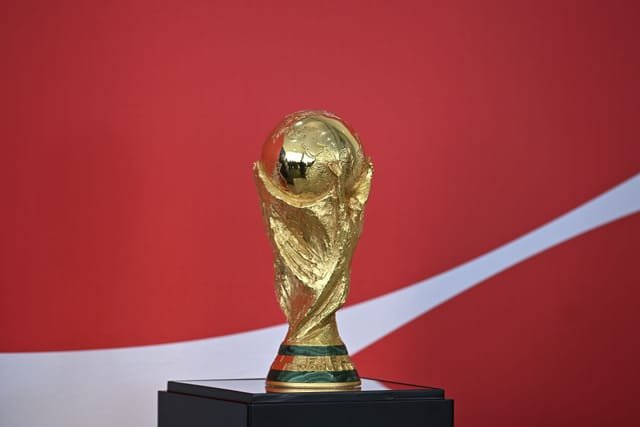
In the final days before the 2026 FIFA World Cup kicks off across the United States, Canada, and Mexico, the Netherlands have delivered the kind of news that every football fan and every coach dreads: a key player confirmed out before the tournament has even begun. Jurriën Timber, the Arsenal defender and one of the most versatile players in the Dutch squad, has been ruled out of the competition after failing to recover sufficiently from a groin injury.
The 24-year-old had been part of the national team’s pre-camp in New York, but the Netherlands medical staff made the call that allowing him to continue in his current condition would not be medically responsible. He will remain with the squad through the friendly against Uzbekistan before departing the camp and returning home.
The official Netherlands statement was direct and immediate in its sympathy:
“Jurriën Timber misses the 2026 World Cup. The 24-year-old defender has not recovered sufficiently from a groin injury to take part in the World Cup in a medically responsible manner. In consultation with the medical staff, it has therefore been decided that Timber will leave the national team’s pre-camp in New York after the game against Uzbekistan. We’re with you, Jurriën.”
The three-word sign-off from his national federation says everything about what this moment costs a player who has been dealing with serious injury disruption for the better part of two years.
An Injury History That Has Taken Too Much Time
To understand the full weight of this World Cup exclusion, you have to look at the broader context of what Timber’s body has put him through in recent seasons. This is not an isolated setback. It is the latest in a series of physical problems that have repeatedly interrupted what should have been a period of sustained development and influence at the highest level of club and international football.
During the 2025/26 season, Timber missed 14 matches in total for club and country, with 13 of those absences occurring since the start of 2026. Beyond the groin issue that has ended his World Cup involvement, he also dealt with hip and ankle problems across the same campaign. In the 2024/25 season, a further 10 matches were lost to injury.
That is a significant amount of football missed across a two-year window for a player still in his mid-twenties. The fact that Timber has nonetheless managed to establish himself as one of Arsenal’s most important defensive options during that same period speaks to both the quality he has demonstrated when available and the frustration that comes from watching that quality be interrupted so frequently.
He did make it back for the UEFA Champions League final, coming on as a second-half substitute in the 65th minute for Cristhian Mosquera. That appearance represented a genuine physical effort to return for the biggest occasion, and it clearly came at a cost. The groin injury that has now ended his World Cup hopes was likely already present or developing through that period of recovery and return.
| Season | Injury Issues | Matches Missed | Key Context |
|---|---|---|---|
| 2024/25 | Various physical issues | 10 | Disrupted season despite promising early form |
| 2025/26 | Hip, ankle, and groin concerns | 14 (13 since January 2026) | Made Champions League final as substitute; World Cup ruled out |
The Netherlands’ Replacement: Lutsharel Geertruida Called Up
Head coach Ronald Koeman moved quickly to address the gap in his squad, calling up Lutsharel Geertruida of Sunderland as Timber’s replacement. Geertruida is a versatile defensive player who can operate across the backline, and his call-up gives the Netherlands a like-for-like replacement in terms of positional flexibility, even if matching Timber’s specific combination of qualities is not a simple task for any individual player.
The Netherlands begin their 2026 World Cup campaign against Japan on Sunday, before facing Sweden and Tunisia to complete their group stage schedule. Koeman’s side have genuine ambitions in this tournament, and the strength of the Dutch squad means they retain the depth to manage Timber’s absence. But losing a player of his caliber and versatility before the tournament starts creates an adjustment that the coaching staff will need to manage carefully through the opening matches.
The Arsenal Injury Concern That Has Not Gone Away: William Saliba’s Back Issue
Timber’s confirmed absence is the most definitive piece of injury news from the Arsenal camp ahead of the World Cup, but it is not the only concern. William Saliba, the Arsenal and France centre-back, is also carrying a back issue into the tournament, and the nature of that problem has attracted significant attention in the lead-up to the competition.
Reports have indicated that Saliba will require surgery on his back at some point this summer. That is a significant statement about the severity of the underlying condition, and in normal circumstances, a player in that situation would not be expected to participate in a major international tournament. But Didier Deschamps has been clear and consistent in his messaging: all his players will be available for the group stage matches and the warm-up friendlies.
Deschamps provided additional context that helps explain how Saliba has been managing the situation:
The Arsenal defender had been playing through the issue for several weeks before the tournament. The UEFA Champions League final against PSG, in which Saliba played the full 120 minutes, made his recovery harder and extended the timeline before he could approach full fitness. But Deschamps’ confidence that Saliba will play at the World Cup suggests that the condition, while serious enough to require eventual surgery, has been managed to a point where it does not preclude participation in the immediate term.
The risk calculation here is a delicate one. France need Saliba. He is central to their defensive structure and has been one of the most composed and commanding centre-backs in European football over the past two seasons. Playing him through a condition that requires surgery carries a genuine risk of aggravating the injury during the tournament. But sitting out a World Cup with France in contention for the title is equally unacceptable from any perspective, and Saliba himself has shown the willingness to manage the issue rather than withdraw.
What Arsenal’s World Cup Injury Situation Means for the 2026/27 Season
The Arsenal perspective on all of this extends beyond the World Cup itself. Both Timber and Saliba are central to how manager Mikel Arteta constructs his defensive unit, and the physical condition both players return in at the end of the tournament will shape Arsenal’s pre-season preparation and opening fixtures of the 2026/27 campaign.
For Timber, the immediate priority is recovery. A groin injury that could not be managed to a level of medical safety for World Cup participation requires proper rehabilitation, and the absence of tournament football actually gives him a clearly defined window to focus entirely on getting the injury fully resolved. Rushing back from groin issues has a documented pattern of creating recurring problems, and Arsenal will want to see Timber return for the new season with the underlying condition fully addressed rather than managed around.
For Saliba, the situation is more complex. If France progress deep into the tournament, he could be playing high-intensity knockout matches through June and into July, all while managing a condition that requires surgery. The longer France go in the competition, the further into the summer that surgery gets pushed, which in turn affects how much of Arsenal’s pre-season preparation he can participate in.
These are the realities of modern football at the intersection of club demands, international competition, and individual physical limits. Arsenal’s medical staff will be watching the tournament closely, and their conversations with both players’ national team medical teams will be important in understanding exactly what condition each player is in when they return to north London after the summer.
Timber’s World Cup Statement: A Career Perspective
For Jurriën Timber personally, this World Cup exclusion arrives at a moment when he was at an age where the tournament should represent the kind of opportunity that defines a player’s generation. At 24, this is a prime World Cup age. Being ruled out through injury rather than selection is a different kind of disappointment, because it removes any element of performance or competition as a factor. He simply could not recover in time. The medical staff made the responsible decision, and the tournament proceeds without him.
The question of whether a future World Cup opportunity will arrive is an open one. He will be 28 at the 2030 World Cup and 32 at 2034, both viable ages for an international defender who manages his physical conditions properly from this point. But the immediate future requires focus on recovery, and the longer-term future will be shaped by how well he can maintain availability across the seasons between now and those tournaments.
His former club and current national team will be hoping for the same thing: a healthy, available, fully functioning Timber who can demonstrate what he is capable of when his body cooperates with his talent. Because when both align, the evidence from his performances at club level suggests something genuinely special.
Conclusion: A Tournament Begins, and a Key Player Watches From Home
The 2026 FIFA World Cup is days away from its opening matches, and the Netherlands will begin their campaign against Japan already managing the absence of one of their most important defensive options. Lutsharel Geertruida arrives as the replacement, bringing his own qualities and the ability to provide Koeman with the flexibility the squad needs.
Meanwhile, the broader Arsenal injury story continues to play out in parallel. Saliba will line up for France despite a back condition that will require surgery. Timber will watch from home while he rehabilitates a groin problem that ended his tournament before it began.
Both players represent the reality of modern football’s demands on elite defenders. The physical cost of performing at the highest level, across two intense seasons of club and international competition, does not spare even the most talented and most carefully managed athletes. Timber’s World Cup ends here. His career has much further left to run.
For breaking news and live news updates, like us on Facebook or follow us on Twitter and Instagram. Read more on Latest Sports on thefoxdaily.com.


COMMENTS 0