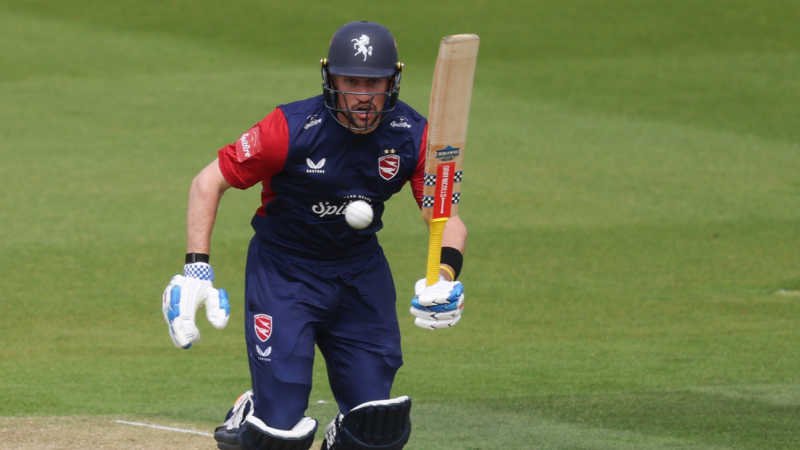
The Metro Bank One-Day Cup often rewards teams that remain calm under pressure, and Kent demonstrated exactly that in their five-wicket victory over Northamptonshire at Canterbury on July 24, 2026. Chasing a competitive target of 254, Kent overcame early setbacks to reach 254 for 5 with two overs to spare, thanks to a match-defining partnership between Harry Finch and Chris Benjamin.
While Northamptonshire produced several encouraging performances, including half-centuries from Nathan McSweeney, Ricardo Vasconcelos, and George Bartlett, they were ultimately undone by their inability to convert strong starts into a truly imposing total. Kent, by contrast, combined disciplined bowling with intelligent batting to secure a valuable Group A victory.
The result highlighted a recurring truth in one-day cricket: success is often determined not by individual brilliance alone but by which team manages key moments more effectively. Kent seized those moments throughout the match and deservedly emerged victorious.
Kent vs Northamptonshire: Match Summary
| Match Detail | Result |
|---|---|
| Tournament | Metro Bank One-Day Cup 2026 |
| Venue | Canterbury |
| Northamptonshire | 253 all out |
| Kent | 254/5 |
| Result | Kent won by 5 wickets |
| Top Scorer (Kent) | Harry Finch – 85 |
| Top Scorer (Northamptonshire) | Nathan McSweeney – 58 |
| Best Bowling (Kent) | Grant Stewart – 3/33 |
| Best Bowling (Northamptonshire) | Luke Procter – 3/44 |
Why This Match Was More Competitive Than the Scorecard Suggests
At first glance, a five-wicket victory with two overs remaining may appear relatively comfortable. However, the contest remained finely balanced for much of the day.
Northamptonshire repeatedly built partnerships that threatened to produce a bigger total, while Kent’s chase featured several momentum swings that kept the outcome uncertain.
The difference ultimately came down to execution during critical phases. Kent maximized their opportunities with both bat and ball, whereas Northamptonshire allowed several key moments to slip away.
In modern 50-over cricket, those small margins frequently determine results.
Northamptonshire’s Openers Provide a Strong Foundation
After Kent elected to field, Northamptonshire made a positive start.
Ricardo Vasconcelos and Gus Miller established an opening partnership that settled nerves and gave the visitors a stable platform.
Neither batter dominated proceedings, but they accumulated steadily and prevented Kent from making early breakthroughs.
By the time the first wicket fell, Northamptonshire had already reached 75, placing themselves in a strong position to build a substantial total.
The partnership illustrated the importance of solid starts in one-day cricket. Even on surfaces that do not heavily favor batters, preserving wickets early often creates opportunities later in the innings.
Grant Stewart Turns the Momentum
Kent struggled to make inroads initially, but Grant Stewart changed the course of the innings.
His first breakthrough removed Gus Miller and immediately increased pressure on the batting side.
Stewart followed that success with another wicket, ensuring Northamptonshire could not fully capitalize on their promising start.
His figures of 3 for 33 reflected a disciplined and intelligent spell that kept Kent in the contest even when Northamptonshire appeared well positioned.
Fast bowlers often receive attention for dramatic wicket-taking spells, but Stewart’s contribution was equally valuable because it prevented the innings from accelerating.
Three Half-Centuries but No Century Partnership Beyond 116
One of the defining features of Northamptonshire’s innings was the number of batters who got starts without producing a match-defining score.
Nathan McSweeney scored 58, Ricardo Vasconcelos added 55, and George Bartlett contributed 54.
All three played important innings. Yet none managed to convert their platform into the kind of dominant score that can control a one-day match.
In modern List A cricket, teams often require at least one batter to push beyond 80 or 100 runs to establish a truly imposing total.
Northamptonshire consistently moved forward but never quite reached that next level.
That inability to produce a major innings ultimately left the door open for Kent.
The McSweeney-Bartlett Partnership Revives Northants
The most productive period of Northamptonshire’s innings came through the partnership between McSweeney and Bartlett.
The pair added 116 runs for the fourth wicket and appeared capable of pushing the score beyond 280.
Their partnership balanced caution with aggression, rotating strike effectively while punishing loose deliveries.
At that stage, Kent faced a significant challenge.
Another 10 overs of similar batting could have transformed the match.
Instead, a dramatic bowling intervention altered everything.
Ekansh Singh’s Match-Changing Burst
Every successful bowling performance contains a decisive phase. For Kent, it came through Ekansh Singh.
The young bowler delivered one of the most influential spells of the match by taking three wickets in quick succession.
His dismissals of McSweeney and Bartlett ended Northamptonshire’s most threatening partnership, while another wicket shortly afterward halted any hopes of a late-innings surge.
Suddenly, a team that looked capable of posting 280-plus found itself scrambling to reach 250.
Singh’s final figures of 3 for 50 only tell part of the story. The timing of his wickets proved even more valuable than the numbers themselves.
| Kent Bowling Leaders | Figures |
|---|---|
| Grant Stewart | 3/33 |
| Ekansh Singh | 3/50 |
| Matt Parkinson | Key middle-over control |
| Keith Dudgeon | Important late wicket |
Was 253 Enough on the Canterbury Surface?
The answer depended largely on how Kent approached the chase.
A target of 254 sits in an interesting zone in one-day cricket. It is neither small enough to guarantee success nor large enough to create overwhelming scoreboard pressure.
Teams chasing such totals generally succeed when they maintain partnerships and avoid clusters of wickets.
Northamptonshire knew early breakthroughs would be essential.
For a brief period, they achieved exactly that.
Luke Procter Gives Northamptonshire Early Hope
Northamptonshire could hardly have asked for a better start with the ball.
Luke Procter removed Ben Dawkins early and then claimed another key wicket shortly afterward.
His spell created uncertainty in the Kent dressing room and gave the visitors genuine belief.
When Jaydn Denly and Sam Northeast departed, Kent’s chase appeared vulnerable.
Momentum had shifted toward Northamptonshire, and the pressure was mounting.
However, successful chases often hinge on one partnership capable of absorbing that pressure.
Kent found theirs at exactly the right moment.
Harry Finch Produces a Captain’s Knock Without Wearing the Armband
Harry Finch’s innings of 85 represented far more than a statistical contribution.
It was an innings built around game awareness, patience, and timing.
Rather than attempting to dominate from the outset, Finch adapted to the situation. He stabilized the innings, rebuilt momentum, and gradually shifted pressure back onto Northamptonshire’s bowlers.
As confidence grew, so did his attacking intent.
His ability to accelerate without losing control became one of the defining features of the chase.
The innings demonstrated why experienced top-order players remain so valuable in 50-over cricket. They understand not only how to score runs but also when to take calculated risks.
Chris Benjamin Provides the Perfect Support Act
While Finch anchored the chase, Chris Benjamin delivered the finishing touch.
His unbeaten 55 ensured Kent never lost sight of the target and prevented Northamptonshire from regaining momentum.
Benjamin balanced aggression with responsibility, selecting the right moments to attack while maintaining scoreboard control.
The partnership between Finch and Benjamin ultimately became the difference between the two teams.
It transformed a potentially nervous chase into a controlled pursuit of the target.
| Key Kent Batters | Runs |
|---|---|
| Harry Finch | 85 |
| Chris Benjamin | 55* |
| Daniel Bell-Drummond | 47 |
| Ekansh Singh | 18* |
Yuzvendra Chahal’s Influence Despite Defeat
Although Northamptonshire lost the match, Yuzvendra Chahal demonstrated why experienced leg-spinners remain dangerous in one-day cricket.
His wickets created moments of uncertainty and briefly brought the visitors back into contention.
Chahal’s variations, flight, and ability to attack middle-order batters continue to make him a valuable asset in domestic cricket.
However, even quality bowlers require sufficient scoreboard pressure to maximize their impact. The total of 253 left little margin for error.
The Importance of Dropped Chances in One-Day Cricket
One often overlooked aspect of this match was the role of fielding.
Northamptonshire missed a significant opportunity when Chris Benjamin received a reprieve during his innings.
At elite levels, dropped catches frequently alter outcomes.
Unlike longer formats where teams may recover from mistakes, one-day cricket punishes errors far more quickly.
The missed chance allowed Benjamin to continue building momentum and contributed significantly to Kent’s successful chase.
Why Kent’s Batting Depth Made the Difference
Perhaps the most encouraging aspect of Kent’s performance was their batting depth.
Even after losing early wickets, they never appeared dependent on a single player.
Multiple batters contributed meaningful runs, ensuring the chase remained on track.
Teams that compete consistently across an entire season often possess this quality. They are capable of recovering from setbacks because responsibility is shared throughout the lineup.
Kent demonstrated exactly that balance against Northamptonshire.
What This Result Means for Both Teams
Kent
- Strengthened their position in Group A.
- Received major contributions from both experienced and emerging players.
- Showed composure under pressure.
- Confirmed the value of their batting depth.
Northamptonshire
- Will regret not turning strong starts into a larger total.
- Produced several encouraging batting performances.
- Saw positive signs from Procter and Chahal.
- Need stronger finishing phases with both bat and ball.
The Bigger Lesson From Canterbury
Modern cricket often celebrates explosive batting and individual brilliance, but this match reinforced the importance of balance.
Kent did not rely on one spectacular performance. Instead, they combined steady contributions across departments.
Northamptonshire, despite three half-centuries and several promising moments, lacked the decisive finishing touches required to control the contest.
In tournament cricket, those differences become increasingly important as the competition progresses.
Conclusion: Finch and Benjamin Guide Kent to a Professional Victory
Kent’s five-wicket victory over Northamptonshire was built on smart cricket rather than dramatic moments. Grant Stewart and Ekansh Singh restricted the visitors to a chaseable target, while Harry Finch’s excellent 85 and Chris Benjamin’s unbeaten 55 ensured the pursuit never spiraled out of control.
Northamptonshire produced enough quality to remain competitive throughout the day, but Kent proved more effective during the crucial phases of the match.
As the Metro Bank One-Day Cup season continues, this performance offers Kent confidence that they possess the balance, depth, and composure required to challenge the strongest teams in the competition. For Northamptonshire, the defeat serves as a reminder that in one-day cricket, converting promising positions into winning ones remains the ultimate challenge.
For breaking news and live news updates, like us on Facebook or follow us on Twitter and Instagram. Read more on Latest Sports on thefoxdaily.com.






COMMENTS 0