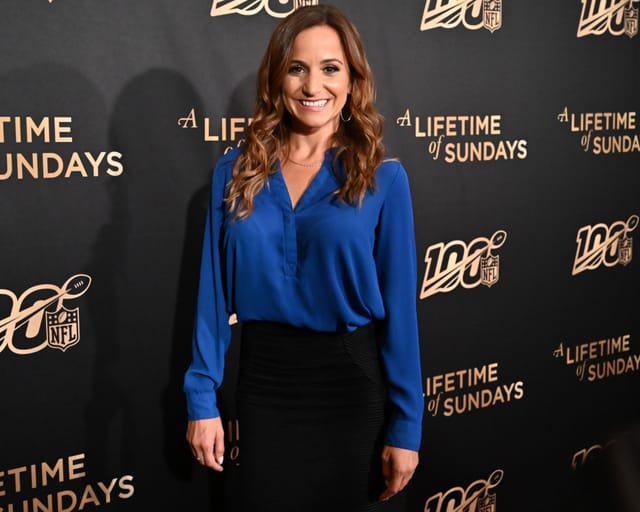
Michael Silver has publicly addressed Dianna Russini’s departure from The Athletic after months of scrutiny surrounding Russini and New England Patriots head coach Mike Vrabel. Silver, who previously worked alongside Russini at the publication, dismissed criticism from a commentator who questioned why he had not spoken publicly about the controversy.
The situation began attracting widespread attention during the offseason after Russini and Vrabel were photographed together at a resort in Arizona. Both individuals denied wrongdoing and rejected suggestions that their interaction represented a romantic relationship. Russini later resigned from The Athletic on April 14, 2026, after the publication launched an investigation into the matter.
The controversy continued to circulate online even after Russini’s departure. That renewed attention eventually prompted a response from Silver, who made it clear that he remains supportive of his former colleague while expressing frustration with what he viewed as an illegitimate line of questioning.
What Michael Silver Said About Dianna Russini
Silver responded after podcaster Tony Farmer questioned why he had remained silent about the situation involving Russini and Vrabel.
Rather than engaging with the allegations themselves, Silver focused on the person asking the question and defended his relationship with Russini as a professional colleague.
Silver explained that he had previously blocked Farmer and said he was unfamiliar with his work. He also stated that he enjoyed working with Russini and was disappointed that she was no longer at The Athletic.
The response is significant because Silver is an established NFL journalist who worked with Russini during her time at the publication. His comments therefore provide an indication of how at least one former colleague views her professional reputation amid the controversy.
Why Silver’s Response Matters
The most important part of Silver’s response is arguably what he did not do. He did not attempt to provide new details about the investigation, speculate about Russini’s personal life or make claims about what happened at the Arizona resort.
Instead, he emphasized the importance of legitimate questions being asked on legitimate platforms.
That distinction matters in an environment where social media can turn an unresolved controversy into a much larger story through repeated speculation.
For journalists and media organizations, situations involving public figures can create difficult boundaries between legitimate reporting and personal speculation. Silver’s response appears to draw a line between the two.
How Dianna Russini’s Departure Became Part of the Story
Russini’s resignation from The Athletic became a major development because the publication reportedly launched an investigation after the photos involving her and Vrabel surfaced.
The departure did not necessarily resolve the questions surrounding the situation. Instead, it became another part of the broader public discussion.
That is an important distinction. A professional departure and the underlying allegations are separate matters, and one should not automatically be treated as proof of the other.
Russini and Vrabel both denied wrongdoing. Their denials remain an important part of the available account, particularly because many claims circulating online have involved interpretation of photographs and reports rather than established findings.
Russini and Vrabel Denied Any Wrongdoing
After photographs of the two surfaced, Russini and Vrabel rejected suggestions that they had engaged in inappropriate conduct.
Vrabel reportedly described the idea of a romantic relationship as “laughable” and maintained that the interaction was innocent.
The fact that both individuals denied wrongdoing is essential context when assessing the controversy. Public speculation can spread quickly, but speculation should not be treated as established fact.
This is especially relevant when discussing professional journalists and coaches whose careers depend heavily on reputation.
The Media Ethics Question Behind the Controversy
The situation raises a broader question about the relationship between journalists, sources and professional organizations.
NFL reporters frequently interact with coaches, executives, players and agents. Those relationships are an essential part of reporting because access and trust can help journalists obtain information that would otherwise remain unavailable.
At the same time, journalists are expected to maintain professional standards and avoid conflicts that could undermine their credibility.
That tension becomes particularly complicated when personal relationships or appearances become part of the public conversation.
In this case, the key issue for readers is separating confirmed information from commentary, speculation and assumptions.
Silver and Russini Had Worked Together at The Athletic
Silver’s defense carries additional context because he and Russini were colleagues at The Athletic.
According to reports cited in the original account, the two worked together for approximately six months, from October 2025 through April 2026.
That period was relatively short compared with some long-running newsroom relationships, but it was still long enough for Silver to develop a professional impression of Russini.
His statement that he enjoyed working with her therefore provides a personal professional perspective, although it does not independently establish the facts surrounding the controversy.
Mike Vrabel’s Position Adds Another Dimension
Mike Vrabel’s role makes the story particularly sensitive because he is not simply a former player or commentator. He is the head coach of the New England Patriots, one of the NFL’s most prominent franchises.
Vrabel returned to New England as head coach in January 2025 after previously building a reputation as a successful coach in the league.
His professional responsibilities mean that media attention surrounding his personal life can quickly become connected to questions about leadership, focus and the Patriots organization.
That is why the controversy attracted significantly more attention than a typical celebrity rumor.
Vrabel’s First Season Back in New England Was Significant
Vrabel’s coaching performance also provides important context.
According to the supplied report, he led the Patriots to the Super Bowl in his first season back with the franchise. New England ultimately lost 29-13 to the Seattle Seahawks.
That successful run meant Vrabel entered the following offseason with substantial attention already focused on his coaching career.
The controversy surrounding the Arizona photographs therefore developed against the backdrop of a high-profile coaching position and a team that had just reached the Super Bowl.
That combination naturally increased media interest.
Why the Story Continued Even After Russini Left The Athletic
One of the reasons the controversy continued is the way social media changes the lifespan of news stories.
A traditional news cycle may move on after an investigation, resignation or official statement. Social media, however, allows old photographs, comments and accusations to resurface repeatedly.
That can create the impression that a story is continuously developing even when no new verified information has emerged.
Silver’s response appears to push back against that cycle by refusing to engage with what he considered an illegitimate source of questioning.
What This Means for NFL Journalism
The incident offers a useful reminder about the importance of separating professional reporting from online commentary.
Journalists covering the NFL often become recognizable public personalities themselves. Their opinions can attract almost as much attention as the news they report.
That creates a difficult environment when a reporter becomes part of a controversy.
Other journalists may face pressure to comment, even when they do not have firsthand knowledge of the situation. Silver’s response suggests that he does not believe every public question deserves an answer simply because it is being discussed online.
From a media perspective, that is an important distinction.
Confirmed Facts vs. Online Speculation
One of the most useful ways to understand the controversy is to separate what has been reported from what has merely been suggested.
| Topic | What is established in the supplied report |
|---|---|
| Arizona photographs | Russini and Vrabel were photographed together at a resort. |
| Denials | Both denied wrongdoing and rejected suggestions of a romantic relationship. |
| The Athletic | Russini resigned after the publication launched an investigation. |
| Michael Silver | Silver defended Russini and said he was disappointed she was no longer at The Athletic. |
| Vrabel’s coaching role | Vrabel is the New England Patriots head coach. |
| Online criticism | Critics continued discussing the situation after Russini’s departure. |
This distinction is important because the existence of controversy does not automatically establish the more serious claims that may circulate around it.
The Bigger Lesson for Sports Media
The Russini-Vrabel controversy illustrates how quickly the boundary between sports reporting and personal speculation can disappear.
Fans naturally want information about the people involved in their favorite sports. But the responsibility for determining what is newsworthy should remain separate from the desire to generate attention.
For media organizations, the challenge is even greater. Reporters need professional independence, while organizations must protect their credibility and investigate concerns when appropriate.
For audiences, the responsibility is different but equally important: distinguish between verified reporting, statements from the people involved and commentary from outside observers.
What Could Happen Next?
Unless new verified information emerges, the controversy may gradually become less relevant to the NFL season itself.
For Vrabel, the primary focus will ultimately return to the Patriots and the demands of coaching an NFL team.
For Russini, her next professional move will likely attract attention because of her established reputation as an NFL reporter.
For Silver, the situation appears to be largely about defending a former colleague and rejecting questions from a commentator he does not consider a legitimate source.
The broader story may therefore shift away from the original controversy and toward the professional futures of the people involved.
Conclusion: Michael Silver Draws a Line Under the Controversy
Michael Silver’s comments provide a clear defense of Dianna Russini while avoiding speculation about the unresolved aspects of the controversy involving Mike Vrabel. His response also highlights a broader issue facing modern sports journalism: the difficulty of separating legitimate reporting from social-media-driven speculation.
Russini and Vrabel have denied wrongdoing, while Russini’s departure from The Athletic followed the publication’s reported investigation. Silver, meanwhile, has made it clear that he remains supportive of his former colleague and is disappointed that she is no longer at the organization.
The most important takeaway is that public attention should not be confused with proof. As the NFL season progresses, the careers of Russini and Vrabel will ultimately be judged by their professional work, while the controversy surrounding them should be discussed through verified facts rather than assumptions.
For breaking news and live news updates, like us on Facebook or follow us on Twitter and Instagram. Read more on Latest NFL on thefoxdaily.com.



COMMENTS 0