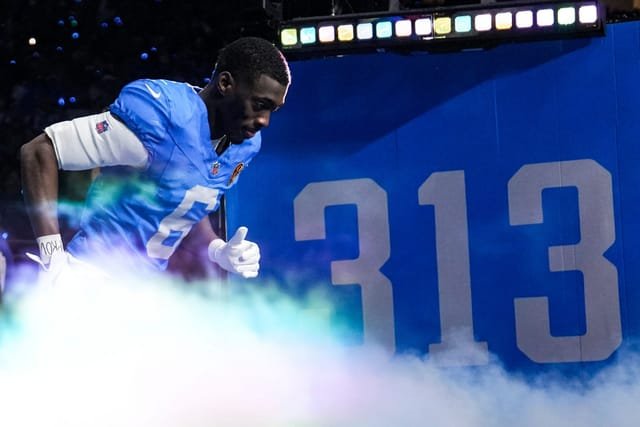
The Terrion Arnold NFL future has become a major topic across football circles after reports emerged that three NFL teams have allegedly expressed interest in the former Detroit Lions cornerback following his release from the organization.
Ordinarily, the release of a young player would generate discussion centered around performance, salary cap implications, or roster construction. However, Arnold’s situation is far more complicated. The former first-round draft selection is simultaneously navigating a highly publicized legal case while facing uncertainty about whether another NFL franchise is willing to offer him an opportunity.
The developments have sparked broader questions about how NFL teams evaluate talent during legal controversies, how organizations balance risk versus reward, and whether Arnold’s football ability will ultimately outweigh concerns surrounding his off-field situation.
As the legal process unfolds, both the league and NFL franchises find themselves facing a difficult and closely scrutinized decision.
How Terrion Arnold Reached This Point
Just a short time ago, Arnold was viewed as one of the NFL’s promising young defensive backs.
Selected in the first round of the 2024 NFL Draft, he entered the league with significant expectations and was regarded as an important part of Detroit’s long-term defensive plans.
First-round cornerbacks are often viewed as cornerstone investments because of the increasing importance of pass defense in today’s NFL.
Teams spend years scouting prospects before making such selections, which is why Arnold’s release immediately became headline news throughout the league.
His departure represents a dramatic shift from the trajectory many envisioned when he entered professional football.
Why This Story Extends Beyond Football
Unlike typical roster transactions, this situation cannot be analyzed solely through a football lens.
Arnold remains involved in an ongoing legal matter, making every personnel decision significantly more complex.
For NFL organizations, such situations create multiple layers of evaluation:
- Football talent assessment.
- Legal risk analysis.
- Public relations considerations.
- Locker room culture implications.
- Potential league disciplinary action.
As a result, any team considering Arnold must evaluate much more than his performance on the field.
Why Three Teams Showing Interest Is Significant
If reports of interest from three NFL teams are accurate, it suggests that some organizations still view Arnold as a potentially valuable football asset.
That interest highlights an important reality about professional sports.
NFL franchises constantly search for talent, particularly at premium positions such as cornerback.
Elite defensive backs remain among the most difficult players to acquire because modern offenses increasingly rely on explosive passing attacks.
A young cornerback with first-round pedigree naturally attracts attention, especially if teams believe he can eventually return to football without significant restrictions.
However, interest does not automatically translate into a contract offer.
The Waiver Process Could Shape Arnold’s Next Chapter
One of the most important aspects of Arnold’s situation involves the NFL waiver system.
Before becoming a free agent, teams have an opportunity to claim his existing contract.
This creates an important decision point for interested franchises.
| Scenario | Potential Outcome |
|---|---|
| Claimed on waivers | Team assumes existing contract obligations |
| Not claimed | Arnold becomes unrestricted free agent |
| Free agency | Any NFL team can negotiate a new deal |
| Legal developments | Could influence team decisions significantly |
The waiver deadline may therefore prove to be one of the most important moments in determining Arnold’s immediate football future.
Why NFL Teams Often Separate Talent Evaluation From Legal Outcomes
Professional sports organizations frequently face difficult decisions when players become involved in legal matters.
While legal concerns are obviously significant, teams often continue evaluating a player’s football value simultaneously.
Front offices typically consider factors such as:
- Age and development potential.
- Position value.
- Previous performance.
- Contract structure.
- Potential future availability.
This does not mean teams ignore legal issues. Rather, they conduct parallel evaluations that combine football, legal, and business considerations.
Arnold’s reported interest from multiple teams may reflect this reality.
The Importance of the Upcoming Court Decision
A key development in the case involves an upcoming hearing regarding monitoring requirements.
Although the decision itself relates to legal proceedings, it could indirectly influence football opportunities.
Teams generally prefer clarity when evaluating player availability.
Restrictions that affect travel, training, or participation can complicate roster planning.
Because of this, organizations will likely monitor every legal development closely before making long-term commitments.
Why Cornerback Remains One of the NFL’s Most Valuable Positions
One reason Arnold continues attracting attention may be the increasing importance of cornerback play throughout the league.
Modern offenses place tremendous pressure on defenses through:
- Elite quarterbacks.
- Explosive receivers.
- Spread formations.
- Pass-heavy schemes.
- High-tempo offenses.
As a result, teams constantly seek young defensive backs capable of matching up against elite receivers.
Players with first-round talent are particularly difficult to replace.
This reality may explain why organizations remain interested despite uncertainty surrounding Arnold’s situation.
The Business Side of NFL Roster Decisions
Beyond football considerations, every personnel move carries financial implications.
Teams must evaluate:
- Salary commitments.
- Roster flexibility.
- Public perception.
- Sponsorship considerations.
- Potential future risks.
For front offices, the challenge lies in balancing potential rewards against potential consequences.
This balancing act often becomes especially difficult when legal matters remain unresolved.
How Public Opinion Can Influence Team Decisions
Modern NFL organizations operate under intense public scrutiny.
Every roster move is analyzed by fans, media outlets, sponsors, and league observers.
Consequently, teams must consider more than football performance.
Questions frequently include:
- How will fans react?
- How will sponsors respond?
- What message does the decision send?
- Will the move affect team culture?
- How will league officials view the situation?
These considerations often play a major role in controversial personnel decisions.
What Makes This Situation Different From Typical Free Agency
Most free-agent discussions revolve around market value and team needs.
Arnold’s situation involves additional uncertainty.
Unlike a standard roster transaction, teams must evaluate multiple unknown variables simultaneously.
| Typical Free Agent | Arnold’s Situation |
|---|---|
| Performance-based evaluation | Football and legal evaluation |
| Market-driven negotiations | Risk-adjusted negotiations |
| Clear availability | Availability questions remain |
| Standard contract discussions | Additional uncertainty factors |
This distinction makes forecasting Arnold’s next move particularly challenging.
Potential Outcomes Over the Next 30 Days
The coming weeks could significantly reshape the narrative.
Several realistic possibilities exist:
- A team submits a waiver claim.
- Arnold enters unrestricted free agency.
- Additional teams express interest.
- Legal developments alter the landscape.
- Teams choose to wait for greater clarity.
Because so many variables remain unresolved, predictions should be made cautiously.
Why Teams May Prefer Patience
Even organizations interested in Arnold could choose to delay action.
Patience allows teams to gather additional information before making commitments.
This approach is common in situations involving uncertainty.
Waiting may provide greater clarity regarding legal proceedings, league considerations, and long-term availability.
While some teams may act aggressively, others could adopt a more measured strategy.
The Broader NFL Trend of Risk Management
Arnold’s case reflects a broader trend across professional sports.
Front offices increasingly rely on sophisticated risk-management frameworks when making roster decisions.
Modern evaluations extend far beyond athletic performance.
Teams now examine:
- Behavioral risk.
- Financial risk.
- Legal exposure.
- Public perception.
- Long-term organizational impact.
This evolution has fundamentally changed how teams approach difficult personnel decisions.
Conclusion
The Terrion Arnold NFL future remains one of the league’s most closely watched stories. Reports that three teams have already expressed interest suggest that some organizations continue to view the former Detroit Lions cornerback as a player with significant football value. However, his ongoing legal situation creates substantial uncertainty that teams cannot ignore.
The coming days will likely provide greater clarity through waiver decisions, court proceedings, and potential negotiations. Whether Arnold joins a new team quickly or faces a longer path back to the field, his situation highlights the increasingly complex relationship between talent evaluation, legal considerations, and organizational risk management in today’s NFL.
For now, the football world is watching closely to see which franchise, if any, decides the potential reward outweighs the uncertainty surrounding one of the most discussed former first-round picks in the league.
For breaking news and live news updates, like us on Facebook or follow us on Twitter and Instagram. Read more on Latest Sports on thefoxdaily.com.






COMMENTS 0