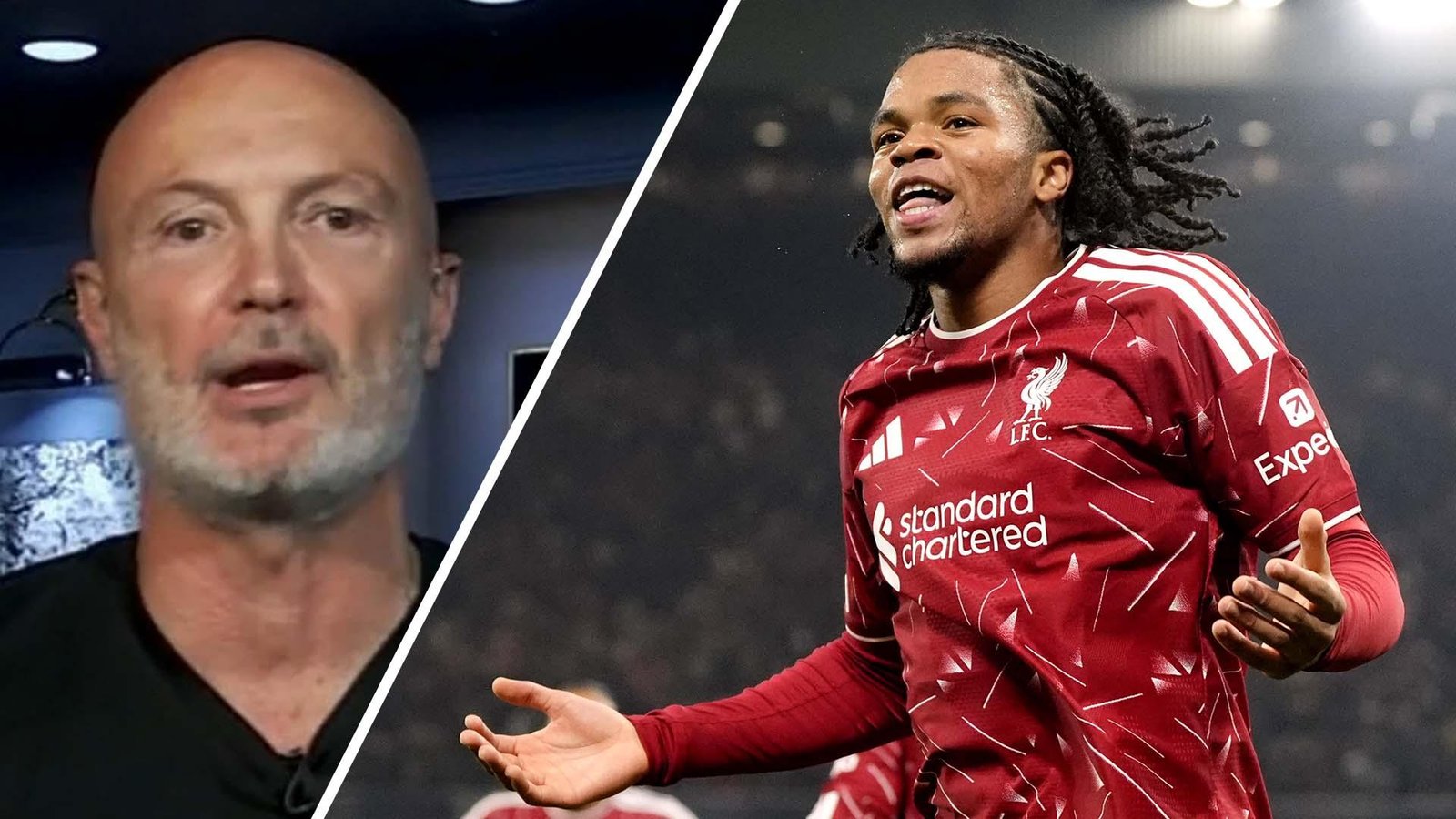
Liverpool captain Virgil van Dijk has praised Mohamed Salah for playing an important role in the development of teenage winger Rio Ngumoha, insisting that the young forward still has “much more” to offer as he continues to establish himself at Anfield.
Ngumoha delivered an impressive performance in Liverpool’s 4-2 victory over Villarreal on Tuesday night, providing two assists as the Premier League side recovered from a two-goal deficit. His contribution helped Liverpool turn a difficult start into a comeback win, highlighting the attacking qualities that have made him one of the club’s exciting young prospects.
Although Ngumoha is typically deployed on the left wing, he has also impressed when operating on the right flank this season. According to Van Dijk, the opportunity to learn from Salah has helped the teenager adapt to the position and develop his understanding of what is required to succeed at the highest level.
The Liverpool captain also highlighted the collective responsibility of senior players in supporting younger members of the squad. While Salah’s experience has been particularly valuable, Van Dijk stressed that several players have contributed to Ngumoha’s progress.
His comments underline Liverpool’s emphasis on combining individual development with experienced leadership, particularly as emerging talents attempt to establish themselves in a competitive first-team environment.
Mohamed Salah’s influence on Rio Ngumoha’s development
Salah has established himself as one of Liverpool’s most influential attacking players, making his experience a valuable resource for younger wingers learning to operate in different positions and handle the demands of elite football.
For Ngumoha, the opportunity to work with a player who has experienced the pressures of competing at the highest level offers a chance to learn beyond the formal training environment. Understanding movement, positioning, decision-making and the timing of attacking runs can be particularly important for a young winger adapting to a new role.
Van Dijk specifically identified Salah’s involvement in Ngumoha’s development during the previous year as a significant advantage. The Liverpool captain believes the teenager has benefited from absorbing information from an experienced player and translating those lessons into performances on the pitch.
“Everyone is chipping in but for him to work with Mo last year was obviously massive as Mo was one of the best wingers at the club and experienced everything so why not soak in all the information and show it on the pitch and show your own qualities?” Van Dijk said.
The comment reflects the value of having experienced players available to guide emerging talent. Young footballers must develop technical ability and tactical awareness while learning how to cope with the physical and mental demands of senior football. Guidance from established teammates can help them understand those challenges more quickly.
However, Van Dijk also made it clear that Ngumoha must ultimately express his own qualities. Learning from Salah is an advantage, but the teenager’s progress will depend on how effectively he applies that knowledge and develops a playing style of his own.
Ngumoha’s performances on the right flank offer an encouraging indication that the lessons are beginning to translate into match situations. His ability to threaten defenders from a position different from his usual role could provide Liverpool with additional attacking options.
Virgil van Dijk highlights Liverpool’s collective responsibility
Although Salah received particular recognition, Van Dijk was keen to emphasise that Ngumoha’s development has not depended on one individual alone.
The Liverpool captain named Cody Gakpo among the senior players who have helped the teenager settle and improve. He also explained that everyone in the squad has a responsibility to support younger players and teammates who have less experience at the highest level.
“A few senior players [have helped him],” Van Dijk said. “I would say Cody Gakpo is definitely part of that. But everyone has that role in order to help the youngsters in the group, the players who have not had so much experience.”
He added: “Everyone is chipping in.”
That approach can be important for a club seeking to integrate young players without placing the entire burden of development on them. Established professionals can provide advice about training standards, match preparation, positional responsibilities and the need to remain composed when performances do not go according to plan.
For a teenager entering a senior team, the adjustment can be considerable. The speed of decision-making is higher, opponents are more experienced and mistakes can attract greater scrutiny. A supportive dressing room can help young players learn from difficult moments rather than allowing them to undermine their confidence.
Van Dijk’s comments suggest that Liverpool want their younger players to benefit from the collective experience of the squad. Salah’s guidance may be particularly relevant to Ngumoha’s development as a winger, while Gakpo and other senior teammates can contribute different perspectives.
This shared responsibility also places Ngumoha’s progress within the wider context of team culture. His development is not just about individual talent but about how effectively Liverpool help promising players transition into consistent first-team contributors.
Ngumoha impresses with two assists against Villarreal
Ngumoha’s performance against Villarreal provided a timely demonstration of his attacking potential. Liverpool found themselves trailing 2-0 at Anfield after a difficult opening period, with defensive errors allowing the visitors to gain control of the contest.
Georges Mikautadze opened the scoring following a rare mistake by Van Dijk. Liverpool then conceded again when further defensive problems allowed Sergi Cardona to double Villarreal’s advantage.
The early deficit placed Liverpool under pressure and forced the team to respond rather than dictate the match from the outset. Recovering from a two-goal disadvantage required greater attacking urgency, improved execution and a collective response from the players.
Ngumoha emerged as one of Liverpool’s standout performers during the comeback, registering two assists as the hosts turned the game around to secure a 4-2 victory.
His contribution was significant because it demonstrated his ability to influence a match when his team needed attacking inspiration. Rather than simply showing promise in isolated moments, he helped Liverpool create the opportunities required to recover from a difficult position.
Van Dijk was particularly impressed by the teenager’s energy and the constant threat he posed to Villarreal’s defence.
“I think he has shown it this season but there is still much more to come,” the Liverpool captain said.
“He’s pretty electric at times and he showed it again. He was a complete threat constantly and their defender had a tough time.”
The description highlights the qualities that can make an exciting winger difficult to contain. Speed, direct running and the willingness to challenge defenders can create uncertainty for opposing back lines, particularly when a player is comfortable operating on either flank.
Ngumoha’s two assists also demonstrated his ability to contribute to the team’s attacking output beyond individual dribbling. For Liverpool, developing a winger who can create opportunities as well as threaten defenders could prove valuable as the season progresses.
Why playing on the right wing could benefit Liverpool
Ngumoha is typically associated with the left wing, but his performances on the right have added another dimension to his development. Learning to operate on both sides can make a young attacker more adaptable and give the manager additional options when selecting the starting lineup.
Wingers face different tactical demands depending on their starting position, their stronger foot and the movement patterns of the players around them. Switching flanks can change the angles available for dribbling, crossing, shooting and combination play.
A player who understands both roles may also be better equipped to adjust during matches. If an opposing full-back begins to limit one side of the attack, changing positions can create a different matchup and force the opposition to reconsider its defensive approach.
Salah’s experience offers a useful reference point in this context. His career at Liverpool has involved the responsibilities of a high-level attacking player who must consistently create chances, threaten goal and make decisions under pressure.
Van Dijk did not suggest that Ngumoha has already reached that level. Instead, he emphasised that the teenager has made encouraging progress while retaining significant room for improvement.
That distinction is important when assessing a young player’s development. A strong performance can indicate potential, but sustained success requires consistency, tactical discipline and the ability to adapt as opponents become more familiar with a player’s strengths.
For Ngumoha, continued exposure to different attacking roles could help broaden his game. It could also make him a more useful option for Liverpool when injuries, rotation or tactical adjustments require changes across the forward line.
Van Dijk reflects on his costly mistake against Villarreal
While Ngumoha attracted praise for his attacking contribution, Van Dijk was candid about his own performance in the opening stages of the match.
The Liverpool captain’s error contributed to Villarreal’s first goal, putting the home side in a difficult position early in the contest. For a defender, conceding an early goal can change the tactical demands of a match, particularly when the team must abandon its original plan and chase the result.
Van Dijk acknowledged that the mistake made the task considerably harder for Liverpool’s defence and accepted that his individual display had fallen below his usual standards.
“It was a terrible start,” the Netherlands international said. “I think the saying is you fight an uphill battle and as a defender it is pretty difficult to come back from it. I tried but it was a bad day at the office personally but we did it together with 11 players. We turned it around and that’s the main thing.”
He also recognised that mistakes are an unavoidable part of football, even for experienced professionals. Van Dijk said such incidents had not happened too often during his Liverpool career, but he was disappointed with his performance on the night.
“Unfortunately in life these things can sometimes happen. Fortunately it didn’t happen too many times in my Liverpool career but tonight I was not the best,” he said.
Despite the personal setback, Van Dijk chose to focus on the team’s recovery and the result rather than his individual error.
“But we won and it’s not about me, it’s all about us. We got the three points.”
His response highlighted the importance of collective resilience. Liverpool could have allowed the early mistakes to determine the outcome, but the team instead recovered and completed the comeback.
The captain’s willingness to acknowledge his own shortcomings also offered a contrast to his praise for Ngumoha. While the teenager’s attacking performance provided a positive example of individual development, the defensive errors served as a reminder that even established players must respond constructively to difficult moments.
What Ngumoha’s progress means for Liverpool’s future
Ngumoha’s performance against Villarreal and Van Dijk’s comments provide encouraging signs for Liverpool, although one match alone cannot determine the teenager’s long-term trajectory.
The most important next step will be maintaining his impact across a larger number of appearances. Young attackers often show flashes of exceptional ability, but consistent performances require the ability to make effective decisions against different defensive systems and in a variety of match situations.
His versatility could help him earn further opportunities. Being able to operate on the left and right gives Liverpool more flexibility, while his willingness to attack defenders can provide an alternative dimension to the team’s forward play.
The support of experienced teammates could also prove important as expectations grow. Praise from a captain such as Van Dijk acknowledges Ngumoha’s progress, but it also reinforces the need for patience as he continues learning the game at senior level.
Salah’s influence may remain particularly valuable because of the similarities between their attacking responsibilities. Observing how an experienced winger handles defensive pressure, chooses when to accelerate and identifies opportunities in the final third can provide practical lessons that are difficult to acquire through training alone.
At the same time, Ngumoha must establish his own strengths and avoid becoming defined solely by comparisons with established players. The objective is to use the experience available within Liverpool’s squad to accelerate his development while allowing his individual qualities to emerge.
Van Dijk’s assessment was positive but measured: Ngumoha has impressed, his energy has troubled opponents and his contribution against Villarreal demonstrated his potential, yet there is still considerable room for improvement.
Conclusion: Salah’s guidance is helping Ngumoha take the next step
Virgil van Dijk has credited Mohamed Salah with playing a significant role in Rio Ngumoha’s development at Liverpool, pointing to the value of learning from one of the club’s most experienced attacking players.
Ngumoha’s two assists in the 4-2 comeback victory over Villarreal offered a clear example of the promise Van Dijk sees in the teenager. His ability to threaten defenders, particularly while operating on the right wing despite usually playing on the left, suggests that his versatility could become an important asset.
Van Dijk also stressed that Ngumoha has benefited from the support of Cody Gakpo and other senior players, reinforcing Liverpool’s collective responsibility to help younger teammates develop.
The captain’s praise came after a match in which he openly acknowledged his own defensive mistakes, making the comeback a reminder of both individual accountability and the importance of teamwork.
For Liverpool, Ngumoha’s immediate challenge is to build on his promising performances and turn flashes of quality into consistent contributions. With guidance from Salah and support from the wider squad, the teenager has an opportunity to continue progressing.
As Van Dijk made clear, Ngumoha has already shown what he can offer, but his development is far from complete. The Liverpool captain believes there is “much more” to come and the teenager’s performance against Villarreal has given supporters another reason to watch his progress closely.
For breaking news and live news updates, like us on Facebook or follow us on Twitter and Instagram. Read more on Latest Football on thefoxdaily.com.






COMMENTS 0