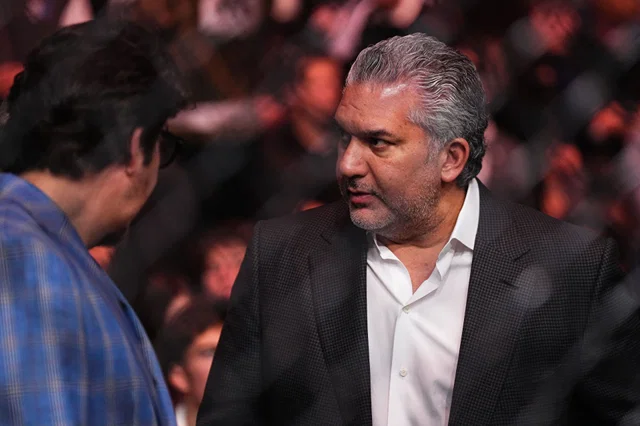
WWE President Nick Khan has offered a closer look at the company’s ticket-pricing strategy, and his comments may not be welcome news for fans hoping to attend major live events at affordable prices. Khan explained that WWE aims to charge as much as possible for its most expensive seats while trying to maintain family-friendly prices in other sections of an arena.
His remarks came during an appearance on Bloomberg Originals’ The Deal, where he spoke with legendary baseball star Alex Rodriguez and Jason Kelly about the business behind professional sports and live entertainment. The discussion focused on a challenge faced by major sports and entertainment companies: how to maximise ticket revenue without making live events inaccessible to ordinary fans.
Rodriguez, who is involved with the Minnesota Timberwolves and Minnesota Lynx, raised the question of how a public company approaches ticket pricing when some supporters cannot afford the cost of attending an event.
Khan’s response revealed that WWE uses different pricing strategies for different sections of an arena. While the company wants to maximise revenue from premium seats, it also recognises the importance of keeping tickets in the upper sections accessible to families.
Nick Khan explains WWE’s strategy for expensive tickets
During the interview, Khan explained that WWE divides its ticket inventory into different categories, with P1 tickets representing some of the most expensive seats available. According to the WWE President, the company wants to push prices in this premium category as high as the market will allow.
“So how we look at the WWE is the P1 tickets, the most expensive tickets, we want to jack those up as high as possible.”
The comment highlights WWE’s approach to generating revenue from fans who are willing and able to pay more for premium live-event experiences. These seats are generally positioned as the most desirable options in an arena, making them an important part of the company’s ticket-revenue strategy.
Khan’s explanation suggests that WWE does not necessarily aim to offer every seat at the same level of affordability. Instead, it uses higher prices for premium sections while considering different price points for fans who want to attend without spending as much.
That approach reflects a wider business model used across major sports and entertainment events. Companies often charge more for the most desirable seats while offering different pricing categories throughout a venue.
Why WWE wants to keep some tickets family-friendly
Although Khan made it clear that WWE wants to maximise prices for its most expensive tickets, he also discussed the importance of keeping upper-bowl seats within reach of families.
He explained that fans with greater purchasing power can afford premium tickets, while the company wants to maintain more accessible prices for people sitting in the upper sections. However, he also pointed out that setting prices too low can create another problem: third-party ticket brokers may purchase the available tickets and resell them at higher prices.
“So for the A-Rods of the world, who can afford it, no problem. For the upper bowl, which you need to watch for, you want to say, ‘Hey we want to price it family-friendly’, but if you price it too family-friendly, they all go to third party brokers. That’s how we do it.”
Khan’s comments reveal the balance WWE is trying to maintain between accessibility and revenue. If tickets are priced too high, families may struggle to attend. But if prices are set too low compared with demand, brokers may buy large numbers of tickets and resell them through secondary marketplaces.
For WWE, the challenge is finding a price that allows regular fans to purchase tickets while preventing too much of the available inventory from moving into the resale market.
The strategy also shows why ticket prices can vary significantly depending on the location of a seat, the popularity of an event and the level of demand. A major premium live event featuring high-profile matches may attract a different market from a regular weekly television show.
WWE ticket prices remain a talking point for fans
Ticket affordability has become an important discussion across professional sports, concerts and live entertainment. As major events attract larger audiences and demand increases, fans often face a wide range of prices depending on where they want to sit.
WWE is no exception. Its biggest events can attract significant demand, particularly when the company promotes major championship matches, high-profile rivalries or appearances by popular wrestling stars.
For some fans, attending a WWE event is a special family experience. Others are willing to pay more for premium seats that provide a closer view of the ring. Khan’s comments indicate that WWE wants to serve both groups through different ticket categories.
However, his explanation may disappoint supporters who were hoping for a broader commitment to lower ticket prices. While the company says it wants to keep certain sections family-friendly, its stated intention to increase premium ticket prices as much as possible makes clear that revenue remains a major consideration.
The role of third-party ticket brokers adds another complication. When tickets are sold below the price that buyers are willing to pay, resellers can purchase them and offer them again at a higher cost. That can make it harder for ordinary fans to secure seats at the original price.
Khan’s remarks therefore provide insight into how WWE views ticket pricing as both a business decision and an effort to manage access to its live events.
Survivor Series: WarGames is WWE’s next major event
WWE’s next premium live event is the 40th annual Survivor Series: WarGames, scheduled for November 28 at Daikin Park in Houston, Texas.
The event is another major opportunity for WWE to attract fans to a large-scale live show. Survivor Series is one of the company’s traditional annual events, while the WarGames format has become a major part of its modern presentation.
With the event taking place in Houston, ticket demand and pricing are likely to remain topics of interest among supporters planning to attend. Khan’s comments about premium and upper-bowl seating provide context for how WWE approaches ticket sales for events of this scale.
For families and fans working within a budget, the availability of affordable sections can make a significant difference. At the same time, supporters seeking premium seats may face higher prices depending on demand and availability.
WWE’s ticket strategy will continue to attract attention as the company stages major events in different markets and looks for ways to expand its live-event business.
Nick Khan could lead WWE’s plans for a Tokyo event
While Khan’s ticket-pricing comments have generated discussion among WWE fans, the company president could also be involved in another major development: expanding WWE’s presence in Japan.
WWE has already established an international event strategy, including premium live events in Saudi Arabia over several years. Japan could become another important market as the company looks for opportunities to bring its programming and major events to more international audiences.
During TKO’s third-quarter earnings call earlier this month, company President and Chief Operating Officer Mark Shapiro discussed the possibility of taking WWE to Tokyo next year. He specifically mentioned that Khan was leading conversations connected to the potential project.
Shapiro expressed optimism about the discussions, saying:
“I’m also pretty bullish about some conversations that Nick Khan is having about bringing WWE to Tokyo next year.”
The statement suggests that WWE is exploring the possibility of holding an event in the Japanese capital. However, Shapiro was careful to explain that discussions had not yet resulted in a completed agreement.
He added:
“No deals done, but the runway is open and we have clearance.”
His comments indicate that the potential Tokyo event is still under consideration rather than being an officially confirmed addition to WWE’s calendar.
What kind of WWE event could take place in Tokyo?
At this stage, WWE has not announced a date, venue or specific event format for a possible Tokyo show. Several possibilities remain open, including a premium live event, a televised episode of Raw or SmackDown, or a regular live event.
A premium live event would represent a major international occasion and could feature some of WWE’s biggest names competing in high-profile matches. A televised show would also allow the company to bring its weekly programming directly to Japanese fans while reaching viewers around the world.
A regular live event would offer another way to connect with the local audience, although it would not carry the same level of television exposure as a major broadcast.
Japan has a long history with professional wrestling and has produced several internationally recognised performers. WWE’s potential return with a major event could therefore create an important opportunity to strengthen its relationship with wrestling audiences in the country.
Nevertheless, until an agreement is completed and WWE makes an official announcement, the exact nature of the proposed Tokyo event remains unknown.
Nick Khan’s growing role in WWE’s international business
Khan’s involvement in discussions about a potential Tokyo event reflects his wider role in WWE’s business strategy. As president, he is involved in major commercial decisions, including the company’s relationships, event planning and opportunities for international expansion.
WWE’s international strategy has become an increasingly important part of its business. Taking major shows to different countries can introduce the product to new audiences, strengthen existing fan communities and create additional commercial opportunities.
Saudi Arabia has already become a regular destination for WWE premium live events. A possible Tokyo show would add another major international opportunity, although the company has not confirmed that the discussions will result in an event next year.
For fans in Japan, the possibility of seeing WWE’s biggest stars compete in Tokyo is an exciting prospect. For the company, it could represent another step in building a global live-event operation.
Conclusion
Nick Khan’s comments have offered WWE fans a clear look at the company’s ticket-pricing philosophy. While WWE aims to charge as much as possible for its most expensive P1 seats, Khan explained that it also tries to keep upper-bowl tickets family-friendly without allowing third-party brokers to take advantage of low prices. Meanwhile, Khan is reportedly leading discussions about bringing WWE to Tokyo next year, although no deal has been confirmed. With Survivor Series: WarGames approaching and international expansion under consideration, WWE’s business strategy remains focused on balancing live-event revenue with opportunities to reach more fans.
For breaking news and live news updates, like us on Facebook or follow us on Twitter and Instagram. Read more on Latest Sports on thefoxdaily.com.



COMMENTS 0