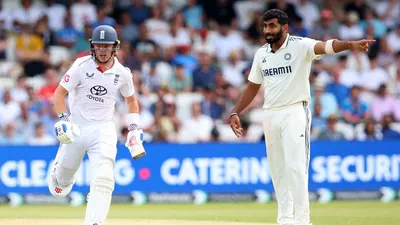
Ollie Pope Headingley experience has resurfaced as the England batter prepares for another opportunity in Test cricket. Recalled for England’s first two Tests against Pakistan after Jacob Bethell suffered an injury, Pope has spoken candidly about the abuse he received from sections of the home crowd during India’s 2025 tour of England.
The 28-year-old has not played Test cricket since being dropped during the Ashes last December. His return has come unexpectedly, with Bethell’s injury creating an opening in England’s batting group. While Pope still needs to earn his place in the playing XI, his recall represents a significant opportunity to rebuild his international career.
His story is particularly relevant because the first Test against Pakistan is scheduled to begin at Headingley, the same venue where Pope experienced one of the most uncomfortable moments of his career. During India’s first innings in the 2025 Test, England supporters reportedly taunted Pope while he was already under pressure for runs.
The experience highlights a less-discussed side of professional cricket: the psychological impact of criticism from supporters, particularly when it comes from fans supporting the player’s own team.
What happened to Ollie Pope at Headingley?
During the first Test against India in 2025, Pope was under pressure after entering the series without the kind of form expected from an established England batter. While India were batting, sections of the English crowd reportedly directed personal criticism towards him.
Speaking to Telegraph Sport, Pope recalled hearing supporters shout, “enjoy your last Test mate!”
For Pope, the comment was particularly difficult because it came from England fans. A player can expect opposition supporters to target weaknesses or attempt to create pressure, but criticism from one’s own crowd can feel considerably more personal.
Pope explained that every cricketer wants to feel appreciated by supporters. He said England are fortunate to receive strong backing, especially during successful periods, but admitted that he did not feel particularly popular at that stage of his career.
His comments provide an insight into something that statistics cannot show. A batter can walk to the crease with a strong technical game and still struggle if confidence is damaged by constant scrutiny.
The irony: Pope answered the critics with a century
The most striking part of the Headingley episode was what happened after the criticism.
Pope scored a century in the match and England went on to win. In purely sporting terms, it was the perfect response to the doubters. Yet the innings did not permanently solve his problems.
His subsequent struggles meant the pressure returned. Pope was later selected for the Ashes but eventually lost his place after the series moved on.
This illustrates one of the harshest realities of international sport: one exceptional performance can silence criticism temporarily, but it cannot guarantee long-term security.
For established players, consistency is ultimately what determines selection. A century can change the narrative for a day, but selectors need sustained performances across matches and conditions.
Why criticism can become a problem for struggling batters
Cricket is an unusually mental sport. A batter can spend long periods waiting for the next delivery, meaning there is plenty of time to think about mistakes, expectations and outside pressure.
When a player is already concerned about his position, comments from the stands can become another distraction. The challenge is not simply hearing the words; it is preventing those words from influencing decision-making.
For a batter, confidence often affects how aggressively he plays, which deliveries he chooses to attack and how he responds after a mistake. Excessive pressure can encourage hesitation, while desperation to prove critics wrong can lead to unnecessary risks.
Pope’s experience therefore provides an important reminder that professional athletes are not immune to emotional pressure simply because they play at the highest level.
Ollie Pope’s England career has reached another crossroads
Pope’s recall comes at an important stage of his Test career. He has already played 64 Tests and has therefore accumulated considerable international experience, but his position has not always been completely secure.
His latest opportunity exists because of circumstances outside his control. Jacob Bethell’s injury forced England to reconsider their batting options, bringing Pope back into the wider Test picture.
The recall does not automatically mean he will play. England’s final XI will depend on their combination, conditions and selection strategy. Pope could potentially be required to wait for his opportunity, but simply being included in the squad represents a chance to rebuild trust with the selectors.
That may be one reason why Pope described his recall positively rather than focusing on the uncertainty surrounding his selection.
‘This story is not over yet’
Pope has adopted a notably optimistic attitude towards his return. Rather than viewing his omission from the previous Test assignments as the end of his international career, he sees the Pakistan series as another chance to prove himself.
He admitted that he would obviously prefer to be selected rather than carry drinks or return to county cricket. However, knowing that England still consider him part of their plans is meaningful.
That mindset could be crucial if he gets another opportunity. Instead of treating every innings as a final audition, Pope can use his previous experiences to make better decisions.
His comments suggest that he has also reflected honestly on his own performances. He acknowledged that there were occasions when he could have left series averaging around 50 but instead finished closer to 35 because he had not been ruthless enough.
That self-assessment is significant. Elite batting is not only about producing attractive strokes; it is also about converting starts into substantial scores and making opponents pay when opportunities arise.
Pope admits he needed greater ruthlessness
Pope’s own assessment points towards an important technical and mental issue. A batter can appear in excellent touch but still struggle to turn that form into consistent numbers.
Getting established is only one part of Test batting. The next challenge is extending an innings once the initial period of uncertainty has passed.
Pope’s admission that he needed to be more ruthless suggests that he understands where some of his opportunities were lost. If he returns to the England side, the ability to convert starts could become one of the main measures of his progress.
Rather than attempting to completely reinvent his batting, his next step may be about improving the small decisions that determine whether an innings finishes at 30 or becomes 100.
Headingley will give Pope another psychological test
The location of England’s first Test against Pakistan makes Pope’s return particularly interesting. Headingley is not simply another venue for him now; it carries a specific memory from the previous summer.
Returning to the same ground could therefore create two possible narratives.
One possibility is that Pope treats the previous experience as motivation and uses the familiarity of the venue to approach the match with confidence. The other is that memories of the criticism create additional pressure if he returns to the XI.
The best response is unlikely to be trying to prove the crowd wrong with every shot. Instead, Pope will need to focus on the same process that allows any Test batter to succeed: patience, shot selection, concentration and the ability to recover after mistakes.
If he can do that, the Headingley experience could eventually become a chapter in his career rather than a defining moment.
England’s selection dilemma adds another layer
Pope’s return also creates an interesting selection decision for England. His experience gives the team an established option, while his recent absence means there is also a question about whether the selectors believe he is ready to return immediately.
Being recalled after an injury to another player is different from being selected after forcing one’s way back through sustained international performances. Pope therefore has something to prove if he gets his chance.
At the same time, his experience cannot be ignored. Sixty-four Tests represent a substantial body of international cricket, and Pope has already experienced pressure at major venues and in high-profile series.
For England, the calculation is ultimately about whether that experience can translate into greater consistency.
Why Pope’s story matters beyond one player
The Pope situation reflects a wider issue in modern cricket. Supporters have unprecedented access to players through television, social media and online commentary, which means criticism can become constant rather than limited to match day.
Players are expected to accept scrutiny because professional sport is performance-driven. However, there is a difference between analysing a player’s performance and personally targeting an individual.
Pope’s recollection demonstrates how strongly those two things can be felt by athletes. He did not suggest that fans should never criticise him. Instead, his comments revealed how difficult it was to hear his own supporters questioning his future while he was still representing England.
That distinction is worth remembering whenever a player goes through a poor run. Statistics can justify selection debates, tactical criticism and questions about form. Personal abuse adds very little to that discussion.
What Pope must do if he gets another chance
If Pope makes England’s XI against Pakistan, his priorities should be straightforward. First, he needs to avoid allowing the external narrative around his selection to dictate his approach.
Second, he needs to convert starts. His own comments suggest that he believes this has been an important weakness in his game.
Third, he needs to use his experience. After 64 Tests, Pope is no longer an inexperienced batter learning how international cricket works. He knows the demands, the pressure and the standards required.
Finally, he needs to separate the crowd from the cricket. Whether supporters applaud or criticise, the next delivery remains the only thing he can control.
Ollie Pope’s Pakistan opportunity could reshape his future
The three-Test series against Pakistan begins on August 19, with Headingley hosting the opening match. For Pope, that creates an opportunity that seemed unlikely only weeks earlier.
He may not immediately walk back into the playing XI, but his inclusion confirms that England have not closed the door on him.
If he gets the opportunity and produces consistent performances, the narrative surrounding his international future could change quickly. The player once being questioned by supporters could become an important part of England’s next phase.
That is why Pope’s description of his career as a story that is “not over yet” carries weight. His comeback does not need to be dramatic. It simply needs to be productive and consistent.
Conclusion: Pope has another chance to rewrite his Headingley story
Ollie Pope’s Headingley experience shows how quickly a difficult period can affect a professional cricketer, particularly when criticism comes from supporters of his own team. The taunts he heard during the India Test left a clear impression, even though he responded with a century and England won the match.
Now, more than a year later, Pope could return to the same venue with a very different objective. His recall for the Pakistan Tests gives him another opportunity to demonstrate that his international career still has plenty to offer.
The biggest challenge will not simply be dealing with the crowd. It will be converting his experience into consistent performances and showing the ruthlessness he believes was missing from some of his previous series.
If Pope gets his opportunity at Headingley, the best way to answer every question about his future will be the same as it has always been in Test cricket: spend time at the crease, make the runs count and let the performance speak louder than the noise from the stands.
For breaking news and live news updates, like us on Facebook or follow us on Twitter and Instagram. Read more on Latest Cricket on thefoxdaily.com.






COMMENTS 0