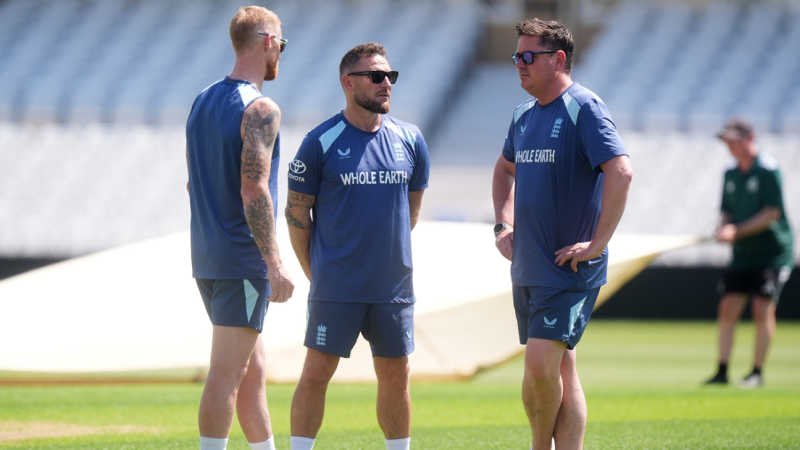
England have unveiled a significantly altered playing XI for the decisive third Test against New Zealand at Trent Bridge, with captain Ben Stokes leading four major changes as the hosts attempt to salvage a series victory after a disappointing defeat at The Oval.
The match, which begins on Thursday, has quickly become one of the most important Tests of England’s recent red-ball journey. Not only is the series on the line, but questions surrounding leadership, team culture, selection strategy, and long-term performance have intensified following England’s struggles over the past year.
The return of Stokes headlines the changes, but England’s selection decisions also reveal how management plans to tackle both New Zealand’s challenge and the unusually hot weather expected throughout the Test.
England XI for the Third Test vs New Zealand
| Position | Player | Role |
|---|---|---|
| 1 | Ben Duckett | Opening Batter |
| 2 | Emilio Gay | Opening Batter |
| 3 | Jacob Bethell | Top-order Batter |
| 4 | Joe Root | Batter |
| 5 | Harry Brook | Batter |
| 6 | Jamie Smith (wk) | Wicketkeeper Batter |
| 7 | Ben Stokes (c) | All-rounder & Captain |
| 8 | Gus Atkinson | Fast Bowler |
| 9 | Jofra Archer | Fast Bowler |
| 10 | Josh Tongue | Fast Bowler |
| 11 | Shoaib Bashir | Spinner |
Ben Stokes Returns at a Critical Time for England
The biggest headline from England’s announcement is undoubtedly the return of captain Ben Stokes. Over the past two weeks, Stokes has been at the center of one of the most discussed stories in English cricket following an off-field controversy that temporarily sidelined him from the second Test.
While investigations eventually cleared both Stokes and fast bowler Gus Atkinson of wrongdoing, the episode generated intense media scrutiny and raised questions about England’s dressing-room environment.
Now, with the series hanging in the balance, England welcomes back its most influential player. Beyond his tactical leadership, Stokes brings energy, confidence, and experience that few players in world cricket can match.
His presence immediately strengthens England’s balance by providing an additional bowling option while also adding depth to the batting lineup.
Gus Atkinson’s Return Bolsters the Pace Attack
Atkinson’s inclusion is equally significant. The fast bowler has rapidly become one of England’s most exciting seam options thanks to his ability to generate pace and extract bounce from various surfaces.
England’s bowling attack lacked penetration at times during the defeat at The Oval, making Atkinson’s return particularly important.
With Jofra Archer and Josh Tongue also included, England will field one of its quickest pace attacks in recent years. The trio offers variety, aggression, and wicket-taking ability, attributes that could prove decisive against a resilient New Zealand batting lineup.
Jamie Smith Returns After Family Leave
Wicketkeeper-batter Jamie Smith also returns after missing the second Test due to the birth of his second child.
His comeback provides England with greater stability behind the stumps and additional firepower in the middle order.
Smith has established himself as one of England’s most promising multi-format talents. His ability to score quickly while maintaining composure under pressure has made him a key part of England’s future plans.
For England management, his return is both a cricketing boost and a welcome restoration of continuity within the squad.
Shoaib Bashir’s Recall Signals Tactical Shift
Perhaps the most interesting selection decision involves the return of Shoaib Bashir.
The young spinner was omitted from the second Test after not bowling a single delivery in the series opener. However, changing weather conditions have prompted England to reconsider their strategy.
Forecasts suggest temperatures could approach 38 degrees Celsius during the opening stages of the match, creating conditions that may assist spin as the surface deteriorates.
By selecting Bashir, England is effectively preparing for a Test that could evolve significantly as it progresses.
Why Spin Could Be Crucial at Trent Bridge
- High temperatures may accelerate pitch wear.
- Dry conditions can create rough patches for spinners.
- Long spells become more demanding for fast bowlers.
- A specialist spinner provides tactical flexibility.
- Fourth and fifth-day conditions may favor turn.
Surprise Omission: Ollie Robinson Misses Out
One of the most notable talking points from England’s selection is the absence of Ollie Robinson.
Despite being declared fit after recovering from a knee issue, Robinson has not been recalled to the starting XI.
The decision is surprising given his outstanding performance in the opening Test, where he earned Player of the Match honors and played a major role in England’s victory.
His omission suggests selectors are prioritizing pace, athleticism, and workload management over previous performances.
It also highlights the increasing competition for places within England’s bowling unit.
England’s Recent Test Form Raises the Stakes
The significance of this Test extends beyond the series scoreline.
England enters the match having lost six of its previous seven Test matches, a statistic that has intensified scrutiny on players, coaches, and administrators alike.
While the aggressive philosophy introduced by Stokes and head coach Brendon mccullum transformed England’s identity, recent results have exposed challenges in maintaining consistency against top-level opposition.
The Trent Bridge Test therefore represents an opportunity to halt a worrying trend and restore momentum ahead of future international assignments.
| Key Concern | Impact on England |
|---|---|
| Recent Test Losses | Increased pressure on leadership |
| Batting Collapses | Missed opportunities in key moments |
| Selection Changes | Questions over team stability |
| Leadership Scrutiny | Greater public and media attention |
Brendon McCullum’s Leadership Philosophy Faces Another Test
Ahead of the match, Brendon McCullum emphasized resilience and patience rather than panic.
The England coach acknowledged that difficult periods are inevitable in elite sport and argued that true leadership is measured during adversity rather than success.
His comments reflected a broader philosophy that has defined England’s approach under his guidance. Rather than focusing exclusively on results, McCullum continues to prioritize processes, culture, and decision-making quality.
That mindset has helped England remain committed to an aggressive style of cricket even during periods of criticism.
The Importance of Team Unity
Recent events have brought England’s dressing-room culture into focus. Questions about leadership relationships and team harmony have dominated headlines throughout the series.
By welcoming back Stokes and Atkinson while publicly emphasizing unity, England appears determined to move beyond off-field distractions.
Successful Test teams often rely on strong internal trust, particularly during high-pressure situations. England’s management will hope that recent challenges ultimately strengthen rather than weaken the group’s collective resolve.
Key Players Who Could Decide the Match
Ben Stokes
England’s captain remains the team’s emotional leader and biggest match-winner in pressure situations.
Joe Root
As England’s most experienced batter, Root’s ability to anchor the innings could prove crucial.
Jofra Archer
His pace and ability to produce breakthrough moments make him one of England’s most dangerous weapons.
Harry Brook
Brook’s attacking style can shift momentum rapidly and put opposition bowlers under pressure.
Shoaib Bashir
If conditions favor spin later in the game, Bashir could become a decisive factor.
A Defining Match for England’s Future Direction
While every Test match matters, some carry greater symbolic significance than others. This contest belongs firmly in that category.
A victory would restore confidence in England’s leadership structure, strengthen belief in the team’s long-term strategy, and provide momentum heading into upcoming international challenges.
A defeat, meanwhile, would inevitably generate further debate about selection policies, tactical approaches, and the overall direction of the Test side.
For that reason, the Trent Bridge Test is about far more than lifting a series trophy.
Conclusion
England’s decision to make four significant changes for the decisive third Test reflects both necessity and ambition. The returns of Ben Stokes, Gus Atkinson, Jamie Smith, and Shoaib Bashir give the hosts greater balance, experience, and tactical flexibility at a crucial moment.
With recent form under scrutiny and the series hanging in the balance, all eyes will now turn to Trent Bridge. The outcome will not only determine the winner of the New Zealand series but could also shape perceptions of England’s Test project for months to come.
As pressure mounts and expectations rise, England’s revamped XI has an opportunity to deliver a statement performance when it matters most.
For breaking news and live news updates, like us on Facebook or follow us on Twitter and Instagram. Read more on Latest Sports on thefoxdaily.com.






COMMENTS 0