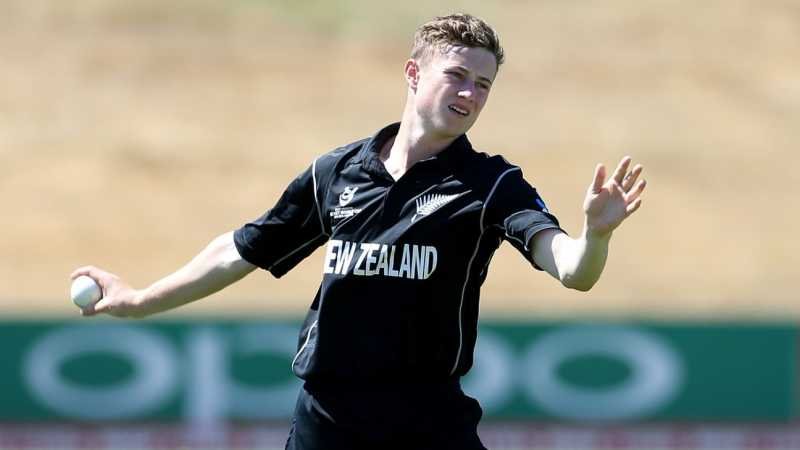
The New Zealand ODI squad for the West Indies series offers more than just a glimpse into the team’s immediate plans—it reveals the blueprint for the next phase of Black Caps cricket. With the five-match series beginning on July 11, the selectors have started evaluating combinations that could shape New Zealand’s campaign at the 2027 ICC Cricket World Cup in southern Africa.
Leading the headlines is fast bowler Matthew Fisher, who is on the verge of earning his long-awaited ODI debut after years of battling injuries and waiting for an opportunity. The return of regular captain Mitchell Santner and several first-choice players further strengthens the squad, while a number of senior stars have been rested as New Zealand carefully manages workloads ahead of a busy international calendar.
The series against West Indies therefore represents both a competitive assignment and an important selection audition, with every performance likely to influence New Zealand’s World Cup plans.
Matthew Fisher Finally Gets His ODI Opportunity
Among the biggest stories from the squad announcement is the inclusion of Matthew Fisher, whose journey has been defined by patience and perseverance. Although he has already represented New Zealand in Test and T20 International cricket, an ODI cap has remained elusive.
Injuries repeatedly interrupted his progress, preventing him from building sustained momentum at the international level. However, after returning to full fitness and consistently impressing in domestic cricket, Fisher has earned another opportunity to prove himself.
For fast bowlers, career progression is rarely straightforward. Managing injuries, maintaining pace, and adapting to different formats require both physical resilience and mental strength. Fisher’s selection reflects the confidence New Zealand’s selectors have in his ability to become part of the team’s future pace attack.
Why This ODI Series Is Bigger Than It Appears
At first glance, a bilateral ODI series against West Indies may seem like a routine assignment. In reality, it marks the beginning of New Zealand’s structured preparation for one of cricket’s biggest tournaments.
Unlike previous international cycles filled with frequent ODI cricket, New Zealand have relatively few one-day matches before the 2027 World Cup. That limited schedule increases the importance of every series.
Each match becomes an opportunity to answer key questions:
- Which fast bowlers can consistently deliver under pressure?
- What is the strongest batting combination?
- Which all-rounders provide the best balance?
- How should New Zealand adapt to South African conditions?
- Which younger players are ready for major tournaments?
Rather than waiting until the final months before the World Cup, the selectors are beginning their evaluation process well in advance.
Mitchell Santner Returns to Lead the Side
Experienced all-rounder Mitchell Santner resumes captaincy after missing the Bangladesh ODI series because of Indian Premier League commitments. During his absence, Tom Latham captained a relatively inexperienced New Zealand side that lost the series 2-1.
Santner’s return restores leadership stability while also bringing back one of New Zealand’s most reliable performers in white-ball cricket.
His ability to contribute with both bat and ball makes him central to New Zealand’s tactical approach, especially on slower pitches where spin often becomes decisive.
Several Senior Players Return to Strengthen the Squad
Alongside Santner, New Zealand have welcomed back several established international players.
Daryl Mitchell, Mark Chapman, Michael Bracewell, and Jacob Duffy all return after missing previous assignments for various reasons, significantly improving the squad’s overall balance.
The experience these players bring allows the coaching staff to integrate emerging talent like Fisher without placing excessive pressure on newcomers.
Meanwhile, wicketkeeper Mitchell Hay rejoins the squad as Tom Latham’s deputy after Devon Conway was granted leave following the birth of his second child.
Why Some Big Names Are Missing
Several familiar names are absent, but their exclusions largely reflect workload management rather than selection concerns.
Fast bowlers Matt Henry, Kyle Jamieson, and Will O’Rourke have all been rested after demanding workloads during New Zealand’s recent Test series in England.
Managing fast bowlers has become increasingly important in modern cricket, where packed schedules often increase the risk of injuries.
Meanwhile, Rachin Ravindra will miss the West Indies tour under a pre-arranged agreement with New Zealand Cricket to participate in Major League Cricket.
These absences create valuable opportunities for fringe players hoping to establish themselves before World Cup selection intensifies.
Matthew Fisher’s Role in New Zealand’s Fast-Bowling Future
New Zealand have traditionally relied on experienced pace attacks featuring bowlers capable of maintaining accuracy rather than relying solely on extreme pace.
With several senior quicks entering the later stages of their careers, identifying the next generation has become a priority.
Matthew Fisher fits that long-term vision because he offers:
- Consistent seam movement.
- Ability to bowl with the new ball.
- Experience across multiple domestic formats.
- Improved fitness after overcoming injury setbacks.
- Potential to develop into a reliable middle-overs wicket-taking option.
If he performs well in the Caribbean, Fisher could quickly become a regular member of New Zealand’s ODI setup.
| Returning Players | Reason for Return | Importance to New Zealand |
|---|---|---|
| Mitchell Santner | Available after IPL commitments | Captain and lead spin all-rounder |
| Daryl Mitchell | Back in ODI squad | Middle-order stability |
| Mark Chapman | Returns to full-strength squad | Flexible batting option |
| Michael Bracewell | Available again | Spin and lower-order batting |
| Jacob Duffy | Returned after paternity leave | Experienced pace option |
| Matthew Fisher | Selected for possible ODI debut | Future fast-bowling prospect |
How New Zealand Are Building Toward the 2027 World Cup
The Black Caps have earned a reputation as one of international cricket’s most consistent ODI teams over the past decade, regularly reaching the latter stages of ICC tournaments.
Maintaining that standard requires careful succession planning.
Selectors are not merely choosing the best XI for the next match—they are building combinations capable of succeeding in unfamiliar conditions nearly eighteen months from now.
South African pitches often offer bounce, pace, and varying conditions depending on the venue. As a result, squad balance, bowling depth, and adaptable batting become even more important.
The West Indies series allows New Zealand to begin experimenting without the pressure of a knockout tournament.
Competition for World Cup Places Is Already Underway
One of the most significant aspects of this squad announcement is the message sent to every player within New Zealand’s cricket system.
No position is guaranteed.
Whether established internationals or emerging talents, every player will need to perform consistently over the coming ODI series to strengthen their World Cup credentials.
That healthy competition often benefits successful teams by increasing standards across the entire squad.
Jacob Duffy’s World Cup Ambition Reflects the Squad’s Mindset
Returning fast bowler Jacob Duffy has openly acknowledged that preparation for the World Cup effectively begins now.
His comments highlight the importance players attach to ODI cricket despite the growing influence of franchise leagues.
For many cricketers, winning or competing in an ODI World Cup remains the pinnacle of international achievement, making every selection opportunity valuable.
Duffy’s impressive ODI record provides him with a strong platform, but competition among New Zealand’s pace bowlers remains fierce.
West Indies Series Could Shape New Zealand’s Future Core
The upcoming five-match series offers far more than ranking points.
It provides selectors with extended opportunities to observe players across different match situations, pitch conditions, and pressure scenarios.
Unlike shorter bilateral series, five matches allow coaches to rotate combinations, evaluate bench strength, and identify players capable of adapting quickly.
This flexibility makes the Caribbean tour one of New Zealand’s most valuable preparation windows before attention shifts to upcoming home series against India and Sri Lanka.
Key Players to Watch
Matthew Fisher
All eyes will be on the fast bowler if he earns his ODI debut, with expectations surrounding how quickly he adapts to international one-day cricket.
Mitchell Santner
The captain’s leadership and all-round contributions remain central to New Zealand’s success in white-ball formats.
Daryl Mitchell
His experience and versatility make him one of the most dependable middle-order batters in the squad.
Jacob Duffy
Returning with strong World Cup ambitions, Duffy will look to cement his place as one of New Zealand’s frontline seamers.
Michael Bracewell
His ability to contribute in multiple disciplines offers valuable balance to New Zealand’s ODI lineup.
Series Schedule
- 1st ODI – July 11, Providence, Guyana
- 2nd ODI – July 13, Providence, Guyana
- 3rd ODI – July 16, Providence, Guyana
- 4th ODI – July 19, Kensington Oval, Barbados
- 5th ODI – July 21, Kensington Oval, Barbados
New Zealand ODI Squad
Mitchell Santner (captain), Michael Bracewell, Mark Chapman, Kristian Clarke, Jacob Duffy, Matthew Fisher, Dean Foxcroft, Mitchell Hay (wk), Nick Kelly, Tom Latham (wk), Jayden Lennox, Daryl Mitchell, Henry Nicholls, Ben Sears, Nathan Smith and Will Young.
Conclusion
New Zealand’s squad announcement for the West Indies ODI series marks the beginning of a carefully planned journey toward the 2027 ICC Cricket World Cup. While experienced players provide the foundation, the inclusion of Matthew Fisher highlights the selectors’ determination to build greater squad depth and prepare the next generation of international performers.
With relatively limited ODI cricket remaining before the World Cup, every series assumes greater significance than usual. Fisher’s potential debut, Santner’s return as captain, and the competition for places combine to make the Caribbean tour a defining chapter in New Zealand’s long-term strategy. Strong performances over the next five matches may ultimately shape not only this series but also the Black Caps’ World Cup ambitions in southern Africa.
For breaking news and live news updates, like us on Facebook or follow us on Twitter and Instagram. Read more on Latest Sports on thefoxdaily.com.






COMMENTS 0