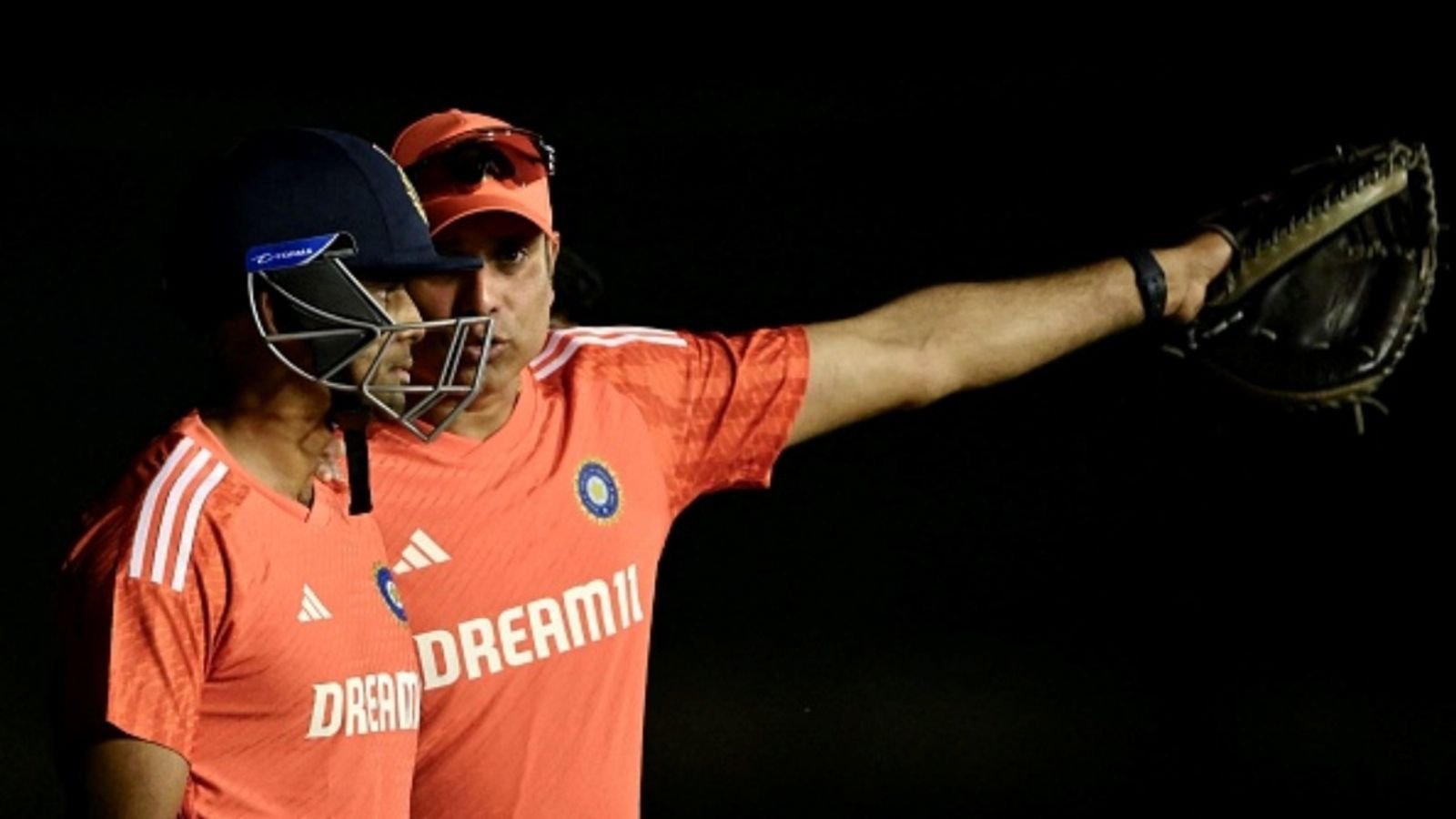
VVS Laxman India head coach revelation has provided fresh insight into the changes that shaped Indian cricket’s coaching structure after the 2023 ODI World Cup. Laxman, who currently heads the BCCI Centre of Excellence in Bengaluru, revealed that he was expected to become India’s head coach in 2023 but ultimately decided against accepting the position because of personal reasons.
The revelation came amid questions about the relationship between the Centre of Excellence and the Indian team management. Laxman dismissed suggestions of a communication gap and explained that his decision to remain with the BCCI was based on a long-term commitment to building the Centre of Excellence rather than taking over the senior men’s team.
VVS Laxman reveals why he rejected India’s head coach role
Laxman’s revelation provides important context to the coaching transition that followed India’s defeat to Australia in the 2023 ODI World Cup final. At the time, Rahul Dravid’s tenure as head coach was approaching its conclusion, while Laxman was already closely involved with India’s coaching setup through his work with the National Cricket Academy.
According to Laxman, he was supposed to become India’s head coach in 2023. However, personal circumstances prevented him from taking up the responsibility. He also revealed that he discussed the situation with then-BCCI secretary Jay Shah before deciding to continue in a different role.
Laxman’s decision ultimately led him toward a bigger structural responsibility within Indian cricket. Rather than taking charge of the senior men’s team, he committed himself to developing the organisation that would later become the BCCI Centre of Excellence.
“In 2023, I was supposed to become the head coach. Because of personal reasons, I was not able to take that up.”
The decision was significant because the head coach role involves managing India’s international teams, while the Centre of Excellence has a much broader responsibility involving player development, rehabilitation, fitness, injury management and high-performance processes.
Laxman chose to build the Centre of Excellence
After deciding not to become India’s head coach, Laxman extended his commitment to the BCCI for another two years. His focus shifted toward establishing the Centre of Excellence and creating a structured system that could support Indian players beyond match-day preparation.
Laxman explained that he wanted to establish the Centre of Excellence’s structure, processes and protocols before eventually moving on. The decision gave him an opportunity to work on a long-term project rather than focusing exclusively on the immediate demands of international cricket.
This role has become particularly important as Indian cricket has increasingly focused on player workloads, rehabilitation and injury prevention. The Centre of Excellence is now closely involved when players require specialist rehabilitation or fitness assessments before returning to international duty.
Why the Centre of Excellence matters to Team India
The BCCI Centre of Excellence is an important part of India’s high-performance system. Players recovering from injuries can use its facilities and work with medical and conditioning specialists before returning to competitive cricket.
Laxman’s comments also underline why communication between the Centre of Excellence and the national team is essential. When players are recovering from injuries, decisions about their availability can directly affect India’s squad selection and match strategy.
Recent injury cases involving senior and emerging Indian players have placed additional attention on the system. Jasprit Bumrah and Sai Sudharsan were initially included in India’s squad for the Sri Lanka Test series subject to fitness before being ruled out of the tour. Other players have also spent time at the Centre of Excellence during rehabilitation.
Laxman denies reports of a communication gap
There have been questions surrounding the interaction between the Indian team management and the Centre of Excellence, particularly after several players suffered setbacks during rehabilitation. Laxman, however, rejected the suggestion that there is a major communication problem.
He explained that the CoE maintains communication with the Indian team management, including the team’s physiotherapists. The aim is to ensure that rehabilitation and workload information is shared before players are cleared for competitive action.
This coordination is particularly important for fast bowlers because their workloads can increase significantly when they move from rehabilitation to match preparation.
Athlete Monitoring System tracks fast-bowling workloads
Laxman also highlighted the use of an Athlete Monitoring System, or AMS, to monitor fast bowlers. The system allows the cricket authorities to keep track of workload-related information, including how many overs bowlers are completing during different phases of their preparation.
Workload monitoring has become increasingly important in modern cricket because fast bowlers face significant physical demands. A carefully managed progression from rehabilitation to bowling and then competitive cricket can help teams make more informed decisions about a player’s readiness.
For India, this process has become especially relevant because injuries to key bowlers can significantly affect the balance of the Test side. Managing workloads effectively can therefore have consequences beyond individual player fitness and influence India’s ability to field its strongest possible XI.
Rahul Dravid continued after the 2023 World Cup
The coaching situation after the 2023 ODI World Cup also involved Rahul Dravid. India’s defeat to Australia in the final brought his original tenure to an end, but the former India captain eventually continued in the role.
Dravid’s extension was helped by a conversation with Rohit Sharma. The decision proved significant because India subsequently ended a long wait for an ICC trophy by winning the 2024 T20 World Cup under Dravid’s leadership.
That transition also meant that Laxman’s decision not to accept the head coach position did not immediately result in him taking charge of the senior men’s side on a permanent basis.
Gautam Gambhir eventually became India’s head coach
After Dravid’s departure, Gautam Gambhir was appointed as India’s head coach. Gambhir inherited a team with considerable expectations across all three formats and subsequently oversaw important achievements in white-ball cricket.
During Gambhir’s tenure, India won the Champions Trophy in 2025 and the 2026 T20 World Cup, adding major ICC trophies to the team’s recent record.
However, Test cricket has presented a different challenge. India failed to qualify for the 2023-25 World Test Championship final and entered the next phase of the WTC cycle needing stronger results to improve their position.
Laxman’s role remains separate from the head coach position
Laxman’s comments make it clear that his current responsibilities are fundamentally different from those of India’s head coach. While Gambhir oversees the senior men’s team’s day-to-day international cricket, Laxman is responsible for a broader high-performance structure through the Centre of Excellence.
The distinction is particularly important when players are injured. The national coaching staff focuses on selection and match preparation, while the CoE contributes medical, rehabilitation, fitness and workload expertise.
Rather than viewing the two departments as competing structures, Laxman’s comments suggest that their effectiveness depends on regular communication and clearly defined responsibilities.
India’s injury concerns make CoE coordination crucial
The importance of this relationship has been highlighted by India’s recent injury problems. Several players have faced fitness concerns ahead of the Sri Lanka Test series, forcing the selectors and team management to make changes to the squad.
Sai Sudharsan was ruled out of the two-Test series because of a toe injury, with Sarfaraz Khan brought back into the Test squad as his replacement. Jasprit Bumrah was also unavailable, while other players faced rehabilitation or fitness-related setbacks.
These situations demonstrate why the Centre of Excellence has become an important component of India’s international cricket structure. The organisation’s assessment of players can influence selection decisions, workload management and the timing of a player’s return.
What Laxman’s revelation means for Indian cricket
VVS Laxman’s revelation offers a glimpse into an important alternative path that Indian cricket could have taken in 2023. Had he accepted the head coach position, the senior team’s coaching setup would have looked very different.
Instead, Laxman chose to focus on building the Centre of Excellence. His decision has allowed him to influence Indian cricket at a structural level, particularly in areas such as player development, rehabilitation, fitness and monitoring.
His comments also put the current coaching setup into perspective. India’s cricket administration now has separate responsibilities for the national team and the high-performance infrastructure supporting players behind the scenes.
As India continues to deal with a demanding international schedule, maintaining strong communication between these departments could become increasingly important. The effectiveness of that relationship will be closely watched as the team manages injuries while competing across Tests, ODIs and T20Is.
Key Takeaways
- VVS Laxman revealed that he was supposed to become India’s head coach in 2023.
- He turned down the opportunity because of personal reasons and later committed to building the BCCI Centre of Excellence.
- Laxman rejected reports of a communication gap between the CoE and India’s team management.
- The Centre of Excellence plays an important role in rehabilitation, fitness and workload monitoring for Indian players.
- Gautam Gambhir eventually became India’s head coach after Rahul Dravid’s tenure ended.
FAQs
Who revealed that he was supposed to become India’s head coach in 2023?
VVS Laxman revealed that he was expected to become India’s head coach in 2023 but could not accept the role because of personal reasons.
Why did VVS Laxman not become India’s head coach in 2023?
Laxman said personal reasons prevented him from accepting the head coach position at that time.
What is VVS Laxman’s current role?
VVS Laxman is the head of the BCCI Centre of Excellence in Bengaluru, where he is involved in India’s broader high-performance structure.
Who became India’s head coach after Rahul Dravid?
Gautam Gambhir became India’s head coach after Rahul Dravid’s tenure ended.
Did VVS Laxman say there is a communication gap between the CoE and Team India?
No. Laxman dismissed suggestions of a communication gap and said there is clear communication between the Centre of Excellence and India’s team management.
What is the Athlete Monitoring System used by India?
The Athlete Monitoring System helps track player workloads, including the workload of fast bowlers during preparation and rehabilitation.
Why is the BCCI Centre of Excellence important?
The Centre of Excellence supports players through rehabilitation, fitness, medical processes, workload management and other high-performance programmes.
What major trophies did India win during Gautam Gambhir’s tenure?
According to the provided report, India won the ICC Champions Trophy in 2025 and the T20 World Cup in 2026 during Gambhir’s tenure.
For breaking news and live news updates, like us on Facebook or follow us on Twitter and Instagram. Read more on Latest Cricket on thefoxdaily.com.





COMMENTS 0