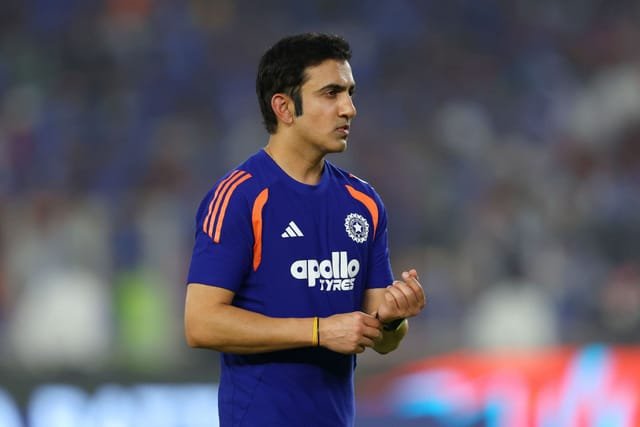
Ravichandran Ashwin says India’s management has drawn a clear line in the sand on senior selections, and Bhuvneshwar Kumar’s exclusion from the Ireland and England T20I squads is the latest evidence of a deliberate, long-term rebuild.
When IPL Form Is Not Enough Anymore
There are few more frustrating positions in professional cricket than delivering one of your best-ever domestic seasons and still not receiving an international call-up. That is precisely where Bhuvneshwar Kumar finds himself heading into India’s T20I series against Ireland and England in the summer of 2026.
The 36-year-old right-arm seamer finished IPL 2026 as the second-highest wicket-taker in the entire tournament. Twenty-eight wickets at an average of under 18, with an economy of 7.95 across 16 matches. By any objective measure, it was a performance that reignited conversations about a possible international recall. His RCB side even won back-to-back IPL titles, with Bhuvneshwar a central reason for their success.
And yet, when India’s squads for the Ireland and England T20I series were announced, his name was absent. No surprise call-up. No reward for consistency. Just the quiet confirmation that for certain players, the door to international cricket has been firmly, if politely, shut.
Former India off-spinner and respected analyst Ravichandran Ashwin has weighed in on exactly why that is, and what it tells us about the philosophy now driving India’s white-ball team-building strategy.
Ashwin’s Core Argument: A Precedent Has Already Been Set
Speaking on ESPN Cricinfo after the squads were announced, Ashwin was characteristically direct. He did not frame Bhuvneshwar’s exclusion as a snub or an injustice. Instead, he placed it within a broader pattern of selection thinking that the Indian management has been signalling for some time.
“It was always going to be difficult for Bhuvneshwar Kumar because of the precedent set with Mohammed Shami, who didn’t make the cut after his injury. From that, it was clear that they were looking at younger bowlers. That’s why Prince Yadav has got a look in, and I like that. It’s saying that they want to move away from all the so-called old crop of seniors.”
Ravichandran Ashwin, ESPN Cricinfo
The Mohammed Shami reference is significant and cuts to the heart of what Ashwin is identifying. Shami returned to competitive cricket after a lengthy injury absence and delivered strong performances at domestic level, yet was not fast-tracked back into the T20I setup. If a bowler of Shami’s pedigree and match-winning record in international cricket could not force his way back in purely on reputation, the message to everyone else was unmistakable: the selectors are not looking backward, regardless of what is happening in the IPL.
That consistent application of a forward-looking philosophy is what Ashwin is pointing to. It is not personal. It is policy.
Who Is Prince Yadav and Why Does His Inclusion Matter?
For many fans outside of IPL circles, Prince Yadav may still be an unfamiliar name. The uncapped seamer made his mark in IPL 2026 with 16 wickets at an average of under 29 in 14 appearances, which placed him among the more economical and wicket-taking young pacers in the competition. His numbers were not as eye-catching as Bhuvneshwar’s on the surface, but the selectors are clearly reading between the lines of raw statistics.
Yadav represents exactly the profile India’s management appears to be prioritising: young, developing, with upward trajectory and years of international cricket ahead of him. The investment logic is straightforward. Selecting Prince Yadav at this stage gives him exposure at international level while his peak years are still ahead, rather than blooding him at 30 when the window for long-term development has narrowed.
| Player | Age | IPL 2026 Wickets | Average | Economy | India T20I Status |
|---|---|---|---|---|---|
| Bhuvneshwar Kumar | 36 | 28 | Under 18 | 7.95 | Not selected |
| Prince Yadav | Young/Uncapped | 16 | Under 29 | N/A | Selected (uncapped) |
The contrast in raw IPL numbers could invite criticism. Bhuvneshwar outperformed Yadav statistically. But international selection has never been purely about who topped the IPL charts in a given season. It is about long-term planning, squad architecture, and where the management believes the team needs to be in two, three, and five years’ time. On all of those dimensions, Prince Yadav is the answer that fits the question being asked.
Bhuvneshwar Kumar’s International Timeline: A Career in Pause
To understand the full weight of this situation, it helps to step back and look at just how long Bhuvneshwar Kumar has been operating outside the national setup. His most recent T20I appearance for India came in November 2022, during the series in New Zealand. His last ODI was earlier that same year in South Africa. In Test cricket, he has not played for India since 2018, also in South Africa.
That is, in cricketing terms, a considerable absence. And yet throughout this period, Bhuvneshwar has not declined quietly. He has continued to pick up over 15 wickets in three of the last four IPL seasons, which represents a level of sustained high-level performance that very few bowlers of any age can claim.
The uncomfortable truth his situation illuminates is that there can be a complete disconnect between domestic form and international selection criteria at a certain career stage. Once a player crosses a particular age threshold and the selectors have mentally categorised them as part of the previous generation, even exceptional performances may not be sufficient to reopen that door. Bhuvneshwar has not been dropped for poor performances. He has been left out as a consequence of a broader strategic direction.
Ashwin’s Important Counterpoint: Experience Cannot Be Entirely Discarded
While Ashwin broadly endorses the youth-forward philosophy, he is careful not to present it as a universally correct approach. His follow-up remarks contain a genuine caution about the risks of over-correcting in the direction of inexperience.
“I would love to think otherwise also because T20 cricket deserves experience, reworking on your skills, and adapting time and again. So hopefully they revisit that aspect of selections where if there is a senior cricketer reworking on his game, they must be given an opportunity to come back.”
Ravichandran Ashwin, ESPN Cricinfo
This is a nuanced and important point that gets lost in the broader narrative of “out with the old, in with the new.” T20 cricket, for all its apparent simplicity, is an intensely skill-based and mentally demanding format. The ability to bowl a yorker under pressure in the final over of a close match is not something that arrives automatically with youth. It is cultivated over years of repetition, failure, and refinement. Experience is not merely sentimental value attached to a veteran’s name. It is a functional cricket asset.
Ashwin’s suggestion that selectors should maintain an open-door policy for senior cricketers actively working to reinvent their game is a reasonable and constructive one. The system should not become so rigidly youth-oriented that it closes the door to a 34-year-old who has genuinely evolved as a cricketer. The two objectives, building for the future and respecting proven quality, do not have to be mutually exclusive.
The Shami Parallel: Why the Precedent Matters So Much
Ashwin’s invocation of Mohammed Shami as the template for this selection policy deserves deeper examination. Shami returned to competitive cricket after significant injury rehabilitation and performed creditably at domestic and IPL level. The selectors chose not to bring him back into the T20I setup. That decision, controversial at the time, established something important: that India’s white-ball management was operating on a framework where past greatness and current domestic form were necessary but not sufficient conditions for international selection.
Once that precedent was established with a bowler of Shami’s stature and public profile, it became the de facto standard. Bhuvneshwar Kumar’s non-selection follows the same logic almost exactly. The selectors are not saying these players are no longer good cricketers. They are saying that the team’s future will be built around different names.
In a results-driven sport, the wisdom of that approach will only be judged in hindsight. If Prince Yadav and the other young pacers develop into genuine international match-winners over the next three to four years, the policy will be considered visionary. If India suffer in the short term from the absence of experienced death bowling, the critics will have ammunition. For now, the management has made their bet, and they are sticking to it.
What This Means for India’s T20I Series Against Ireland and England
In the immediate context of the upcoming series, the selection choices tell us several things about how India intend to approach these fixtures. The Ireland and England T20I assignments are not being treated as win-at-all-costs occasions where experience is the overriding priority. They are being used, at least in part, as platforms for the next generation to accumulate international exposure in competitive but developmentally appropriate conditions.
England at home in T20 cricket is never easy. Their batting line-up, their conditions, and their familiarity with the format make them one of the most testing T20 opponents in world cricket. Throwing uncapped seamers into that environment carries real risk. But the Indian management clearly believes that the best way to develop international-quality bowlers is to place them in international-quality environments, not to protect them in domestic cricket until they are considered fully ready. There is genuine logic in that philosophy.
Conclusion: A Clear Direction, With a Caveat Worth Heeding
Ravichandran Ashwin has articulated something that many cricket observers had sensed but not fully crystallised: India’s selection policy for T20 cricket has undergone a quiet but decisive philosophical shift. The IPL is no longer a path back to international cricket for senior players once they have been moved on. It has become, instead, a proving ground for the next cohort to demonstrate they deserve the opportunity in the first place.
Bhuvneshwar Kumar’s exclusion despite a brilliant IPL 2026 campaign is the clearest illustration yet of that policy in action. Prince Yadav’s inclusion signals that the management is comfortable absorbing short-term uncertainty in exchange for long-term squad development. Whether that trade-off proves correct will take time to assess.
But Ashwin’s caveat is worth keeping in mind. A rigidly age-based selection philosophy carries its own risks. T20 cricket rewards experience as much as youth, and the best teams in the world have typically combined both. India’s management has set a direction. The challenge now is to ensure it does not harden into an ideology that closes the door on talented senior cricketers still capable of contributing at the highest level.
The Ireland T20I series begins before the England tour in July. Both campaigns will be closely watched, not just for results, but for what the new faces do with the opportunities that experienced hands like Bhuvneshwar Kumar have been denied.
For breaking news and live news updates, like us on Facebook or follow us on Twitter and Instagram. Read more on Latest Sports on thefoxdaily.com.





COMMENTS 0