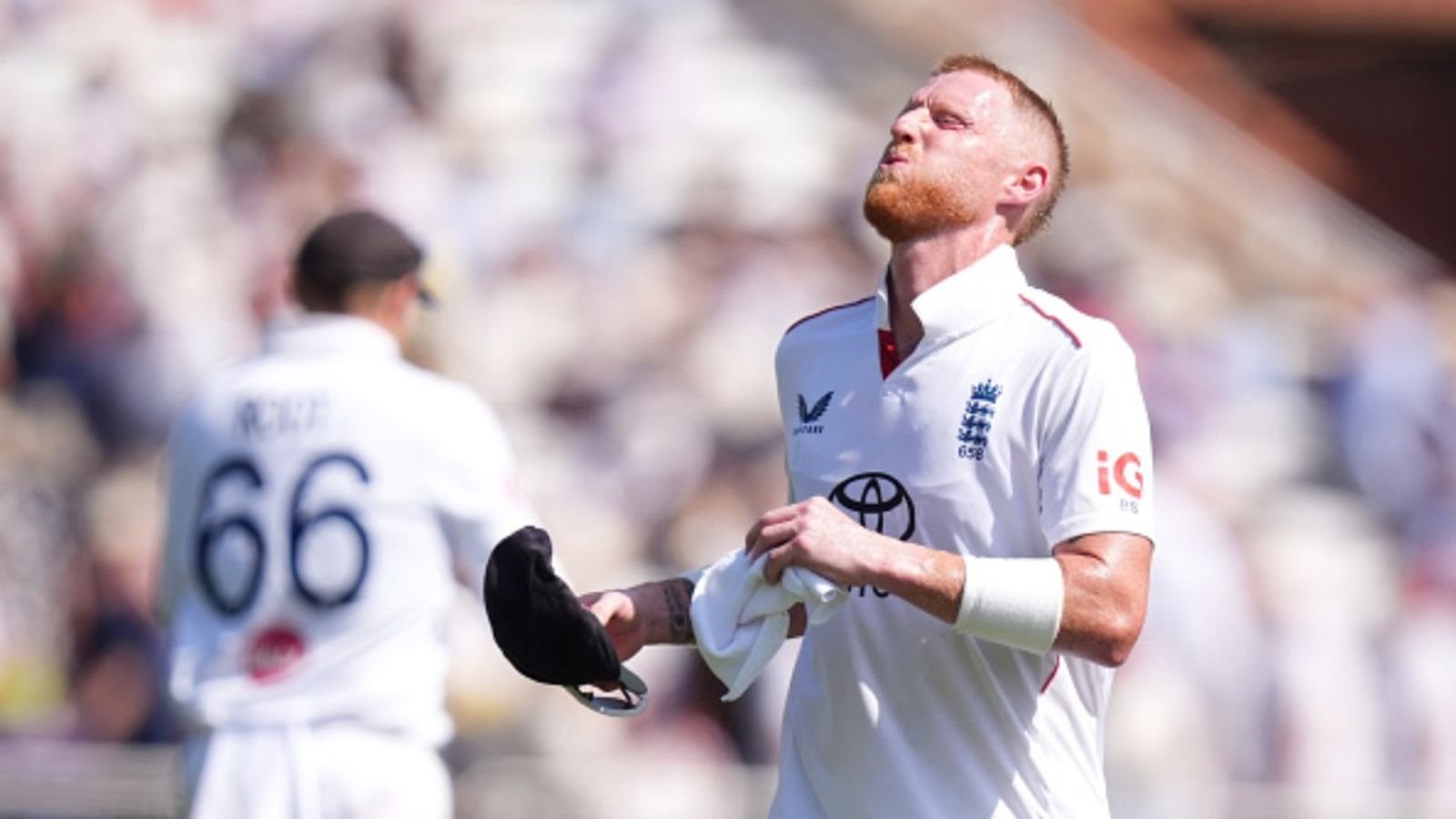
Ben Stokes ICC action has become a major talking point in cricket after the England captain was involved in an unusual incident with New Zealand’s Mitchell Santner during a Test match. The moment occurred during a DRS review when Stokes touched Santner’s glove wristband while explaining where the ball had made contact.
The incident has raised questions about the ICC Code of Conduct, player behaviour during matches, and how even small physical gestures can come under review in modern international cricket. While the moment appeared minor, cricket authorities closely monitor interactions between players to maintain fairness, respect, and sporting discipline.
Stokes, who had already been through disciplinary attention earlier, could now face further examination depending on how match officials interpret the incident. The key question is whether his action was simply an explanation during a cricket discussion or whether it crossed the line into inappropriate physical contact.
What happened between Ben Stokes and Mitchell Santner?
The incident took place during England’s Test match against New Zealand when Ben Stokes was bowling a short delivery to Mitchell Santner. The ball appeared to make contact near Santner’s glove area before being caught by Jacob Bethell at gully.
The on-field umpire gave Santner out, but the New Zealand batter immediately challenged the decision through the Decision Review System (DRS). The replay showed that the ball had touched the upper part of Santner’s wristband, which falls under the definition of the bat according to ICC playing conditions.
The third umpire supported the original decision, giving Stokes his 250th Test wicket. However, during the review process, Santner questioned whether the contact came from his glove area or another protective part of his equipment.
While explaining his view, Stokes touched the wristband area on Santner’s glove to indicate where he believed the ball had hit. This small gesture became the centre of discussion after concerns emerged over whether such contact could breach cricket’s disciplinary rules.
Why could Ben Stokes face ICC action?
The possible issue is linked to the ICC Code of Conduct for players and support staff. Cricket’s governing body has rules designed to prevent aggressive behaviour, intimidation, unnecessary physical contact, and actions that could damage the spirit of the game.
One area officials consider is whether a player makes inappropriate physical contact with another player or match official. The ICC does not only focus on serious confrontations; even smaller incidents can be reviewed if they appear inappropriate or unnecessary.
In Stokes’ case, the important factor will be intent. There is a major difference between a player pointing out a ball mark, demonstrating a technical point, or accidentally making contact compared with behaviour that could be viewed as disrespectful or confrontational.
ICC Code of Conduct: What does it mean for players?
The ICC Code of Conduct exists to protect the competitive balance of cricket. International matches involve intense pressure, emotional moments, and frequent disagreements, especially during close decisions.
The rules allow players to show passion, celebrate wickets, and communicate with opponents. However, cricket authorities expect players to maintain professional standards because their actions influence millions of viewers worldwide.
- Player behaviour: Respectful communication between opponents is expected.
- Physical contact: Unnecessary touching or aggressive gestures may attract attention.
- Match officials: Players must respect umpiring decisions and review processes.
- Spirit of cricket: Competitive intensity must remain within acceptable limits.
Ben Stokes’ history with discipline and pressure
Ben Stokes has built a reputation as one of cricket’s most passionate competitors. His aggressive leadership style has helped transform England’s Test approach, particularly during the Bazball era.
However, that same intensity has often placed him under the spotlight. Captains are expected to lead through both performance and behaviour because every action on the field receives greater attention.
The modern cricket environment has changed significantly. With multiple camera angles, social media discussions, and instant analysis, moments that once passed unnoticed can now become major talking points within minutes.
Why this incident matters beyond one player
The Stokes-Santner moment highlights a larger issue in modern cricket: the balance between competitive emotion and controlled behaviour.
Cricket has always involved conversations between batters, bowlers, and fielders. Players often explain their opinions during reviews or discuss technical aspects of dismissals. These interactions are part of the game’s character.
However, the increasing focus on player conduct means that even harmless-looking gestures can be examined through the lens of regulations.
Comparison: Old-school cricket vs modern cricket discipline
| Old-school cricket approach | Modern cricket approach |
|---|---|
| Players often had more freedom during heated moments | Player actions are closely monitored through technology |
| Many incidents stayed within the field | Social media quickly creates global discussions |
| Verbal exchanges were more common | Officials focus strongly on maintaining professional conduct |
Expert analysis: Was Stokes’ action really serious?
From a cricketing perspective, the incident appears to be more about interpretation than obvious misconduct. Stokes was attempting to show Santner the exact point of contact rather than appearing to challenge or threaten him.
The deciding factor for match officials will likely be whether the contact was viewed as unnecessary. Cricket authorities generally consider context, intent, and the overall behaviour of the player before deciding on disciplinary measures.
This situation also shows why modern cricket has become more complex. Players now operate in an environment where every movement can be replayed, analysed, and judged.
Possible outcomes if ICC reviews the incident
If officials decide that no breach occurred, the matter could end without any action. If they believe the gesture violated the code, Stokes could receive a sanction depending on the severity of the offence.
Possible disciplinary outcomes in such cases can include:
- Official warning
- Demerit points
- Match fee penalty
- Suspension in serious cases
The final decision would depend on the match referee’s assessment and whether the action was considered a genuine cricket discussion or inappropriate physical interaction.
The bigger impact on international cricket
This incident reflects how international cricket is evolving. Players are not only judged by runs, wickets, and victories but also by leadership behaviour and professionalism.
For captains like Stokes, the responsibility is even higher. A team leader sets the tone for the entire side, and small actions can influence how teams are perceived.
The situation also raises an interesting question: should cricket allow more emotional freedom, or should strict regulations continue to control player interactions?
Future outlook: Will Ben Stokes face punishment?
At this stage, the incident depends largely on official interpretation. A small gesture during a DRS conversation does not automatically mean a violation, but the ICC’s responsibility is to examine whether the action affected the spirit of fair play.
The bigger lesson is that international cricket has entered an era where discipline is judged not only by major controversies but also by small moments captured on camera.
Ben Stokes ICC action remains a developing discussion because it represents a wider challenge for modern cricket: maintaining passion and competitiveness while ensuring respect between opponents.
Conclusion
The Ben Stokes and Mitchell Santner incident has become a talking point because it sits in the grey area between normal cricket communication and possible disciplinary concern.
While the England captain appeared to be explaining his viewpoint during a review, the ICC will consider whether the physical gesture crossed any boundaries. Regardless of the final outcome, the incident highlights how carefully player behaviour is monitored in today’s game.
As cricket continues to evolve with technology and global attention, players will need to balance aggression, emotion, and professionalism more carefully than ever before.
For breaking news and live news updates, like us on Facebook or follow us on Twitter and Instagram. Read more on Latest Sports on thefoxdaily.com.






COMMENTS 0