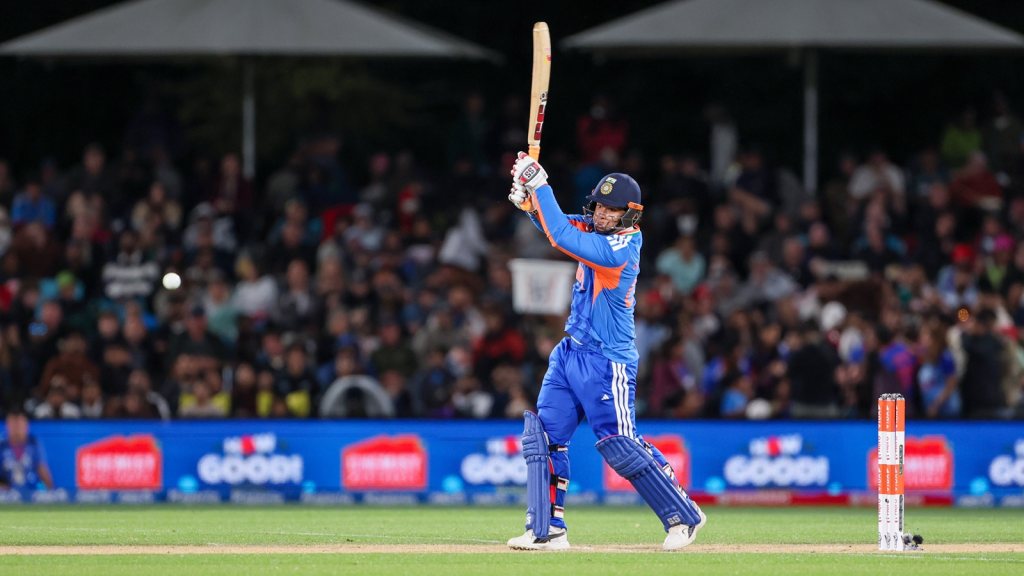
Vaibhav Sooryavanshi Moved Out of Opening Slot for the First Time, Falls for 4 Runs in 8 Balls
Vaibhav Sooryavanshi Moved Out of Opening Slot for the First Time, Falls for 4 Runs in 8 Balls
India’s teenage batting sensation Vaibhav Sooryavanshi experienced a new challenge in the second T20I against New Zealand in Christchurch, as he batted outside the opening position for the first time in his young career. The 15-year-old came in at No. 3 but failed to make a significant impact, scoring just four runs off eight deliveries.
India retained their established opening combination of Sanju Samson and Abhishek Sharma, leaving Sooryavanshi to enter the game after the first wicket fell. The youngster had returned to the playing XI as a replacement for the injured Ishan Kishan, who did not bat in the series opener. However, his opportunity in Christchurch ended sooner than expected as New Zealand’s bowlers kept India’s top order under pressure.
India Retain Sanju Samson and Abhishek Sharma as Openers
After New Zealand elected to bat first, the hosts posted a competitive total of 180/5. Matt Henry and Jacob Duffy then took the new ball and initially made scoring difficult for the Indian openers. Samson began the innings cautiously, while Abhishek Sharma also had to work hard to find his rhythm.
Samson started India’s chase with a maiden over, putting early pressure on the batting side. India finally got off the mark in the second over when Abhishek attempted an aggressive shot against Duffy. Although the opening partnership took some time to develop, Abhishek soon found his timing and struck consecutive boundaries after receiving a reprieve.
The left-handed batter appeared to have been caught at deep square leg off the fifth delivery of the over. However, the umpire ruled the delivery a no-ball, allowing Abhishek to continue his innings. He made the most of the opportunity by finding the boundary twice in succession.
The opening pair eventually added 40 runs before Duffy dismissed Samson in the fifth over. The Indian wicketkeeper-batter departed for 14 off 17 deliveries, bringing Sooryavanshi to the crease at No. 3 for the first time in his fledgling career.
Vaibhav Sooryavanshi Struggles to Find His Rhythm
Sooryavanshi’s promotion to No. 3 represented a notable change in his batting role. The teenager has primarily been associated with the opening position, where his aggressive approach allows him to attack from the beginning of an innings. Against New Zealand, however, he had to adapt to entering the game after an early wicket.
The conditions in Christchurch also presented a challenge for the Indian batters. The match was played on the same pitch used for the first T20I, and the surface was not as favourable for stroke-making as the conditions India have often experienced in recent home white-ball matches.
Although Sooryavanshi has already attracted considerable attention for his attacking batting, he is still at an early stage of his career. The teenager has yet to play international cricket at home, making the experience of adapting to different conditions an important part of his development.
His innings began with a stroke of luck when New Zealand’s Glenn Phillips, referred to as Jacobs in the match account, missed a catching opportunity off the second ball Sooryavanshi faced. The chance offered the young batter an opportunity to settle at the crease and build his innings.
However, Sooryavanshi could not turn the reprieve into a substantial score. He attempted a few aggressive shots but struggled to find the timing required to put pressure on the New Zealand bowlers. His stay ended when Nathan Smith dismissed him off the second delivery of the seventh over.
Sooryavanshi walked back after scoring four runs from eight balls, leaving India with another early setback in their pursuit of New Zealand’s 180/5.
New Zealand Bowlers Keep India’s Top Order Under Pressure
New Zealand’s bowling effort proved effective in the opening stages of India’s chase. Henry and Duffy restricted the scoring opportunities early on, forcing the Indian openers to work for their runs. Duffy then removed Samson before Smith ended Sooryavanshi’s brief innings.
The dismissals highlighted the challenge India faced while trying to build momentum against a disciplined bowling attack. While Abhishek managed to respond aggressively after his early reprieve, Samson and Sooryavanshi were unable to convert their starts into substantial contributions.
New Zealand’s total of 180/5 meant India needed a strong batting effort to remain on course in the second T20I. The early wickets increased the pressure on the middle order and made it important for the remaining batters to establish a partnership.
What Does the No. 3 Experiment Mean for Sooryavanshi?
Sooryavanshi’s brief appearance at No. 3 offered a glimpse of how India’s batting order could change when circumstances require a different combination. With Kishan unavailable after his injury in the first T20I, India opted to retain Samson and Abhishek as openers and gave the teenager a chance to bat one position lower than usual.
The move did not produce the desired result in Christchurch, but one short innings is not enough to judge Sooryavanshi’s ability to adapt to a new batting position. At just 15, he is still gaining experience against international bowling attacks and learning how to adjust his approach to different match situations.
For India, the second T20I provided another opportunity to assess their batting options while continuing to rely on their established opening partnership. For Sooryavanshi, the outing was a reminder that international cricket can demand patience and adaptability alongside the aggressive stroke play that has made him a promising young talent.
Remove unsupported player identification Trim repetitive match analysis Fix the headline’s grammar
For breaking news and live news updates, like us on Facebook or follow us on Twitter and Instagram. Read more on Latest Cricket on thefoxdaily.com.






COMMENTS 0