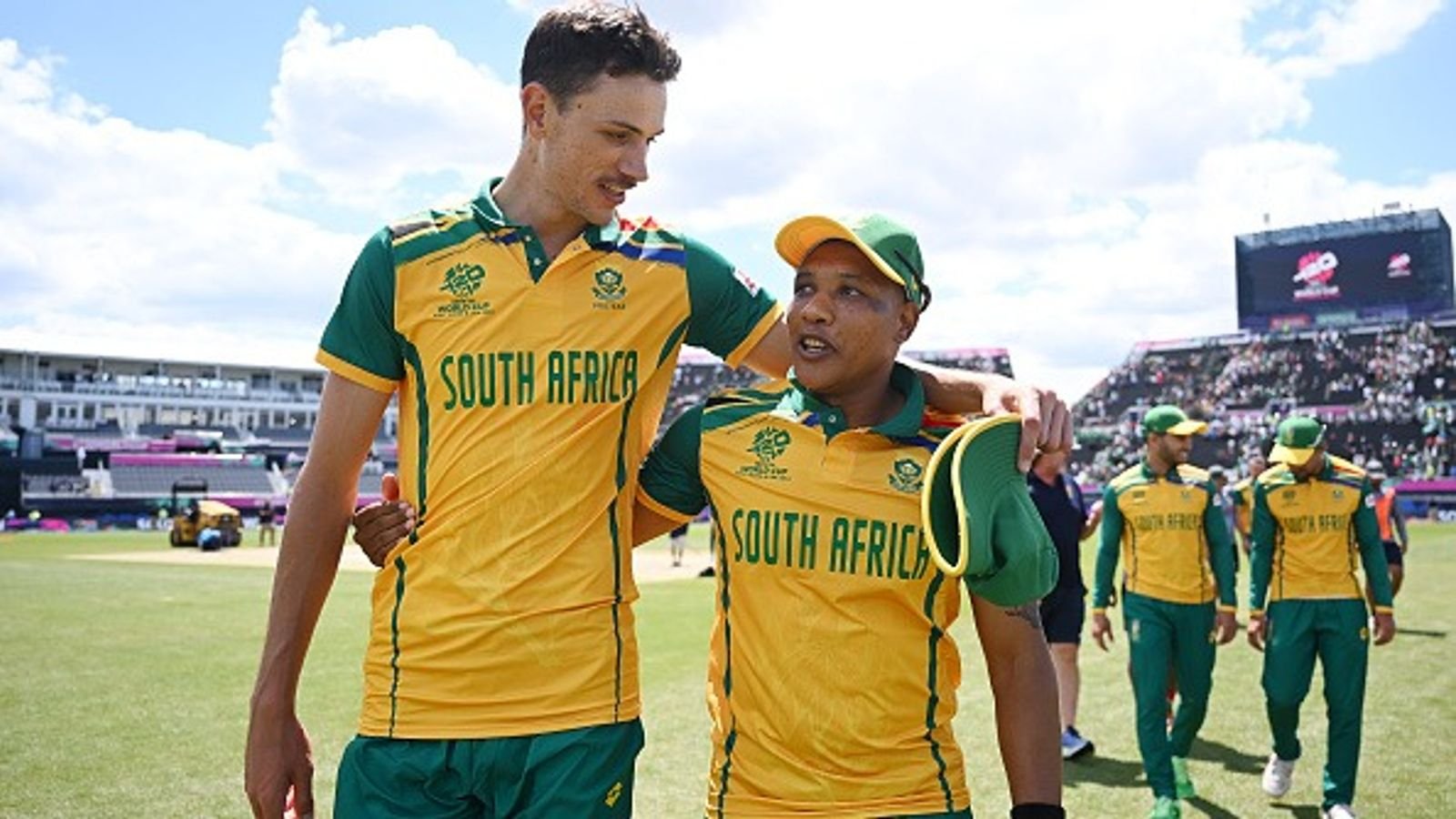
South Africa have suffered a major blow ahead of their ODI series against Australia after fast bowler Ottneil Baartman was ruled out with a left hamstring strain. Cricket South Africa confirmed the injury on Sunday, leaving the Proteas without another important pace option for the three-match contest.
The Australia ODI series is scheduled to begin on September 24 and run until September 30. Baartman’s absence comes at an inconvenient time for South Africa, who are already dealing with fitness and selection concerns within their pace attack.
The selectors have moved quickly to address the problem by calling up Duan Jansen. The young seamer will join the squad when the South African team assembles in Durban on September 19, giving the management another option before the series against Australia gets underway.
Ottneil Baartman’s comeback ends in injury setback
Baartman had only recently returned to competitive cricket after being away from South Africa’s ongoing ODI series against Namibia. His latest appearance was expected to be an important step towards returning to the national setup.
Instead, the bowler’s comeback was cut short during the Dolphins’ CSA 4-Day Series match against the Titans. Baartman managed only five overs during the Titans’ innings before leaving the field.
He was subsequently unable to bat when the Dolphins began their second innings. The development raised concerns about his fitness, and further assessment resulted in the confirmation that a left hamstring strain would prevent him from featuring against Australia.
For Baartman, the timing is particularly frustrating because he had been working his way back towards international cricket. His last appearance for South Africa came during the T20I series against New Zealand in March.
Baartman’s recent international journey
The injury interrupts a period in which Baartman had been trying to re-establish himself in South Africa’s international plans. Before his latest domestic appearance, he had also spent the summer playing in Major League Cricket.
His last international involvement came after a period that included South Africa’s tour of India late last year. He subsequently missed the ongoing ODI series against Namibia before returning to domestic red-ball cricket.
The move back into four-day cricket was an opportunity to regain match rhythm. However, the hamstring problem means South Africa will now have to look elsewhere for depth ahead of their Australia assignment.
Hamstring issues can be particularly troublesome for fast bowlers because of the physical demands involved in sprinting and delivering at high intensity. South Africa will therefore have little reason to take unnecessary risks with Baartman while preparing for the series.
Duan Jansen gets another opportunity
Duan Jansen has been selected as Baartman’s replacement after making a positive impression during the recent Namibia series. His elevation gives the young seamer another opportunity to become part of South Africa’s international setup.
Jansen recently made his international debut in the Namibia T20I tri-series. He then produced an impressive performance in the second ODI against Namibia, claiming 4 wickets for 31 runs.
That performance strengthened his case for further opportunities, and the injury to Baartman has now opened another door. Jansen was also brought into South Africa’s XI for the final match of the Namibia ODI series as part of three changes, with the Proteas already holding an unassailable 2-0 lead.
His recent form means South Africa are not bringing in an entirely untested option. Jansen has already experienced international cricket and will now have the chance to work alongside a more established group of fast bowlers.
South Africa’s pace attack faces multiple concerns
Baartman’s absence becomes more significant when viewed alongside South Africa’s wider fast-bowling situation. The Proteas are already without Kagiso Rabada, who remains unavailable while recovering from a hamstring problem.
Anrich Nortje was also not considered for the upcoming assignment. That leaves South Africa having to manage their resources carefully as they prepare to face Australia’s batting lineup.
To add experience to the group, the selectors have recalled Gerald Coetzee. The upcoming series will mark his first ODI involvement since the 2023 World Cup, giving him an opportunity to return to the format after a lengthy absence.
South Africa’s pace group now includes Marco Jansen, Lungi Ngidi, Kwena Maphaka and Corbin Bosch, alongside the returning Coetzee and the newly added Duan Jansen.
The combination provides variety and potential, but Baartman’s injury reduces the depth available to the management. With Rabada also unavailable, the Proteas will have to rely on their remaining bowlers to carry a larger share of the workload.
Why Gerald Coetzee’s return matters
Coetzee’s recall could prove particularly valuable given the changes to South Africa’s bowling options. His return to the ODI setup brings additional experience to a group that also contains younger players.
His previous ODI involvement came during the 2023 World Cup, meaning the Australia series could represent an important opportunity to re-establish himself in South Africa’s plans for the format.
However, the selection does not automatically mean Coetzee will carry the attack. South Africa have several options and will need to decide how to balance experience, pace, workload and recent form.
Marco Jansen remains one of the most important members of the group because of his ability to contribute with both bat and ball. Lungi Ngidi provides experience, while Maphaka represents the younger pace option. Bosch and the two Jansen brothers add further variety.
Duan Jansen’s opportunity comes at the right time
For Duan Jansen, the timing of his call-up could hardly be more important. His four-wicket performance against Namibia has given him momentum, while Baartman’s injury has created an immediate vacancy in the squad.
The challenge will now be to translate his recent success into a higher-pressure series against Australia. The Australian batting lineup will present a considerably different test, and South Africa will need their younger bowlers to adapt quickly.
Jansen can nevertheless take confidence from the fact that the selectors have already shown faith in him. His inclusion after his Namibia performances suggests that his recent displays have been noticed by the team management.
Joining the squad on September 19 will also give him some time to settle into the group before the first ODI on September 24.
Australia series presents a tougher test
The three-match ODI series against Australia will run from September 24 to September 30. With only three matches, every game will carry considerable importance, particularly for players looking to establish themselves in the squad.
South Africa’s bowling plans will be under close scrutiny because Australia are capable of putting pressure on an attack during both the powerplay and middle overs. The Proteas will therefore need their seamers to maintain control while also finding ways to take regular wickets.
Baartman’s absence means the team management has less room for rotation. If the series becomes physically demanding, South Africa will have to carefully manage the workload of their frontline quicks.
The situation also provides an opportunity for players such as Maphaka and Duan Jansen to demonstrate that South Africa’s pace-bowling pipeline has enough depth to cope with injuries.
South Africa must balance youth and experience
The current bowling group represents an interesting mixture of established international players and younger prospects. Coetzee’s return provides experience, while Jansen and Maphaka offer the potential of a new generation of fast bowlers.
Jansen’s ability to contribute with the bat can also provide additional balance if the team management chooses to use him in the playing XI. However, the primary responsibility will remain taking wickets and controlling Australia’s scoring rate.
South Africa will be hoping that the combination of Jansen, Ngidi, Marco Jansen, Coetzee, Maphaka and Bosch can compensate for the absence of Baartman and Rabada.
The selectors have already acted quickly rather than leaving the squad short of options. The next challenge will be deciding which combination offers the best balance for Australian conditions and the demands of three consecutive ODIs.
What Baartman’s injury means for South Africa
Baartman’s absence is more than a straightforward replacement issue. His injury comes during a period when South Africa are already missing other pace-bowling resources, meaning the workload and responsibility on the available quicks will increase.
At the same time, the setback has created a valuable opening for Duan Jansen. His recent four-wicket haul against Namibia has ensured that his selection is backed by current form rather than being purely a reaction to Baartman’s injury.
South Africa will now hope that Jansen can carry that confidence into the Australia series. If he adapts successfully, the injury setback could unintentionally help the Proteas discover another reliable option for their ODI attack.
Final Verdict
Ottneil Baartman’s injury is a significant setback for South Africa ahead of their three-match ODI series against Australia. The left hamstring strain has ended his comeback at an unfortunate moment and further reduces the Proteas’ fast-bowling depth.
With Kagiso Rabada unavailable and Anrich Nortje not under consideration, South Africa will have to rely on a reshaped pace attack featuring Marco Jansen, Lungi Ngidi, Gerald Coetzee, Kwena Maphaka, Corbin Bosch and Duan Jansen.
Duan Jansen’s recent success against Namibia gives South Africa reason for optimism, but the Australia series will provide a much tougher examination. The Proteas now need their remaining bowlers to stay fit, manage their workloads and execute consistently when the series begins on September 24.
For breaking news and live news updates, like us on Facebook or follow us on Twitter and Instagram. Read more on Latest Cricket on thefoxdaily.com.






COMMENTS 0