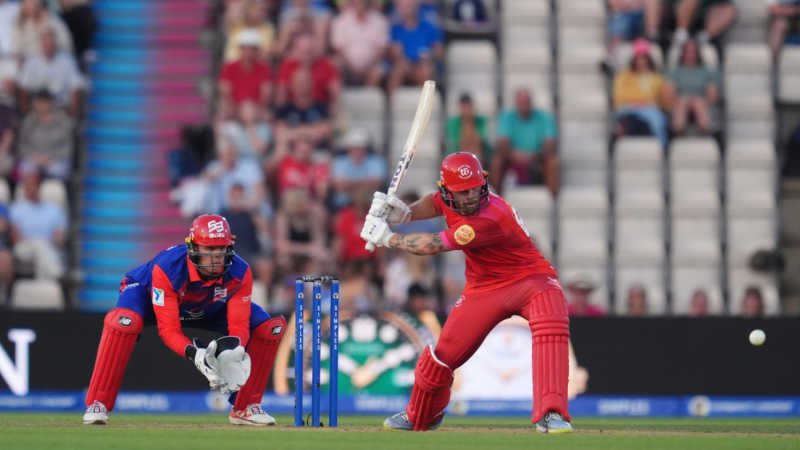
Cricket is often decided by spectacular catches, explosive sixes, or match-winning bowling spells. Occasionally, however, a game turns on something far less obvious. In Welsh Fire’s victory over Southern Brave in The Hundred, the defining moment was not a massive shot or a dramatic wicket. Instead, it was Phil Salt’s sharp awareness of the fielding regulations that completely altered the course of the contest.
In a format where every ball carries enormous significance, Salt spotted a fielding mistake that many players, spectators, and even commentators initially missed. Within moments, what could have been a routine delivery became a no-ball, an extra scoring opportunity, and ultimately a pivotal turning point in the match.
The incident served as a reminder that elite cricket is increasingly becoming a battle of intelligence as much as talent.
How the Match Reached a Crucial Moment
The chase was delicately balanced when the incident occurred.
Welsh Fire still required a challenging number of runs on a surface that was not particularly easy for batting. Southern Brave remained firmly in the contest, applying pressure through disciplined bowling and restricting boundary opportunities.
Phil Salt had spent much of his innings building a foundation rather than dominating the attack. While he was set at the crease, he had not yet produced the kind of explosive acceleration that supporters typically associate with his batting style.
At that stage, the match could easily have swung in either direction.
One wicket or one expensive over had the potential to decide the outcome.
The Fielding Restriction Error That Changed Everything
The turning point emerged from an unexpected source.
As Salt prepared to face a delivery, he surveyed the field and noticed something unusual. Southern Brave had incorrectly positioned their fielders, leaving only three players inside the designated inner circle despite regulations requiring a different setup.
For many players, such a detail might have gone unnoticed in the heat of competition.
Salt immediately recognized the error and understood its implications.
Rather than simply playing the ball conventionally, he altered his approach, knowing the fielding infringement would result in a no-ball being called.
That split-second recognition demonstrated the type of game awareness that separates good players from elite competitors.
Why Fielding Regulations Matter in Limited-Overs Cricket
Modern white-ball cricket operates under strict fielding restrictions designed to maintain balance between bat and ball.
These regulations determine how many fielders can be positioned in specific areas of the field during various phases of an innings.
The rules serve several purposes:
- Encouraging attacking cricket.
- Preventing excessively defensive field placements.
- Maintaining fairness between teams.
- Creating scoring opportunities for batters.
- Ensuring strategic variety.
Because the margins between victory and defeat are often extremely small, even a minor violation can have significant consequences.
That is exactly what happened in this match.
Why Phil Salt’s Awareness Was So Impressive
Spotting a fielding mistake is one thing.
Recognizing it instantly during a live match situation is something entirely different.
Professional cricketers must simultaneously focus on bowlers, field placements, match situations, run-rate calculations, communication with partners, and tactical planning.
To identify a fielding restriction breach amidst all those variables requires exceptional concentration.
Salt not only noticed the issue but also reacted immediately.
His quick communication with the umpire ensured the infringement was reviewed and correctly addressed.
This level of situational awareness reflects a deep understanding of cricket’s laws and the ability to apply that knowledge under pressure.
The Sequence That Shifted Momentum
The impact of the moment extended well beyond the no-ball itself.
What followed created a chain reaction that dramatically altered the chase.
| Event | Impact on Match |
|---|---|
| Fielding Restriction Error | No-ball awarded |
| Boundary Scored | Immediate pressure released |
| Free Hit Opportunity | Additional scoring chance |
| Extra Delivery | More runs added |
| Momentum Shift | Welsh Fire gained control |
In limited-overs cricket, momentum is often more valuable than statistics alone.
Once Welsh Fire sensed the opportunity, the pressure that had been building throughout the chase began to ease.
Southern Brave, meanwhile, suddenly found themselves dealing with frustration and a changing match situation.
The Importance of Small Details in Elite Cricket
One of the biggest lessons from the incident is how small details can decide major matches.
At the professional level, the gap between teams is often extremely narrow.
Most players possess excellent technical skills. Most bowlers can execute plans effectively. Most batters can clear boundaries.
What frequently separates winning teams from losing teams is execution of minor details.
Examples include:
- Field placements.
- Running between wickets.
- Over-rate management.
- Communication.
- Awareness of playing conditions.
- Knowledge of regulations.
Salt’s intervention perfectly illustrated this principle.
The incident was not about physical ability. It was about observation and understanding.
How Substitute Fielders Can Create Unexpected Challenges
The situation also highlighted one of the less-discussed aspects of modern cricket.
Substitute fielders often enter matches with limited preparation and must immediately adapt to tactical plans established by the captain and coaching staff.
When substitutions occur suddenly due to injury concerns or player discomfort, communication can become more difficult.
Maintaining correct fielding positions under those circumstances requires exceptional coordination.
Even experienced teams occasionally encounter confusion during these transitions.
In this case, that confusion proved costly.
Phil Salt’s Growing Importance in White-Ball Cricket
The innings itself was another reminder of Salt’s value in limited-overs cricket.
While he is often celebrated for aggressive strokeplay, this performance showcased a different side of his game.
Rather than launching an immediate assault, he adjusted to challenging batting conditions and built his innings patiently.
That adaptability is becoming increasingly important in modern white-ball cricket.
The best players are no longer simply powerful hitters. They are complete batters capable of assessing conditions and modifying their approach accordingly.
Salt demonstrated exactly that.
The Evolution of Cricket Intelligence
Cricket intelligence has become one of the most valuable skills in the modern era.
Advances in analytics, video analysis, and tactical preparation mean players now operate in a highly sophisticated environment.
Today’s elite cricketers must understand:
- Matchups.
- Fielding regulations.
- Powerplay strategies.
- Bowling patterns.
- Data-driven trends.
- Format-specific tactics.
Those who combine technical skill with high-level cricket intelligence often become the most successful players.
Salt’s actions provided a textbook example of this evolution.
What Southern Brave Can Learn From the Incident
While the mistake was costly, it also offers valuable lessons.
Successful teams frequently use setbacks as opportunities for improvement.
Southern Brave will likely review several areas following the match:
- Communication during substitutions.
- Field-placement verification.
- Leadership coordination.
- Awareness of fielding regulations.
- Pressure management during critical moments.
Addressing these details can help prevent similar situations in future matches.
In tournaments with tight margins, even a single mistake can determine qualification prospects or playoff positions.
Why The Hundred Rewards Smart Cricket
The Hundred’s unique structure increases the importance of decision-making.
With fewer deliveries than traditional T20 cricket, every ball carries additional weight.
A single boundary, extra delivery, or fielding mistake can have a greater impact than it might in longer formats.
That reality encourages players to remain constantly alert.
The format rewards teams that maximize every opportunity while minimizing avoidable errors.
Salt’s awareness perfectly aligned with those demands.
The Psychological Impact of Momentum Shifts
Cricket matches are often influenced by psychology as much as tactics.
When a team gains momentum, confidence grows rapidly.
Batters become more decisive. Bowlers may feel additional pressure. Fielders can become hesitant.
The no-ball incident created exactly this type of psychological shift.
Welsh Fire suddenly felt the game moving in their favor, while Southern Brave were forced to regroup after an avoidable setback.
These emotional swings frequently prove decisive in closely contested matches.
Could This Become One of The Hundred’s Most Talked-About Moments?
The Hundred has already produced several memorable incidents, but this moment stands out because of its unusual nature.
Fans often remember spectacular catches or dramatic finishes, yet cricket history also contains famous examples of matches changing because a player noticed something others missed.
Salt’s awareness belongs in that category.
It was a reminder that cricket remains a game where intelligence, observation, and understanding can influence outcomes just as much as physical execution.
Conclusion: A Masterclass in Awareness Under Pressure
Phil Salt’s contribution to Welsh Fire’s victory will be remembered not only for the runs he scored but for the awareness he displayed at a critical moment. By identifying a fielding restriction error and reacting instantly, he transformed a tense chase and shifted momentum decisively in his team’s favor.
The incident highlighted the importance of concentration, knowledge, and decision-making in modern cricket. While power-hitting and bowling skill often dominate headlines, matches are frequently won through smaller moments that reveal a player’s understanding of the game.
For Welsh Fire, the moment helped secure a valuable victory. For cricket fans, it provided a fascinating example of how intelligence can influence elite sport. And for Phil Salt, it reinforced his reputation as a player whose impact extends far beyond the boundaries he hits.
For breaking news and live news updates, like us on Facebook or follow us on Twitter and Instagram. Read more on Latest Sports on thefoxdaily.com.






COMMENTS 0