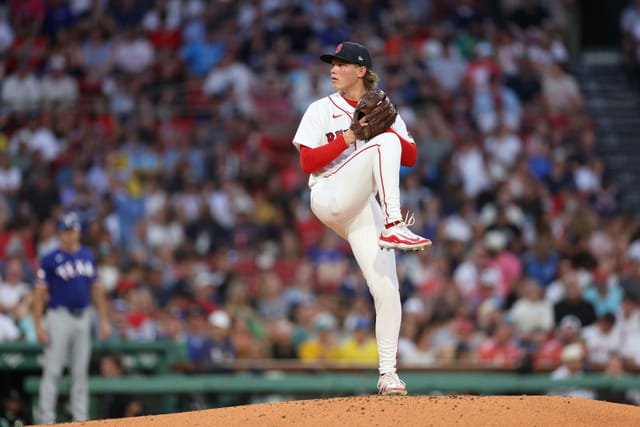
The Red Sox trade of Connelly Early for Curtis Mead has become one of the most talked-about MLB transactions of the week. While Boston addressed an immediate need by adding an established major league infielder, many supporters believe the club sacrificed a high-upside young pitcher who could have been an important part of its future rotation.
The trade also reflects two franchises at different stages of roster building. Boston is attempting to strengthen its lineup for a playoff push, while Washington continues investing in controllable young pitching that could anchor its rotation for years to come.
Red Sox Prioritize Infield Depth with Curtis Mead Acquisition
Boston’s front office has made it clear that improving the infield was a priority. Injuries and inconsistent production created a need for another reliable bat capable of contributing immediately.
Curtis Mead arrives during the best offensive season of his major league career. His combination of power, run production and defensive versatility gives Boston another option as it looks to remain competitive during the second half of the season.
Rather than waiting for injured players to return, the Red Sox opted to make an aggressive move that could improve the lineup immediately.
Why Boston Was Willing to Trade Connelly Early
On paper, moving a talented young pitcher may appear surprising. However, roster construction often requires difficult decisions.
Connelly Early impressed whenever he received opportunities in the major leagues, showing composure and the ability to generate quality innings. Nevertheless, several factors likely influenced Boston’s decision.
- Strong starting pitching depth within the organization.
- Immediate need for offensive production in the infield.
- Early’s recent elbow inflammation created uncertainty.
- The opportunity to acquire an MLB-ready everyday position player.
Although injuries alone should never define a player’s value, front offices routinely balance long-term potential against present-day roster needs.
Curtis Mead’s Breakout Season Made Him an Attractive Target
Mead has developed into a much more complete offensive player this season.
After producing modest numbers during the early stages of his major league career, he has taken a significant step forward with improved power, better plate discipline and increased run production.
That offensive growth likely convinced Boston that Mead could contribute immediately while still possessing room for further development.
| Trade Overview | Boston Red Sox | Washington Nationals |
|---|---|---|
| Player Acquired | Curtis Mead | Connelly Early |
| Primary Need Addressed | Infield offense | Starting pitching depth |
| Immediate Impact | MLB-ready bat | Long-term rotation prospect |
| Future Focus | Playoff contention | Player development |
Fan Reaction Highlights the Risk of the Deal
The announcement generated mixed reactions across social media, with many Red Sox fans questioning whether the organization received enough value in return.
Some supporters argued Boston should have targeted a more established infielder, while others worried the club had traded away one of its better young pitching assets.
Those concerns are understandable because promising left-handed starters remain among baseball’s most valuable long-term resources.
However, others believe Boston’s front office deserves credit for addressing one of the roster’s biggest weaknesses before the stretch run.
Where Curtis Mead Fits in Boston’s Lineup
Although Mead has spent considerable time at third base, his versatility gives Boston multiple options.
With injuries affecting the middle infield, second base appears to be the most logical position for him initially. His ability to move around the infield also provides additional flexibility for the coaching staff when constructing daily lineups.
If his offensive production continues, Mead could become an important middle-of-the-order contributor.
What Connelly Early Brings to Washington
For the Nationals, acquiring Early represents an investment in long-term pitching.
Young starting pitchers with years of club control are extremely valuable, particularly for organizations focused on sustainable roster building.
Washington will likely give Early time to recover fully before integrating him into its long-term plans, where he has the potential to develop into a reliable member of the starting rotation.
Comparing the Trade Philosophies
This transaction perfectly illustrates how teams with different competitive timelines approach roster construction.
| Boston’s Strategy | Washington’s Strategy |
|---|---|
| Improve current roster | Develop future core |
| Add proven major league hitter | Acquire controllable pitching |
| Support playoff aspirations | Strengthen long-term rotation |
| Address positional weakness | Increase pitching depth |
Will the Trade Be Judged Differently in a Few Years?
Many baseball trades look dramatically different several seasons after they are completed.
If Mead becomes a consistent everyday contributor and helps Boston reach the postseason, the move could be viewed as a success. On the other hand, if Early develops into a frontline starter, the Nationals may ultimately emerge as the long-term winners.
Player development remains one of the most unpredictable aspects of Major League Baseball, making immediate reactions only part of the story.
Why This Trade Reflects Modern MLB Decision-Making
Front offices today rely on far more than traditional statistics when evaluating players.
Health projections, roster balance, years of team control, positional scarcity, advanced analytics and organizational depth all influence trade decisions.
While fans naturally evaluate transactions based on current performance, executives must consider how each move affects the organization over multiple seasons.
Key Takeaways
- Boston acquired Curtis Mead to strengthen an injury-hit infield.
- Washington received Connelly Early, adding a promising young left-handed pitcher.
- Red Sox fans expressed mixed reactions, with many questioning the value of the return.
- The trade reflects contrasting organizational goals, with Boston focusing on immediate competitiveness and Washington investing in future pitching.
- The long-term success of the deal will depend on how both players develop in their new environments.
Expert Insight: Rather than evaluating this trade solely on present-day statistics, it should be viewed through the lens of organizational priorities. Boston prioritized immediate offensive help, while Washington secured a controllable young pitcher with long-term upside. The true winner may not be determined for several seasons.
Conclusion
The Red Sox trade involving Connelly Early and Curtis Mead has generated significant debate because it addresses two very different organizational needs. Boston gains a productive infielder capable of contributing immediately, while Washington strengthens its future pitching plans with a talented young arm.
Although fan reactions have largely centered on whether the Red Sox surrendered too much potential, the ultimate verdict will depend on how both players perform over the coming years. If Mead becomes a key contributor during Boston’s playoff pursuit and Early develops into a reliable starter in Washington, this trade could ultimately benefit both franchises in different ways.
For breaking news and live news updates, like us on Facebook or follow us on Twitter and Instagram. Read more on Latest Sports on thefoxdaily.com.



COMMENTS 0